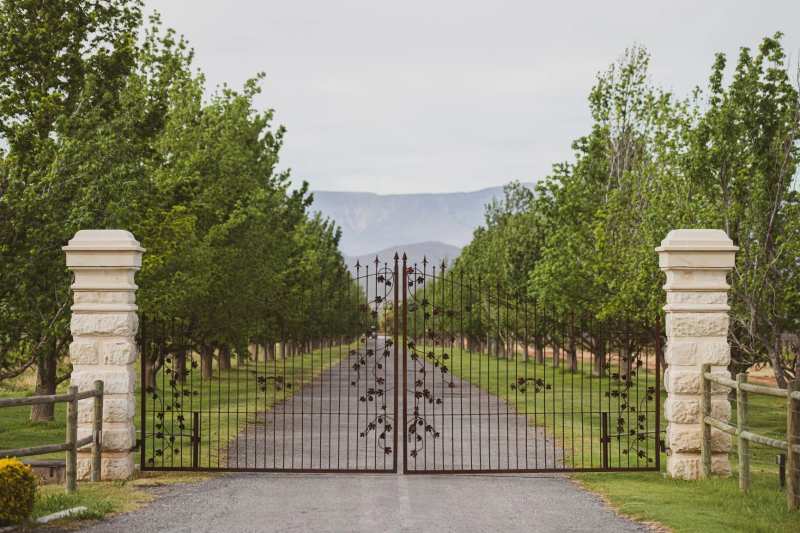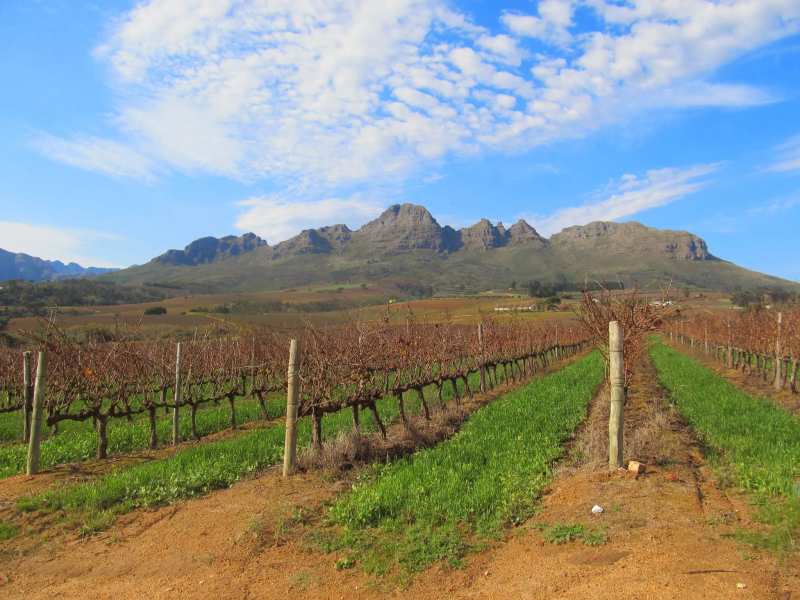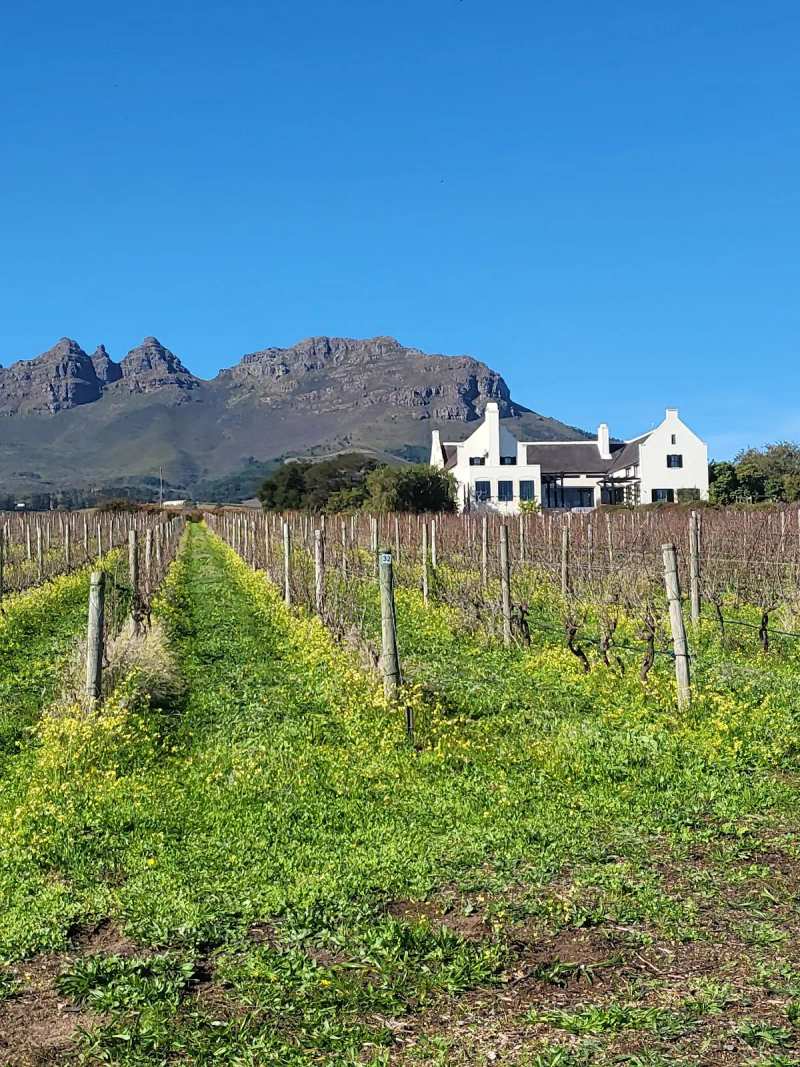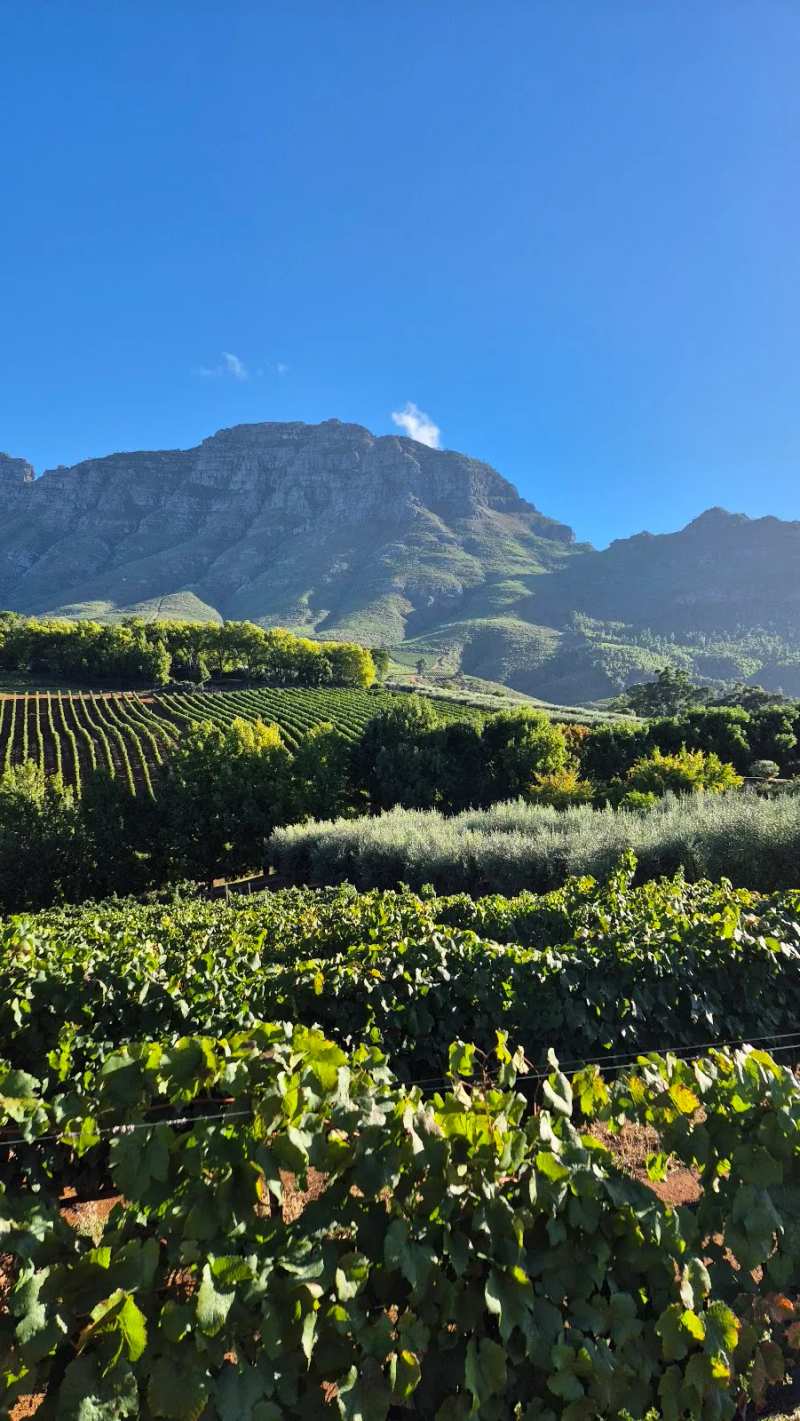
Drive an hour in almost any direction from Cape Town and you run into vineyards. They climb the slopes behind the southern suburbs, roll over the wheat-coloured hills north of the city and fill whole valleys under the mountains further inland. The Western Cape wine farms are not one place but eight distinct regions, each with its own roads, its own climate and its own idea of a good afternoon.
This is the map of those eight, ordered roughly by how far they sit from the city. For each one you get the character of the place, the farms worth stopping at first, and where to go next when you want the full picture of a single valley.
What counts as the Western Cape winelands?
Most visitors use "the winelands" to mean Stellenbosch, Franschhoek and Paarl, the block of valleys east of the city that the province calls the Cape Winelands district. Wine country is wider than that. Two wine valleys, Constantia and Durbanville, sit inside the City of Cape Town itself. The Helderberg around Somerset West is a sub-route of Stellenbosch. Further out, the Hemel-en-Aarde Valley behind Hermanus and the Breede River valley around Robertson are serious wine regions in their own right.
On a wine label you will see Wine of Origin names, South Africa's appellation system of districts and wards. You do not need them to plan a visit. The regions below follow the way people actually travel: by road, by valley, and by how much of the day you want to spend in the car.
A practical note before you go. Most tasting rooms take walk-ins on weekdays, weekends get busy from late morning, and the farm restaurants book up well ahead. And because the whole point is tasting, plan who drives or use a tour, which the last section covers.
Constantia: wine farms inside the city
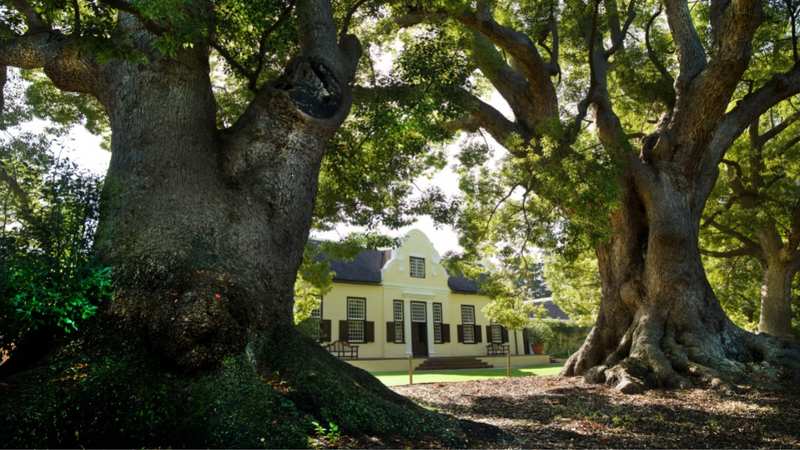
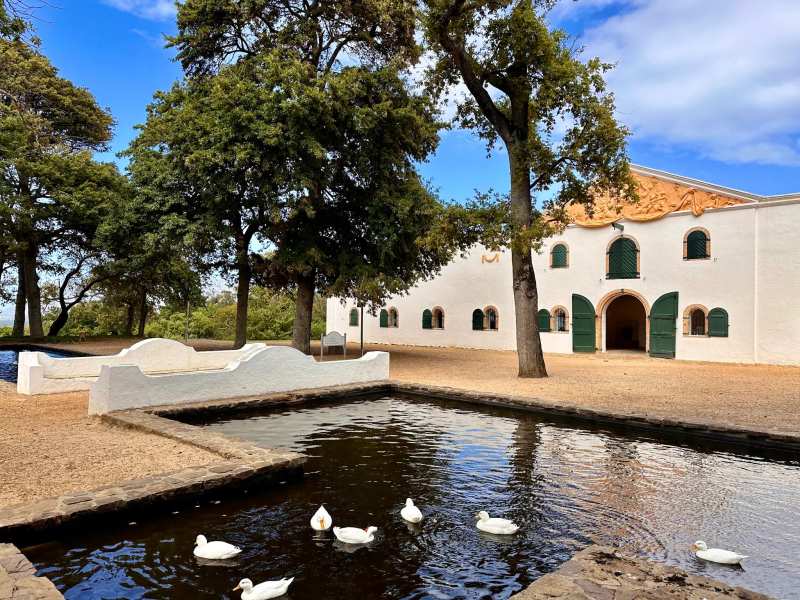
Constantia is the closest wine region to the city, about 11 km south of the centre as the crow flies, on the slopes between Wynberg Hill and the Silvermine mountains. This is where South African wine farming took hold: the land was granted to the Cape governor Simon van der Stel in 1685, and the estate at its heart still trades under the name Groot Constantia. The valley's wine route grew from five member farms to eight, which makes it easy to do properly in an afternoon.
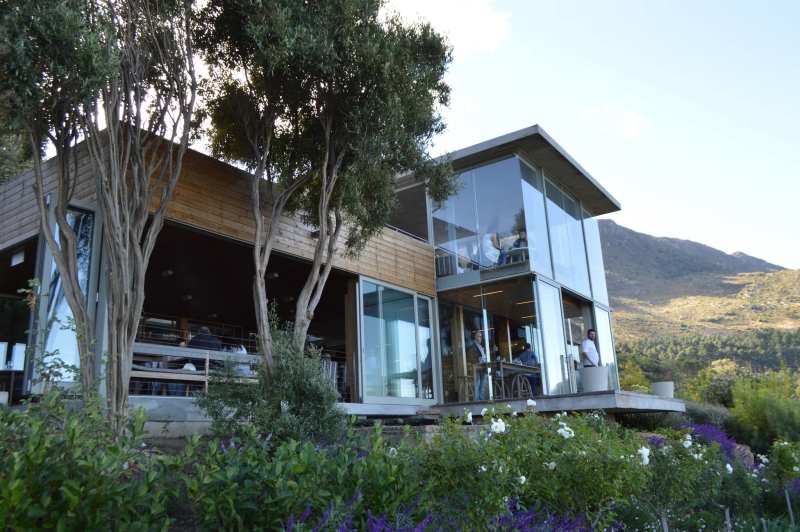
Up at Constantia Nek, Beau Constantia plants some of the steepest vineyards in the Cape and pours them in a glass-walled tasting room with False Bay below. Next door, Silvermist is an organic estate that hosts La Colombe, rated three stars in Eat Out's 2026 list.
Everything about tasting in the valley, from picnic lawns to the drive order, is laid out in the Constantia wine farms, from Groot Constantia to Silvermist.
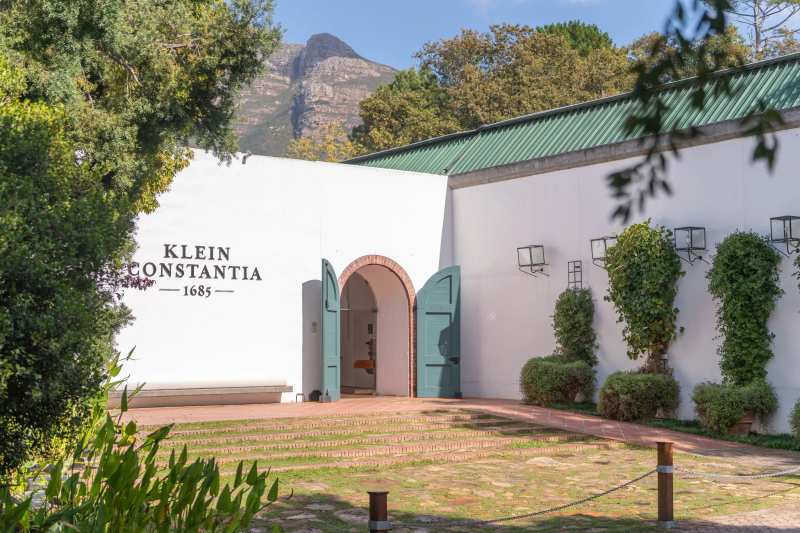
Two more Constantia farms round out a first visit. Buitenverwachting, whose name means something like beyond expectation in Afrikaans, was part of Van der Stel's original estate; in summer people order a bottle and a picnic and settle on the lawn under the oaks. Further up the same road, Klein Constantia is the other half of the old Constantia story.
At the Tokai end of the valley, Steenberg is a polished, modern tasting room on one of the Cape's oldest farms. Between them, these farms cover the range: history, views, a lawn picnic and a serious tasting, all within a short drive of each other and of the city.
Durbanville: Sauvignon Blanc on the Tygerberg Hills
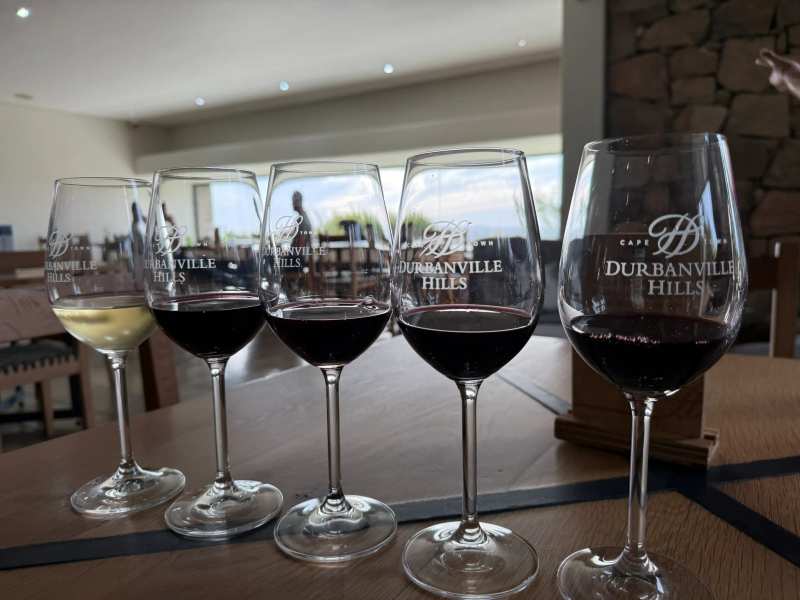
North of the city, around 23 km from the centre, the suburbs give way to the Tygerberg Hills and a cluster of about a dozen wine farms. The local association calls it Sauvignon Blanc country, and the cool Atlantic air that blows in off the west coast is the reason. The other reason to come is the view: from several farms you look straight back across the vineyards at Table Mountain.
For the classic Table Mountain photograph with a glass in hand, De Grendel is the farm people name first. Families tend to end up at the farms with proper play areas, which Durbanville's wine farms are known for.
The valley has a family side too. D’Aria has a dedicated play park, CU Kids, alongside three restaurants, and Meerendal, where vines were first planted in 1714, has mountain-bike trails and a busy casual restaurant with a jungle gym on the lawn.
For something quieter, Nitida runs a Sauvignon Blanc sensory tasting among the barrels, which is a good way to understand why this valley is known for that grape. One honest caveat: some older guides still list farms that have since closed, so check that a farm is trading before you drive out.
Durbanville is also the easiest wine valley to combine with the coast. From the western farms it is a short hop down to Bloubergstrand, and a late-afternoon tasting followed by sunset on the beach is a very local way to spend a Saturday.
Stellenbosch: the biggest wine route in the country
Stellenbosch is about 40 km east of the city and is, by a long way, the largest concentration of cellars you can visit. The Stellenbosch Wine Route was the country's first, founded in 1971, and today counts roughly 150 cellars. Since 2002 it has been divided into five sub-routes that radiate out of the university town like wedges: Greater Simonsberg to the north, Stellenbosch Berg in the mountains behind town, Stellenbosch Valley to the south-west, Bottelary Hills to the west and the Helderberg to the south.
That structure matters when you plan, because the farms on one road can feel like a different region from the farms on the next. Planning a day around one Stellenbosch sub-route is the most useful thing you can do before you set off.
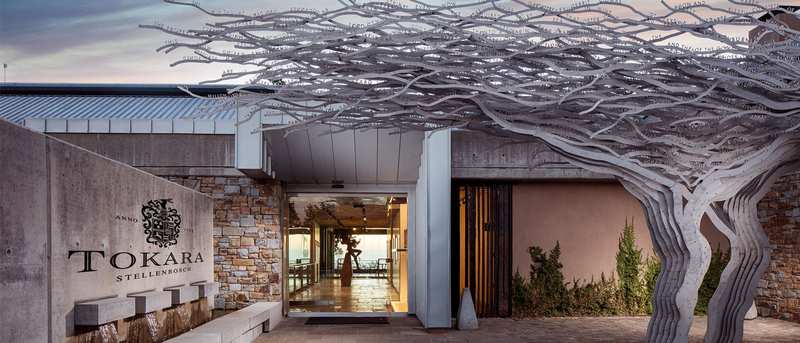
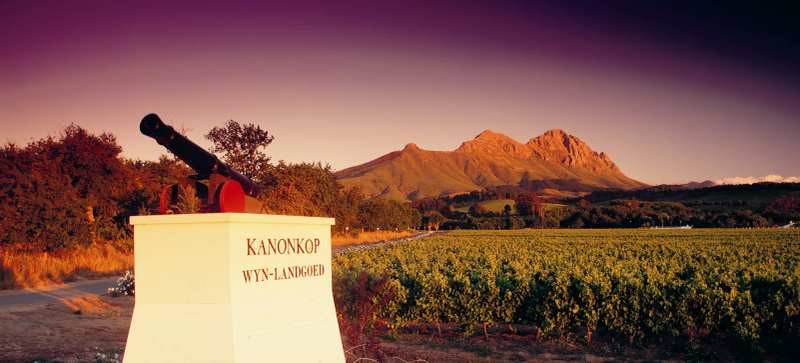
Three farms show the range. Tokara sits high on the Helshoogte Pass with a view over the whole valley to False Bay and a restaurant to match. Kanonkop, on the R44 under the Simonsberg, is the name South Africans associate with serious red wine. Spier, on the far side of town, is the one that does a bit of everything, with lawns, food and a long history going back to 1692.
Twenty-odd Stellenbosch farms, grouped road by road, are in the Stellenbosch wine farms along the R44 and Helshoogte Pass.
If lunch is the point of the day, the wine farm restaurants in Stellenbosch run from deli counters to tables on Eat Out's star list.
A few more names come up again and again. Rust en Vrede, on Annandale Road, is known for its Cabernet Sauvignon and its dinner-only restaurant, starred in Eat Out's 2026 awards. Delaire Graff, near the top of the Helshoogte Pass, has some of the best mountain views in the district.
On the western side of town, Jordan has an Eat Out-starred restaurant of its own, and Warwick on the R44 is a favourite for booked picnics on the lawn.
Families with young children often head for Neethlingshof, which serves a juice and snack pairing so kids can join the tasting.
Somerset West and the Helderberg
The Helderberg is the southern end of the Stellenbosch route, wrapped around Somerset West about 42 km from the city, with the mountain behind and False Bay in front. The town itself was founded in 1822 on part of a single historic farm, Vergelegen, which had been split into four: Vergelegen, Lourensford, Morgenster and Cloetenburg.
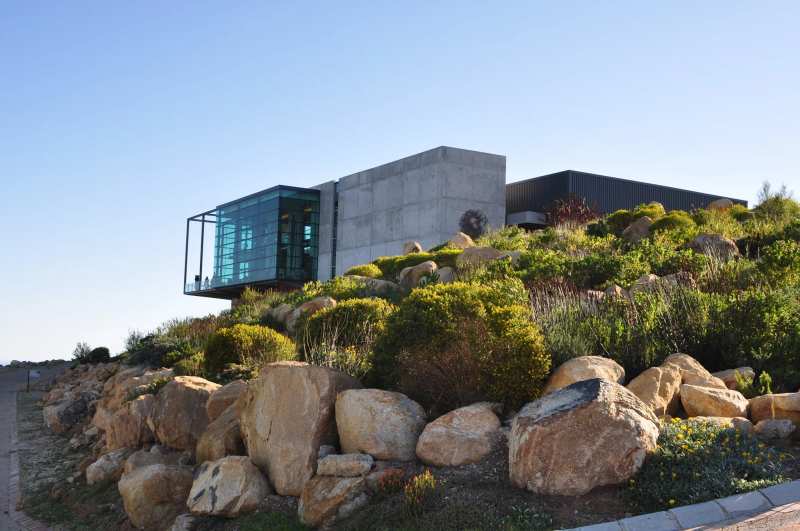
Up the hill, Waterkloof looks out over False Bay from a glass-fronted building whose restaurant, Chorus, holds an Eat Out star. On the R44 toward Stellenbosch, Cavalli pairs a star-rated restaurant with fynbos gardens.
The whole cluster is mapped in the Helderberg wine farms around Somerset West.
Lourensford Road is the spine of the area. Morgenster, another piece of the original Vergelegen farm, makes both wine and olive oil. Closer to the coast at the Faure end, Vergenoegd Löw is famous for a duck parade, with a flock that patrols the vineyards for pests.
Between Somerset West and Stellenbosch on the R44, Longridge and Uva Mira sit on the Helderberg's lower slopes; Uva Mira's tasting room is one of the highest in the area. Most visitors combine two or three Helderberg farms with lunch rather than trying to do the whole route.
The Helderberg is also the wine region closest to the False Bay beaches at Strand and Gordon's Bay, so it suits a day that starts in the vineyards and ends at the sea. On a hot summer afternoon, that is hard to beat.
Franschhoek and Simondium
Franschhoek is the valley people picture when they think of Cape wine country: a single main road, mountains on three sides, and around 40 farms between the village and the Simondium end of the R45. French Huguenot refugees settled here from 1688, which is why so many farms carry French names. It sits about 64 km east of the city, and it rewards staying the night.
Across the R45 in Simondium, Babylonstoren is known first for its garden and second for its wine, and gets crowded enough at weekends that an early start pays off.
The valley's own hop-on hop-off service, the Franschhoek Wine Tram, solves the driving problem; choosing a Wine Tram line comes down to which end of the valley you want to see.
The farms themselves, from the village to Simondium, are in Franschhoek's wine farms.
Back toward the village, Haute Cabrière is built into the hillside below the Franschhoek Pass and specialises in Chardonnay and Pinot Noir, with what many people consider the best view of the valley from its terrace. Note that it is cashless.
In the middle of the valley, Leopard’s Leap is a large, easy-going farm with a play area, and Grande Provence combines a tasting room with an art gallery.
At Anthonij Rupert on the R45, the Franschhoek Motor Museum on the same estate is a good reason for non-drinkers to come along.
Paarl and Wellington
Paarl, about 54 km north-east of the city, takes its name from the granite domes on the mountain above town that shine like a pearl after rain. It gets fewer overseas visitors than Stellenbosch or Franschhoek, which is a large part of its appeal. Wellington, a little further north, is quieter again.
Under Paarl Mountain, Laborie is a town-edge estate with a play area and a restaurant.
In Wellington, Diemersfontein is a relaxed country estate, and the Bosman family has farmed outside the town for eight generations. The roads, the clusters and the farms to book are in Paarl's wine farms.
Paarl's other big draw is Spice Route on the Suid-Agter-Paarl Road, a collection of tastings and eateries in one place: wine, craft beer, chocolate, a distillery and pizza, with hiking and biking trails behind it. North of town, Rhebokskloof has a big dam, mountain-bike routes and lawns for a long lunch.
At the edge of town, Nederburg serves breakfast and lunch in its Manor House, a Cape Dutch homestead built in 1800 and now a national monument. And in Klapmuts, between Paarl and Stellenbosch, Glen Carlou is known for its contemporary architecture and art gallery.
Hermanus and the Hemel-en-Aarde Valley
Behind the whale-watching town of Hermanus, about 93 km south-east of Cape Town, the R320 climbs into the Hemel-en-Aarde Valley. The name means heaven and earth. Somewhere between 15 and 18 farms line roughly 20 km of road, and the cool ocean air makes this one of the best places in the country for Pinot Noir and Chardonnay.
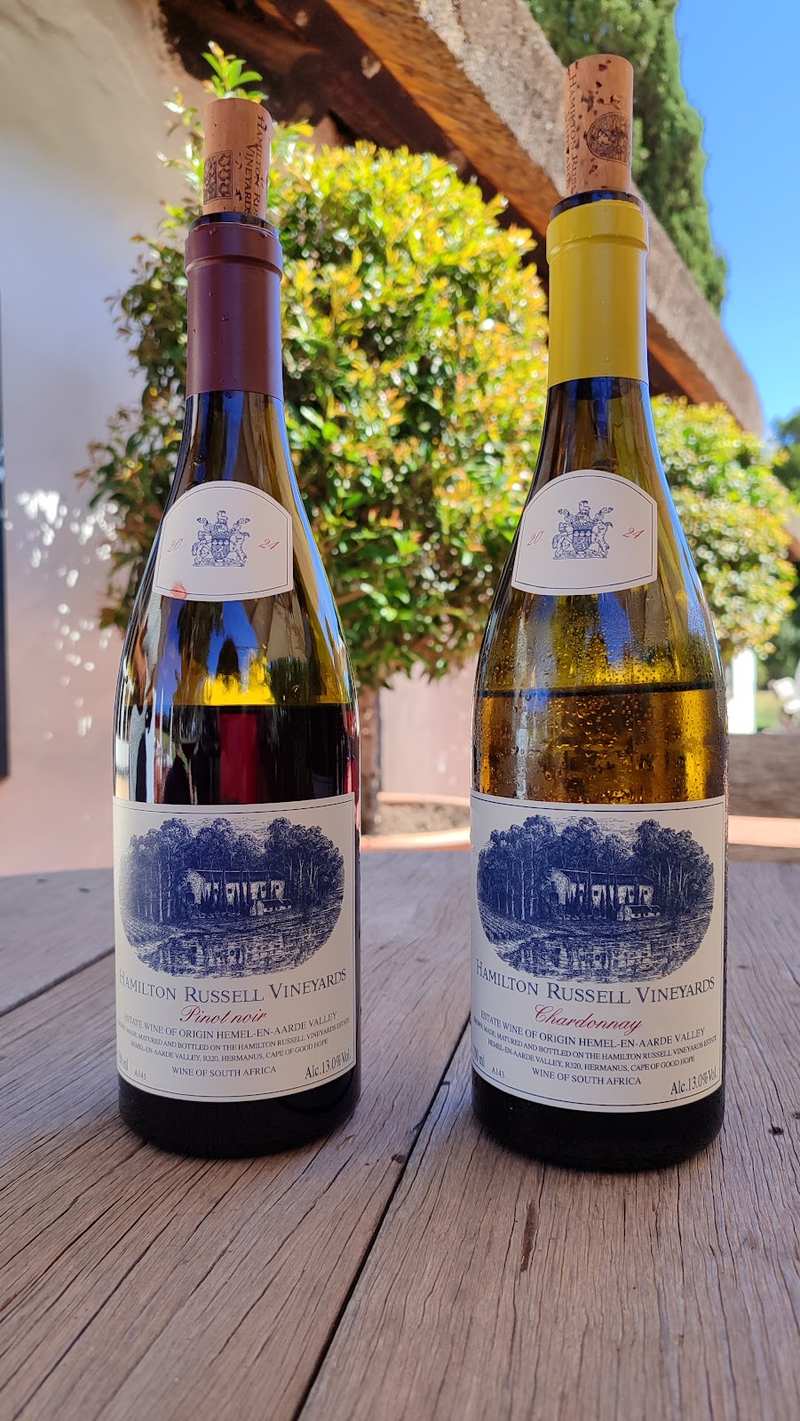
Lower down the valley, Hamilton Russell is the estate whose Pinot Noir and Chardonnay put the area on the map.
One change worth knowing: Bouchard Finlayson's valley estate is closed for redevelopment, and its tastings have moved to a pop-up tasting room at the Harbour Square Hotel in town. How to pair a tasting day with whale season is in the Hemel-en-Aarde Valley's wine farms.
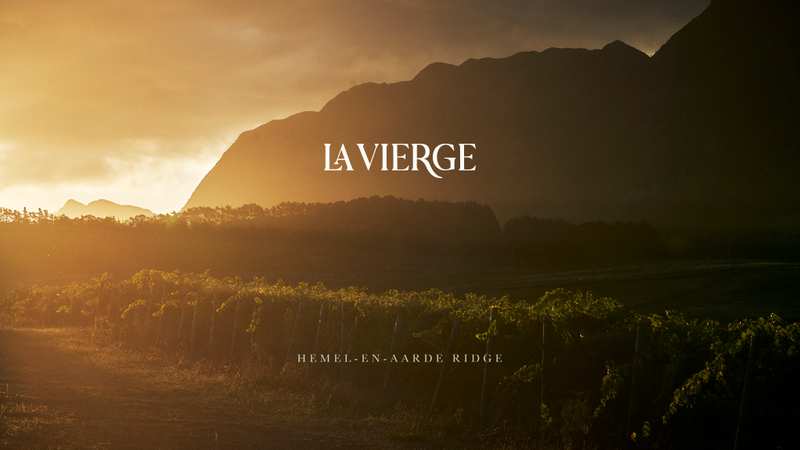
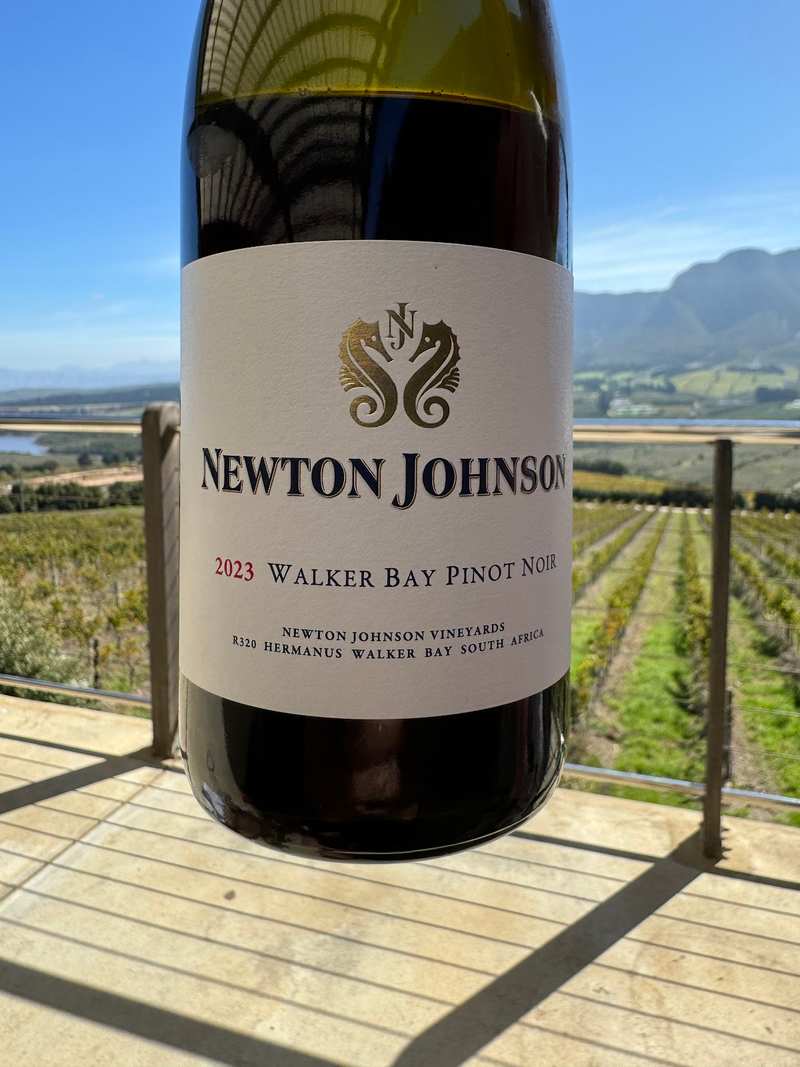
Hermanuspietersfontein, the first farm off the main road, is named after Hermanus Pieters, one of the founders of the town. Further up, Newton Johnson and La Vierge both focus on cool-climate Pinot Noir and Chardonnay, and La Vierge pairs its tasting room with a restaurant.
East along the coast road, Stanford has two more farms worth the detour, including Stanford Hills with its dam and walking trails. On the way from Cape Town you pass through Elgin, where Paul Clüver makes cool-climate wines in apple-orchard country.
Robertson and Route 62
Robertson is the furthest region here, about 136 km east of the city in the Breede River valley between the Langeberg and Riviersonderend mountains. Locals call it the Valley of Wine and Roses. Over 40 farms spread along Route 62 and the river through Robertson, Ashton, Bonnievale, McGregor and Montagu, and tastings here are noticeably less crowded than closer to the city.
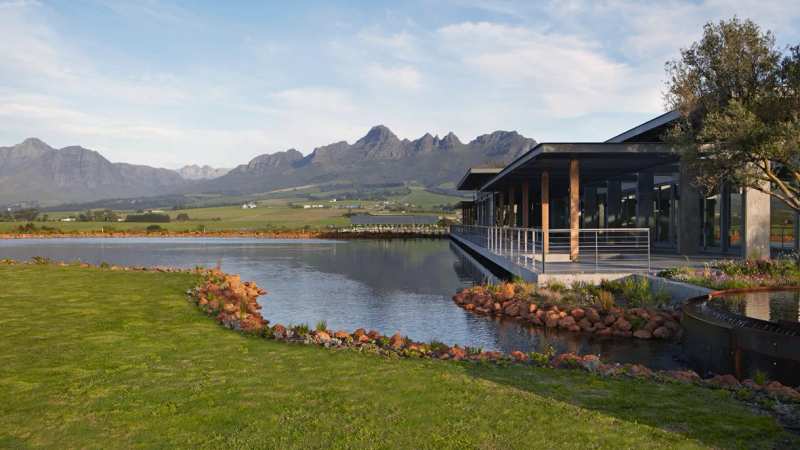
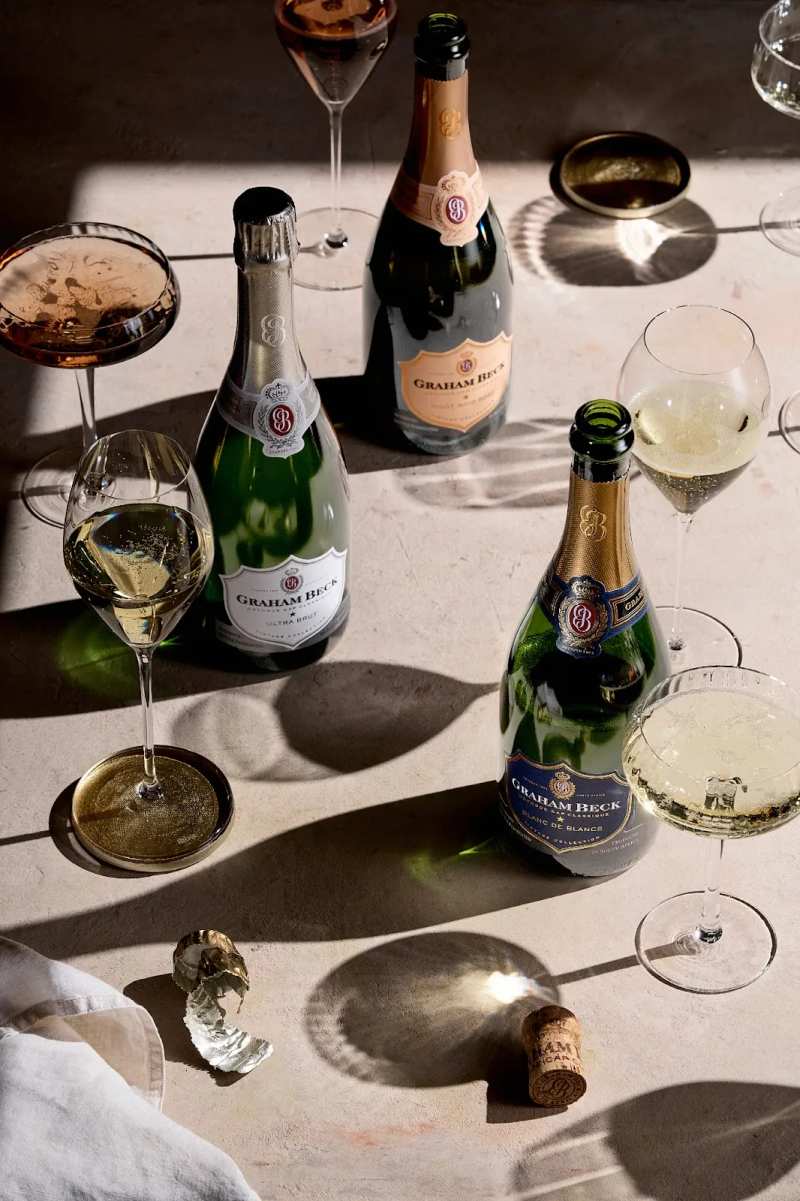
Nearby, Springfield has been making wine since 1995 and is a favourite with people who know the valley. The two big events are the Wacky Wine Weekend and Hands-on Harvest in February. Everything from Graham Beck to Weltevrede at Bonnievale is in the Robertson valley's wine farms.
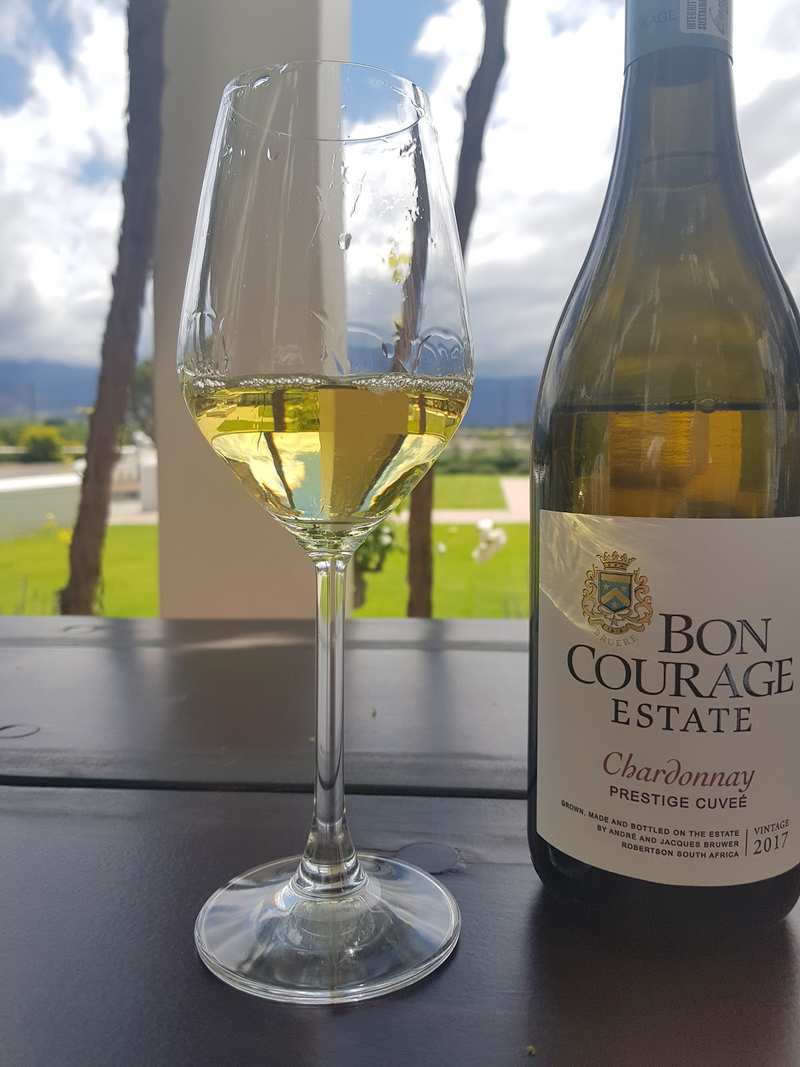
Around Robertson itself, Bon Courage has a Cape Dutch homestead dating from 1818, and Van Loveren is a large family farm with gardens.
Downstream at Ashton, Excelsior lets you blend and label your own bottle, and its restaurant overlooks a dam.
The distance is the reason to stay over. Robertson is too far for a comfortable day trip with tastings, and the valley's guest farms and small hotels make a weekend of it easy.
Choosing a region for your day
If you have one afternoon and no car, go to Constantia; it is closest and the hop-on bus reaches it. If you want the classic view of Table Mountain over the vines, Durbanville is the answer. For the widest choice of farms and food, base yourself in Stellenbosch. For a single beautiful valley that you can cover by tram, choose Franschhoek.
If you are travelling with young children, Durbanville and Paarl have the most farms built around play areas. For quiet tastings and cooler-climate wines, the Hemel-en-Aarde Valley is the pick, and it pairs naturally with whale season in Hermanus. And if you want to feel far from the city, Robertson is the region that delivers it.
How a tasting works
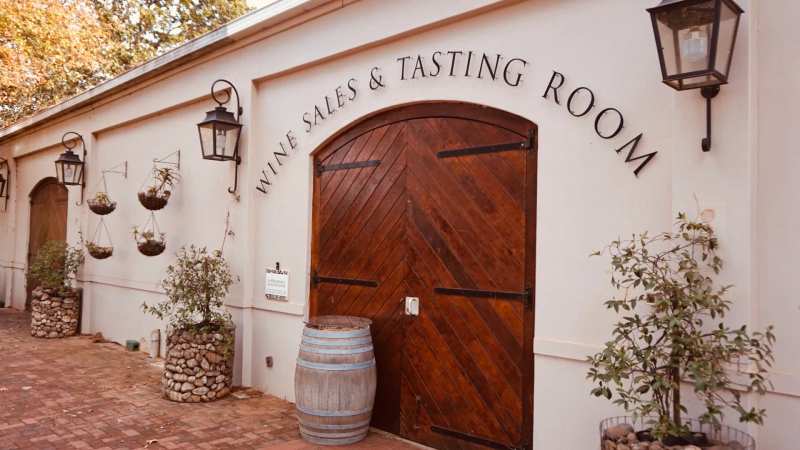
At most farms you walk up to the tasting room, choose a tasting from a short menu and pay per person at the counter. A standard tasting is a handful of wines; premium tastings and food pairings such as cheese, chocolate or charcuterie cost more. Many couples share one tasting, and few farms mind. Some farms waive the tasting fee if you buy wine, so it is worth asking.
Tasting rooms generally open in the morning and close in the late afternoon, with shorter hours on Sundays and some farms closed on Mondays. Opening times change through the year, so check each farm's listing before you go.
What each region pours
The regions taste different, and knowing roughly what each does best helps you choose. Constantia's cool, ocean-facing slopes are known for Bordeaux-style red blends, Sauvignon Blanc and a historic sweet wine made from Muscat grapes. Durbanville leans hard into Sauvignon Blanc, with Pinotage and red blends behind it.
Stellenbosch is red wine country first: Cabernet Sauvignon and Bordeaux-style blends, especially on the Simonsberg slopes north of town, with Pinotage, the Cape's own grape, strong on the Bottelary Hills. Franschhoek is known for Shiraz and Cabernet Sauvignon and for Cap Classique, the Cape's bottle-fermented sparkling wine, usually shortened to MCC.
Paarl does well with Chenin Blanc and Chardonnay among the whites and Shiraz, Cabernet Sauvignon and Pinotage among the reds. The Hemel-en-Aarde Valley is all about Pinot Noir and Chardonnay. Robertson, warm by day and cooled at night, built its name on Chardonnay and has become one of the best places in the country for sparkling wine.
If you only have time for one region, pick by the style you drink most at home. If you have two days, pair a red-wine valley with a white-wine one; Stellenbosch and Durbanville, or Franschhoek and the Hemel-en-Aarde, make good contrasts.
How to visit without driving
The simplest answer is a tour. Operators such as Wine Flies collect from Cape Town and handle the driving to Stellenbosch, Franschhoek or Paarl; check whether tasting fees are included before you book, because with some operators they are paid on the day. Inside the valleys, the Franschhoek Wine Tram is the best-known hop-on hop-off option, and Stellenbosch has its own tractor rides, guided walks and Segway tours.
If you would rather not leave the city at all, the two metro valleys and a pair of city wine bars make a full day of wine tasting inside Cape Town.
When to go
The vineyards are at their busiest and most beautiful from February to May. The harvest runs from February into March, the weather stays warm without the full heat of midsummer, and many farms host harvest events. Winter, from June to August, is wetter and quieter, and plenty of tasting rooms light fires. Weekdays are calmer than weekends all year round.
If you are travelling with children, plan around family-friendly wine farms, where play areas and kids' tastings decide the route.
History lovers can build a whole day around the oldest wine farms, most of which still pour wine in buildings from the 1600s and 1700s.
Frequently asked questions
Published June 22, 2026