The open-sided tram rolls out between the vines, and for the rest of the day nobody in your group has to drive. That is the whole appeal of the Franschhoek Wine Tram, and it is why choosing between the Franschhoek wine tram routes matters more than people expect: the line you pick decides which end of the valley you see, how often you are collected, and how relaxed the day feels.
The lines change. They are added, dropped, renamed and re-routed from season to season, so any list of stops goes out of date quickly, and published guides disagree on how many lines there even are. This guide does not try to list them. Instead it explains how the tram works and how to choose a line by what you want from the day, so that whatever is running when you book, you can pick well.
How the tram works
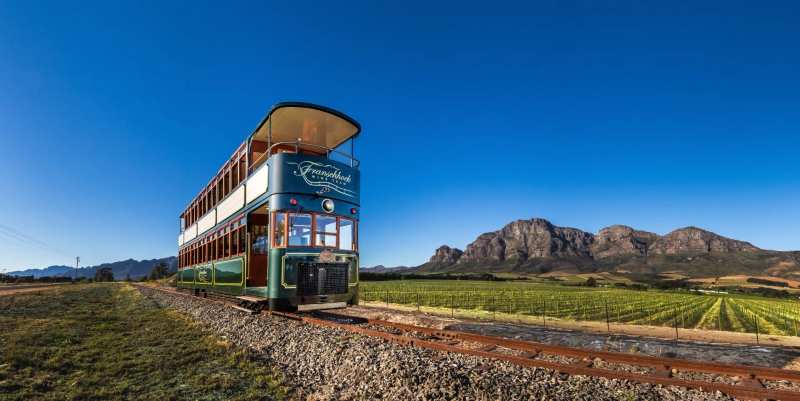
The tram itself is the smaller part of the ride. It runs on a stretch of old railway line through the vineyards, track that dates back to the early 1900s and once carried farm produce. The line lay unused for more than a decade before it was brought back into service for the wine tram in 2012, first with a single-decker tram modelled on 19th-century designs and later with a double-decker. Most farms are not on the railway, so every line combines a section on the tram with longer stretches on open-air tram-buses.
You start at one of the terminals, collect a timetable and a list of the farms on your line, and set off. Collections come round on a schedule, roughly every half hour to every hour depending on the line, so you decide how long to stay at each farm. Most people end the day back at the terminal they started from; if you want to stay on at a farm after the last collection, you arrange your own transport home.
The ticket covers the ride only. Tastings, food and anything you buy at the farms are paid separately at each stop, and if you buy wine, you can usually leave it with the crew and collect it at the end of the day rather than carrying it from farm to farm.
You cannot join a line halfway round. Everyone boards at a terminal, so plan to arrive with time to spare; guides suggest checking in about 15 minutes before your departure.
Choose a line by what you want
The lines differ by which part of the valley they cover, not by quality. Franschhoek's farms stretch about 20 km along the R45, from the village under the mountains down to the Groot Drakenstein and Simondium end, and each line works one part of that stretch. Pick the part of the valley first and the line follows.
For the village end and mountain views
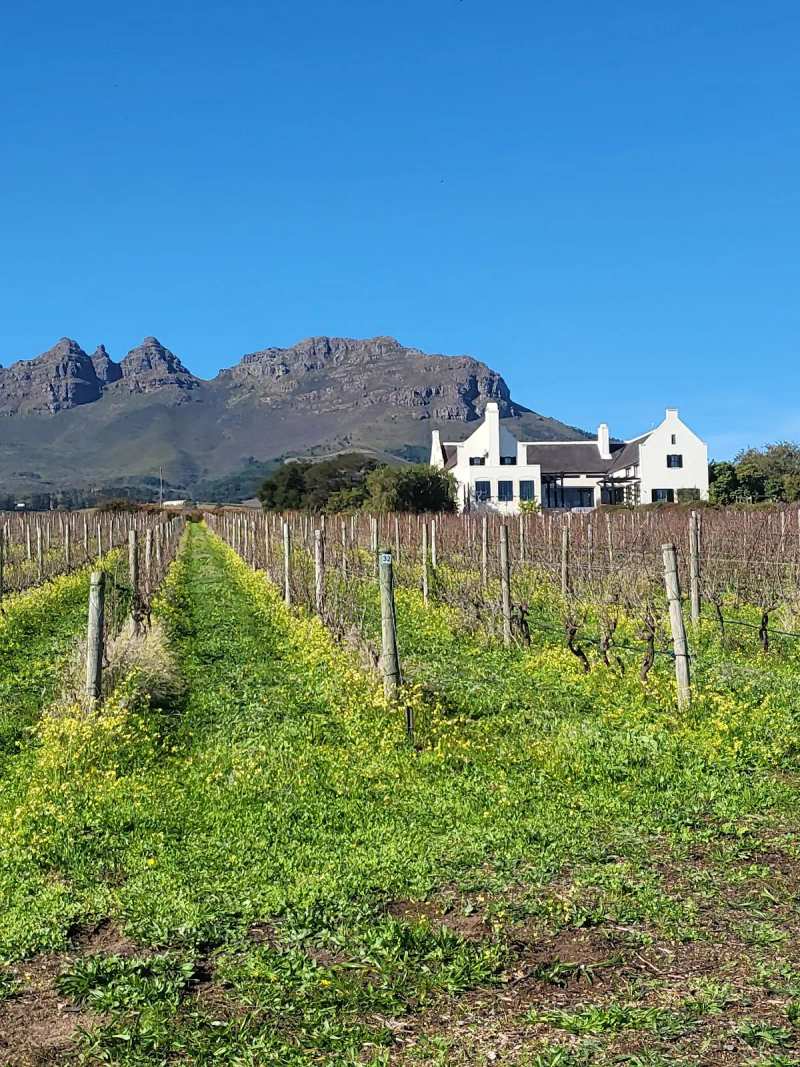
Lines that start from the Franschhoek terminal and stay near the village visit the farms closest to the mountains. These include smaller, family-run cellars such as La Bri, known for its chocolate pairings, and Holden Manz on the slopes south of the village.
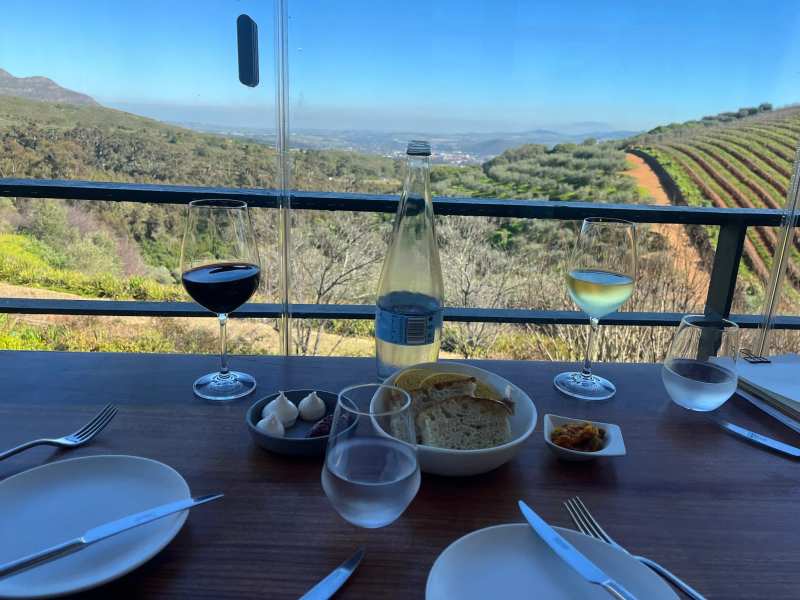
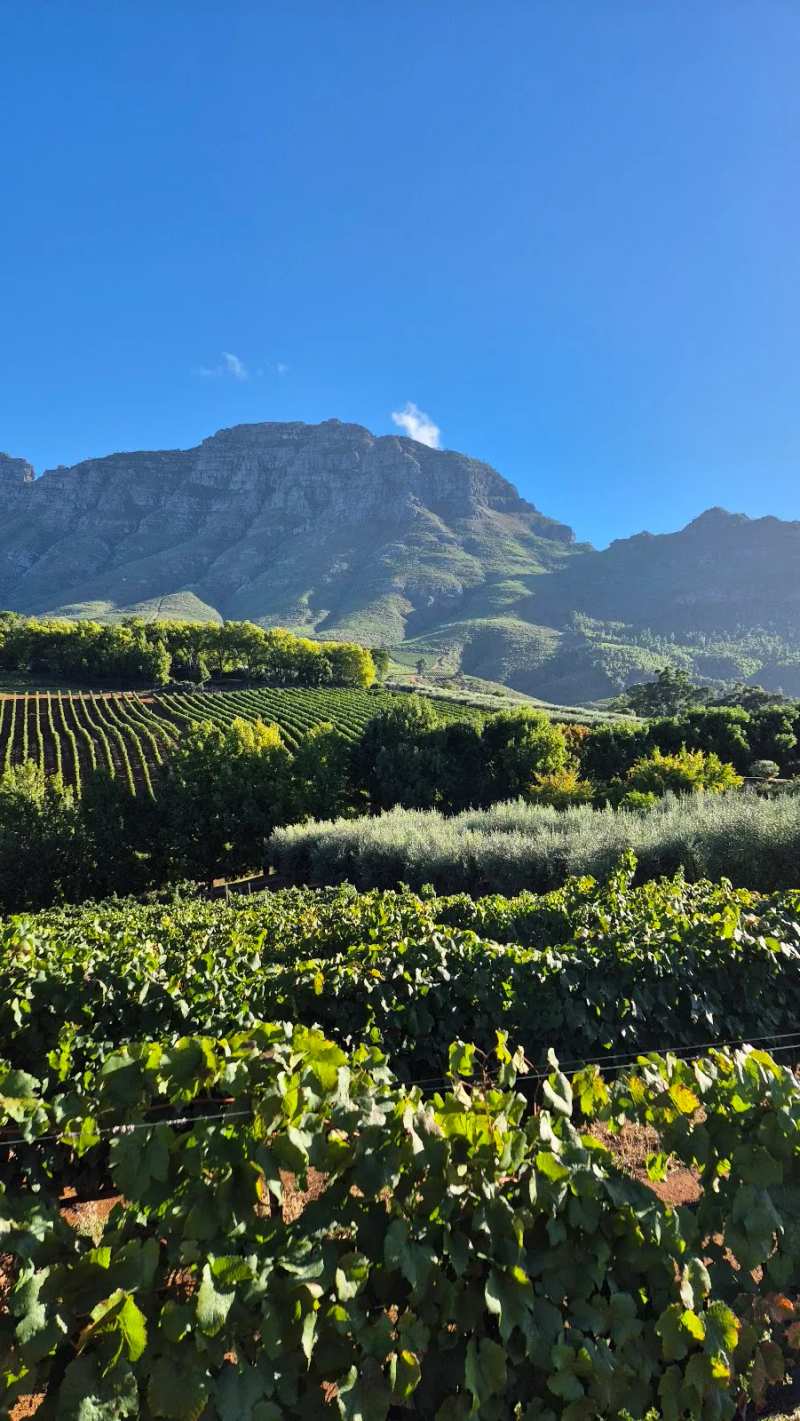
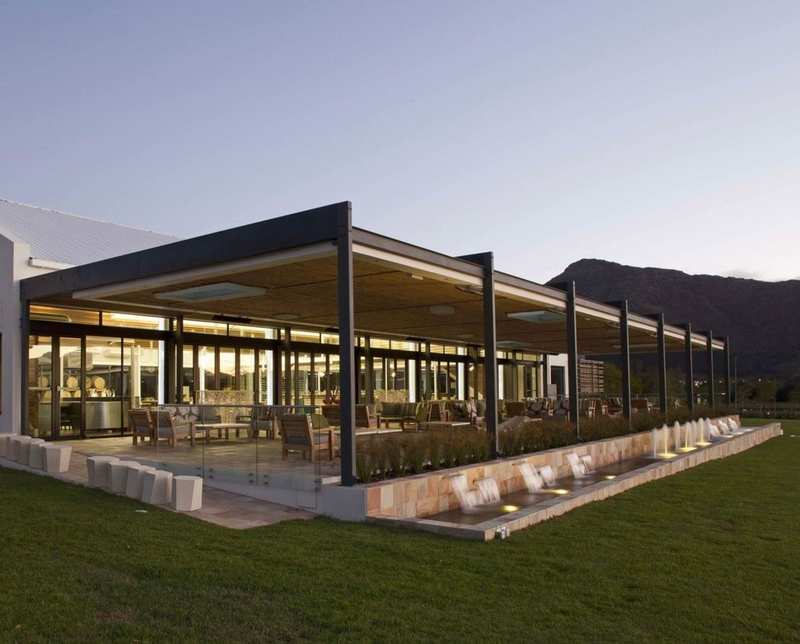
On the east side of the village, near the start of the Franschhoek Pass, the terraces at Haute Cabrière’s cellar and Chamonix look back across the valley. Choose this end if you want the dramatic mountain backdrop and a quieter, more boutique feel.
For the middle of the valley
Many lines share a core of farms in the middle of the valley, where the tram section runs. Rickety Bridge has one of the tram platforms and is one of the valley's original Huguenot-era farms. Grande Provence’s tasting room sits at the other platform, with an art gallery, a restaurant and a large estate to wander.
Close by, Franschhoek Cellar offers cheese and chocolate pairings and a supervised playground, which makes it a useful stop with children. Because these farms appear on so many lines, they are easy to fit into almost any day.
For the big estates at the Simondium end
Lines that run from the Groot Drakenstein terminal head the other way, toward the big estates at the foot of the Simonsberg. These are the lines to choose if you want the Boschendal estate, one of the oldest farms in the area, with tastings under the oaks and picnics on the lawns.
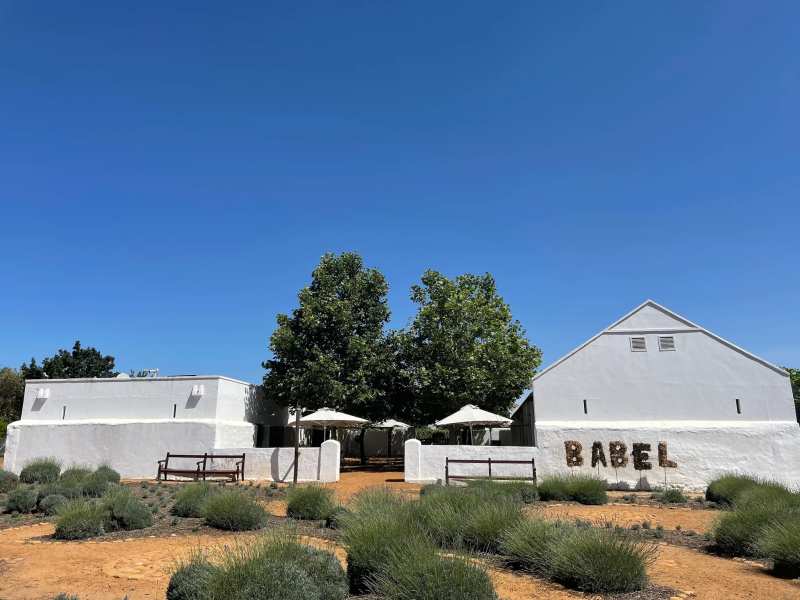
The same end of the valley reaches the Simondium farms on the Paarl side, including Babylonstoren's famous garden and smaller farms such as the Noble Hill estate. Expect longer gaps between collections here, often about an hour, which suits a slower day with fewer, longer stops.
For a short day
If you only have a morning or an afternoon, choose a line with frequent collections, every half hour or so, and plan on two or three farms. The middle-valley farms near the tram platforms are the easiest to combine in a short window, since you spend less time on the bus between them.
More than wine
The farms along the lines offer more than tastings. Depending on the line, you can book cellar tours, cheese, chocolate and charcuterie pairings, picnics on the lawns, and at some farms carriage rides through the vineyards or art galleries to wander between glasses. Several have spas and shops, and a few serve breakfast for early starters.
That variety is what makes the tram work for mixed groups. A non-drinker can spend the day in gardens and galleries while the rest of the group tastes, and everyone meets again on the next collection.
How many stops to plan
Each line passes about eight farms. Four stops is a full, comfortable day, and three is better if you want a long lunch. People who try to hit every farm on their line spend the day watching the timetable rather than enjoying the wine.
Book lunch before you go. The tastings rarely need a booking, though some farms ask for one for groups of eight or more or for food pairings, but the farm restaurants on popular lines fill up, especially on summer weekends. Pick your lunch stop first and plan the morning and afternoon around it.
Know your last collection. The tram runs to time, and missing a pick-up can cost you up to an hour. Note the time of the last ride back to the terminal before you get comfortable at your final farm.
A sample day on the tram
A good day on the tram has a simple shape. Take an early departure, when the buses are quieter and the light over the vineyards is soft. Spend the first hour at a farm with a view and a straightforward tasting, then move on for a second tasting before lunch.
Book lunch for about half past twelve at a farm on your line with a restaurant, and give it a full hour and a half. After lunch, one more stop is usually plenty: choose somewhere with a garden, a lawn or a terrace where you can sit with a last glass rather than a formal tasting.
Catch a collection well before the last one of the day. The final ride back to the terminal is the busiest, and arriving with time to spare means you can collect any wine you bought and get to your car or transfer without a rush.
What to bring
The tram and buses are open-sided, so dress for the weather. In summer, bring a hat, sunscreen and water, because many stops are on open lawns and the afternoon heat in the valley is strong. In winter and on cool evenings, bring a warm layer on a mild morning too; the crew hands out blankets, but a jacket is more comfortable.
Wear comfortable shoes. You will walk from the stops to the tasting rooms, across lawns and gardens, and sometimes along gravel paths. And keep your timetable somewhere easy to reach, because you will check it more often than you expect.
Riding with children
Children are welcome on every line and pay a child fare. The open-sided tram and the buses are an adventure in themselves, so the travelling part of the day tends to go down well.
Choose farms with something for children to do. Franschhoek Cellar's supervised playground and the play area at Leopard's Leap are the obvious stops, and several farms offer juice or non-alcoholic tastings so children can take part.
When to go and how to book
The tram runs all year, closing only on a few days around Christmas and New Year. Summer, from December to February, is the busiest season, when lines sell out and the buses are full; book well ahead and take the first departure of the day to beat the crowds.
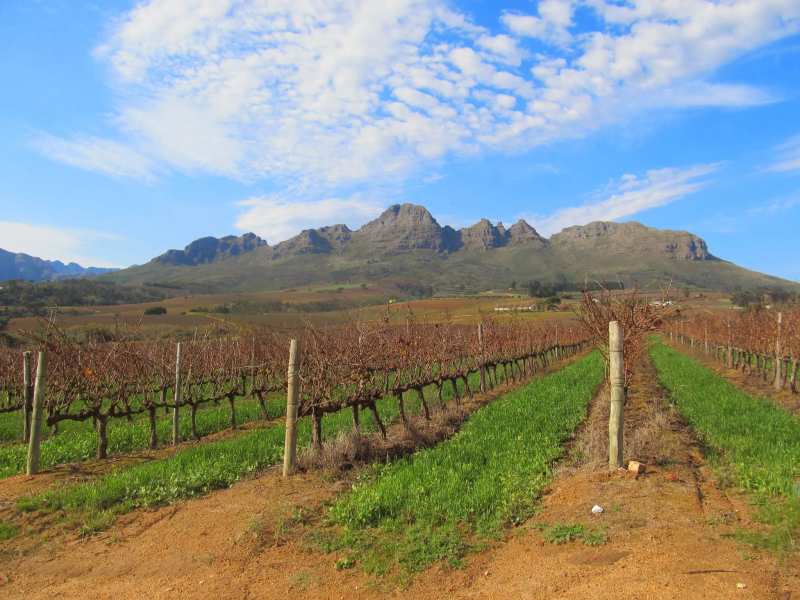
Autumn, from March to May, is the best time to ride. The harvest is in, the vineyards turn gold and red, and the weather is still warm. Weekdays are noticeably quieter than weekends, though not every line runs every day of the week.
Rain rarely stops the tram. The tram and buses are covered but open-sided, blankets are handed out on cold days, and only very heavy weather leads to cancellations. If the forecast is bad, call ahead.
Getting to the terminal
The tram does not collect you from Cape Town, which is about 64 km away in a straight line. You can drive to Franschhoek and leave the car for the day, book a transfer, or join one of the packaged trips that include a return shuttle from the city.
If you drive, agree in advance that the driver is not tasting, or book a night in Franschhoek so nobody has to get behind the wheel after the last ride. Getting a taxi back to Cape Town in the evening is harder than getting one out in the morning.
Is the wine tram worth it?
Yes, if you want a day of tasting without a designated driver, and you are happy to follow a fixed loop. It is good value compared with a private driver, it is sociable, and the views from the open-sided tram and buses are the best way to see the valley.
It is less suited to people who want small, appointment-only cellars, or who want to move between both ends of the valley in one day, since you stay on one line. For that, a car with a non-drinking driver or a private tour works better.
For the bigger picture of what each farm offers, the tram is only one way to see farms along the whole Franschhoek valley.
And Franschhoek is one of several wine regions an hour or so from Cape Town, each worth a day of its own.
Frequently asked questions
Published July 27, 2026