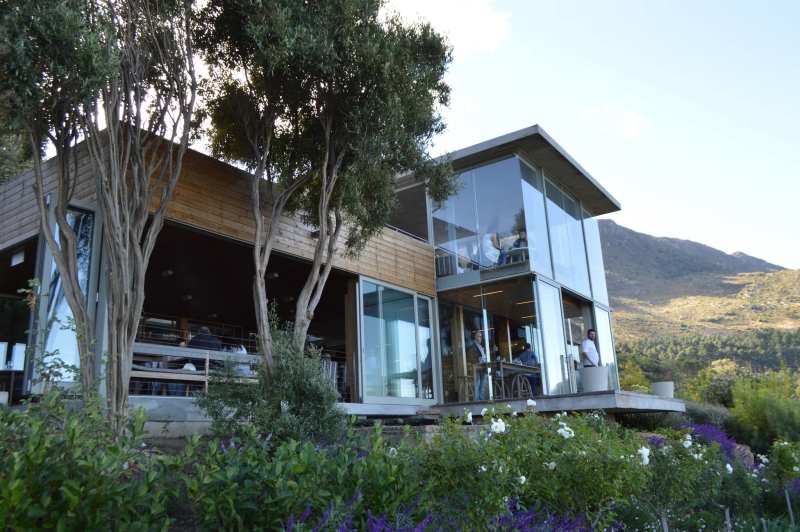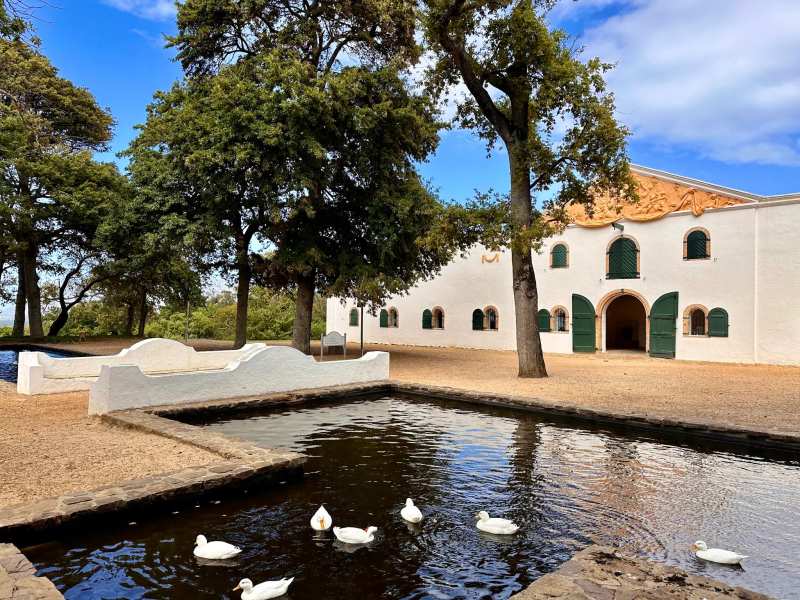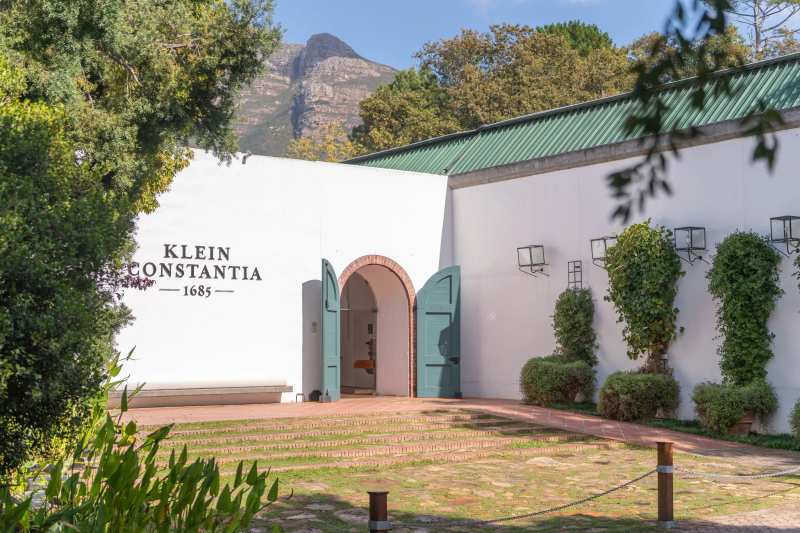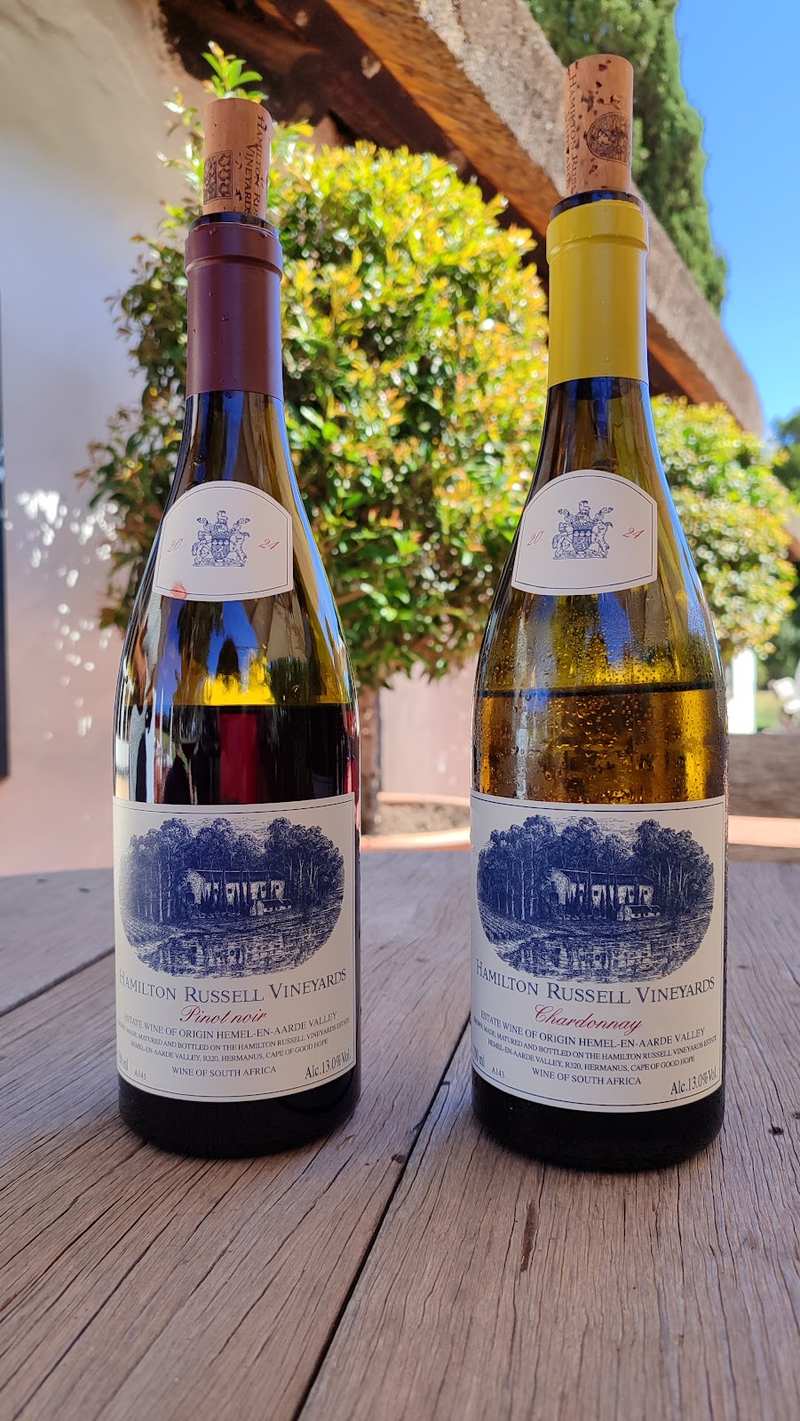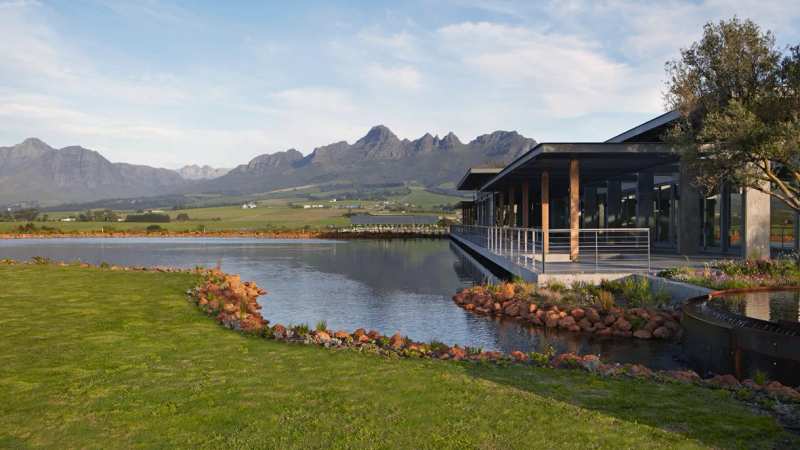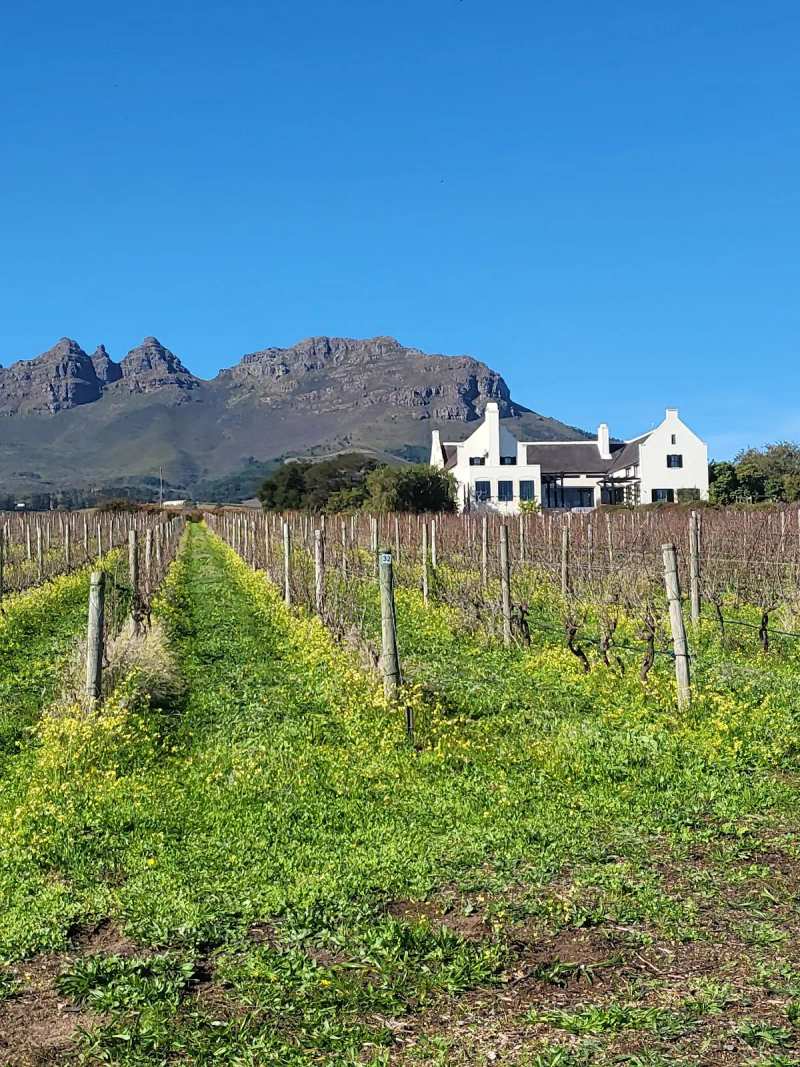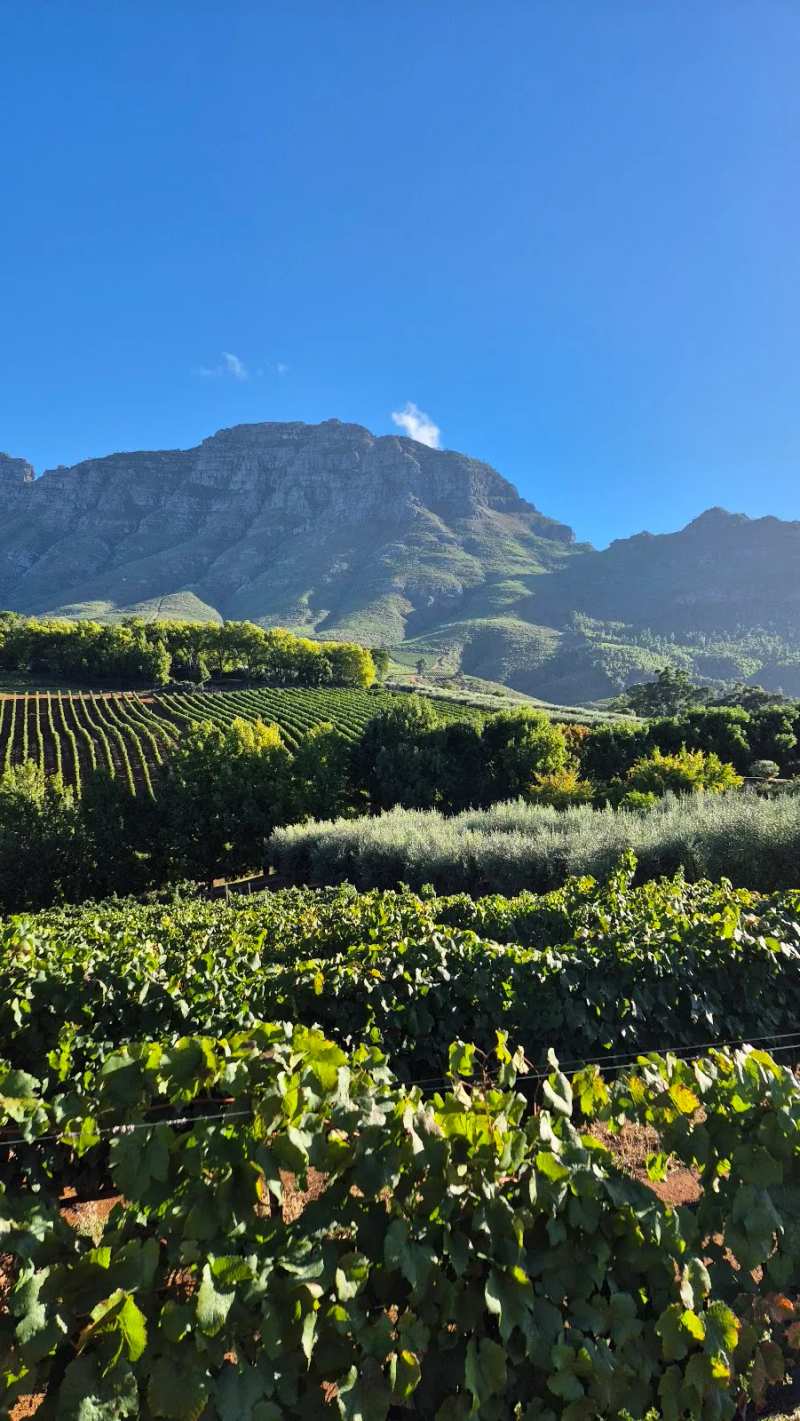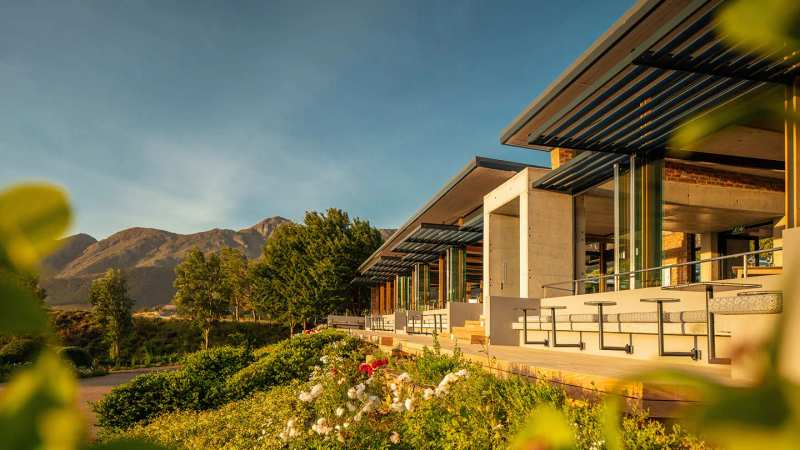
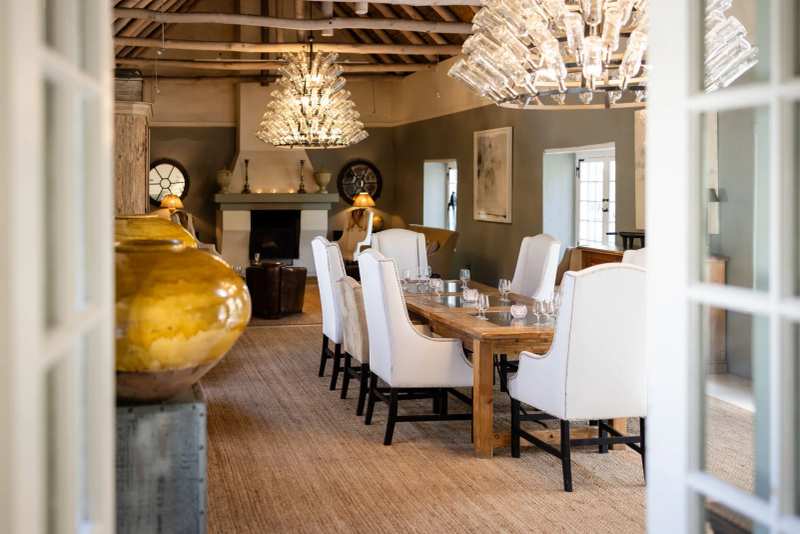
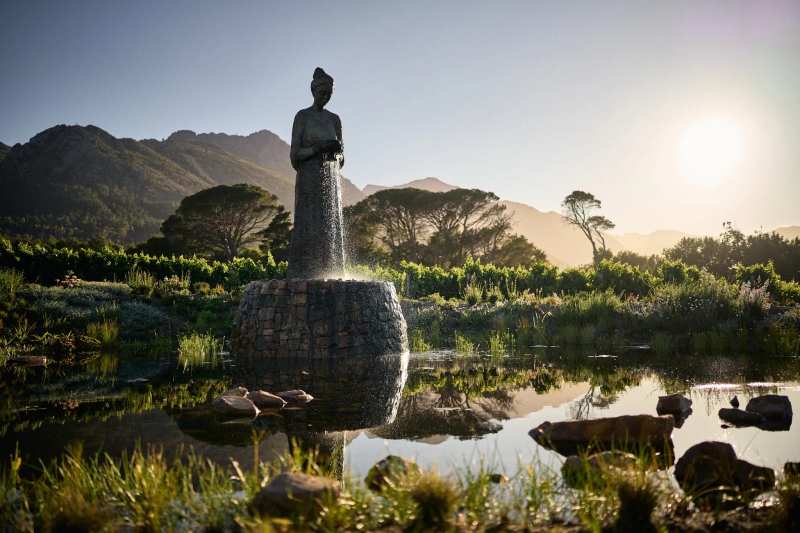
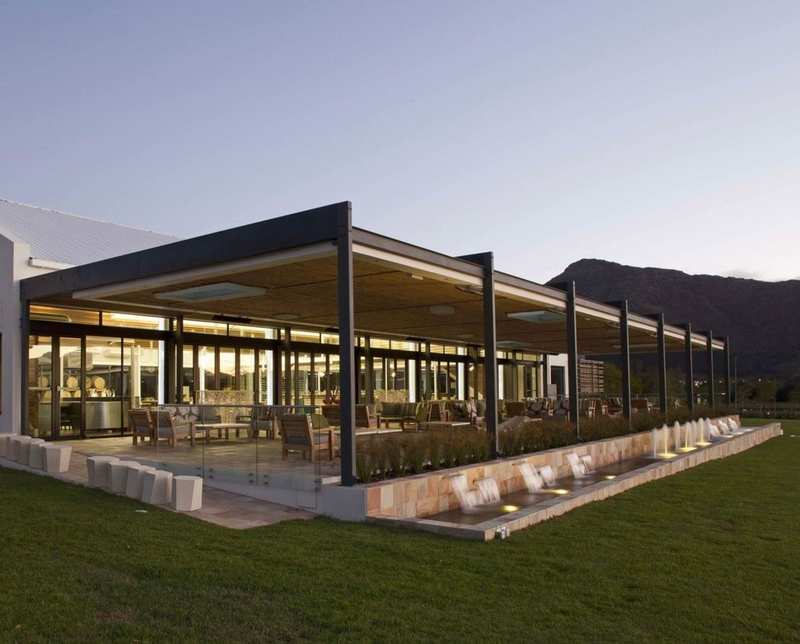
Stand on the terrace at Haute Cabrière at the foot of the Franschhoek Pass and the valley opens out below you: the village roofs, then vineyards running away to the west along one main road. Nearly all the Franschhoek wine farms sit along that line, which makes this the easiest wine valley in the Cape to understand and to plan.
This guide follows the valley in order, from the cellars under the mountains at the village end, down the R45 past the middle farms and the Rupert family estates, to Boschendal and Babylonstoren at the Groot Drakenstein and Simondium end. For each stretch it covers which farms are worth your time, what they pour, which ones have a serious restaurant, and which you can reach on foot or by tram.
How the Franschhoek Valley is laid out
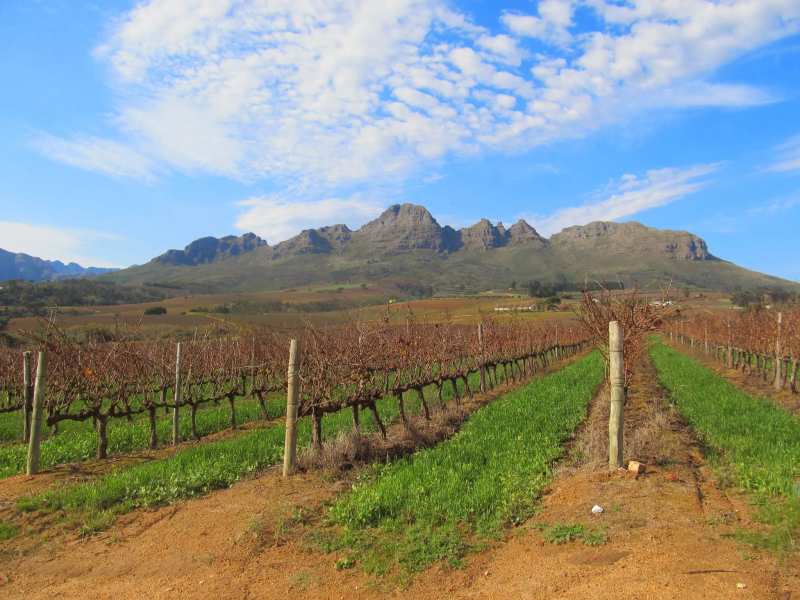
The valley is a long, narrow bowl closed off by mountains on three sides, with the village at its top end and one road, the R45, running down its length. Around 40 wine farms line that road and the lanes off it. The village end sits under the Franschhoek Pass, which climbs east over the mountains; the open end runs about 20 km west and north-west to Groot Drakenstein, where the R310 turns off over the Helshoogte Pass to Stellenbosch, and on to Simondium on the road toward Paarl.
The farms you visit on the same day are rarely far apart. Most of the valley's best-known cellars sit within about 5 km of the village in a straight line, and the big estates at the Simondium end are 14 to 20 km away. That geography is the key to planning: pick a stretch of the road, and the day almost plans itself.
Why the farms have French names
Before it was French it was Olifantshoek, the elephants' corner, named for the herds that once crossed the mountains into the valley. In 1688 Huguenot refugees, French Protestants who had fled persecution at home, began arriving at the Cape, and the Dutch authorities settled many of them here. Farms were granted along the river in the 1690s, and the settlers named them after the places they had left: La Motte, Cabrière, La Provence, La Cotte. By the early 1700s the valley was being called the French corner, which in Dutch became Franschhoek.
Several of those grants are still working wine farms, and a few still use the original names. The Huguenot Memorial Museum at the top of the village tells the story of the refugees, next to the monument at the foot of the pass, and it is a good first stop if you want the history before the tastings. The valley's farms that were granted in the 1680s and 1690s sit among the oldest in the country.
What the valley pours
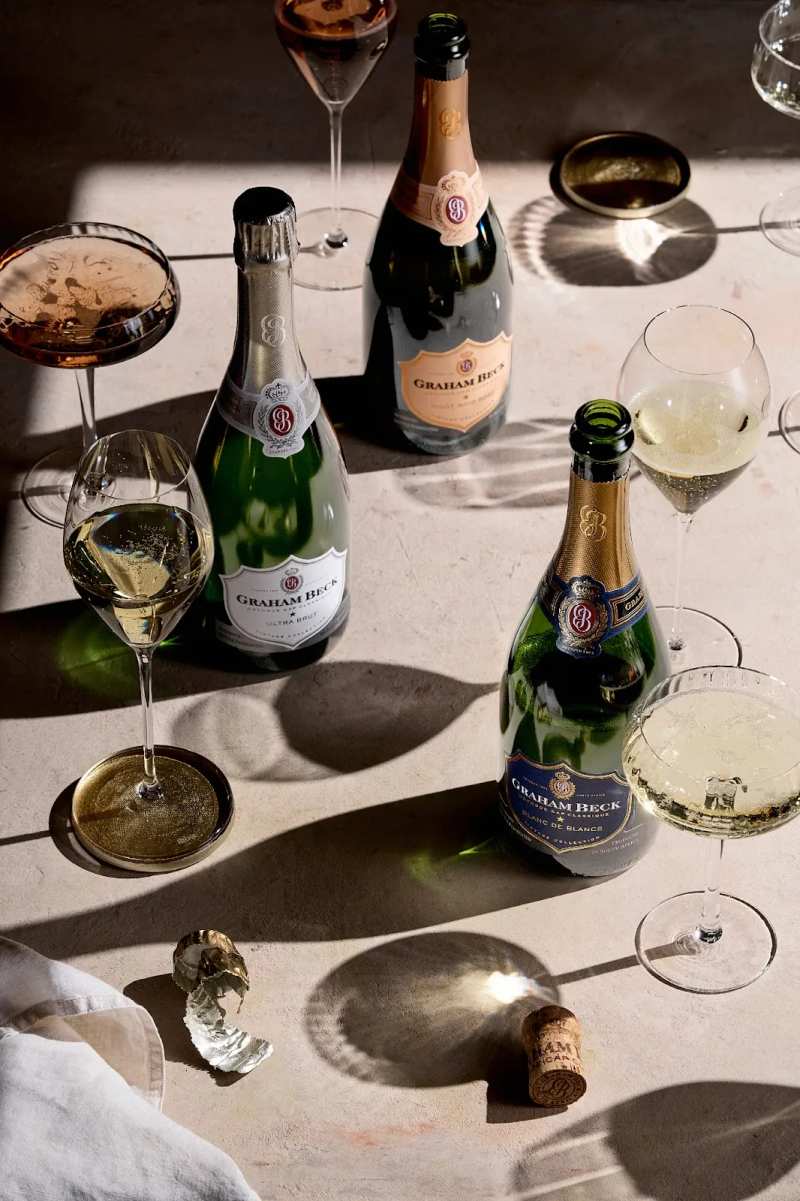
Franschhoek is best known for Cap Classique, South Africa's bottle-fermented sparkling wine made the same way as Champagne, and several of the farms at the village end make little else. Chardonnay and Pinot Noir, the classic grapes for that style, are the speciality of the cellars under the pass. Further down the valley the bigger farms pour the full range of Cape whites and reds, and some, such as Old Road Wine Co., bottle wine from vineyards certified as heritage sites for the age of their vines.
The village end: under the mountains
The farms at the top of the valley are the closest to the village and the most dramatic to visit, with the mountains rising straight up behind the vineyards. Several are within 2 km of the main street, and most are small, family-run cellars rather than big estates.
Just below Haute Cabrière, toward the village, Le Lude makes nothing but Cap Classique, and the cellar tour explains how the bubbles get into the bottle. Its Orangerie restaurant, which serves dishes such as burrata and mushroom tortellini, was among the Franschhoek restaurants starred in Eat Out's 2026 awards.
Uitkyk Street: Chamonix and Dieu Donné
On the north-east side of the village, Uitkyk Street climbs toward the mountains to two farms that sit only about 400 m apart. The Chamonix farm was once part of La Cotte, one of the original Huguenot grants of 1688, and was mostly an export fruit farm until it was replanted with vines in the 1990s. Its tasting room is in a cottage built at the end of the 18th century, where you can taste by the fire; the room itself has little view, so book the underground cellar tour instead.
Higher up the same slope, Dieu Donné’s terrace has one of the best views in the valley, a panorama of the mountains that ring Franschhoek. The name means God-given. Besides the standard tasting there is a brownie and Cap Classique pairing, and full cellar tours with the winemaker should be booked ahead.
South of the village
Toward the southern end of the bowl, about 1.4 km from the centre, the La Bri farm grew from one of the oldest Huguenot grants in the valley. The name comes from l’abri, the refuge, and the cellar door pairs its wines with chocolate, biltong and Turkish delight.
Further south, about 3 km from the centre, the Holden Manz estate sits in the top corner of the valley at around 300 m above sea level, a 22-hectare farm beside the Franschhoek River. It is as much a place to stay as a place to taste, with rooms, a spa and a pool among the vines.
Which farms can you walk to?
If you are staying in the village and want to leave the car, four farms are within about a kilometre of the main street in a straight line: Franschhoek Cellar, Backsberg and Old Road Wine Co. at the western entrance to the village, and Le Lude near the Huguenot Monument. Chamonix and Dieu Donné are about 1.5 km away up Uitkyk Street, which climbs all the way. Haute Cabrière is about 1.8 km out, at the start of the pass road, and most visitors drive.
Along the R45: the middle of the valley
Leaving the village westward, the R45 passes the valley's busiest cluster of tasting rooms, then a string of larger farms set back from the road. This middle stretch is where the wine tram runs most often, and it suits a relaxed day of three or four tastings without much driving.
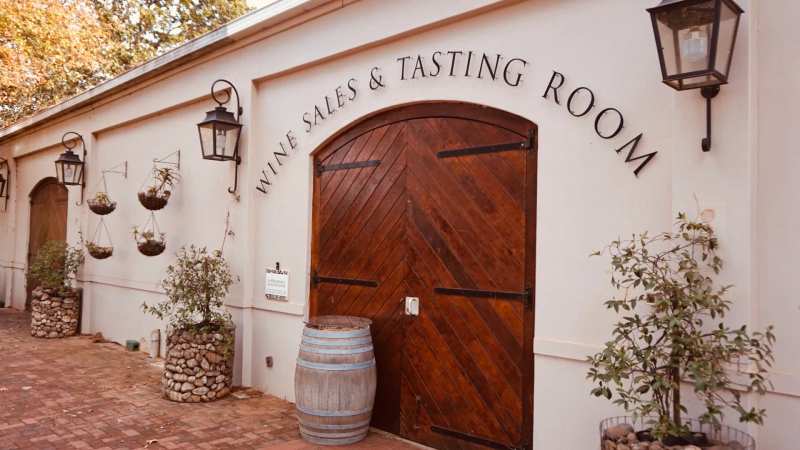
Three cellar doors sit almost side by side at the western entrance to the village, all about 700 to 800 m from the centre. The Franschhoek Cellar tasting room is the most casual of them, with cheese and chocolate pairings, a supervised playground and a lunch menu designed around its wines. Next door, Backsberg’s Franschhoek tasting room is new to the valley: the family winery, which dates from 1916 and became South Africa's first carbon-neutral winery in around 2006, moved here from its old home on the Simonsberg and built its tasting room around a tractor more than a century old, brought over from the original farm.
A few doors along, Old Road Wine Co. pours single-vineyard wines from Certified Heritage Vineyards, the official mark for old-vine sites, alongside a range named after characters from the valley's past. It is the place in the village to taste what old vines can do.
Further down the road, about 2.8 km from the village, the Rickety Bridge estate is the other tram platform and another farm with roots in the Huguenot grants. It has vineyard and cellar tours, a restaurant that mixes South African flavours with French bistro dishes, rooms, and padel courts, so it is easy to spend a whole afternoon there.
La Motte, Leopard's Leap and Anthonij Rupert
Between about 4 and 9 km west of the village, the R45 passes three farms tied to the family of the late industrialist Anton Rupert. They are bigger and more formal than the cellars at the village end, and each offers something beyond the tasting room.
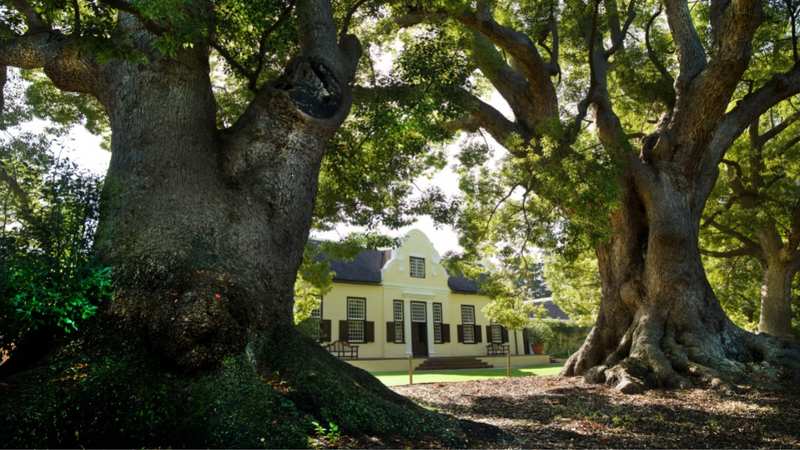
La Motte is the most historic of the three. The land was granted in 1695 and bought in 1709 by Pierre Joubert, who named it after La Motte d'Aigues, a village in Provence, and vines were first planted here in 1752. Anton Rupert bought the farm in 1970 and restored its old buildings, and his daughter Hanneli Rupert-Koegelenberg now runs it. The estate museum holds the family's collection of work by the South African painter J.H. Pierneef, and a guided historic walk takes in the manor house, the old cellar and a water mill that still grinds flour for the restaurant's bread.
Less than a kilometre from La Motte, on the village side, Leopard's Leap is the relaxed family stop. It was set up by Hein Koegelenberg, Hanneli's husband, with guidance from Anton Rupert. The tasting room is a bright, barn-like space with couches, the lawn has a play park and a pump track for bicycles, and the restaurant serves rotisserie lunches, pizzas and a South African table of traditional dishes. It is one of the easiest farms in the valley to visit with children.
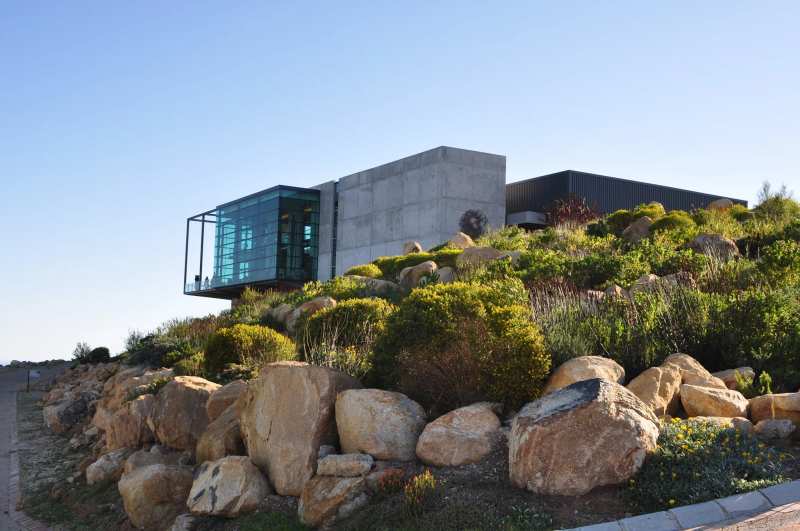
About 4.5 km further west, the Anthonij Rupert farm, L'Ormarins, has the most to see. Owned by Johann Rupert since 2003, it has two tasting rooms: the one in the restored Cape Dutch manor house pours the flagship wines, while the Terra del Capo room serves the more affordable ranges with Italian-style antipasto. An estate tram links the tasting rooms, and the Franschhoek Motor Museum on the same property shows a rotating selection of about 80 cars from the family's collection. Book the museum ahead.
Back toward the village, between Rickety Bridge and Leopard's Leap, on a strip of land between the main road and the railway line, Klein Goederust tells a newer story. Paul Siguqa, whose mother Nomaroma worked on Cape wine farms for more than 40 years, bought the run-down 10-hectare farm in 2019 and replanted it, and it became the first wholly Black-owned wine farm in Franschhoek. The flagship Cap Classique is named after his mother, the old tasting room preserves traces of the dop system, the practice of paying farmworkers partly in wine, and the spit braai on weekends is worth booking.
Boschendal and Babylonstoren
At the bottom of the valley, where the R45 meets the R310 at Groot Drakenstein, the farms change character again. These are big working estates with gardens, farm produce and several places to eat, and they are worth a day on their own rather than a stop between tastings.
There are two ways in to the wine. The Cellar Door at Boschendal pours tastings with chocolate, cheese or charcuterie, and serves a breakfast of canapés with the wines. For food, the farm deli does breakfasts and wood-fired pizzas for walk-ins, while Arum, a fire-focused restaurant from chef Peter Tempelhoff's FYN group, opened in December 2025 in the Werf building, the original cellar of the 1812 manor house. That building has housed a restaurant since 1977, the first on a South African wine farm.
About 8 km north-west of Boschendal, on the road toward Paarl, the gardens at Babylonstoren draw as many visitors as the wine. The farm dates from 1692, and its formal garden of fruit, vegetables and indigenous plants covers about 3.5 hectares. Next door, Noble Hill’s organic vineyards climb the slopes of the Simonsberg, with lunch served under the trees.
Both farms are in Simondium, about 20 km from Franschhoek village and much closer to the farms toward Paarl, which share the same stretch of the R45. If you only have one day, choose this end or the village end rather than trying to cover both.
From Boschendal the R310 climbs over the Helshoogte Pass, so this end of the valley is also the natural link to the Stellenbosch farms on the far side of the Helshoogte Pass. A day that starts at Babylonstoren and finishes in Stellenbosch is easy to plan.
Restaurants and booking
For a village of its size, Franschhoek has an unusual number of the country's top restaurants, and many of them are on wine farms. In Eat Out's 2026 awards, La Petite Colombe kept its three stars, the top rating, and Protégé, Epice, Le coin Français, Chefs Warehouse at Maison and the Orangerie at Le Lude were all starred.
La Petite Colombe is at Leeu Estates, about 1.8 km west of the village, and is the sister restaurant of La Colombe in Constantia, serving a multi-course tasting menu that needs a deposit to book. In the village itself, the Protégé kitchen offers a more casual version of the same group's cooking, with dishes such as tuna tataki and confit duck.
On the farms, lunch is the main event. Haute Cabrière, Grande Provence, La Motte, Leopard's Leap, Rickety Bridge, Klein Goederust and Boschendal all serve meals, and several serve lunch only, with some closed early in the week. Check the days on each farm's own listing before you set out.
Tastings at most farms need no booking for a small group, though cellar tours and food pairings usually do, and groups of eight or more should always call ahead. Restaurant tables are a different matter. On summer weekends and in the December holidays, the popular farm restaurants book out days ahead, so reserve lunch first and plan the tastings around it.
Visiting the farms on the wine tram
Many of the farms in this guide are on the valley’s hop-on hop-off wine tram, which runs a set of loops from terminals in the village and at Groot Drakenstein, part of the way on old railway track and the rest on open-air tram-buses. The ticket covers the ride only, and you pay for tastings and food at each farm.
Each line covers one stretch of the valley, so choosing a tram line by the end of the valley you want matters more than which farms you pick. The village-end lines take in the cellars under the mountains, the middle lines the R45 farms around the two platforms, and the Groot Drakenstein lines head toward Boschendal and Babylonstoren. Lines change through the year, so check that a farm you want is on your line before you book.
Planning a day in the valley
Three or four farms make a full day. A good order is to start at the village end in the morning, while the tasting rooms are quiet, then work west down the R45 for lunch, and finish at one of the big estates in the afternoon. Going the other way works just as well; what matters is staying on one stretch of the road.
If you are driving, agree before you start who is not tasting, or use the tram, a tour or a taxi. Cape Town is about 64 km away in a straight line, so many visitors stay at least one night. Sleeping on a farm is part of the appeal: besides Boschendal's cottages and the rooms at Holden Manz, Grande Provence and Rickety Bridge, the suites at Maison Montagne sit among the Merlot vines at Dieu Donné with views across the valley.
And if Franschhoek leaves you wanting more, Franschhoek is the most compact of the Western Cape's wine valleys, so it combines easily with a second day elsewhere.
When to go
Summer, from December to February, is the busiest season, with long days, full restaurants and the heat building in the valley by early afternoon. Harvest falls in late summer and early autumn, and autumn, from March to May, is the best time to visit, with the vineyards turning gold and red and the weather still warm. Winter is quieter and wetter, the best season for a tasting by the fire at Chamonix and an easier restaurant booking.
Frequently asked questions
Published August 3, 2026