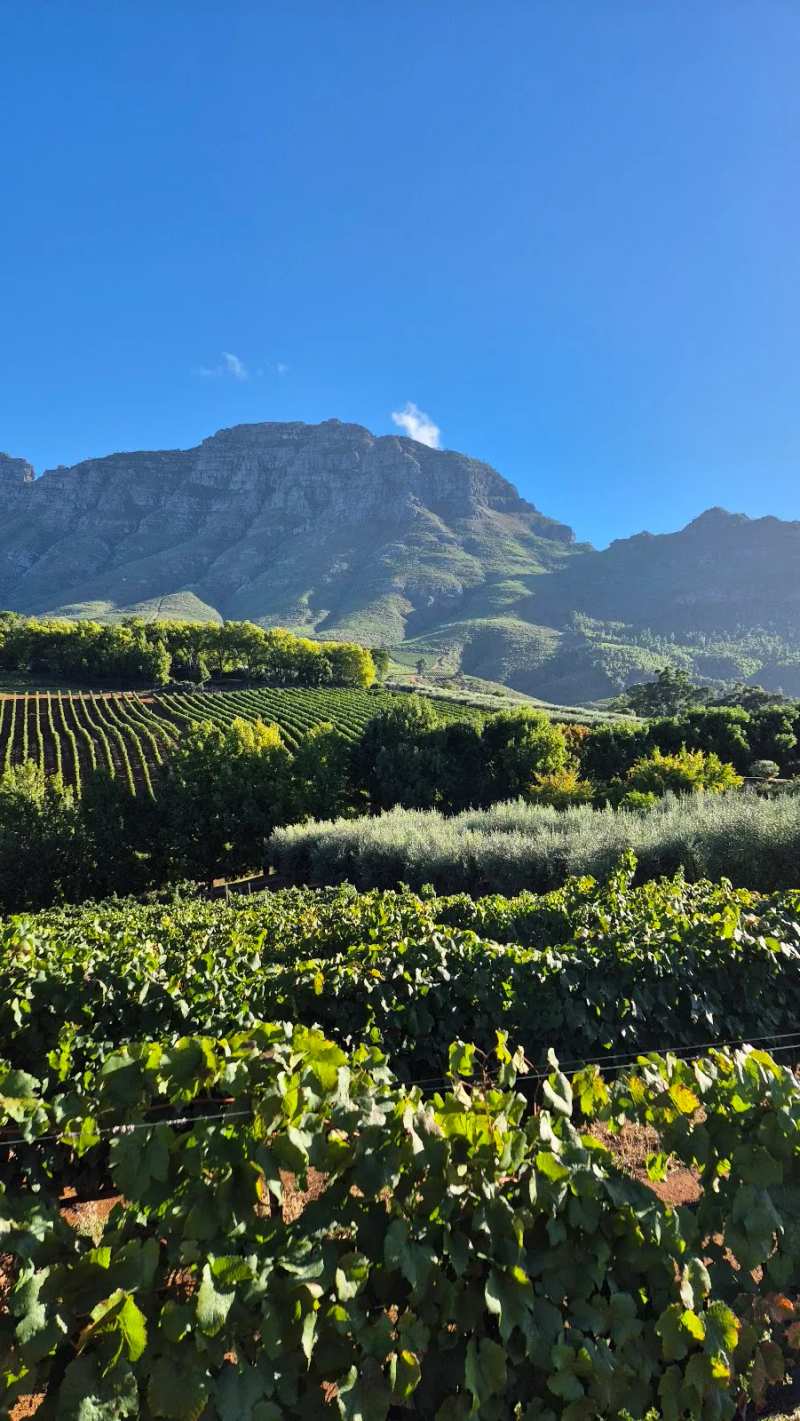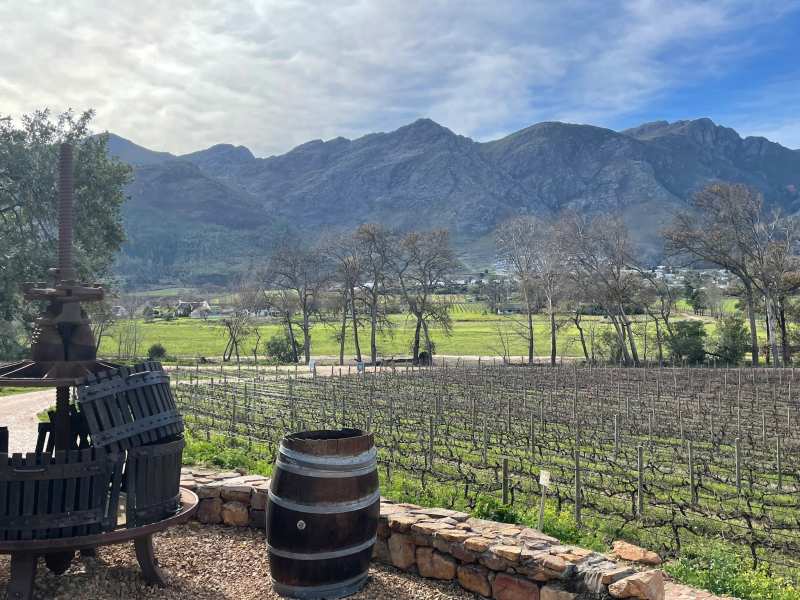
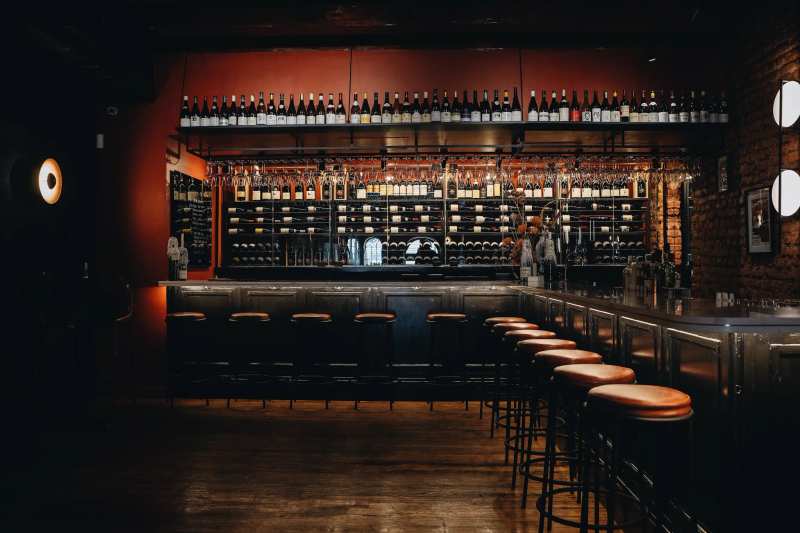
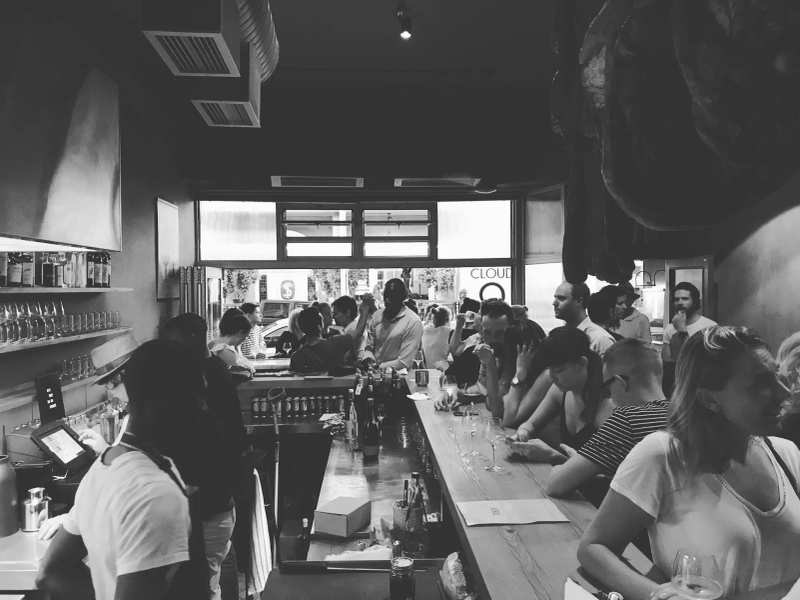
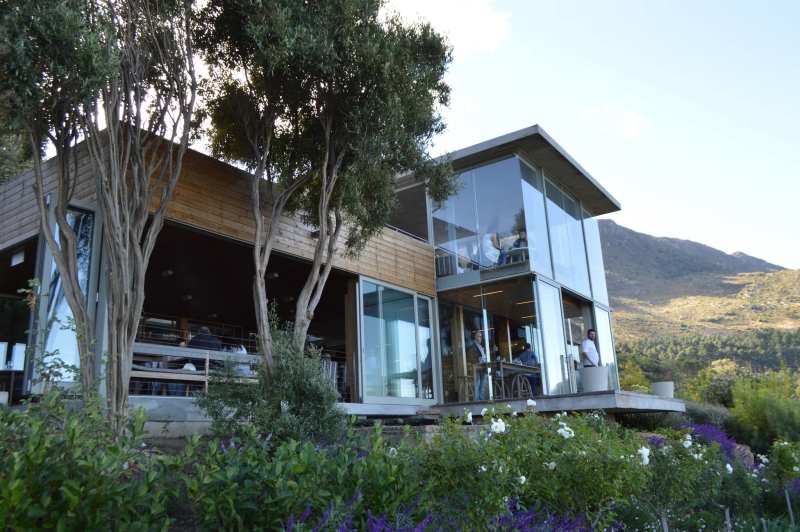
You can drink very good Cape wine on Bree Street in the city centre, and you can be standing in a vineyard 10 km from it. Most visitors miss both, because a search for wine tasting Cape Town turns up day tours to Stellenbosch and Franschhoek first.
Those tours are worth doing, but they are the long option. This guide sorts wine tasting in Cape Town by how far you want to go: wine bars in the city centre that pour Cape wine by the glass and the flight, the two wine valleys inside the metro, Constantia to the south and Durbanville to the north, and the tours and hop-on bus that take you there or further without anyone having to drive.
Three ways to taste, by distance
Cape Town gives you three distinct levels of effort. The first costs you a walk: a handful of wine bars in the city centre and the streets above it pour flights of local wine, often from small producers you will not find on a farm route. The second costs you a short drive or a taxi ride: the Constantia valley is about 10 to 14 km south of the city centre in a straight line, and the Durbanville farms about 16 to 25 km north-east, both still inside the City of Cape Town.
The third is a full day out. Stellenbosch is about 40 km east of the city, Paarl about 54 km and Franschhoek about 64 km, and that is where most organised wine tours go. Pick the level that fits the time you have, and do not assume you need the third to taste well.
The Cape Town wine district
The wine farms inside the metro belong to their own official wine district, the Wine of Origin district Cape Town. It has around 30 wine farms, split into the wards of Constantia, Durbanville, Philadelphia and Hout Bay. The ocean is never far from any of them, and the cooler sea air is why the district is best known for Sauvignon Blanc, along with red Bordeaux-style blends and, in Constantia, sweet wine.
Wine tasting without leaving town
The quickest way to taste Cape wine is in a city-centre wine bar. Many of these bars now pour flights of several small glasses, which suits visitors who want to try a range without committing to a bottle, and the lists lean toward the small producers and new names that the big farm routes skip.
Culture Wine Bar is on Bree Street in the city centre, in the same building as chef Matt Manning's Grub & Vine bistro. Its list mixes respected local producers, cult names, natural wines and imports, and the sommeliers put together tasting flights. A short menu of charcuterie, cheese and plates from the kitchen keeps it from being a drinking-only stop, and the bar has hosted weekly tastings led by a different wine farm.
About 1.3 km away in a straight line, on Kloof Nek Road in Tamboerskloof, Publik’s small counter bar is where many people in the local wine trade drink. It specialises in small-production wines made with as little intervention as possible, many of them organic, biodynamic or natural, and it likes unusual grapes such as Cinsault, Grenache, Carignan and Riesling. Its wines are poured by the glass, service is at the counter only, and the list changes often.
Other city bars are worth knowing. Bouchon on Hout Street pours South African wine only, Openwine on Wale Street sits between a wine bar and a tasting room, and the Cultivar Wine Bar inside the Time Out Market at the V&A Waterfront lists more than 100 South African wines from across the winelands. Any of them makes a good first stop on an arrival evening, or a wet afternoon when the vineyards feel too far.
For something closer to a farm tasting without leaving town, The Wine Shop on Loop Street runs a seated tasting of wines from regions across the country, hosted by a sommelier or winemaker, with regional maps and real soil samples on the table. It is a useful primer before a trip into the winelands, because it shows how the same grape changes from the cool coast to the hot interior. A few city hotels also run tastings for their guests, so ask at the front desk.
What a city wine bar does better than a farm
A farm pours its own wines and nobody else's. A good city bar pours dozens of producers side by side, from established cellars to small-production labels, natural wines and unusual grapes that rarely turn up on a farm route. If you want to understand where Cape wine is going rather than where it has been, the bars are where to taste it.
What you give up is the setting. There are no vineyards, no cellar tours and no mountain views from a city pavement. Most visitors do both: a flight in town to get their bearings, then a day on the farms.
Constantia: the closest wine farms
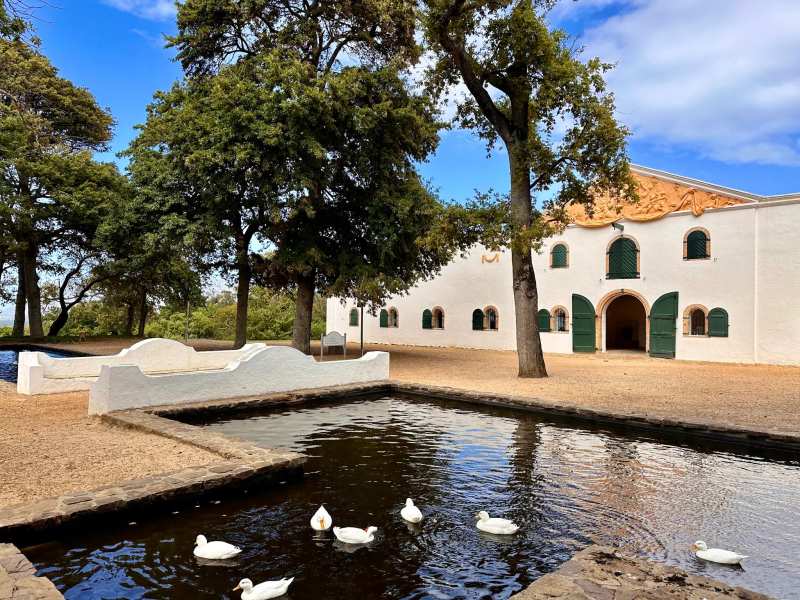
Constantia is a leafy southern suburb at the foot of the Table Mountain range, and its farms are the closest vineyards to the city centre, about 10 to 14 km away in a straight line. It is also where the Cape's first great wine estate was founded: Governor Simon van der Stel established Groot Constantia here in 1685, and the sweet wine made in the valley in the 1700s and 1800s found its way to the courts and dinner tables of Europe.
Next door, Constantia Glen sits on the same slopes below Constantia Nek, with its own tasting room, a restaurant and a wide view of the vines and mountains. The two farms are about 300 m apart, so they make an easy pair. A little further along, Silvermist’s organic vineyards add live music and a braai to the tasting on some days.
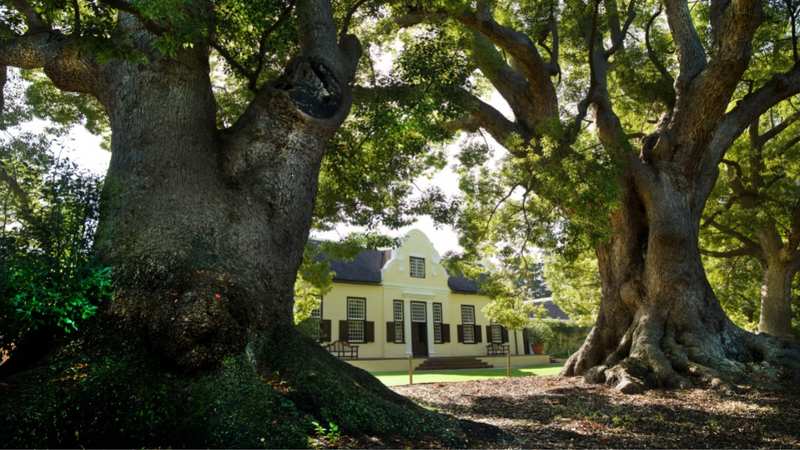
Lower down the valley, about 12 km from the city centre, the Groot Constantia estate is the historic heart of the valley and a sightseeing stop in its own right. The manor house is a museum, the old Cloete Cellar is part of the visitor route, and there are cellar tours, tastings, chocolate and wine pairings and two restaurants. The farm still makes Grand Constance, a modern version of the old sweet wine, which makes a good bottle to take home.
Further south along the valley, about 13 km from the city centre, the farm at Buitenverwachting was once part of the original 1685 Constantia estate. It has a tasting room, a coffee shop and a restaurant, and in summer its picnic lawns open when the weather allows. Its neighbour, the Constantia Uitsig estate, about 14 km out, has a tasting area and wine shop, a main restaurant, a café, a picnic lawn and gardens to walk in, which makes it one of the easier Constantia farms for a mixed group.
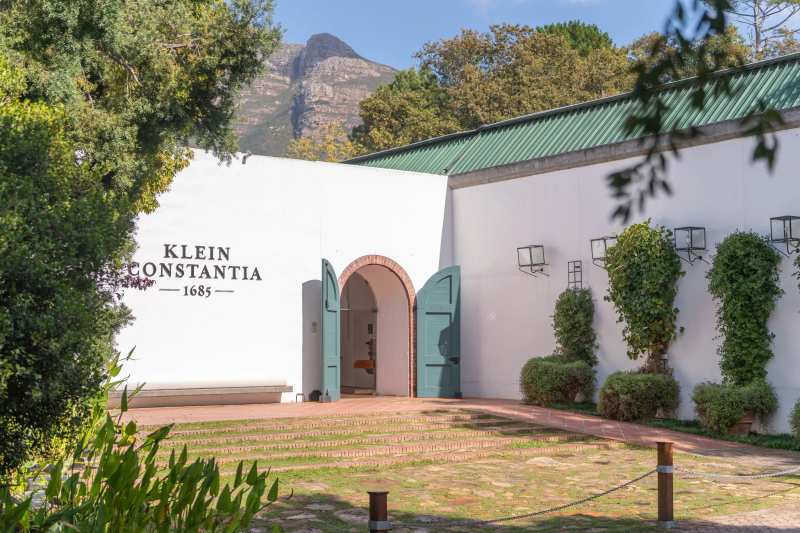
Two of the valley's best-known names complete the picture. The Klein Constantia farm is the home of Vin de Constance, the modern revival of the sweet wine that made the valley famous, while Steenberg’s tasting room is on a farm granted in 1682, three years before Groot Constantia.
Older guides and some tour listings still send visitors to Eagles' Nest. The farm closed to visitors in 2023, so do not plan a stop around it.
Constantia has more than these farms, and the full spread of Constantia's farms are worth a look if you want a whole day in the valley rather than a quick afternoon.
Durbanville: the farms north of the city
Durbanville is a northern suburb, and its farms spread over the rolling Tygerberg hills about 16 to 25 km north-east of the city centre in a straight line. There are around a dozen of them. The hills catch the cool breezes off the Atlantic, and the area is best known for Sauvignon Blanc, along with Bordeaux-style reds and Pinotage. Several of the farms look back across the city to Table Mountain.
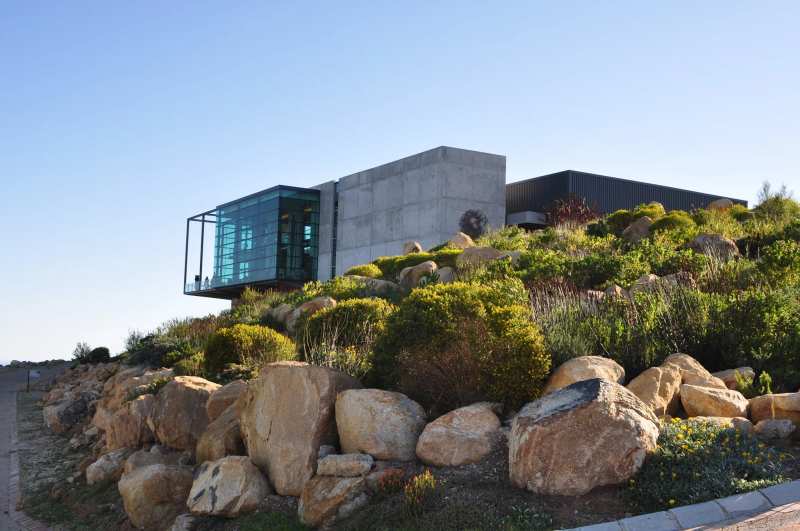
About 3 km further north, the tasting room at Durbanville Hills is the area's best-known cellar. It opened in 1999, has cellar tours, an eco-friendly vineyard and a restaurant called Tangram with views of Table Mountain, and its play area makes it a good stop with children.
Among the smaller farms, the Nitida farm is known for its white wines, sharing platters and a wine tasting for children, and has an Italian-style wine window. Further north, the Meerendal estate, where vines were first planted in 1714, has a tasting room and restaurants for a longer visit.
At the far northern end of the area, about 25 km from the city centre, the Diemersdal estate serves bistro-style food in its old stables, with outside tables looking over historic vineyards.
For families, Hillcrest’s farm and the D’Aria farm both welcome families, and D'Aria has several places to eat on one property.
Not every interesting Durbanville tasting is at a big farm. At the Klein Roosboom cellar, for example, the tastings take place inside old concrete fermentation tanks that have been turned into small private rooms, the kind of detail that makes the smaller farms worth seeking out.
For a full day on this side of town, Durbanville's farms, from the big cellars to the boutique ones are mapped out in order.
Getting there without a car
Every option above can be done without driving. The city-centre bars are walkable from most hotels in the city bowl. For the farms, you can take a ride-hailing car or taxi, join the hop-on hop-off bus to Constantia, or book a tour that collects you and brings you back.
The hop-on hop-off bus
The red open-top City Sightseeing bus runs a wine route through Constantia, sometimes called the Purple route. You ride the Blue route around the peninsula, change at Constantia Nek, and the wine bus loops past a few of the valley's farms. Groot Constantia and Beau Constantia have both been on it, but the stops change, so check the current route before you set out.
The bus ticket covers the ride only; you pay for tastings at each farm. It is the simplest way to reach the Constantia farms without a car, and the Blue route also stops at the Kirstenbosch garden, which fits easily into the same day.
A simple bus day looks like this. Board the Blue route in the morning and stop at Kirstenbosch for an hour or two in the garden. Get back on, change to the wine bus at Constantia Nek, and ride down into the valley for lunch at Groot Constantia, where Simon's restaurant and the Jonkershuis both serve meals. Taste there, take the wine bus to a second farm for the view, then ride back to Constantia Nek and finish the Blue route loop past Hout Bay and Camps Bay on the way home. Note the time of the last wine bus back to Constantia Nek before you settle in, because missing it leaves you finding your own way back.
Wine tours from the city
African Story Wine Tours runs full-day tours to four farms in the Stellenbosch, Franschhoek and Paarl areas, with cellar tours, cheese and wine pairings and an à la carte lunch. For a private trip planned around you, Luhambo Tours arranges customised wine tours to Stellenbosch, Franschhoek and Constantia, including three-day trips, and takes bookings by WhatsApp.
A standard full-day tour runs about seven to nine hours from collection to drop-off, and usually visits four or five farms in the Stellenbosch, Paarl and Franschhoek areas, with a lunch stop in the middle. It is a long, sociable day, and good value compared with hiring a private driver. If you would rather go slowly, a half-day tour of Constantia, sometimes by bicycle, is a gentler option that stays inside the city.
Some tours combine the city with the Franschhoek Wine Tram: a coach or shuttle takes you out to the valley, you ride the tram between farms for the day, and the shuttle brings you back in the evening. It solves the transport problem of the tram, which does not collect from Cape Town.
Most full-day tours head to the Stellenbosch farms about 40 km east of the city, often adding Franschhoek or Paarl. Check what each tour includes before you book: some include the tasting fees, some do not, and lunch is often extra.
If you would rather plan your own day in Stellenbosch, the Stellenbosch wine route and its five sub-routes make that easier.
What to taste in and around the city
Start with Sauvignon Blanc. The farms closest to the sea, in Constantia and Durbanville, make some of the country's best in a fresh, cool-climate style shaped by the sea air. Taste one from each valley side by side and the difference between them is easy to pick out.
For reds, look for Bordeaux-style blends built on Cabernet Sauvignon and Merlot, which both valleys do well, and for Pinotage in Durbanville. Pinotage is South Africa's own grape, a cross bred at Stellenbosch University in the 1920s, and Durbanville makes a good introduction before you meet it again inland.
In Constantia, finish with the sweet wine. The valley's historic dessert wine, once shipped to European courts, has been revived at Groot Constantia and Klein Constantia, and a small glass at the end of a tasting is the best way to understand why Constantia mattered so much three centuries ago.
How a tasting works
At most farms you pay a fee at the tasting counter and work through a set list of wines, usually three or more, with the staff explaining each one. Many farms offer more than one tasting, from a standard list to a premium or reserve selection, and pairings with chocolate, cheese, charcuterie or biltong are common. Fees vary a lot from farm to farm and change often, so check the listing or the farm's own site rather than relying on a figure you read elsewhere.
Tastings at most farms need no booking for a small group. Cellar tours, food pairings and groups of eight or more usually do, and so do the farm restaurants on summer weekends. In the city bars, flights are ordered at the counter or the table like any other drink.
If you plan to taste at several farms, agree on a non-drinking driver before you start, or use the bus, a tour or a taxi.
When to go
Summer, from December to February, is peak season, with long evenings, full farm restaurants and the bus and tours at their busiest, so book lunches and tours ahead. Autumn, from March to May, brings the harvest and quieter roads, and the weather is still warm enough for lunch outside. Weekdays are noticeably calmer than weekends at most farms.
Winter, from June to August, is Cape Town's wet season. It is the best time for the city wine bars and for tastings by a fire. On a clear winter day, though, the views from Constantia and Durbanville are at their sharpest.
Choosing the right option
If you have an evening
Go to a city-centre bar. A flight at Culture or Publik shows you more of the Cape in an hour than a single farm can, and dinner on Bree Street or Kloof Street is a short walk away.
If you have half a day
Go to Constantia. Two farms on the slopes below Constantia Nek, such as Beau Constantia and Constantia Glen, plus a look at Groot Constantia, fit comfortably into an afternoon, by car, taxi or the wine bus. Durbanville works just as well if you are staying in the northern suburbs.
If you have a full day
Either combine Constantia with the Kirstenbosch garden on the hop-on bus, or book a tour to Stellenbosch, Franschhoek or Paarl. If you have a car and a non-drinking driver, the Winelands are about 40 to 65 km from the city, and the wine farms beyond the city, spread across the Western Cape each reward a day of their own.
Frequently asked questions
Published August 10, 2026