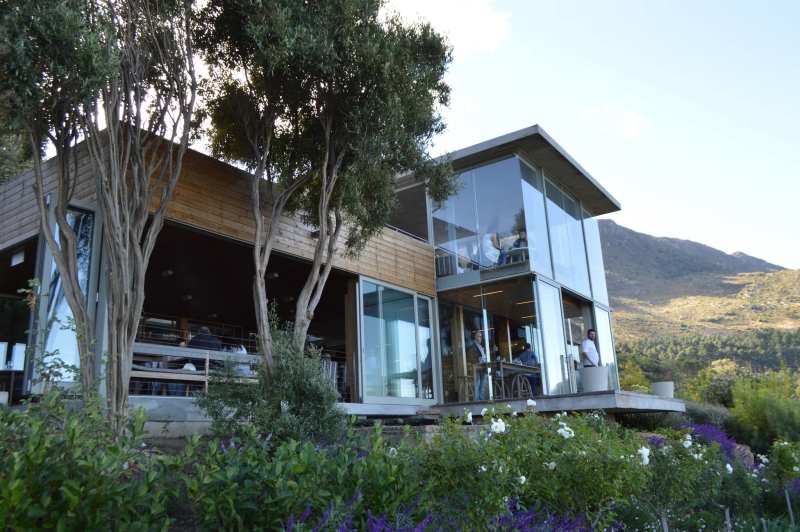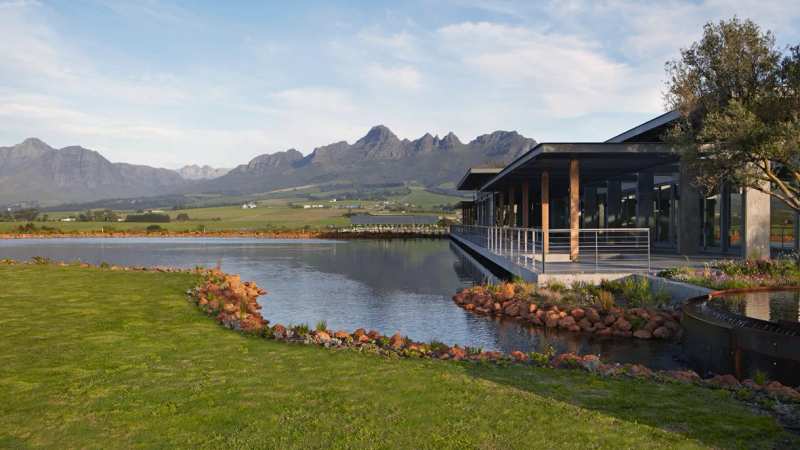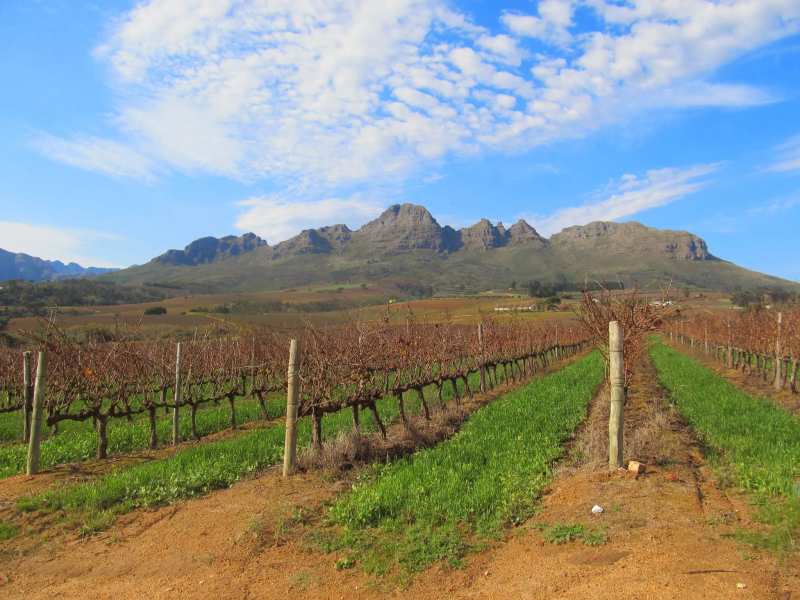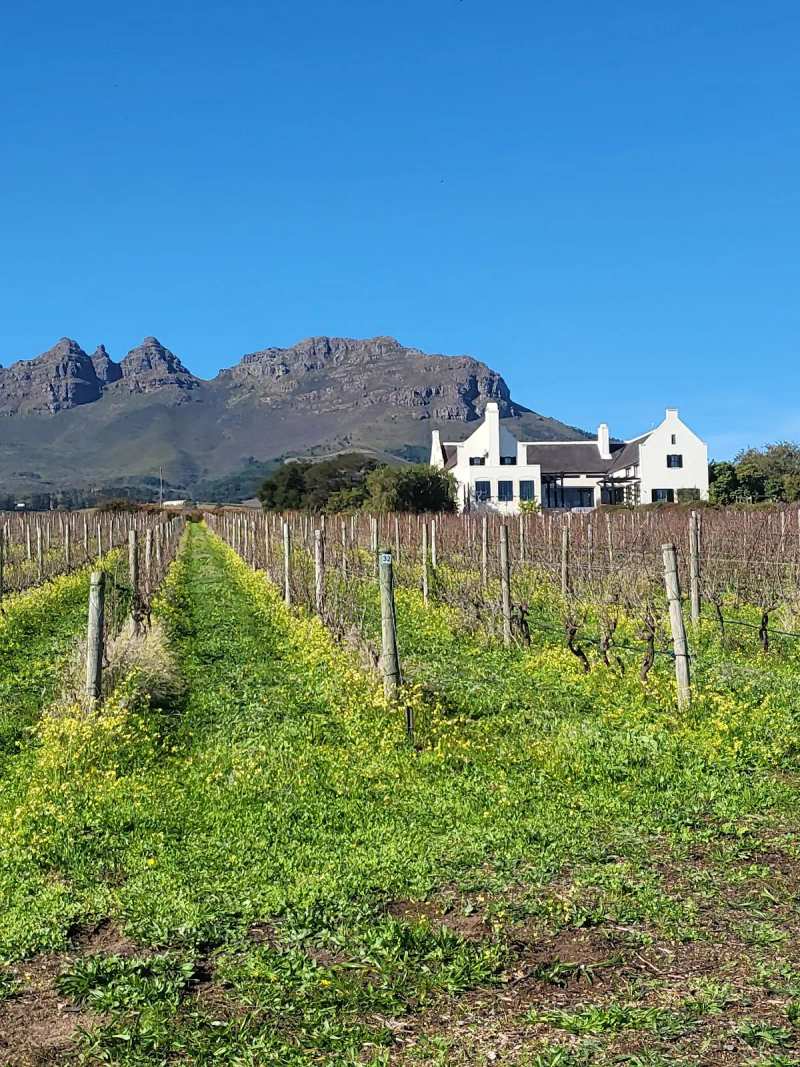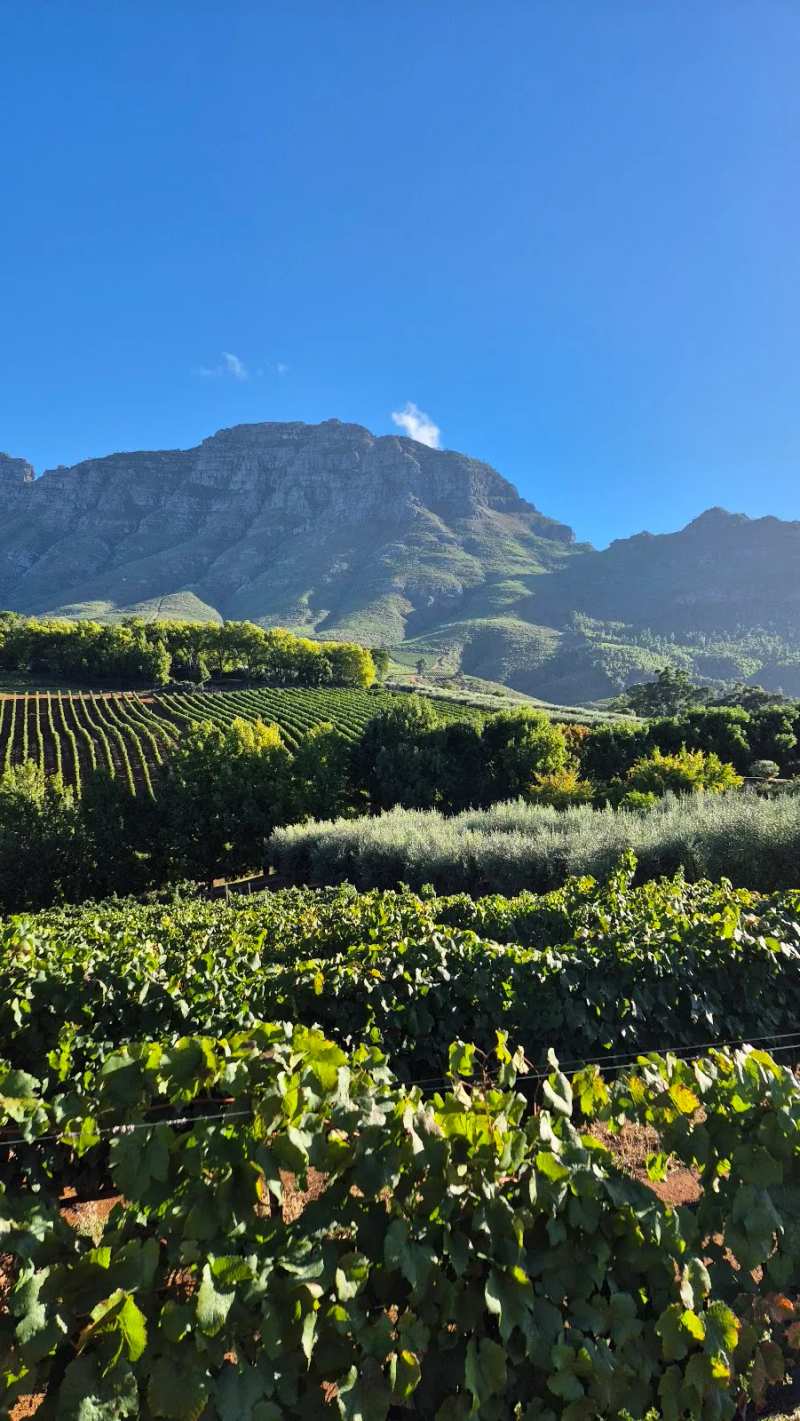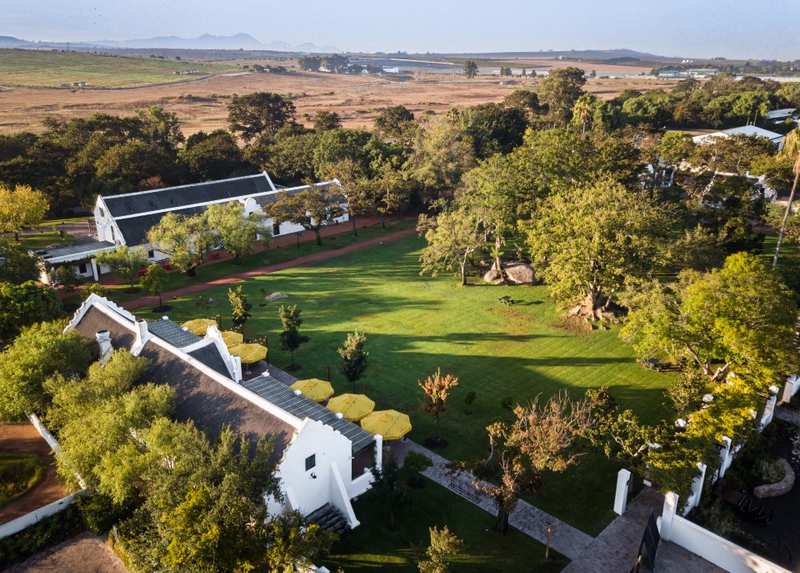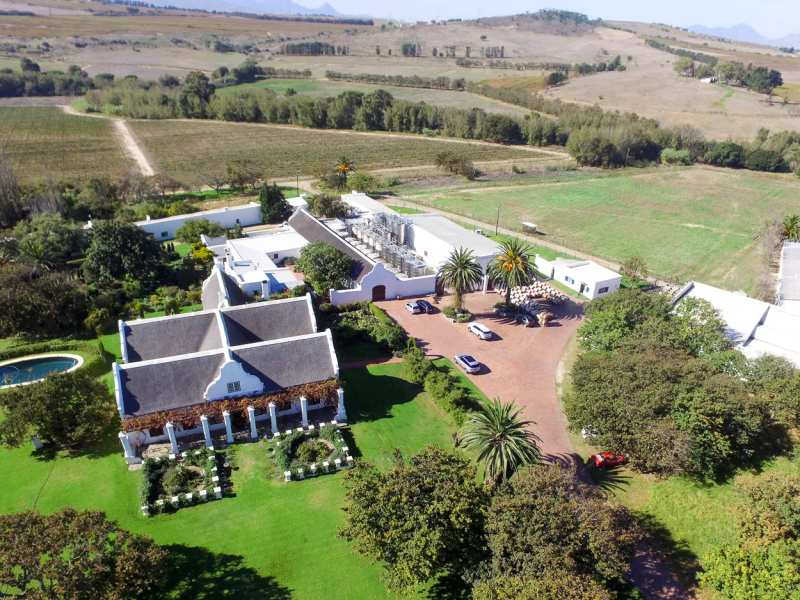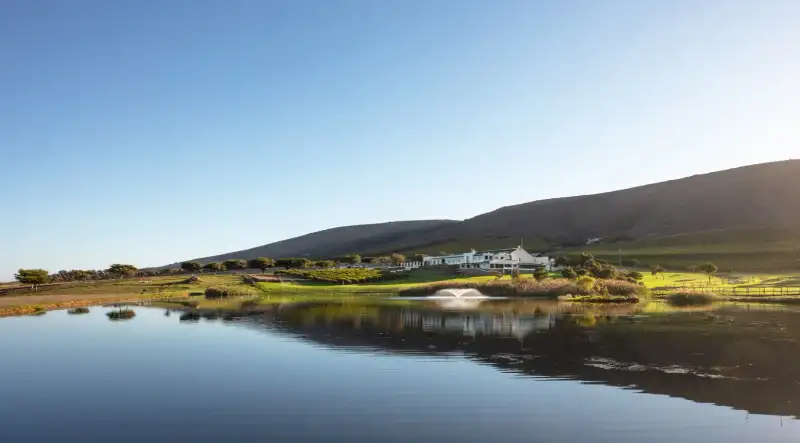
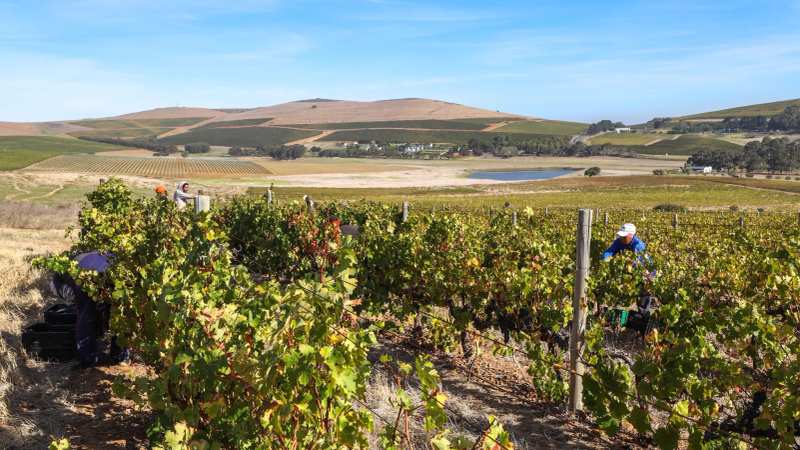
From the deck at De Grendel you can see Table Mountain across the whole of the city, and the vineyards in front of you are inside the City of Cape Town. That is what makes the Durbanville wine farms different. They sit on the Tygerberg Hills on the northern edge of the city, about 16 to 25 km from the centre in a straight line, and they make some of the best Sauvignon Blanc in the country.
Durbanville is quieter and less polished than the big valleys inland, and the farms are mostly family-run, with good food, play areas and trails. This guide covers the farms with the best views of Table Mountain, the family farms along Tygerberg Valley Road, the older estates to the north, where to eat, and how to plan a Durbanville day.
Where the Durbanville Wine Valley is
Durbanville is a northern suburb of Cape Town, and its wine farms spread across the rolling Tygerberg Hills above it. There are a dozen or more estates, depending on who is counting, close enough together that you can visit three or four in a day without much driving. The area became an official Wine of Origin ward in 1989, and today it falls within the Wine of Origin district Cape Town. The district has around 30 wine farms in four wards: Durbanville, Constantia, Philadelphia and Hout Bay.
The farms work together as the Durbanville Wine Valley, an association that runs the area's events and markets it as one destination. It is a small, close-knit valley, and its winemakers often speak of the camaraderie between the farms.
Why it is called Sauvignon Blanc Country
The wine valley itself describes the stretch of country between Durbanville and Bloubergstrand as Sauvignon Blanc Country, and the name has stuck. The valley's own pitch is cool-climate diversity and know-how handed down through several generations, which in practice means old family farms making fresh whites alongside terroir-driven reds such as Pinotage.
From Pampoenkraal to wine valley
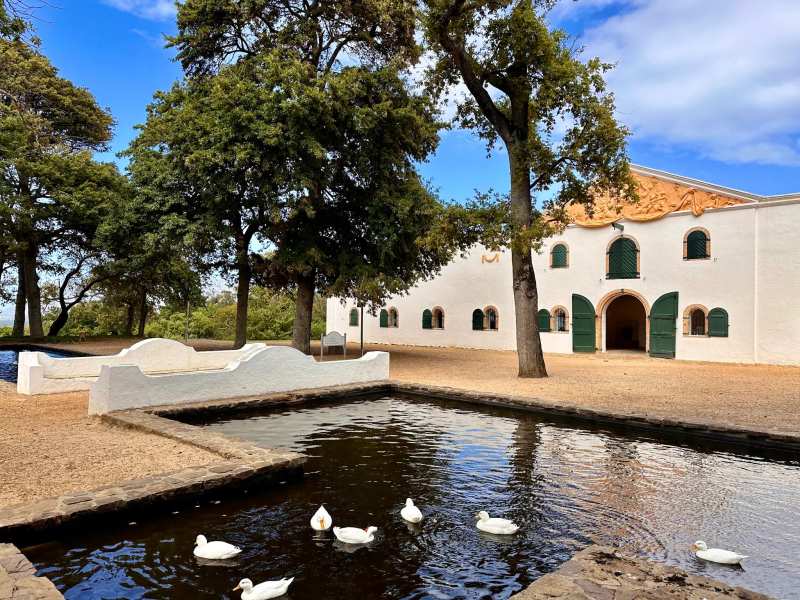
Durbanville was originally called Pampoenkraal. In the late 1600s the Dutch East India Company began allocating farms in the area, and the land was farmed for wheat and for wine. Several of those early farms are still working today, and many of them are now known for their wine, which is why so many estates here date their history to the 1690s and early 1700s.
The town itself is now a semi-rural suburb on the north-eastern edge of the city, surrounded by farms producing wine and wheat. On a clear day you look back from the farms at the city you have just left.
What Durbanville pours
Sauvignon Blanc is the valley's calling card. The Tygerberg Hills catch cool breezes off the Atlantic, and the valley's cool climate gives the wines their fresh, zesty character. Almost every farm here makes one, and tasting two or three side by side is the best way to see how different they can be from farm to farm.
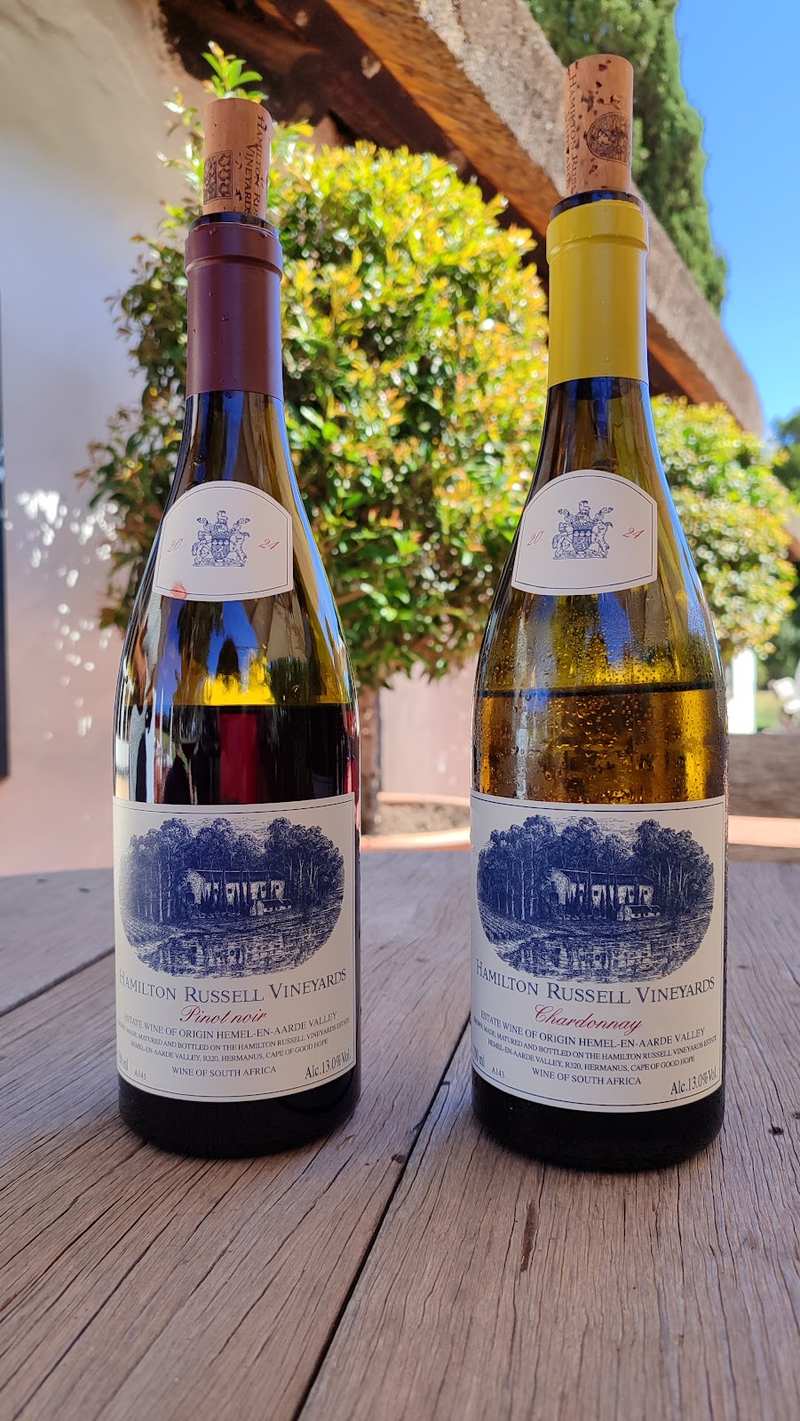
It was not always this way. Durbanville's winemaking roots are in red wine, and Diemersdal, one of its oldest farms, was known for Cabernet Sauvignon in the 1970s and 1980s. The reds are still worth tasting: look for Bordeaux-style blends, Merlot, Syrah and Pinot Noir, and for Pinotage, which several farms do well. Chardonnay and Cap Classique round out most tasting lists.
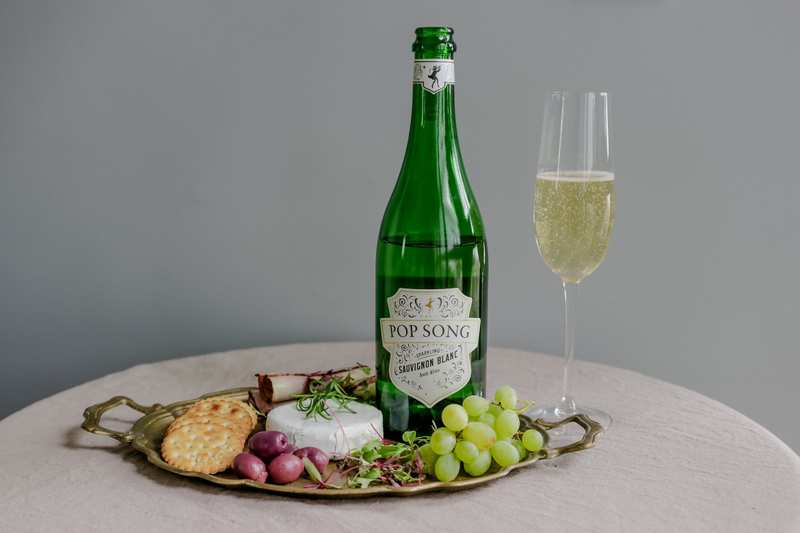
The valley's winemakers have also made a collaborative Sauvignon Blanc together, using grapes from farms across the valley and made by one winemaker on behalf of all of them. The first version, sold as the Durbanville Twelve Sauvignon Blanc, went on sale at the 2017 Season of Sauvignon, and later releases have followed. If you find a bottle, it is the whole valley in one glass.
Views of Table Mountain
The farms on the western side of the hills, closest to the city, have the views that Durbanville is known for: Table Mountain, the city bowl and Table Bay laid out below the vineyards. They are also the closest farms to central Cape Town, about 16 to 19 km away in a straight line.
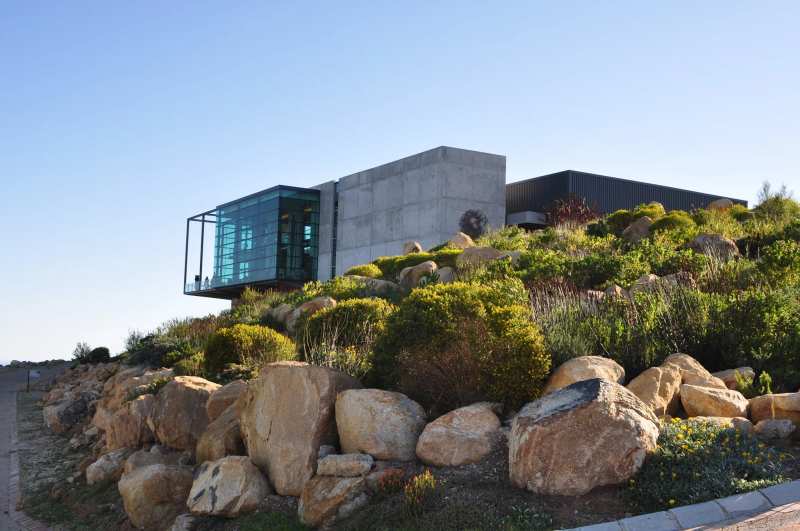
About 3 km north, Durbanville Hills’ glass-walled cellar looks out over Table Bay and is the largest cellar in the valley. It opened in 1999 as a joint venture between a big wine company and nine local farms, and today it has cellar tours, tastings, an eco-friendly vineyard, a wine safari through the vines, and Tangram, a restaurant with views of Table Mountain and a play area for children.
Durbanville Hills is also the place for wine experiences beyond a standard tasting. Its Harvest Tour takes you through how the wine is made and ends with a chance to blend your own, and its chocolate and wine pairing is a popular choice for a group. It makes a good first stop if you want to understand the valley before tasting at the smaller farms.
Just inland, Hillcrest’s Mediterranean terrace serves breakfast, lunch and tea with views over the vineyards, and is a relaxed stop for families. Hillcrest describes itself as a wine and olive estate, a boutique farm in the Tygerberg Hills that sits on the M13, Tygerberg Valley Road. It sits about 3 km from De Grendel, so the three farms on this side of the hills make an easy morning with the best of the views.
Family farms on Tygerberg Valley Road
Further east, several farms sit close together along Tygerberg Valley Road, the main route through the wine valley. They are mostly family-owned, with restaurants, play areas and space to run, which makes this the part of Durbanville to head for with children.
D'Aria, one of the oldest wine farms in the Cape Town area, makes its wines from two historic farms, Doordekraal and Springfield, with roots going back to 1698. The range includes Sauvignon Blanc, Gewürztraminer and Barbera, and the farm has several places to eat on one property, so a tasting easily turns into lunch. Its restaurants, Patina, the Terrace and Botany, range from a casual lunch to a longer meal.
Nitida, about 2 km away, was bought by Bernhard and Peta Veller in 1990, and the first vines went in two years later. The farm is known for its white wines, and it is one of the most child-friendly farms in the valley, with a tasting for children, sharing platters and an Italian-style wine window. Its restaurants, Cassia and Tables, include one with a jungle gym in view of the tables.
Bloemendal, about 1 km from Nitida, is one of the oldest farms in the valley. It dates from 1702, when it supplied fresh produce to Dutch East India Company ships sailing round the Cape, and its first cellar was built in 1920. It was registered as an estate in 1987 and built its name on Sauvignon Blanc, and its café-restaurant serves French-inspired food in a large garden among the vines. The farm grows Sauvignon Blanc, Shiraz, Pinotage, Merlot, Malbec, Semillon and Chardonnay, and its high ground looks out over Stellenbosch, False Bay, Table Bay and Table Mountain. The estate went to auction as a going concern in March 2026, after an earlier sale fell through, so check that the restaurant and tasting room are open before you go.
For more farms that suit a family day, farms that work for a day out with children include several of these, with what each offers children.
North toward Philadelphia
The northern farms sit on the far side of the hills toward Philadelphia, about 23 to 25 km from central Cape Town. They are some of the oldest estates in the valley, with long family histories and plenty of space. Beyond them lies Philadelphia, a separate wine ward in the same Cape Town district.
About 2 km east, Diemersdal’s stables restaurant serves bistro-style food in the old stables, with outside tables over historic vineyards. The farm's history goes back to 1698 and a Captain Diemer, and the Louw family has farmed it since 1885. Thys Louw, the sixth generation, makes the wine today, and the farm was the first in the country to make a Sauvignon Blanc from grapes frozen after picking, released as its Winter Ferment.
Beyond the Sauvignon Blanc, taste the Pinotage and the Chardonnays, which are as much part of Diemersdal's name as the whites.
About 3.6 km from Nitida, Starke Brews on the Contermanskloof farm is a craft brewery with fresh pizzas, wine for those who want it and a dedicated children's area, and makes a useful stop if not everyone in the group wants to taste wine all day.
Smaller producers worth finding
Not every Durbanville tasting is at a big estate. Some of the most memorable are at small family cellars, where a member of the family may well pour the wines.
At Klein Roosboom’s boutique cellar, on a farm that dates from 1714, the tastings take place inside old concrete fermentation tanks that have been turned into small private rooms, and the De Villiers family behind it is closely involved in running the wine valley. Order a cheese and charcuterie platter with the tasting, and expect a member of the family to talk you through the farm's history. Groot Phesantekraal, on a farm from 1698, stands out in a valley known for Sauvignon. Other smaller names to look out for include Canto’s wine and macaron pairing, Maastricht and Signal Gun.
One of the most unusual farms in the valley is Signal Gun. It is family-friendly, with a wide view from the top of the farm, and alongside the wine tastings it offers pizza and wine pairings, its own craft beer paired with biltong, and toffee.
On the edge of Durbanville, the family-owned Maastricht estate pours its own reds and whites, Pinotage among them, in an intimate tasting room. Further out, the Brink family runs Groot Phesantekraal as a working farm and winery with a farm-to-table restaurant at Groot Phesantekraal, and Chenin Blanc, the grape the Swartland just to the north is known for, as its focus.
Craft beer has become part of the valley's story too. Several farms along the route now brew their own, and Starke Brews on the Contermanskloof farm is the best-known example. For a group that includes non-wine-drinkers, a stop at one of the brewing farms keeps everyone happy.
Older guides may also list Altydgedacht, one of the valley's best-known family farms, but it closed in 2023. Check that a farm is still open before planning a day around it, and use the wine valley's own list of members as the current reference.
Pairings and tastings worth booking
Most Durbanville farms offer something beyond a standard tasting, and these are often the highlight of a visit. Durbanville Hills has its chocolate and wine pairing and the Harvest Tour with blending. Nitida has a tasting for children alongside the adults' one, and sharing platters. Signal Gun pairs its wine with pizza and its beer with biltong, and at the small family cellars a cheese and charcuterie platter with the tasting is the norm.
At Diemersdal, ask about the Winter Ferment and the Pinotage alongside the standard Sauvignon Blanc. At De Grendel, the farm tour in an open vehicle is the experience to book. Pairings and tours usually need a booking, especially on weekends.
Restaurants and breakfast
Durbanville is a valley where food matters as much as wine, and many visitors come for a meal rather than a tasting. For a serious lunch with a view, De Grendel's restaurant is the choice, and Tangram at Durbanville Hills has the views and the play area. For something more relaxed, Diemersdal's bistro in the old stables, the café-restaurant at Bloemendal and the several restaurants at D'Aria all work for a long lunch.
Durbanville is also good for breakfast. Hillcrest serves breakfast on its terrace over the vineyards, which makes a good start to a day and gets you onto the farms before lunch.
On weekends, especially in summer, book the restaurants ahead, because the most popular tables fill quickly.
Diemersdal's reds
Diemersdal, on Koeberg Road, is worth a second look for its reds. Its Private Collection is a Bordeaux-style blend led by Cabernet Sauvignon with Merlot, Malbec, Cabernet Franc and Petit Verdot, and it is a reminder that the farm made its name on red wine long before Sauvignon Blanc took over the valley.
Trails and the outdoors
The Tygerberg Hills are made for being outside. The valley has waymarked hiking and cycling trails, picnics on farm lawns and breezy terraces built for long summer tastings. Meerendal's mountain bike trails and parkrun and De Grendel's game-viewing farm tour are the best-known outdoor activities on the farms, and Bloemendal has long had its own trail park for mountain biking.
Events: the Season of Sauvignon
The valley's main event is the Season of Sauvignon, an annual spring food and wine festival that has run since the mid-2000s. It is usually held over a weekend in September or October, when around ten of the valley's farms each put on their own programme of tastings, food pairings, live music and family activities to celebrate the new season's Sauvignon Blanc.
The festival is a good time to visit if you like a crowd and want to taste across the valley, and a busy time if you do not. Dates and participating farms change each year, so check the wine valley's own programme before you plan around it.
Alongside the wine, the weekend usually brings food, art, live entertainment and outdoor activities, so it suits families and serious tasters alike, and each farm builds a menu around its Sauvignon Blanc.
When to go
Spring is the valley's season, when the Season of Sauvignon celebrates the new white wines and each farm creates a menu to go with its Sauvignon Blanc. Summer is for the terraces, with long tastings in the breeze and picnics on the lawns, and the farms are at their busiest on summer weekends. Autumn brings the harvest and quieter roads.
Whenever you go, the prices are part of the appeal. Tastings and bottles at many Durbanville farms are close to cellar prices, which makes it an easy place to buy wine to take home.
Durbanville or Constantia?
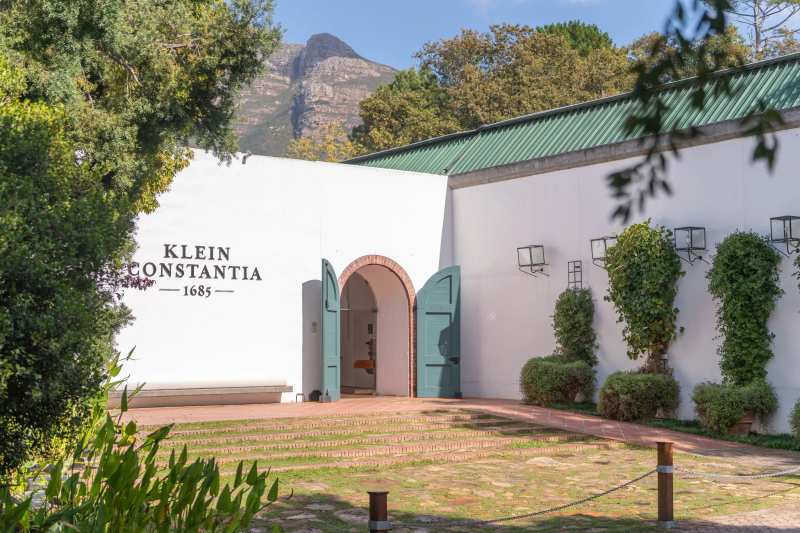
Cape Town has two wine valleys inside the city, and visitors often ask which to choose. Constantia, south of Table Mountain, is where the Cape's first great wine estate was founded, and it is the more historic and more visited of the two, with sweet wine as part of its story. Durbanville, on the northern edge of the city, is quieter, more family-run and better value, with some of the best views back across the city to Table Mountain.
Both make excellent Sauvignon Blanc in a cool climate shaped by the sea. Choose Constantia for history and grand estates, and Durbanville for views, family farms, children's play areas and a more relaxed pace. If you have two free afternoons, do both and compare.
Planning a Durbanville day
Start with the views. Begin at De Grendel or Durbanville Hills in the morning for the views, then move east along Tygerberg Valley Road to Nitida, D'Aria or Bloemendal for lunch. Finish in the afternoon at Meerendal or Diemersdal in the north. Three or four farms make a full day, and the short distances leave time to linger.
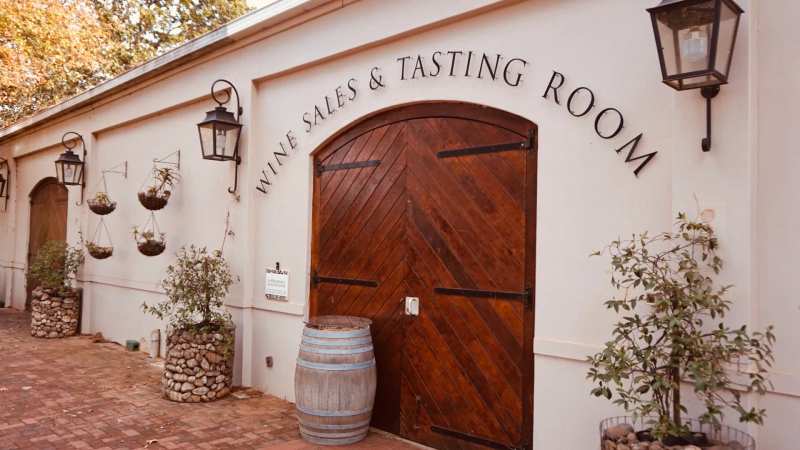
Tastings at most farms need no booking for a small group, but the restaurants, cellar tours and De Grendel's farm tour usually do. If you are driving, agree on a non-drinking driver before you start, or use a taxi or ride-hailing car, which is easy this close to the city.
A half day near the city
If you only have a morning, stay on the western side of the hills. De Grendel, Durbanville Hills and Hillcrest are all within about 3 km of each other and are the closest farms to the city, so you can taste at two and eat at the third without much driving. It is the easiest wine outing from Cape Town that still feels like a day in the country.
A day with children
Start at Durbanville Hills for the play area at Tangram, then move on to Nitida, where children get their own tasting and there is a jungle gym in view of the tables. After lunch, head north to Meerendal for the jungle gym and space to run, or to Starke Brews for its children's area. Hillcrest's terrace is a quieter option for a family breakfast before you start.
A day for wine lovers
Begin at De Grendel for the Sauvignon Blanc and the reds, with the valley's best-known view, then taste at Diemersdal for the Winter Ferment and Pinotage. Book a small family cellar such as Klein Roosboom for a seated tasting, and finish at Durbanville Hills to taste across a big range. Taste one Sauvignon Blanc at each stop, and by the end of the day you will know the valley's signature grape well.
Getting there
The farms are on the city's northern edge, reached through the northern suburbs, and the distance from the city centre is short, which is the valley's great advantage over the inland wine regions. Taxis and ride-hailing cars work well this close to the city, and several Cape Town tour companies run private wine tours to Durbanville if you would rather not drive at all.
In Durbanville town
The town itself is worth a short stop on the way. Durbanville has an old Dutch Reformed church, the Onze Molen windmill and a nature reserve, reminders that it was a country village long before it became a suburb, and a useful place to pick up picnic supplies before heading up to the farms.
Where to stay
Most visitors come out from the city for the day, but staying in Durbanville puts you among the farms. the apartments at The Winelands Guest House come with an outdoor pool, a lounge and a terrace with a braai, a few kilometres from the family farms on Tygerberg Valley Road.
Combining Durbanville with the rest of Cape Town
Durbanville is one of two wine valleys inside the city, so it pairs well with Constantia's farms on the other side of the city, which sit south of Table Mountain.
If you have no car at all, start with wine tasting without leaving Cape Town: the city-centre wine bars that pour wine from across the Cape, a short walk from most hotels.
Beyond the city, the bigger wine valleys further inland begin with Stellenbosch, about 28 km east of Nitida in a straight line.
Frequently asked questions
Published September 14, 2026