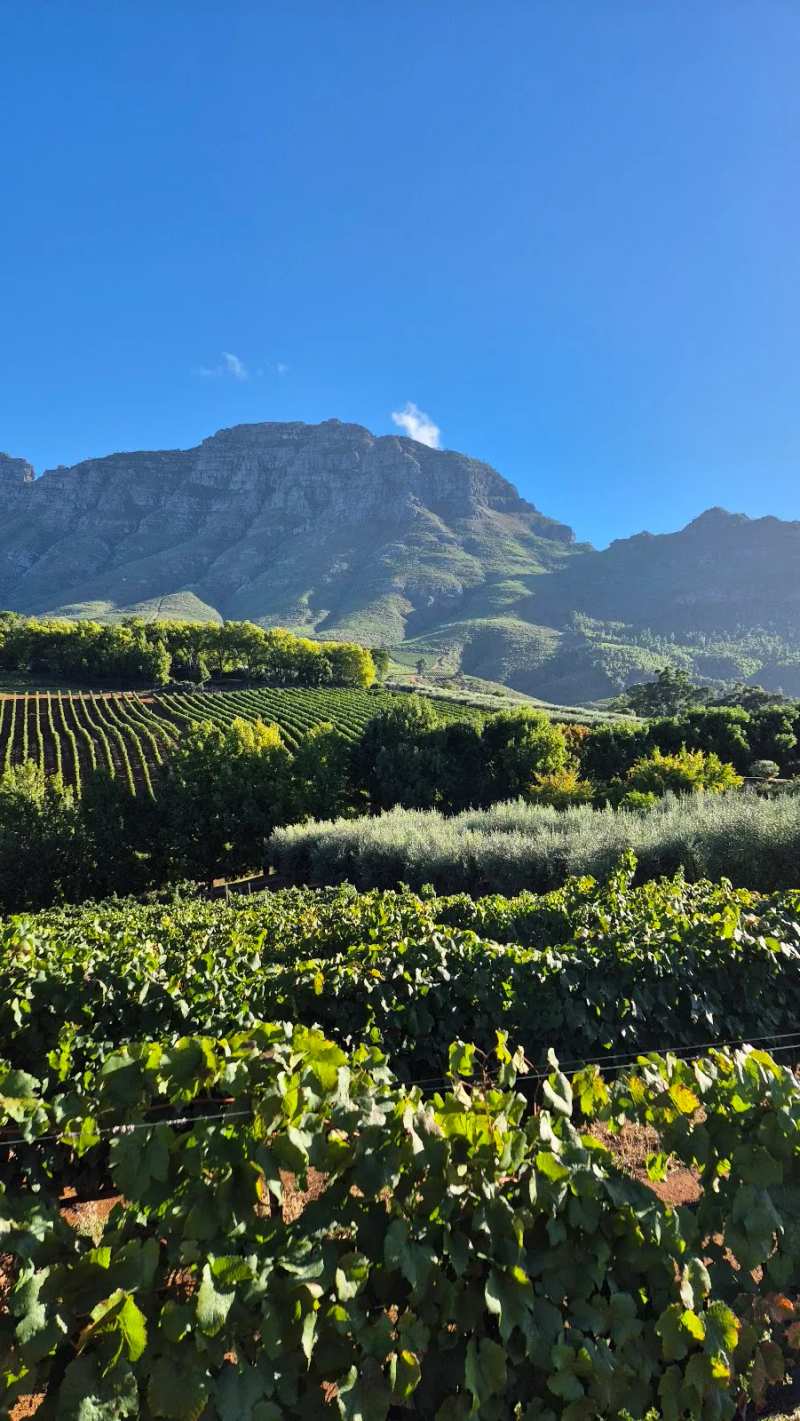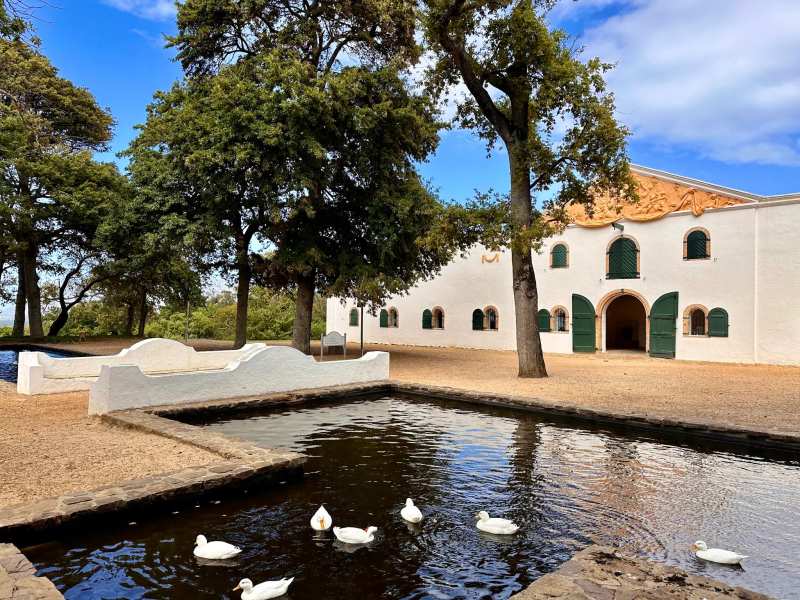
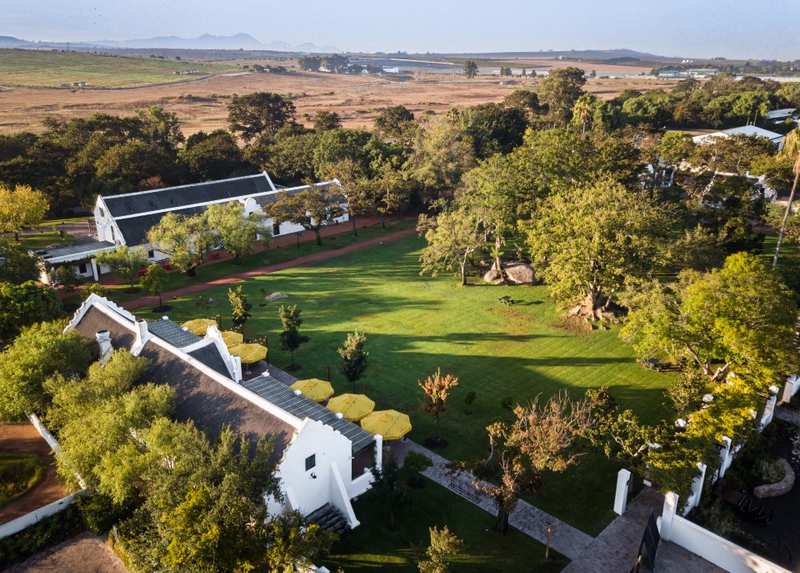
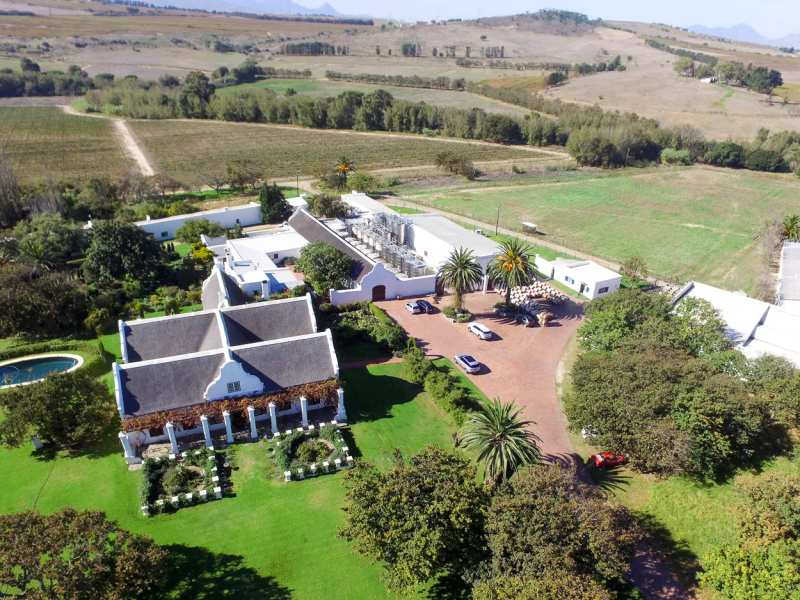
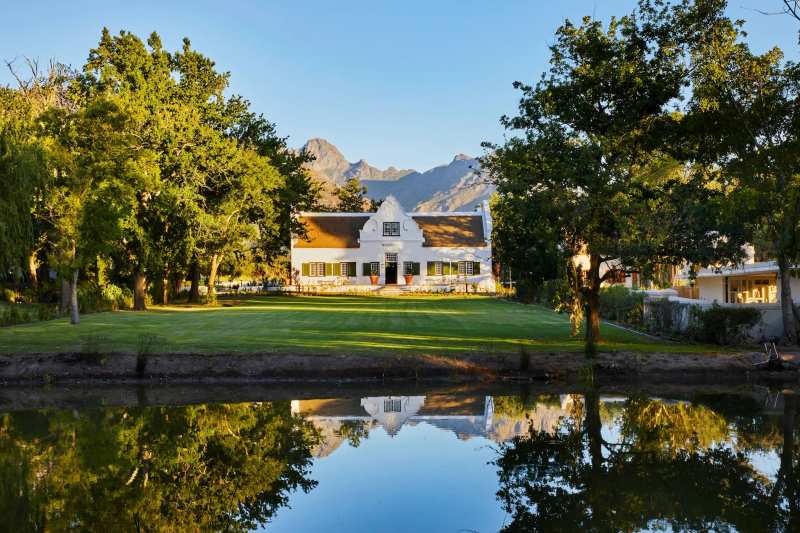
On 2 February 1659, Jan van Riebeeck, the commander of the Dutch settlement at the Cape, wrote in his journal that wine had been pressed from Cape grapes for the first time. Within a generation, farms granted to Dutch officials and French Huguenot refugees were planting vineyards across the valleys east and south of the settlement, and many of them are still making wine today. The oldest wine farms in South Africa are not museums. Most still have working cellars and tasting rooms, and you can sit under oaks that were planted by their first owners.
This guide covers the old farms you can actually visit, grouped by where they are. One honest warning before you start: the dates are slippery. Some farms date themselves from the year the land was granted, some from the first vines, and some from the first recorded sale of wine, so two farms can both claim to be the oldest and both be right on their own terms. Where sources disagree, this guide says so.
Where South African wine started
The first vines were planted at the Cape by the Dutch East India Company, which ran the settlement as a supply station for its ships. Van Riebeeck's 1659 pressing was small, and the early wine had a poor reputation. Things changed in 1685, when the governor Simon van der Stel was granted a large estate behind Table Mountain and named it Constantia.
Van der Stel took winemaking seriously, and within decades Constantia's sweet wines were being shipped to Europe and talked about at royal courts. At the same time, farms were being granted around the new town of Stellenbosch, founded in 1679, and from 1688 French Huguenot refugees were settling the Drakenstein and Franschhoek valleys. Most of the oldest farms date from this burst of activity between about 1680 and 1700.
The Constantia grants
Constantia, on the slopes behind the southern suburbs of Cape Town, is where the story is easiest to see, and the valley is often described as the oldest wine-producing area in the Southern Hemisphere. Van der Stel's original estate was later divided, and several of today's farms in the valley are pieces of it.
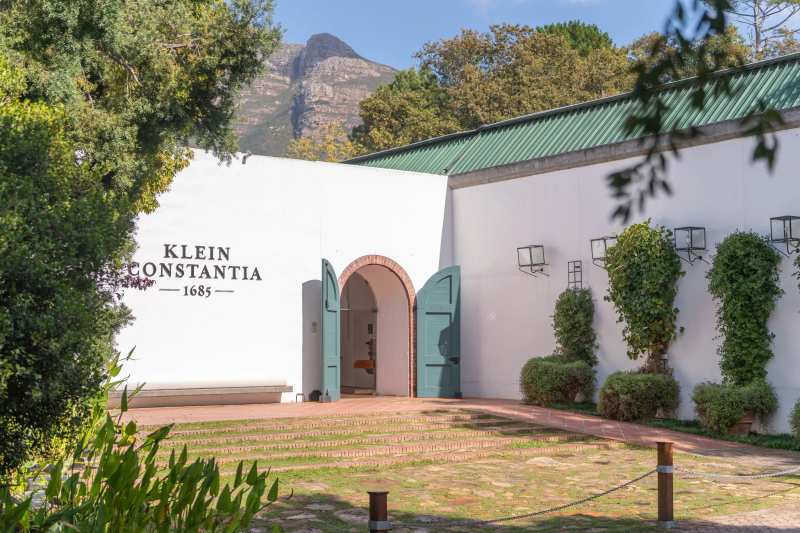
Next door, Klein Constantia is another part of the old estate, now a 146-hectare farm with a tasting room open year-round. Constantia's sweet wine was famous in Europe in the 18th and 19th centuries, and Klein Constantia's Vin de Constance revives that style.
Further along the valley, the Buitenverwachting estate was also part of Van der Stel's original estate, and its lawns under the oaks are a classic spot for a summer picnic.
At the Tokai end of the valley, Steenberg dates its farm to 1682, three years before Constantia was granted, and is often described as the Cape's first farm. Today it combines the old farm with a hotel, spa and golf course, and its restaurant, Bistro 1682, takes its name from the date. Constantia Uitsig completes the group, with a tasting room, a wine shop, a café and a picnic area.
All of these farms sit within a few kilometres of each other, so the Constantia grants make an easy half day. The valley rewards a slow afternoon on the Constantia wine route.
Stellenbosch's early farms
Stellenbosch was founded in 1679 as the colony's second town, and farms were granted around it almost immediately. Several of the farms below were in production within a decade of the town.
Spier was established in 1692 on the banks of the Eerste River and is one of the oldest farms in the area. Meerlust dates to 1693, and in 1756 it was bought by the Myburgh family, who have farmed it ever since; the estate is a national monument and the Myburghs are one of the longest-serving wine families in the country. Their Rubicon red blend, first made in 1980, is one of the best-known wines in South Africa.
Blaauwklippen, just south of town, traces its history to 1682, when the land went to Gerrit Jansz Visser, with the first vineyards planted in 1688. Today it is one of the most relaxed and family-friendly farms in the district.
On the slopes of Ida's Valley, Rustenberg also claims 1682, when Roelof Pasman first saw its potential. The first record of a sale from the farm is a receipt for brandy sold to a midwife in 1692, which may be the best founding document in Cape wine.
In the Jonkershoek Valley, Lanzerac dates to 1692 and is better known now for a 20th-century first: it bottled the first commercial Pinotage, from the 1959 vintage. And on Polkadraai Road, Neethlingshof’s manor house carries its founding year in its name.
On Bottelary Road, the Hazendal estate dates to 1699, and its wine lounge now sits in the farm's original cellar, built around 1870.
Two more names belong here. The house at Muratie on the Simonsberg was first built in 1685, and the Rust en Vrede estate on Annandale Road dates to 1694.
To see these farms in the context of a modern day out, start with the Stellenbosch roads these farms sit on.
Huguenot-era Franschhoek and Paarl
From 1688, about 200 French Huguenot refugees arrived at the Cape, fleeing religious persecution, and many were given farms in the Drakenstein valley and the valley that became Franschhoek, French Corner. They brought winemaking knowledge with them, and the French names on many farms today date from this time.
In the middle of the valley, the Grande Provence estate was established in 1694 by Pierre Joubert, a Huguenot from Provence. The Haute Cabrière farm, near the village, is on an estate founded the same year.
Toward Paarl, Babylonstoren’s old farm buildings date back to 1692 and were restored around its famous garden before the farm opened to visitors in 2010. In Paarl itself, Laborie’s manor house stands on land granted to the Huguenot Isaac Taillefert in 1691, whose family was making wine within seven years. They boasted that it was the best wine in the colony.
On the eastern side of Paarl, Nederburg’s 1800 manor house is a later landmark from the same tradition. Nederburg dates its heritage to 1791, and the thatched, gabled, H-shaped manor, completed in 1800, is a national monument that keeps its original yellowwood shutters, beams and doors.
On the slopes south-west of Paarl Mountain, the Fairview farm dates its land to 1693, though its modern story began when the Back family bought it in the 1930s. Charles Back, the first of three generations of that name, had arrived from Lithuania in 1902. For the whole of the Franschhoek valley today, there is far more to see than the old farms alone.
The same is true of Paarl's four clusters of farms, where the old estates sit beside much newer neighbours.
Vergelegen and the Helderberg
When Vergelegen was later divided, other farms were carved from it, among them Morgenster, which today makes Bordeaux-style reds and olive oil, and Lourensford. The town of Somerset West itself was founded in 1822 on part of the old estate, and the Helderberg farms that grew out of Vergelegen still trace their boundaries to that split.
How to read an old Cape farm
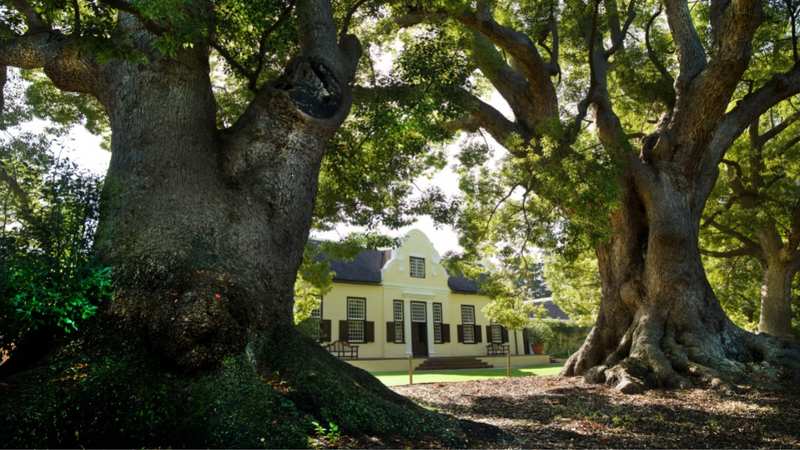
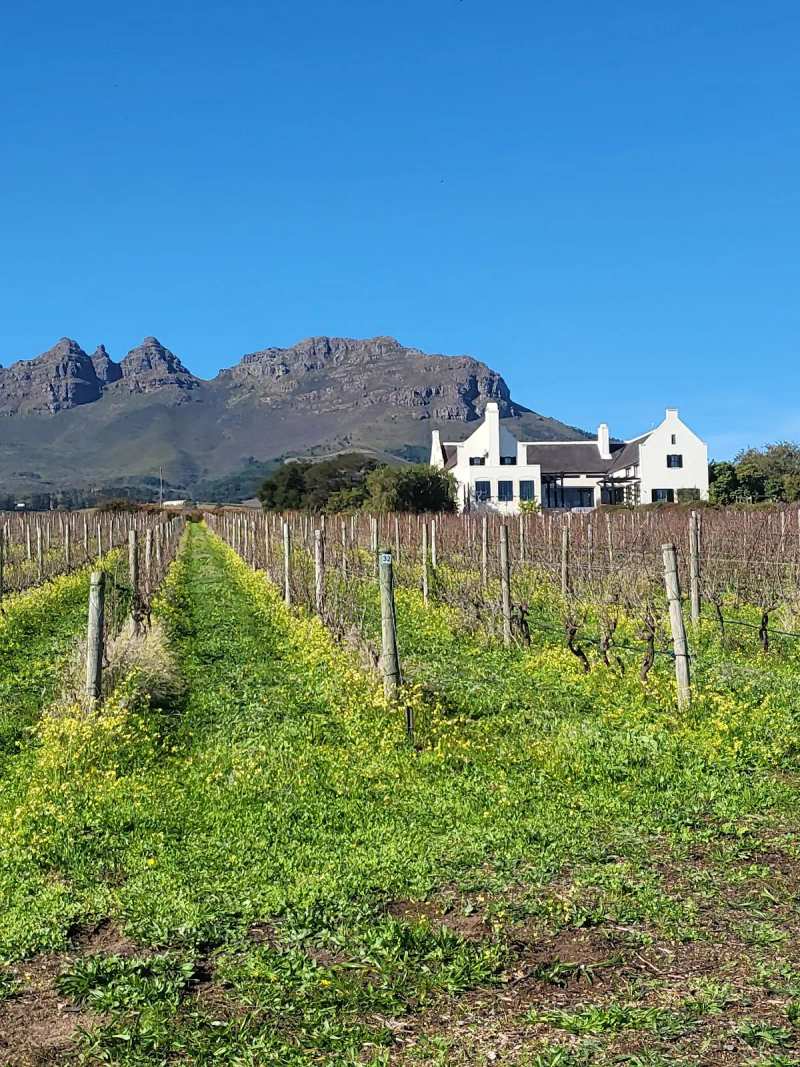
The old farms share a look, and knowing what you are seeing makes a visit far richer. The style is Cape Dutch: whitewashed walls, thatched roofs and ornamental gables over the front door, often with the year of building worked into the plaster.
Many manor houses are built on an H, a T or a U plan, and the grandest gables are on the front, facing the approach road. Inside, look for yellowwood and stinkwood beams, floors and doors, the indigenous hardwoods the early builders used.
The farm buildings were arranged around a werf, a yard with the manor at its head and the cellar, stables and workers' houses around it, usually enclosed by a low whitewashed wall. Walk the werf at Groot Constantia, Boschendal or Vergelegen and you can still see that layout.
And then there are the oaks. Simon van der Stel had oaks planted around Stellenbosch, and the town is still nicknamed Eikestad, the town of oaks. The great avenues and shade trees on many old farms date back centuries, and they are the reason so many tastings happen outside under green leaves.
Old families, not just old farms
Some farms are remarkable less for their founding date than for how long one family has stayed. The Myburghs at Meerlust, since 1756, are the best-known example in Stellenbosch.
In Wellington, the Bosman family’s farm has been in the family for eight generations, and its tasting room is built into the old cellar; sources disagree on exactly when the first Bosmans arrived, so treat any single date with caution. In the Robertson valley, Rietvallei celebrates more than 160 years of family winemaking, with tastings paired with cheese.
Lunch at the old farms
Many of the old farms are as good for a meal as for a tasting, and eating in a historic setting is half the pleasure. Groot Constantia has two restaurants on the estate, and Steenberg's Bistro 1682 serves lunch a short drive away at the Tokai end of the valley.
In the Drakenstein valley, Boschendal’s Deli serves farm breakfasts and wood-fired pizza near the old buildings, and picnics on the lawns are a Boschendal tradition. In Paarl, Laborie's bistro, Stoep, and The Manor at Nederburg both put you at a table beside a historic Cape Dutch house.
Further south, Vergelegen's restaurant and gardens make a long lunch easy to justify, and at Spier the farm café and lawns suit families. Book the restaurants at weekends, especially in summer.
Visiting the old farms
Most of these farms are working estates, not museums, so the history is part of the visit rather than the whole of it. The best way to see it is to look past the tasting counter: the gables, the old cellars, the oak avenues and the werf, the yard around which the farm buildings were arranged.
If you have one day, spend it in Constantia, where Groot Constantia's museum and three or four old farms sit close together. With two days, add Stellenbosch's early farms, from Blaauwklippen and Spier on one side of town to Rustenberg and Lanzerac on the other. Vergelegen and the Huguenot farms of Franschhoek each deserve a day of their own.
All of them sit within the main wine regions around Cape Town, so an interest in history fits easily into any wine trip.
Frequently asked questions
Published August 17, 2026