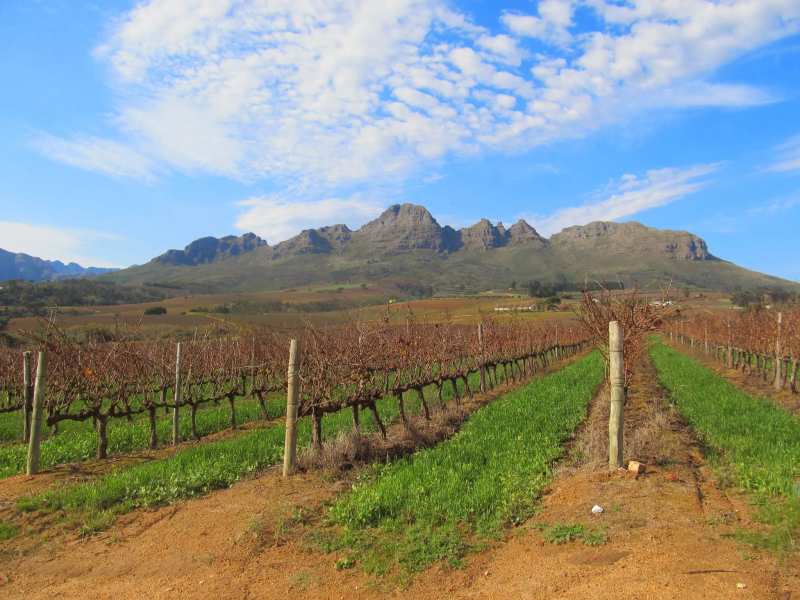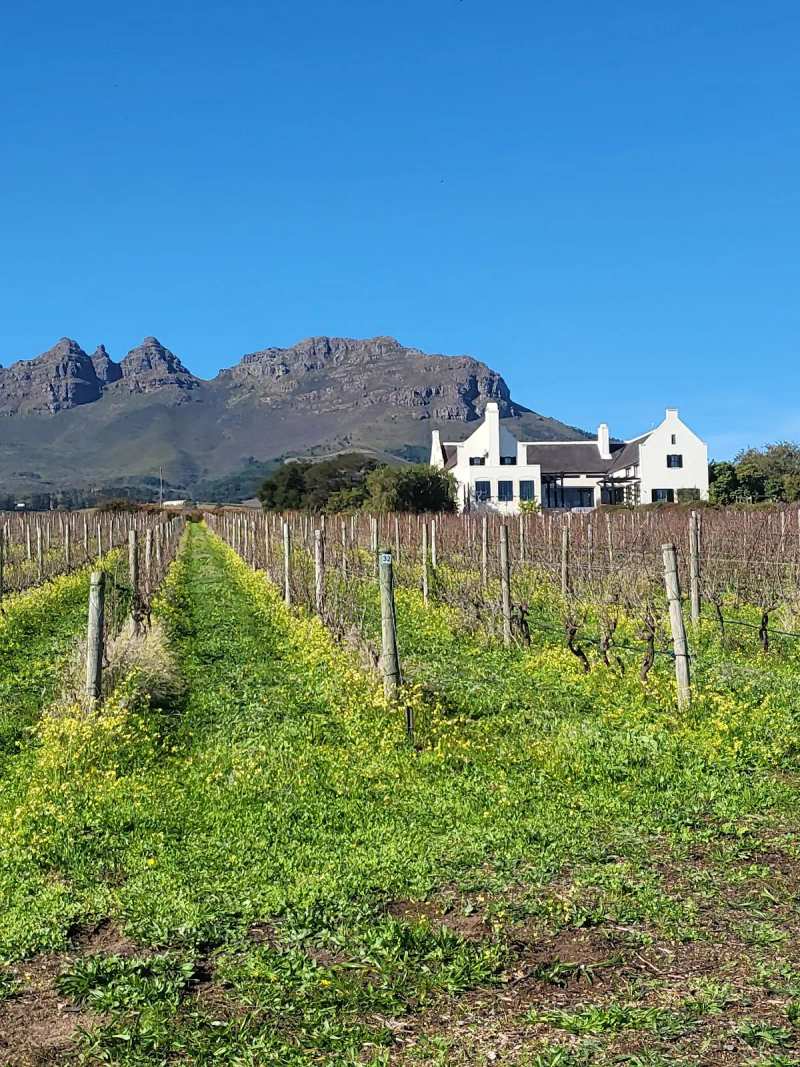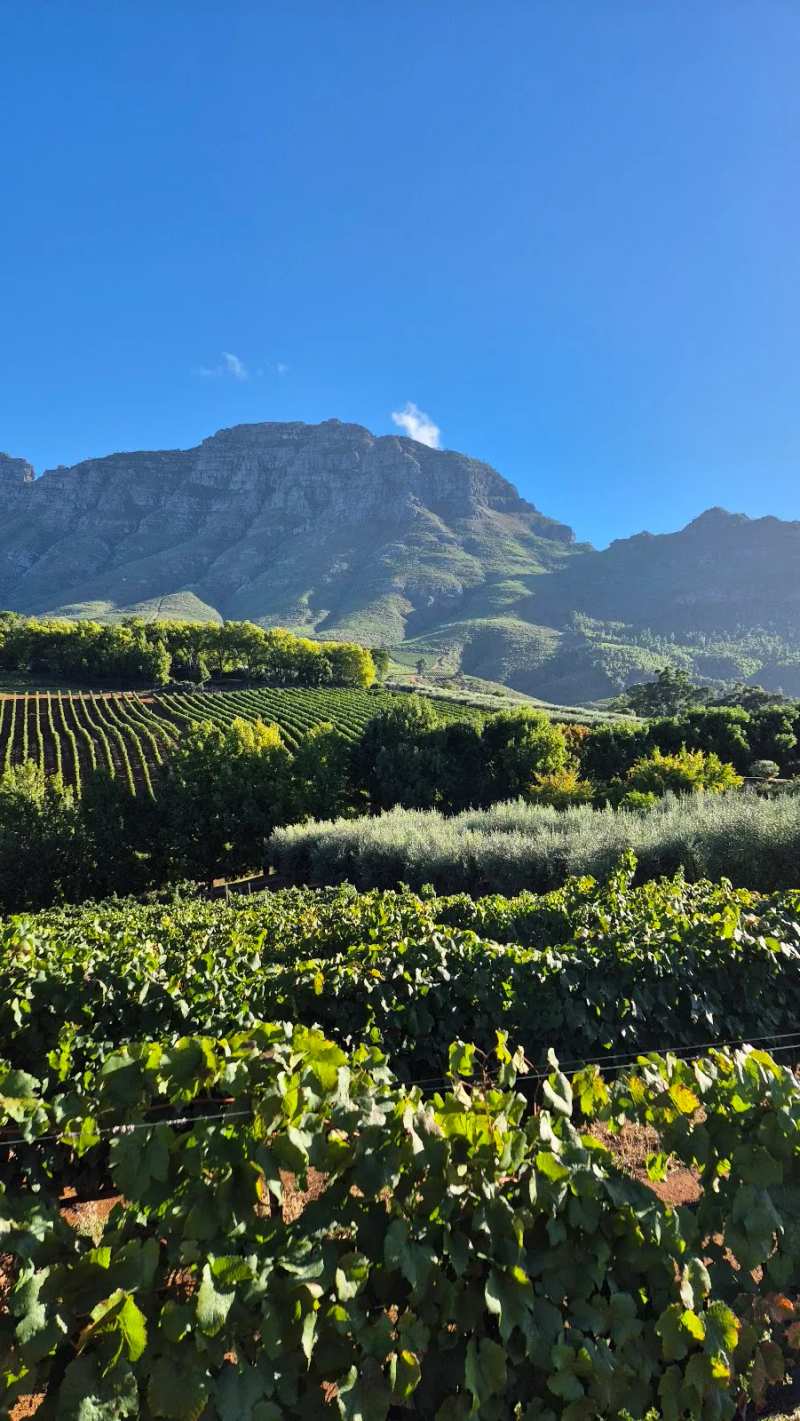
After a winter storm, the granite domes on the mountain above Paarl catch the light and shine, which is how the town got its name: the Dutch called the rock de Paarl, the pearl. The vineyards spread out below it in every direction, and the Paarl wine farms are some of the most varied in the Cape, from a goat farm with a tower in the middle of the car park to a historic estate where the first vines went in during the 1690s.
Paarl gets fewer overseas visitors than Stellenbosch or Franschhoek, which works in its favour. Tastings are easier to walk into, lunch tables are easier to find, and the farms feel less polished and more like places where people actually grow grapes. It sits about 54 km north-east of Cape Town in a straight line, reached on the N1.
The farms are not on one road. They fall into four clusters around the town, and the easiest way to plan a day is to pick a cluster rather than criss-cross the valley. This guide follows those clusters, with the farms worth stopping at in each and where to book lunch.
Where Paarl's wine farms are
Think of Paarl Mountain as the centre of a clock. The town runs along its eastern foot, and the wine farms sit in four groups around it.
South-west of the mountain, the Suid-Agter-Paarl Road (South Behind-Paarl Road) holds Fairview and Spice Route, about a kilometre apart and roughly 5 km from the middle of town. On the edges of town itself, Laborie sits under the mountain at the southern end of the main road, and Nederburg lies about 4 km east toward the Drakenstein mountains.
Further south, about 10 km out, the Klapmuts and Simondium end of the valley runs along the R45 toward Franschhoek and holds Babylonstoren, Noble Hill and Glen Carlou. And north of the mountain, the Noord-Agter-Paarl Road leads through Windmeul to Rhebokskloof and Tempel, with Wellington's farms another 11 km or so to the north-east.
Two clusters make a comfortable day. Three is possible with an early start and a designated driver. Paarl is one of the Western Cape's eight wine regions, and the one most often skipped by people who only have time for the famous two.
Suid-Agter-Paarl Road: Fairview and Spice Route
If you only visit one part of Paarl, make it this road. Two farms owned by the same family sit a kilometre apart on the slopes south-west of the mountain, and together they fill an afternoon with very little driving.
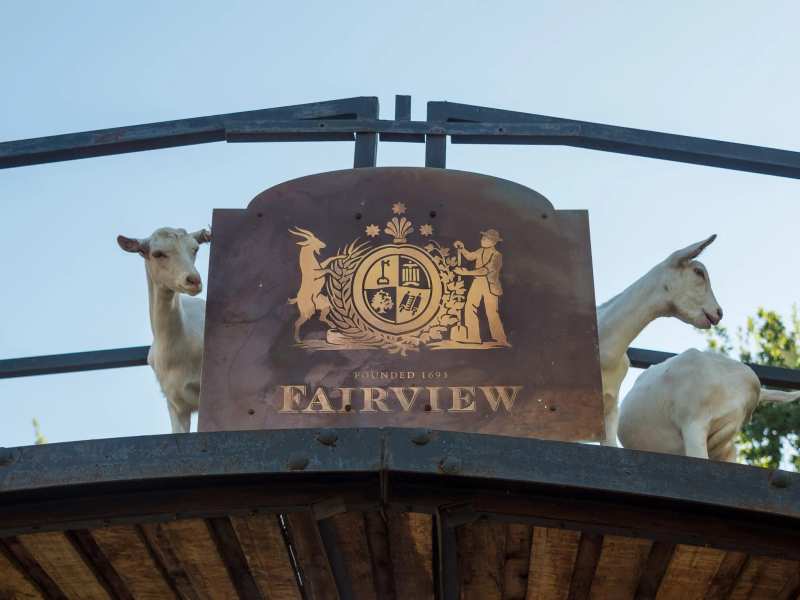
Fairview is the Paarl farm almost everybody has heard of. The Back family has run it since the 1930s, and the cheesery started in 1980 with a couple of goats; the farm now keeps a herd of several hundred. The goat tower at the entrance has been there since 1981, a spiral of wooden platforms that the goats climb all day while visitors take photographs.
The main tasting pairs Fairview wines with a selection of its own cow and goat's milk cheeses, which makes it one of the more filling tastings in the province. For something quieter, the Beryl Back Master Tasting Room offers seated, tutored tastings set apart from the busy main room.
The Goatshed restaurant, open since 2004, does farm-style food and cheese platters and has a children's menu. The deli next to it sells the farm's cheese, bread and preserves, which is worth knowing if you are planning a picnic later in the day. Look out for the Goats do Roam wines on the list, a range whose name is a play on Côtes du Rhône and whose labels lean into the joke. Expect tour buses in the car park on most days. The farm suggests allowing two to three hours for a tasting and lunch, and that is about right.
Next door, the Spice Route complex opened in 2013 as a collection of small producers on one farm. The wine comes from the family's Swartland vineyards, and around it sit a chocolate maker, a distillery making grappa and gin, a charcuterie tasting and a glass-blowing studio where you can watch the work through the windows.
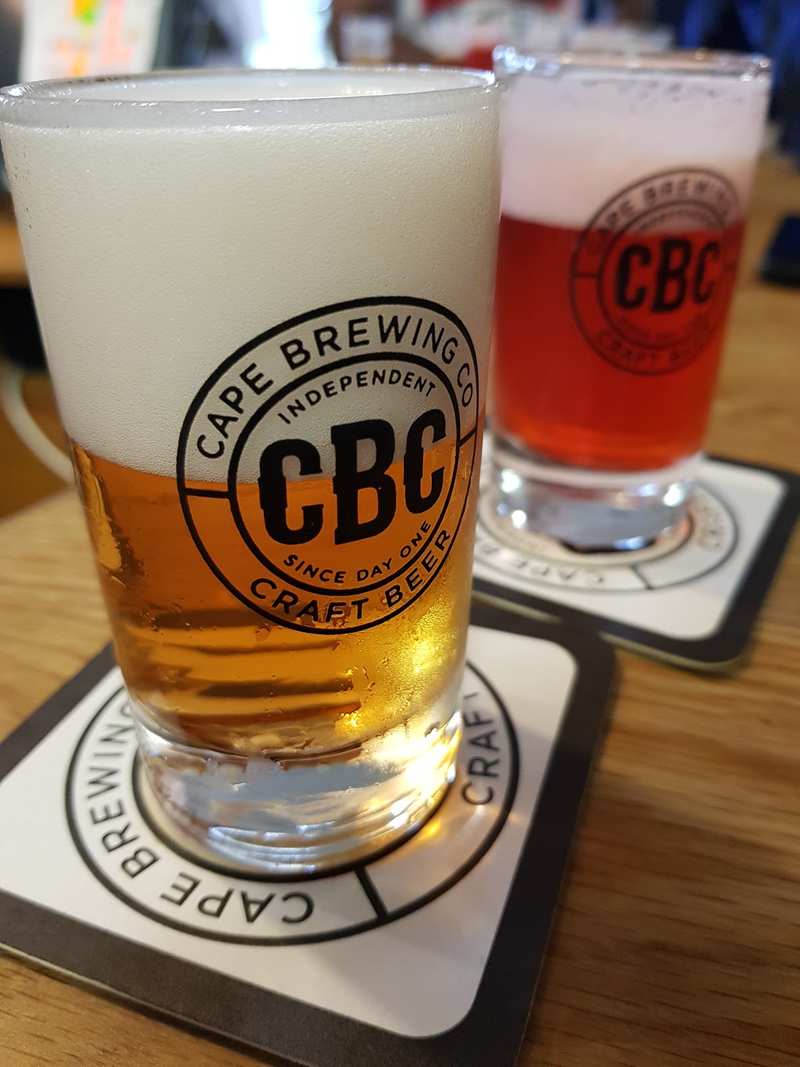
The beer is from Cape Brewing Company, whose tasting room lets you look straight into the brewhouse through glass panels. Each venue keeps its own hours, so check before you go if one of them is the reason for your visit.
The chocolate is made by De Villiers, which bills itself as the country's first bean-to-bar chocolate maker, and you can taste it alone or paired with wine. At the Wilderer distillery, the grappa and fruit brandies are the house speciality, and the pizzeria next door makes a good stop if anyone in the group is hungry before the wine.
A tasting passport lets you work through several venues in one visit, and there are places to eat ranging from pizza to a beer garden with biltong. On a clear day you can see Table Mountain from the terrace. Families tend to like it here because there is a play area and enough variety to keep everyone interested.
Laborie and Nederburg, on the edges of town
The two big estates closest to Paarl itself could hardly be more different in feel, and both are easy to add to a day on the Suid-Agter-Paarl Road.
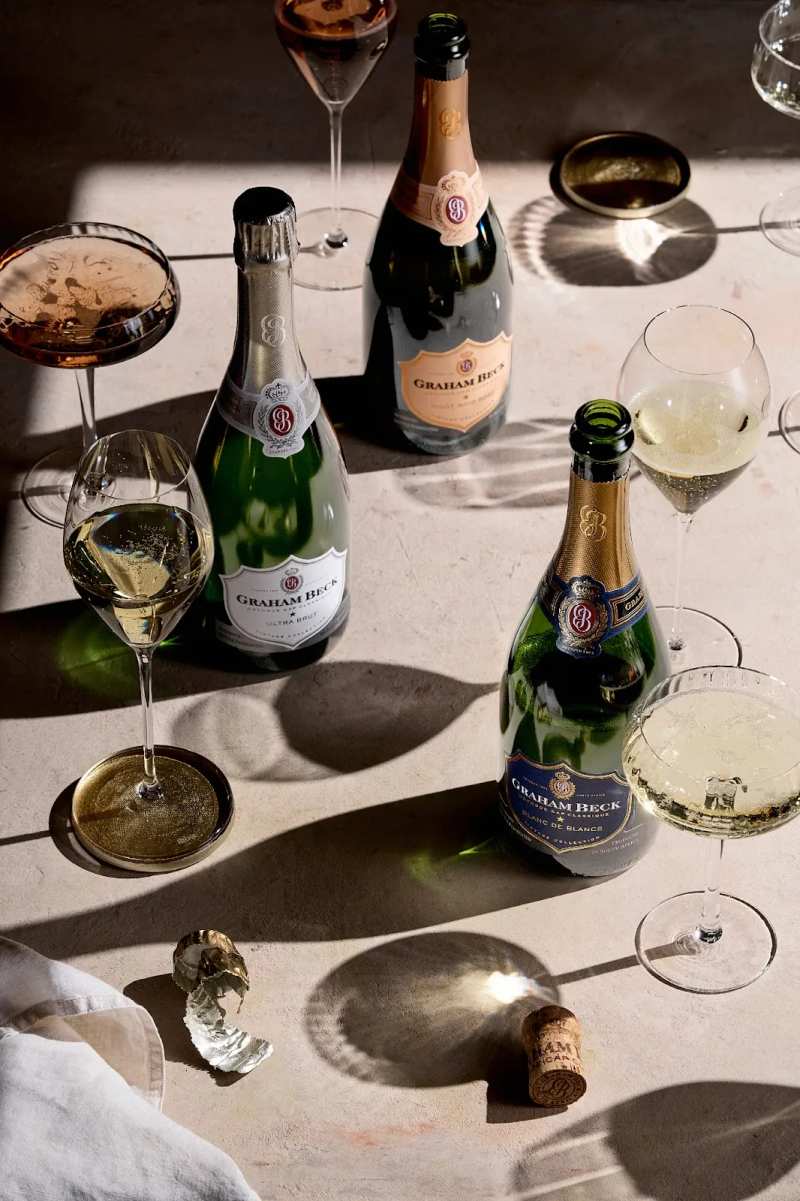
Laborie belongs on any list of the oldest wine farms in the country, and it is one of the few where the history and a relaxed modern lunch sit comfortably side by side. Its Cap Classique range, the Cape's bottle-fermented sparkling wine, is worth a taste if you see it on the menu.
On the eastern side of town, Nederburg is one of the best-known names in South African wine and one of the biggest. Visitors come for the manor house: a thatched, gabled Cape Dutch homestead with 1800 on its front gable, now a national monument that keeps its original yellowwood shutters, beams and doors, with The Manor restaurant inside and a broad lawn under tall trees outside.
The Manor serves breakfast, lunch, cheese and charcuterie platters and picnics in the garden. The tastings change through the year and have included a food-and-wine pairing tasted partly blindfolded, which is more fun than it sounds. Children are well looked after, with lawn games, a jungle gym and a zip-line. Nederburg also hosts the long-running Nederburg Auction, often described as the oldest wine auction in the New World, though that is a trade event rather than something to plan a visit around.
Simondium and Klapmuts: the R45 end
South of town, the valley opens out toward the Simonsberg and the R45 runs on toward Franschhoek. The farms here are about 10 km from the middle of Paarl and only a little further from Franschhoek, so this is the cluster to choose if you want to see both valleys in one day.
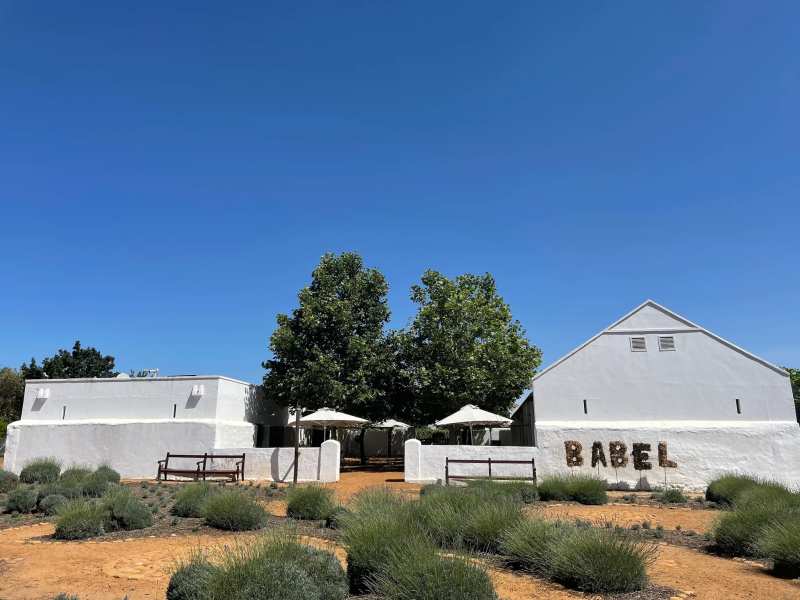
Lunch at Babel at Babylonstoren is served in an old cow shed that keeps its thick Cape Dutch walls and adds glass sides, so you eat looking straight out at the vegetable beds that supplied the plate. The menu changes with the harvest, and the room fills quickly.
The garden is one of only two in Africa partnered with Britain's Royal Horticultural Society, and the guided garden walks are the best way to understand how it works. Beyond the garden there is a bakery, a farm shop selling bread and cured meats for a picnic, and a cellar with exhibits on how the wine is made.
Which of the Franschhoek Wine Tram's lines reaches Babylonstoren has changed from season to season, so check before you plan a car-free day around it.
About a kilometre away on the same slopes, Noble Hill is a smaller organic estate on the Simonsberg. Its Harvest restaurant puts tables under the trees and in covered areas outside, and the tasting room focuses on fresh, mineral wines including Chenin Blanc and a Cap Classique. It is a calmer alternative to Babylonstoren on a busy Saturday.
On the Klapmuts side, the vines at Glen Carlou have grown on the Simonsberg-Paarl slopes since 1988, and the farm was among the first in the Cape to make a name for Chardonnay. The visitor centre combines a tasting room, a lunch restaurant with views across the valley and a large contemporary art gallery, which is reason enough to stop for anyone travelling with a non-drinker.
Closer to town, Bacco Estate is a small farm with an Italian feel, where you can taste the white wines with a cheese platter or stay for a main course. It suits a quiet weekday stop between the bigger names.
Windmeul and the north
Drive round the northern end of Paarl Mountain and the valley changes again. The Noord-Agter-Paarl Road (North Behind-Paarl Road) runs through farmland around the village of Windmeul, the traffic thins out, and the farms feel more rural.
Rhebokskloof suits families especially well. The play area is close to the tables, there is a children's menu, and children can bring bikes and balls for the lawn. If you want a long lunch while the children burn off energy, this is the farm in Paarl to choose.
Nearby, Tempel Wines is a small producer working with Mediterranean grapes such as Cinsaut, Grenache, Mourvèdre and Tempranillo. The tasting happens at a Cape Dutch cottage that was once known as the Jooden Tempel, and there is a small B&B with views of Paarl Mountain and the Berg River.
Wellington wine farms
Wellington is a farming town about 11 km north-east of Paarl, at the foot of the mountains below Bain's Kloof Pass. Most visitors never get this far, which is a pity, because the Wellington Wine Route counts around a dozen farms and the tastings are among the most relaxed in the Cape Winelands.
Out on Hexberg Road, Bosman Family Vineyards has been in the same family for eight generations. The Bosmans are also among the country's biggest vine growers, supplying young vines to farms across the Cape, and the tasting room is built into the farm's old cellar. Saturday tastings have been by appointment, so check before driving out at the weekend.
Wellington is worth combining with Rhebokskloof or Tempel, since both sit on the northern side of Paarl and the road between them is quick and quiet.
Paarl wine farms with restaurants
Lunch is half the reason to come, and Paarl has more good farm restaurants than its quiet reputation suggests. The question is less where to eat than what kind of meal you are after.
For a casual family lunch, the Goatshed at Fairview, the terrace at Rhebokskloof and The Manor at Nederburg all work well and have space for children. For a more considered meal, Babel at Babylonstoren and Stoep at Laborie are the obvious choices. Babel needs a booking well ahead, especially at weekends.
East of town, toward the Klein Drakenstein mountains, the bistro at Brookdale Estate is one of the most talked-about tables in Paarl. It sits next to the tasting room and cellar, with a terrace looking over the vineyards, and it was voted among Dineplan's top 20 restaurants for 2025. It serves lunch on most days and dinner on a couple of evenings a week, with the exact days changing by season.
Glen Carlou's restaurant is a lunch-only affair with one of the best valley views in the area, and Noble Hill's tables under the trees are hard to beat on a warm day. Spice Route is the one to choose if your group cannot agree, with pizza, a beer garden and a sit-down restaurant all a short walk apart.
What Paarl pours
Paarl is warmer than Stellenbosch and much warmer than the coastal valleys, and the wines reflect it. The reds are generous: Shiraz and Cabernet Sauvignon do well here, and Pinotage, the Cape's own grape, is everywhere. Among the whites, Chenin Blanc and Chardonnay are the ones to try.
A few farms lean toward Mediterranean grapes that cope well with the heat, such as Grenache, Cinsaut and Mourvèdre, which Tempel builds its whole range around. Fairview and Spice Route have done a lot to popularise these grapes in the Cape, so a tasting on the Suid-Agter-Paarl Road is a good introduction.
If you prefer lighter, fresher wines, head for the cooler slopes of the Simonsberg at Noble Hill and Glen Carlou, or taste the Cap Classique at Laborie.
Planning a day in Paarl
A good first visit pairs Fairview and Spice Route in the morning with lunch at Laborie or Nederburg in the afternoon. All four sit within a few kilometres of each other, and you spend more time tasting than driving.
If you want gardens and food, start at Babylonstoren at opening time, then move a kilometre down the road to Noble Hill for a quieter tasting. If you are active, spend the morning on the trails at Rhebokskloof and the afternoon in the tasting rooms around Windmeul and Wellington.
Paarl is one of the best regions for family-friendly wine farms, thanks to the goats at Fairview, the play areas at Laborie, Nederburg and Rhebokskloof, and the sheer variety at Spice Route.
Paarl and Franschhoek are close enough to combine. From the Simondium end, the Franschhoek village is about 20 km away along the R45. If you would rather give the second half of the day to the Huguenot valley, Franschhoek's wine farms run from Boschendal right up to the mountains.
Weekdays are quieter than weekends at almost every farm. Tasting rooms generally open mid-morning and close in the late afternoon, some close on Mondays or Tuesdays, and hours change with the seasons, so check each farm's listing before you set off. And plan who is driving before the first tasting, not after.
If you have time for one more stop, the Afrikaans Language Monument on the slopes of Paarl Mountain has a wide view over the town and the vineyards on a clear day. It is a few minutes from Laborie and Fairview and makes a good break between tastings.
Higher up, the granite of Paarl Rock itself sits inside the Paarl Mountain Nature Reserve, with walking routes, fynbos and views across the whole valley. In spring the reserve is at its best, and a morning walk before the tasting rooms open is a good way to start the day.
Visiting Paarl without a car
Paarl is a driving region, and the farms are too spread out to walk between. The simplest car-free option is a day tour: operators such as Wine Flies collect from Cape Town and cover Paarl alongside Stellenbosch or Franschhoek. Check whether tasting fees are included before you book, because with some operators they are paid on the day.
At the Simondium end, the Franschhoek Wine Tram is the other option, and it suits a day built around Babylonstoren and the Franschhoek valley rather than the farms around Paarl itself. Within any one cluster, a short taxi ride between neighbouring farms is usually enough, especially on the Suid-Agter-Paarl Road, where Fairview and Spice Route sit a kilometre apart.
Frequently asked questions
Published July 6, 2026