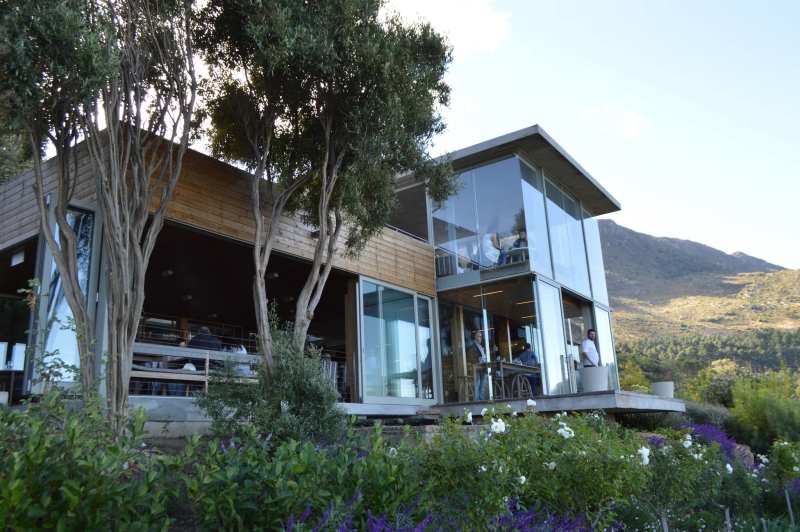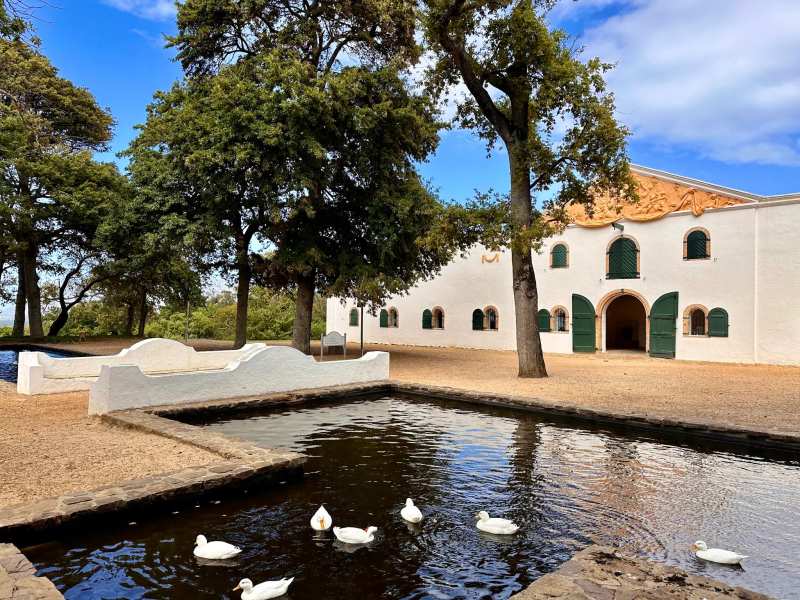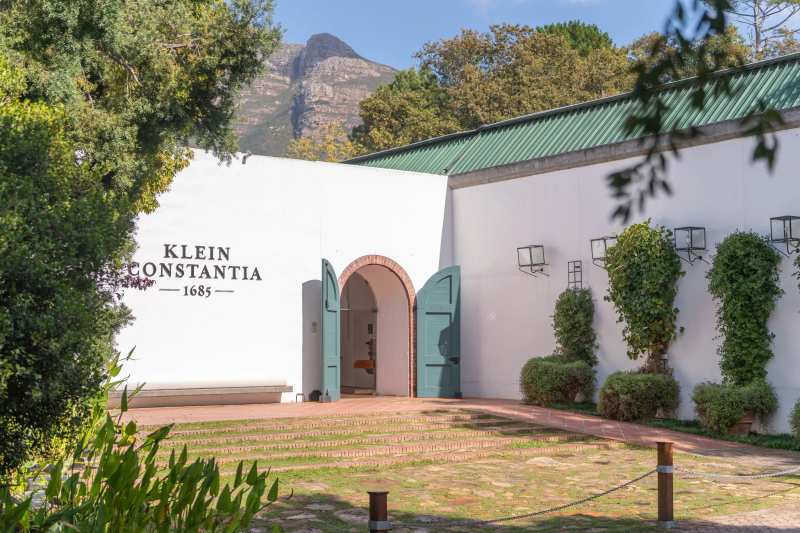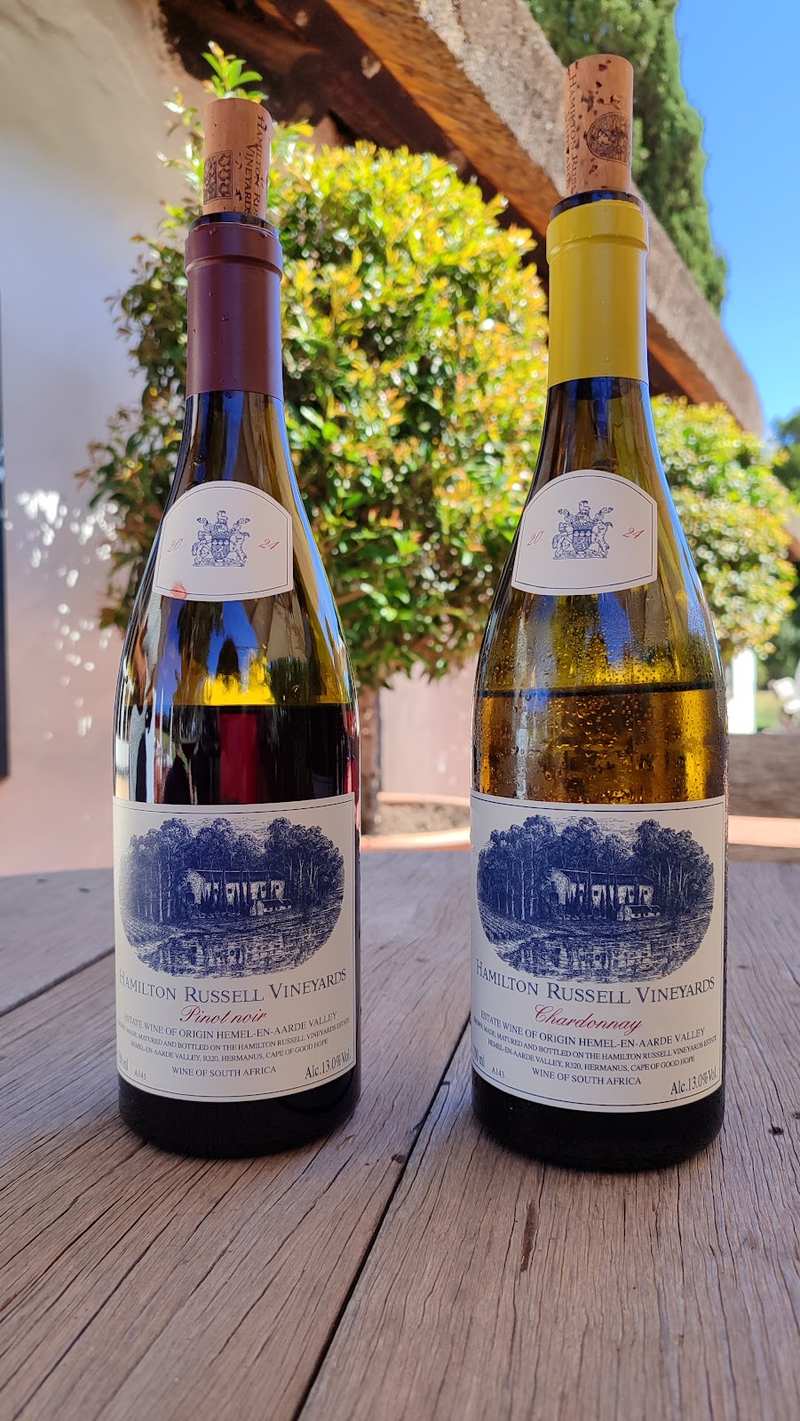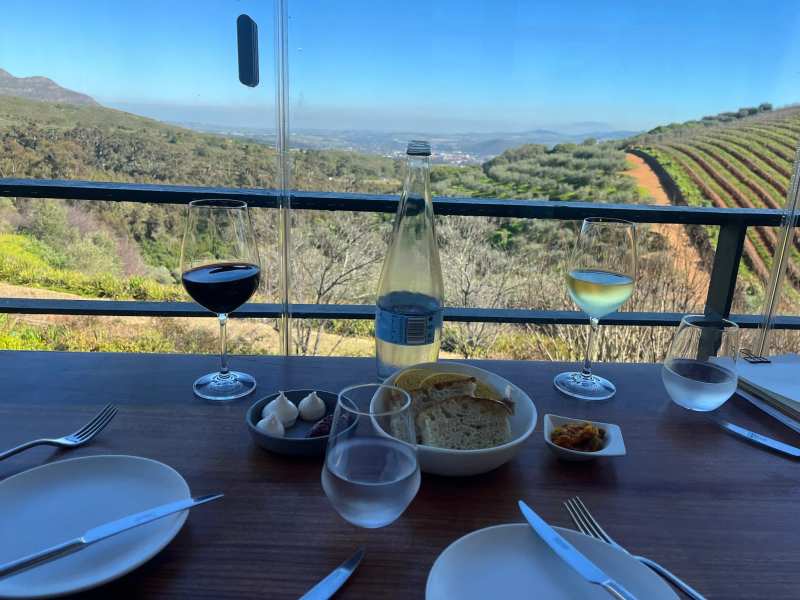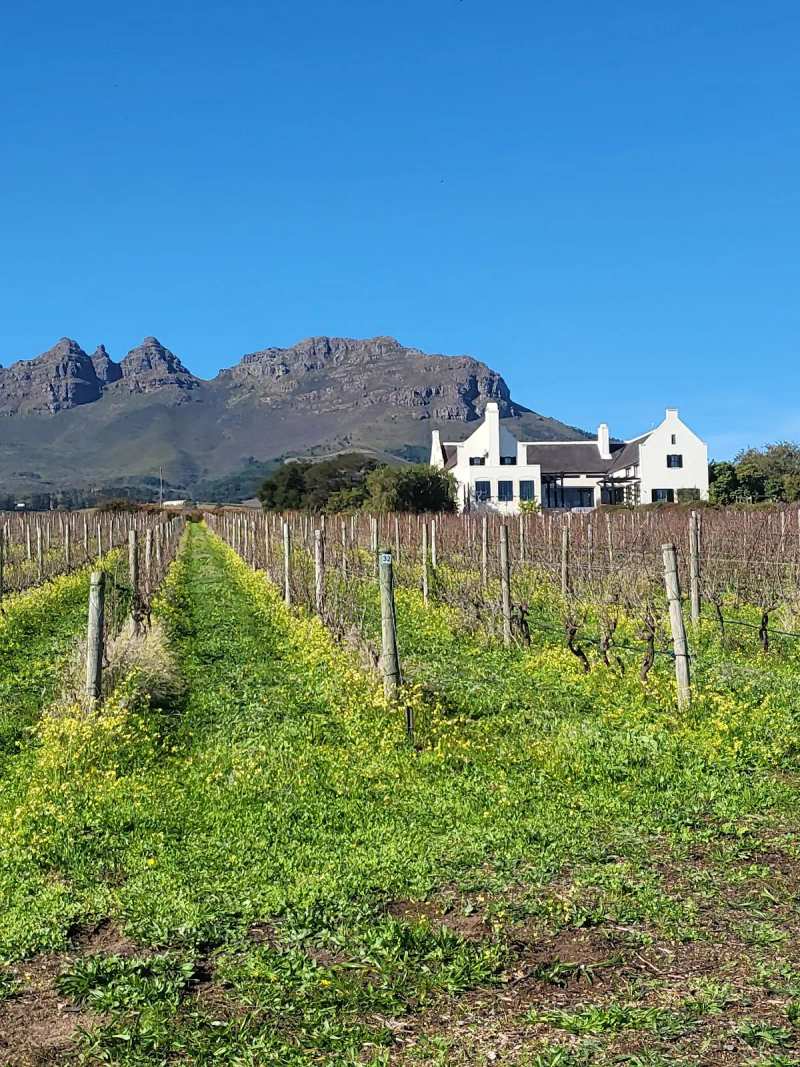
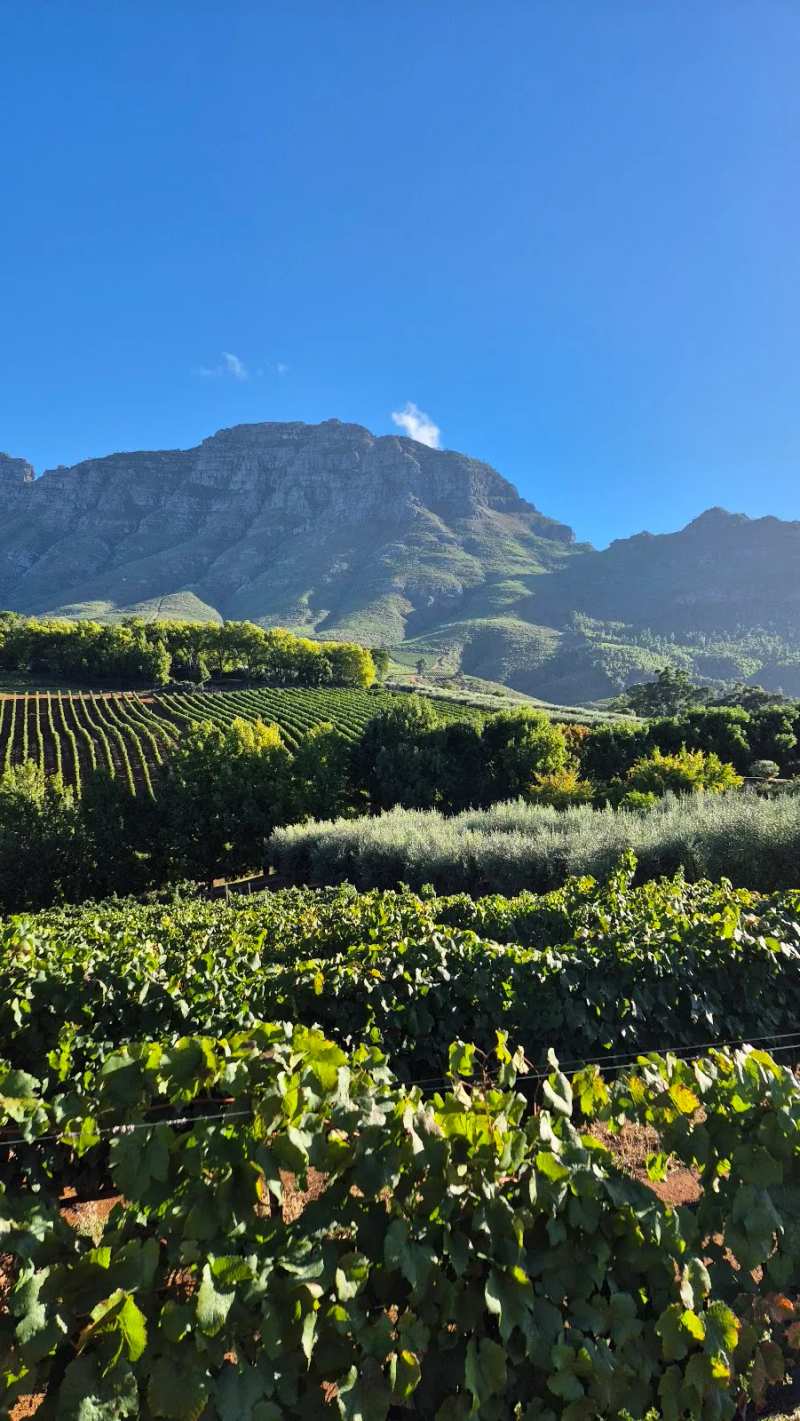
Stand on the terrace at Tokara on a clear afternoon and you can see most of the district at once: vineyards running down the Banhoek Valley, the university town in the middle, and False Bay shining at the far end. It is a lot of farms. The Stellenbosch wine farms are the largest group you can visit anywhere in the country, with roughly 150 cellars on the local wine route alone, and choosing between them is the hard part.
The trick locals use is to think in roads rather than names. The farms fan out from town along a handful of routes, each with its own character: big red-wine estates under the Simonsberg to the north, mountain views on the Helshoogte Pass to the east, a quiet valley behind town, polished estates to the south and a cluster of family farms out west. Pick a road, give it a day, and you spend your time tasting rather than driving.
This guide follows those roads, with more than 20 farms placed where they actually are. Stellenbosch is about 40 km east of Cape Town in a straight line, and every distance below is measured from the middle of town.
How Stellenbosch's wine farms are laid out
Picture the town as the hub of a wheel. Five roads and valleys run out from it, and the farms line each one.
North, the R44 runs toward Klapmuts under the Simonsberg mountain, with side roads such as Knorhoek Road climbing into the slopes. This is the district's Cabernet and Pinotage country, and many of the famous names sit here, between 6 km and 12 km from town.
East, the R310 climbs out of town over the Helshoogte Pass toward Pniel and Franschhoek, with the Banhoek Valley below it. The farms up here, about 6 km out, have the views people come for. Closer in, the Jonkershoek Valley runs behind the town itself, with farms only a few kilometres from the centre.
South, Annandale Road and Blaauwklippen Road lead toward the Helderberg and Somerset West. West, the R310 and Polkadraai Road head toward the Cape Town side, with the Bottelary Hills to the north of them. These western farms sit between 5 km and 14 km out.
The official Stellenbosch Wine Routes body groups the farms differently, into the route's five official sub-routes, which is worth knowing if you are booking a tour. For a self-drive day, though, the roads are easier to follow.
The R44 north: Cabernet country under the Simonsberg
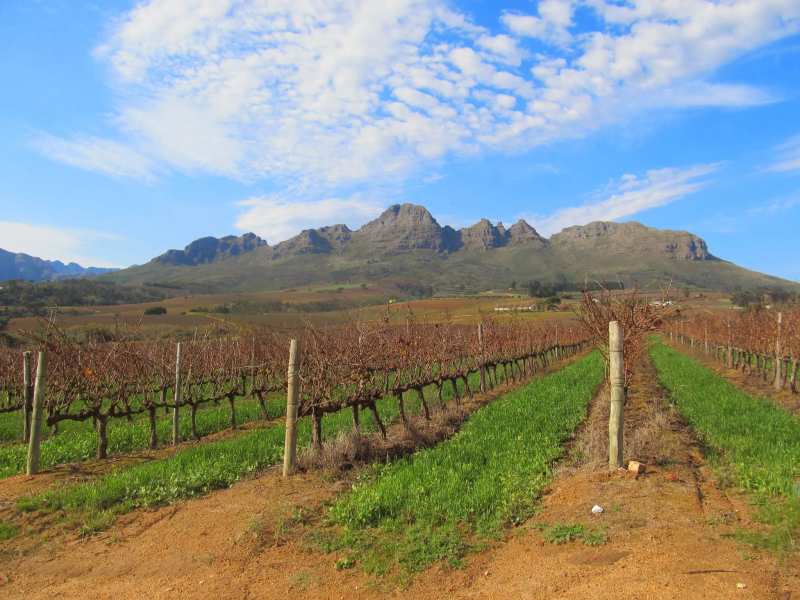
Head north out of town on the R44 and the Simonsberg fills the windscreen. The granite slopes and cooler nights here suit red wine, and this stretch holds more famous names per kilometre than anywhere else in the district.
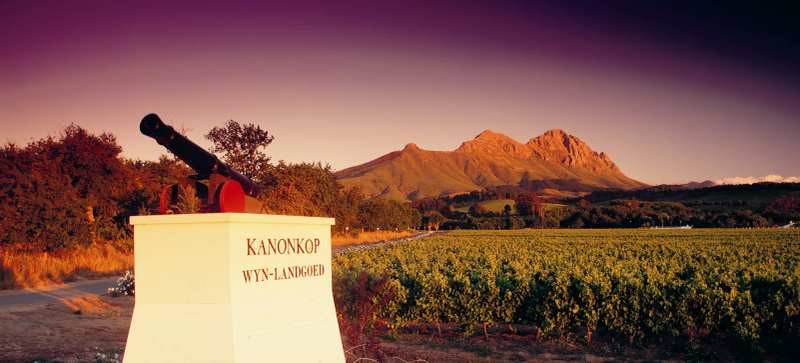
Kanonkop Estate, about 9 km north of town, is the farm South Africans mention first when they talk about serious red wine. The name means cannon hill: in the 1600s and 1700s a cannon was fired from a hillock on the Simonsberg above the farm to announce ships arriving in Table Bay. The Sauer family has owned it for four generations, and its flagship red blend is named after Paul Sauer.
Pinotage is the reason most people come. The tasting includes a dedicated Pinotage flight that runs from the easy Kadette to the flagship Black Label, made only in the best years, which makes this one of the best places in the country to understand the grape.
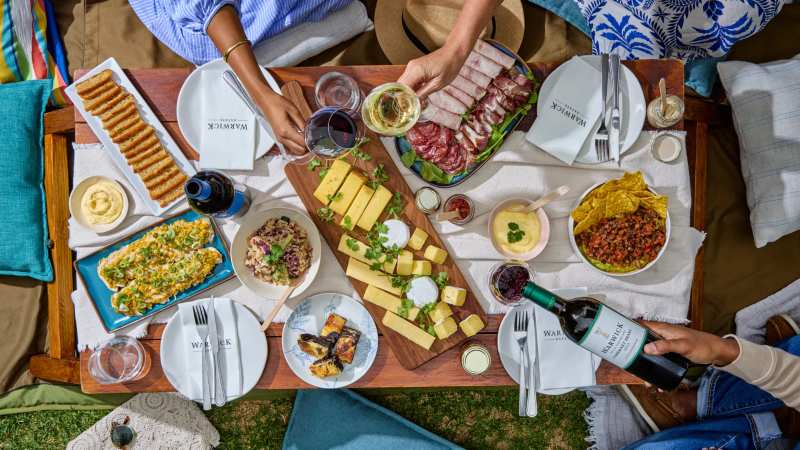
A little further up the road, Warwick Estate is the farm to choose if you want the afternoon to stretch. The gourmet picnics on the lawn are the main event, and there is a burger bar for a quicker bite, with seats on a first-come basis.
Warwick also runs a Big Five vineyard safari, a drive up into the vineyards and the mountain slopes in an open vehicle, where each of the farm's flagship grapes is matched with one of the Big Five animals. It is a good way to see how high the vineyards climb, and it suits anyone who has had enough of tasting rooms for a while.
Turn off onto Knorhoek Road and you reach Muratie, which may be the most atmospheric tasting room in the Cape. The house on the farm was first built in 1685, and the Melck family connection goes back to 1763. In the 1920s the farm belonged to the painter George Paul Canitz, who planted some of the first Pinot Noir in the country; his old studio is now a gallery where you can sit for a tasting.
The cobwebs are part of the deal. The family leaves them undisturbed in the old tasting room, with its stained-glass windows, and asks visitors to do the same. The farm kitchen serves breakfast and lunch under the oaks, there is a children's menu, and mountain-bike permits are sold at the tasting room. Try the Port before you leave.
The farm left the Melck family for long stretches of its history, and Ronnie Melck, a direct descendant of the 1763 owner, bought it back in 1987. His son Rijk runs it now, and one of its ranges tells the stories of the people who shaped the farm, from Canitz to the winemakers who followed him. If you want something different from a straight tasting, there is a chocolate and wine pairing.
Next door on the same road, Delheim has a garden restaurant serving German and South African dishes with views across the valley, and tastings that include its Pinotage. It is a relaxed lunch stop between Kanonkop and Muratie. A short way back toward town, Quoin Rock is a polished contrast, with a guided tasting of five wines in its wine lounge and fine dining at Gåte, its restaurant.
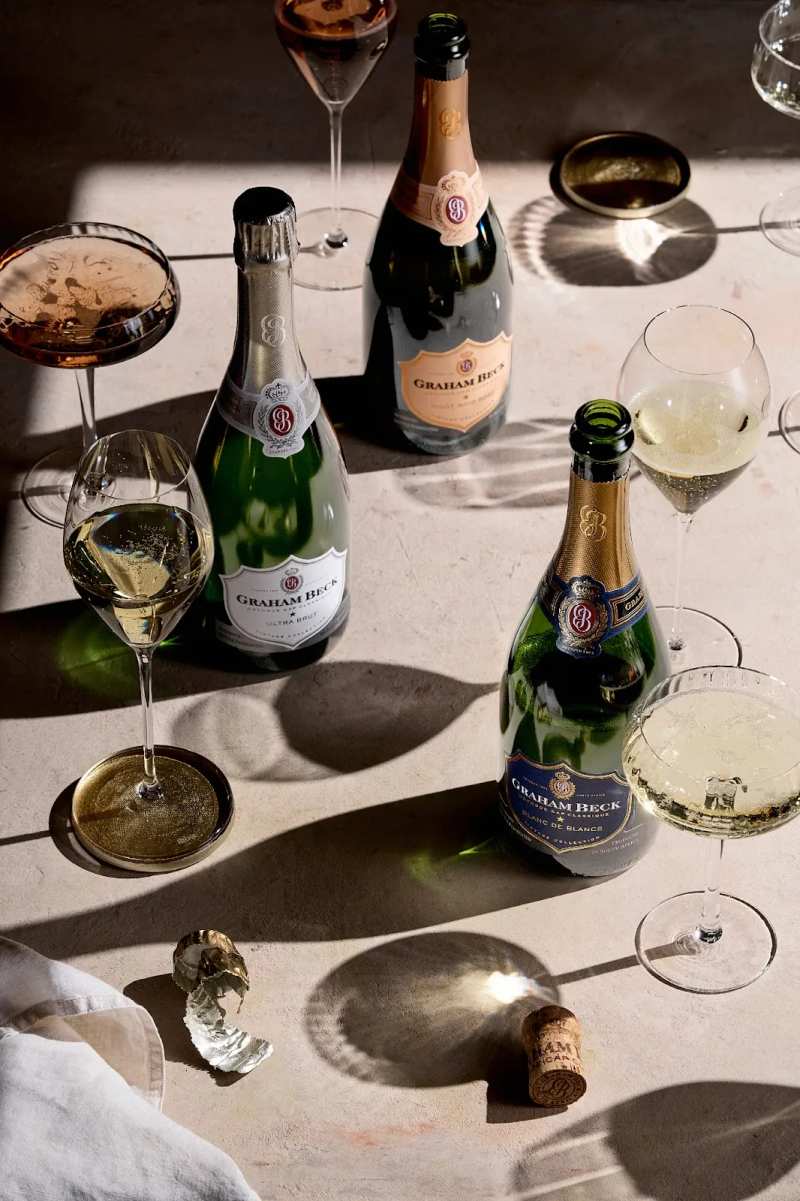
North-west of town, off the R304 rather than the R44, Simonsig has a place in Cape wine history. In 1971 Frans Malan made Kaapse Vonkel here, the country's first traditional bottle-fermented sparkling wine, and he also helped found the Stellenbosch Wine Route. His family still runs the farm, and you can taste the full range of Cap Classique under the oaks in summer or by the fire in winter. The tasting of the day changes monthly, and the Cap Classique flight includes the Cuvée Royale, the estate's top sparkling wine.
The early story is a good one. Kaapse Vonkel, Cape Sparkle, cost R3 a bottle when it reached the shops in late 1972, which made it one of the most expensive white wines in the country at the time. The first bottles Simonsig sourced were made for German sparkling wine, and many of them exploded under the pressure of the fizz.
Close by, Beyerskloof calls itself the home of Pinotage. Its founding winemaker, Beyers Truter, is known locally as the Pinotage King, and the farm is the country's best-selling producer of the grape. The restaurant does Pinotage-friendly food with views over the vineyards.
At the far end of the cluster, about 12 km from town, Mitre’s Edge is a small farm making Bordeaux-style reds, with tastings by booking only. And on the foothills of the Simonsberg closer in, Remhoogte is a family estate where the tasting room looks out over springbok grazing below the vineyards.
Helshoogte Pass and the Banhoek Valley
The R310 east of town climbs steadily onto the Helshoogte Pass, and the farms near the top have the views that end up on postcards. They sit about 6 km from the middle of Stellenbosch, so this is an easy half day from town.
Directly across the road, near the highest point of the pass, Delaire Graff Estate belongs to the jeweller Laurence Graff, and it shows. There is a lodge and spa, a large private art collection on display, and two restaurants, one of them Hōseki, which holds two stars in Eat Out's 2026 list. Tastings happen on the terrace or in the lounge, and the view down the valley is the equal of Tokara's. The lodge has 16 cottages, and art from Graff's own collection hangs throughout.
A little higher, Thelema is the opposite of a showpiece. Gyles Webb bought the farm, then a run-down fruit farm, in 1983 and released the first wines in 1988. The vineyards climb from about 370 m to 640 m, which makes it one of the highest and coolest farms in Stellenbosch. Webb was an accountant until a glass of white Burgundy changed his mind; he went back to study winemaking at Stellenbosch University. Thelema is the Greek word for will.
There is no restaurant and no spa, only a tasting room above the cellar with a big view. Ask for The Mint, a Cabernet Sauvignon with a distinctive minty edge that has a cult following, and taste the Sutherland wines from the family's Elgin vineyards alongside. Tastings run Monday to Saturday; the tasting room has been closed on Sundays.
On the way back down toward town, a turn into Ida's Valley leads to Rustenberg, one of the most beautiful old farms in the district. Vines have grown here since 1682, and the manicured gardens and open lawns make it a peaceful stop at the end of a day on the pass.
From the top of the Helshoogte the road carries on down through Pniel, and the Franschhoek valley on the other side of the pass is the natural next stop if you want to see two districts in one day.
Jonkershoek and Lanzerac: farms on the edge of town
The Jonkershoek Valley runs south-east from the town into the mountains, and it is the closest wine country to the centre of Stellenbosch. If you are staying in town and do not want to drive far, start here.
Further up the valley, the Postcard Café at Stark-Condé sits at the edge of a dam with the Jonkershoek mountains behind it. It serves breakfast, cakes and lunch, with a wine suggestion next to each dish, and it is a local favourite for a slow weekend breakfast. The Stark-Condé tasting room sits on a small island in the same dam.
The Jonkershoek Nature Reserve at the end of the valley has hiking trails, so this is a good corner to combine a morning walk with an early lunch and a single tasting.
South: Annandale and Blaauwklippen roads
South of town, two roads run toward the Helderberg and the Somerset West side of the district. The farms here are known for elegant reds and some of the most polished tasting experiences in Stellenbosch.
Up Blaauwklippen Road, Waterford was founded in 1998 by the Arnold and Ord families and built around a shaded Cape-Mediterranean courtyard with a fountain, at the end of a road lined with lavender. There is no restaurant, which is deliberate: the farm is about the wine.
Waterford was the first farm to make its own chocolates for a wine pairing, created by founder Kevin Arnold with the chocolatier Richard von Geusau, and the pairing is still the reason most people visit: the Shiraz with a masala chai dark chocolate, the Cabernet Sauvignon with a rock salt chocolate and the Heatherleigh sweet wine with a rose geranium milk chocolate. The farm also runs two-hour wine drives through its vineyards. The Heatherleigh, for the record, is named after the wives of the two founders.
Closer to town, Blaauwklippen Tasting House is the casual one. Tastings pair the wines with pizza and arancini, there are alcohol-free options for drivers, and two playgrounds and a pump track make it one of the easiest family stops in the district.
This road leads on toward the Helderberg, and the Helderberg farms around Somerset West sit only a few kilometres further south.
West: Polkadraai Road and the Bottelary Hills
The western side of the district, toward Cape Town, is where many families on a day trip from the city end up. The farms are a little flatter and further apart, between 5 km and 14 km from town, and several are built for long, easy days.
On Polkadraai Road, Neethlingshof Estate is approached along a long avenue of pines, and its restaurant sits in the old manor house. It offers several tastings and wine-and-snack pairings, a deli for breakfast or lunch and a wine garden serving pizza, and children get a juice and snack pairing of their own.
At the end of Stellenbosch Kloof Road, the Jordan estate looks across the vineyards to the mountains from the Bottelary hills. The family is known for Chardonnay, especially the Nine Yards, and for the Cobblers Hill red blend, and The Jordan Restaurant was starred in Eat Out's 2026 awards. It is a serious lunch destination, so book. Since 2022 the kitchen has been run by chef Marthinus Ferreira, and the restaurant now carries his name.
On Bottelary Road, Hazendal dates back to 1699 and has a hotel, gardens, a vintage car collection and a wine lounge in the farm's original cellar, built around 1870. The gardens were laid out by Leon Kluge, and there is an organic harvest garden that supplies the kitchen. It has run a supervised children's centre, Wonderdal, for children from five to thirteen, which makes it unusually useful for parents who want an adult tasting.
Further out on Polkadraai Road, Saxenburg has a safari-meets-vineyard feel, with wild animals roaming the farm, and offers accommodation for a night in the country.
South-west toward the coast, Meerlust has been in the Myburgh family since 1756, and the estate is a national monument. Its Rubicon, a Bordeaux-style blend first made in 1980 and released in 1983, is one of the best-known South African reds; the name refers to Caesar crossing the Rubicon, a nod to the risk the family took in making it. The tasting is low-key and good value; book it through the estate. Meerlust belongs with some of the oldest farms still making wine in South Africa, alongside Spier and Neethlingshof on this side of town.
Where to taste Pinotage
Pinotage was born in Stellenbosch. Professor Abraham Perold crossed Pinot Noir with Cinsaut, which South Africans then called Hermitage, at Stellenbosch University in 1925, and the name joins the two. A century later the grape divides opinion, and the best way to make up your mind is to taste a few side by side.
Start at Kanonkop, where the Pinotage flight runs from the easy Kadette through a library release to the Black Label, made only in the best years. Then go to Lanzerac, the first estate to bottle a commercial Pinotage, from the 1959 vintage, and take the cellar tour that tells that story.
Beyerskloof makes more bottled Pinotage than anyone else in the country and serves it with food built to match, which is the friendliest way in for beginners. Simonsig's Red Hill Pinotage, from old bush vines, shows what the grape does with age and good oak, and Delheim includes Pinotage in its regular tastings.
If you only have time for two, make them Kanonkop and Beyerskloof. They sit a few kilometres apart on the north side of town and show the grape at both ends of its range, from a serious, age-worthy red to an easy wine for lunch.
Staying on a Stellenbosch wine farm
Spending a night on a farm changes the trip. You can taste late in the afternoon without worrying about the drive back, and you have the vineyards to yourself once the day visitors leave.
At the top end, Lanzerac in the Jonkershoek Valley and the lodge at Delaire Graff on the Helshoogte Pass are full hotels with spas and restaurants. Hazendal on the Bottelary side also has a hotel, with its gardens and Wonderdal on the doorstep for families.
For something smaller, Muratie rents out two historic rooms, the George Paul Canitz guest cottage and a studio in the old Melck homestead, each for two people. Mitre's Edge has vineyard studios and a poolhouse, and Saxenburg offers a night in a country farm setting with game on the property.
Staying in town is the other option. The centre of Stellenbosch has plenty of guesthouses and hotels, and the farms in Jonkershoek and on Blaauwklippen Road are a short taxi ride away.
What Stellenbosch pours
Stellenbosch is red wine country first. Cabernet Sauvignon and Bordeaux-style blends do best on the granite slopes of the Simonsberg, which is why Kanonkop, Warwick and Rust en Vrede are so well known. Pinotage, the Cape's own cross of Pinot Noir and Cinsaut, is a local speciality, and the Pinotage tastings at Kanonkop and Beyerskloof are the best introduction.
The whites are serious too. Chenin Blanc, South Africa's most planted white grape, does well across the district, and the cooler, higher farms such as Thelema and Jordan make fine Chardonnay and Sauvignon Blanc. For sparkling wine, Simonsig is where Cap Classique began.
If you are unsure where to start, choose by style. Red lovers should go north on the R44. White and sparkling drinkers will be happiest up on the Helshoogte Pass and at Simonsig. And anyone who wants a bit of everything should head west to Spier.
Booking, prices and when to go
Most Stellenbosch tasting rooms take walk-ins on weekdays. You pay per tasting at the counter, and the price depends on the range, with premium and food-paired tastings costing more. Book for groups, for weekends and public holidays, and for any special tasting such as a chocolate pairing or a vineyard safari.
The restaurants are different. The starred tables at Jordan, Rust en Vrede and Delaire Graff fill weeks ahead, especially in summer, so book as soon as your dates are fixed. Casual spots such as the Tokara Delicatessen and the deli at Neethlingshof rarely need a booking at all.
Opening days vary. Most farms open seven days a week, but some close on Sundays or Mondays and a few open by appointment only, so check each farm's listing before you set off. Tasting rooms generally close in the late afternoon.
The best months are February to May. The harvest runs through February and March, the weather is warm without the full heat of midsummer, and many farms hold harvest events. Winter, from June to August, is wetter and quieter, and plenty of tasting rooms light their fires. If lunch is the point of your day, wine farm lunches in Stellenbosch range from deli counters to dining rooms on Eat Out's star list.
Using the town as your base
Stellenbosch is a town worth an evening of its own, and basing yourself there makes every road in this guide easy to reach. Founded in 1679, it is the second-oldest town in South Africa after Cape Town, and its centre is full of whitewashed Cape Dutch and Georgian buildings under old oak trees. Dorp Street, lined with oaks, is the most historic street in town and a good place for an early-evening walk.
It is also a university town, home to Stellenbosch University, where Pinotage was created in 1925 and where many of the district's winemakers learned their trade. That gives the centre a young, lively feel during term, with restaurants and bars that stay busy well after the tasting rooms close.
From the centre, the Jonkershoek farms and Lanzerac are a few minutes away, the Helshoogte Pass and the Polkadraai farms are each about ten minutes out, and the R44 estates are a little further. No road in this guide takes more than a short drive from town, which is the main reason to stay here rather than in Cape Town.
Doing it without a car
Stellenbosch has more car-free options than any other wine district in the Cape. The Stellenbosch wine tractor pulls a trailer of visitors between farms, and the Stellenbosch Wine Walk is a guided walk through the vineyards with tastings along the way.
Hop-on hop-off wine tours run set routes through the district's farms, and private operators collect from hotels in town and in Cape Town. Within town, a short taxi ride reaches Lanzerac, the Postcard Café and Blaauwklippen, the farms closest to the centre.
Planning a day in Stellenbosch
Three or four farms make a full day. More than that and the tastings start to blur, so pick one road and follow it.
For a red-wine day, take the R44 north: a Pinotage flight at Kanonkop, lunch at Delheim or Muratie, and an afternoon picnic or safari at Warwick. For views, drive the Helshoogte Pass: Thelema in the morning, lunch at Tokara or Delaire Graff, and Rustenberg's gardens on the way back down.
For a family day, go west: Spier for the lawns and juice tasting, the deli and wine garden at Neethlingshof, and Hazendal if the children want an afternoon at Wonderdal. For something slower, stay in Jonkershoek: breakfast at the Postcard Café, a tasting at Lanzerac, and a walk in the nature reserve.
Stellenbosch is the biggest of the eight wine regions within reach of Cape Town, and the one that rewards a second visit most. Whichever road you choose, plan who is driving before the first tasting.
Frequently asked questions
Published July 13, 2026