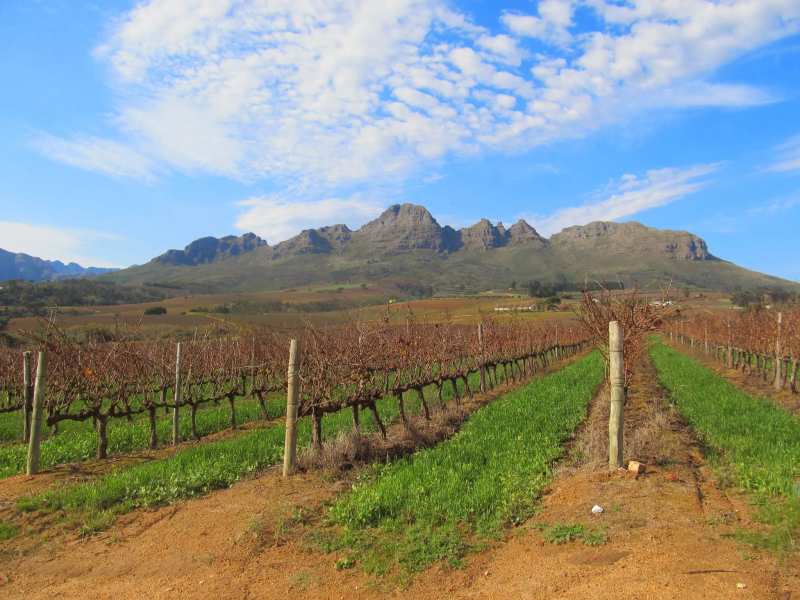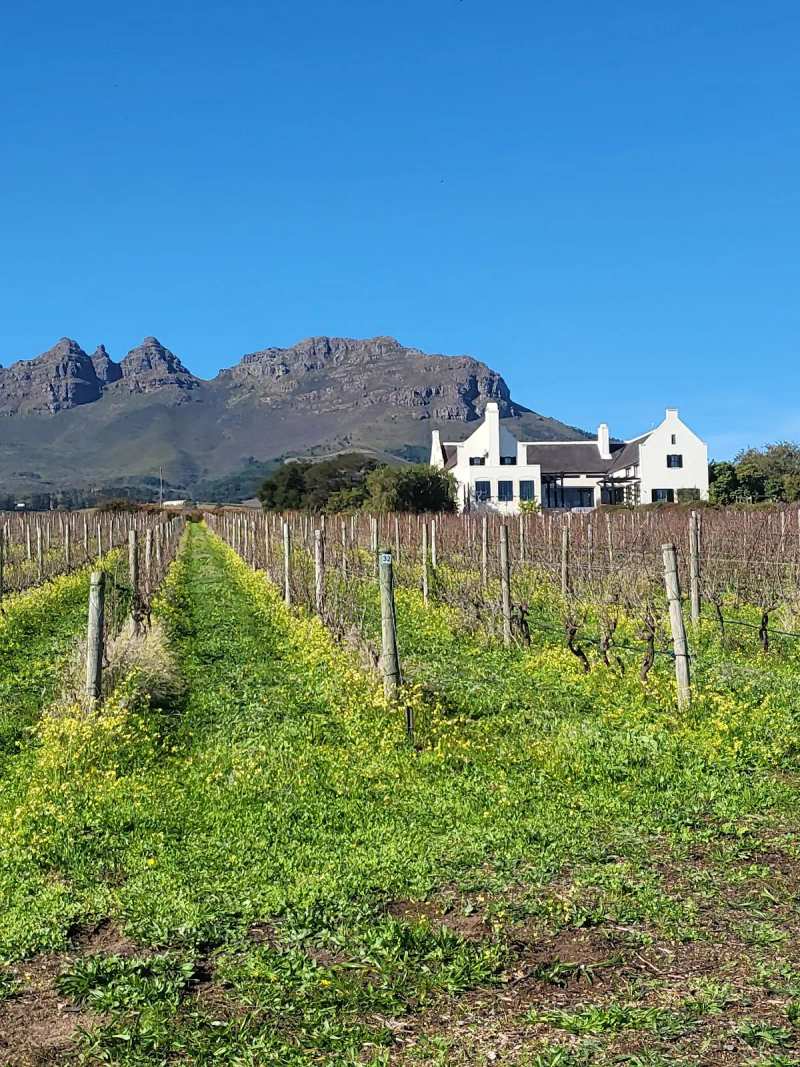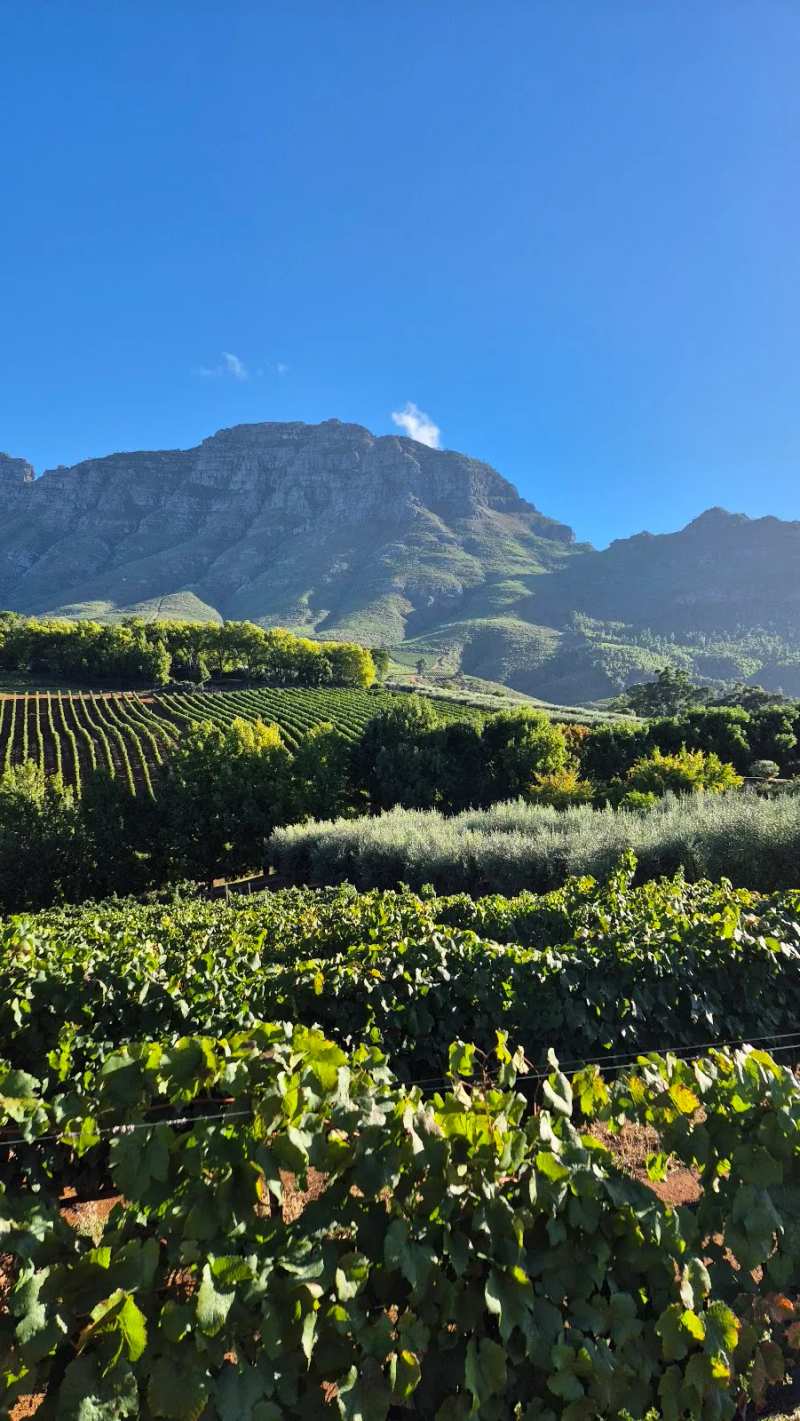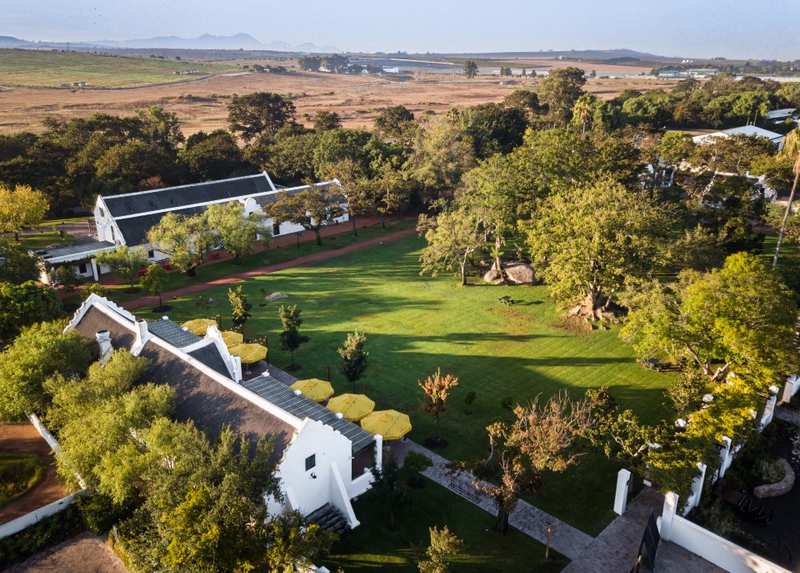
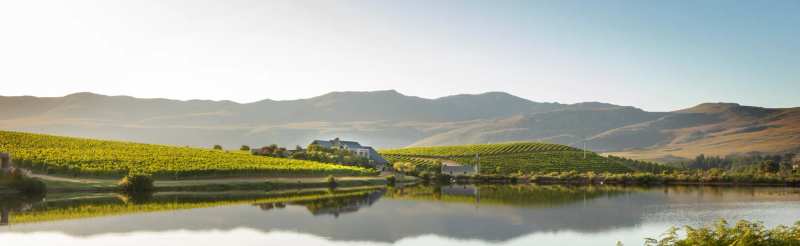
In 1975 an advertising executive from Johannesburg went looking for the most southerly site he could find to grow Pinot Noir and Chardonnay, and settled on a valley just behind the fishing village of Hermanus. Fifty years later the Hermanus wine farms along that valley make some of the best Pinot Noir and Chardonnay in the country, and they sit a few kilometres from one of the best places in the world to watch whales from land.
The valley is called Hemel-en-Aarde, heaven and earth, and one road, the R320, runs up it from the edge of town. This guide follows that road from the farms closest to the sea, up through the upper valley to the ridge, and then out to Stanford and back toward Cape Town through Elgin. It covers what each farm pours, which have food, and how to combine a tasting day with the whales.
The Hemel-en-Aarde Valley
The Hemel-en-Aarde is a narrow valley running north-east from Hermanus, about 90 km from central Cape Town in a straight line. It is one of the most southerly wine regions in the world, and the cold Atlantic and Walker Bay sit only a few kilometres from the nearest vineyards, which keeps the valley cool enough for the grapes of Burgundy. Around 20 producers now farm here, and between them they have made it the heart of South African Pinot Noir.
The valley is split into three official wine wards, nested inside the larger Walker Bay district. Hemel-en-Aarde Valley, the lower valley closest to the sea, was recognised in 2006 along with the Upper Hemel-en-Aarde Valley a little higher up, and the Hemel-en-Aarde Ridge, highest and furthest from the coast, followed in 2009. All three carry the valley's name, heaven and earth. Locals still talk simply about the lower valley, the upper valley and the ridge, and that is how the farms in this guide are arranged.
Why the Pinot is so good here
Three things set the valley apart. The sea is close, so summer days are tempered by cool air off the ocean. The soils are a mix of Table Mountain sandstone and Bokkeveld shale, with clay-rich, iron-rich ground in the lower valley. And the leading farms have narrowed their focus to Pinot Noir and Chardonnay, the grapes the valley does best.
The result is a style that wine writers often compare with Burgundy: lighter, more elegant reds and Chardonnays with tension rather than weight. Taste a Pinot Noir from each of the three wards side by side and you will notice the difference as you move up the valley, from the darker, more savoury wines near the sea to the lighter red-berry styles of the upper valley.
The lower valley: Hamilton Russell and the first farms
The lower valley starts at the edge of town, and its farms are the closest to the sea, about 5 to 7 km from the start of the R320. This is where the valley's wine story began, and where two of its founding estates sit side by side.
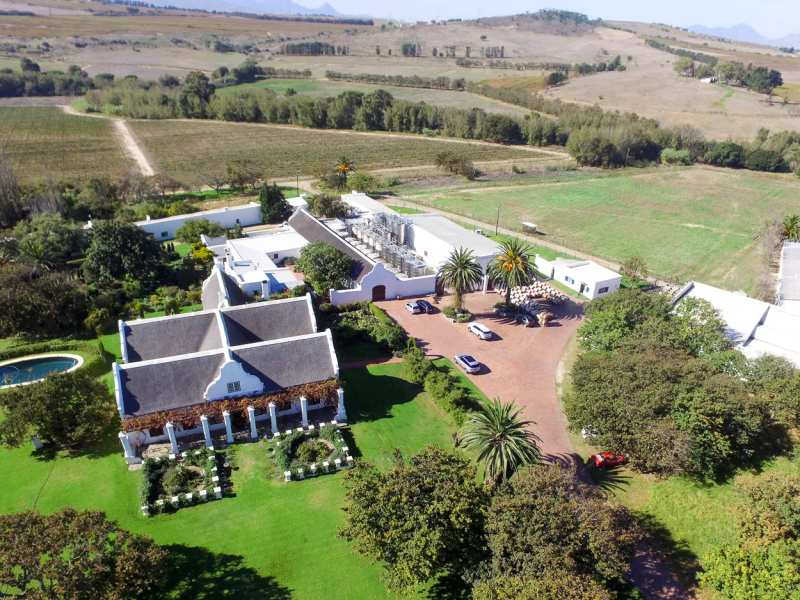
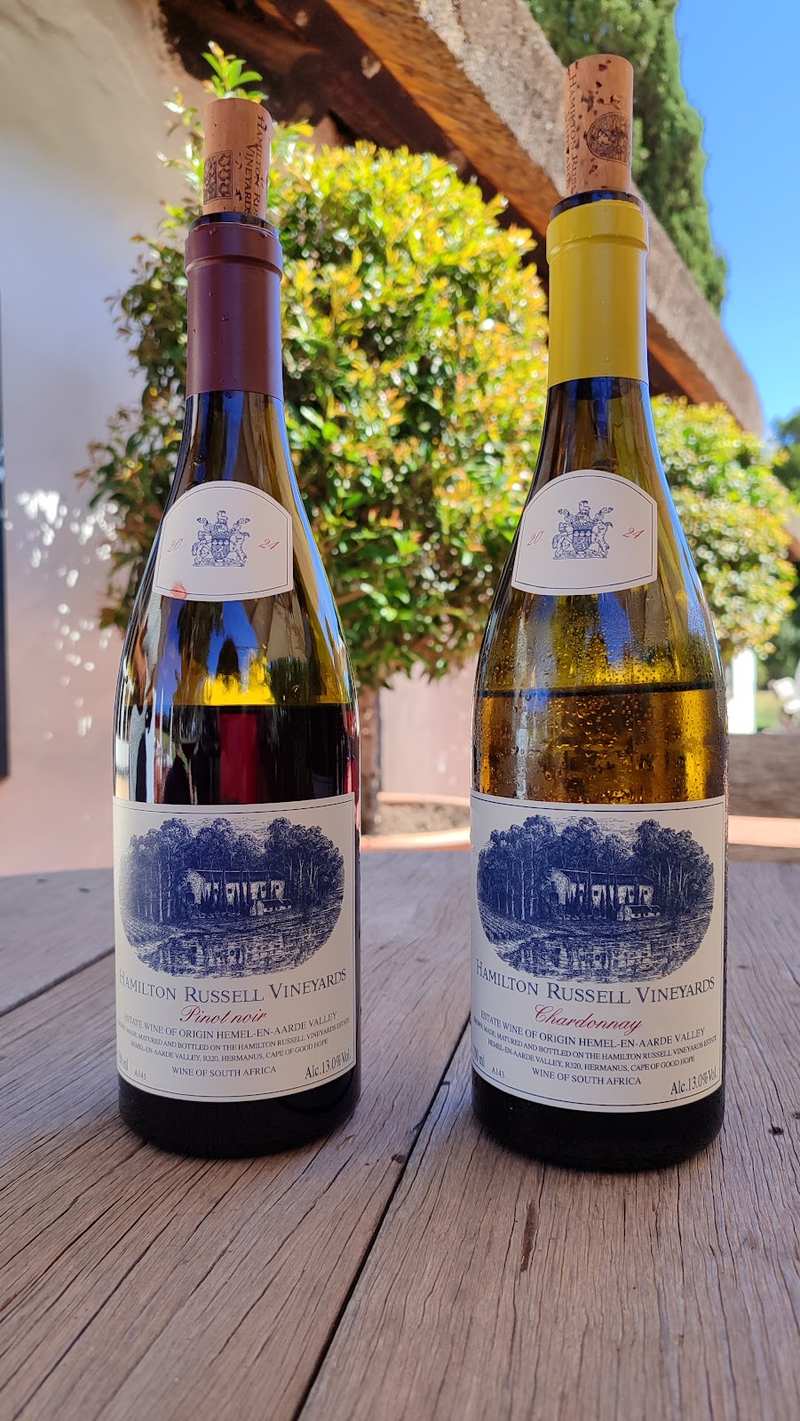
The early years were not easy. In the late 1970s the Chardonnay and Pinot Noir vines available in South Africa were badly affected by virus, so to balance the books the farm planted other grapes that had little to do with Tim Hamilton Russell's vision of a South African Burgundy. Those days are long gone. The vineyards have been farmed organically since 2014, winemaker Emul Ross has been in charge of the cellar since 2015, and the Ashbourne range now carries the farm's other wines, including a white blend called Sandstone and a premium Pinotage.
Next door, Bouchard Finlayson was founded in 1989 by Peter Finlayson, Hamilton Russell's first winemaker. Its valley estate is closed while it is redeveloped, and in the meantime its tastings have moved to the Bouchard Finlayson Pop Up on the ground floor of the Harbour Square Hotel on Harbour Road in Hermanus, pouring wines such as Galpin Peak and its Kaaimansgat Chardonnay. Check whether the estate has reopened before you drive out.
The pop-up keeps the estate's structured tastings, with options drawn from its Legacy Collection and Alchemy Collection and a third that combines the two. Wines are poured as tastings, by the glass or by the bottle, and there is food from regional producers, so it works as a stop on a walk around town between whale-watching sessions.
Closest of all to town, near the start of the R320, the cellar at Hermanuspietersfontein, named after Hermanus Pieters shares its namesake with the town itself. It makes cool-climate wines from the edge of the Cape, and its tasting room serves food, including prego rolls and burgers, which makes it an easy first or last stop.
Right beside it on the valley road, the Whalehaven tasting room is a boutique cellar known for cool-climate Chardonnay and Pinot Noir, with three tasting options and a wine and chocolate pairing.
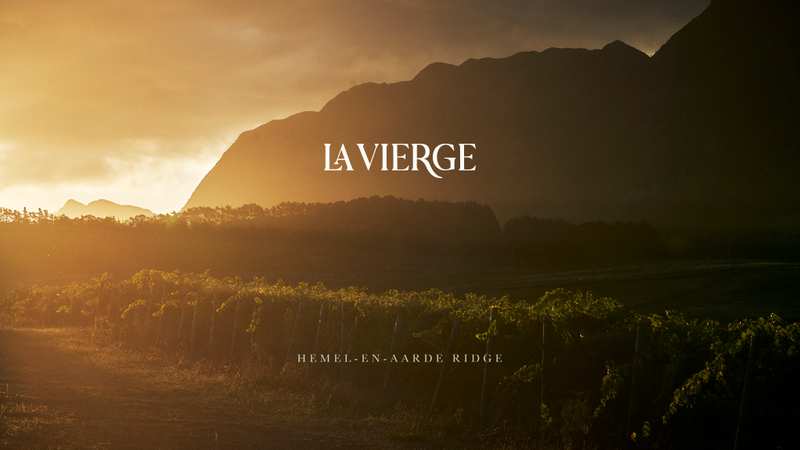
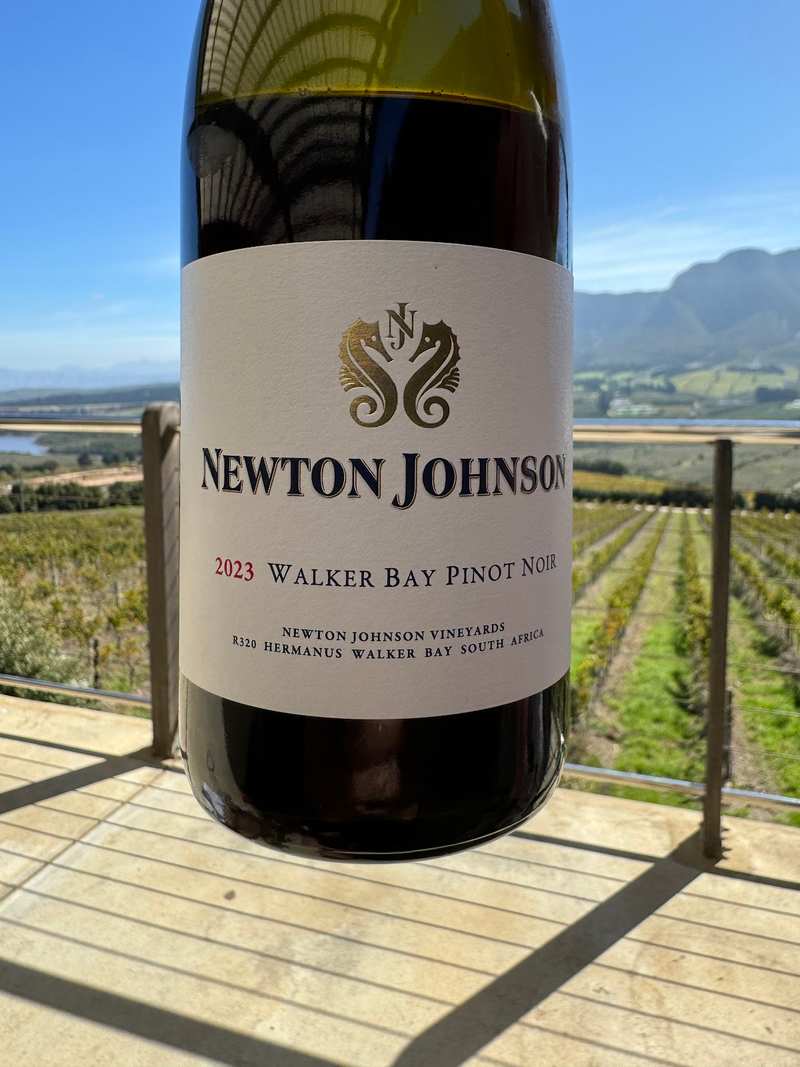
Further up, about 6 km from town, La Vierge has a tasting room and restaurant serving sharing dishes, and pours wines from its dryland vineyards on the Hemel-en-Aarde Ridge, made to show the character of each block. A little higher, about 7 km out where the upper valley begins, Newton Johnson Family Vineyards is owned and run by the Newton Johnson family, with tastings of its valley wines.
Close by in the upper valley, Sumaridge’s award-winning wines are also made here. The farm has been updating its visitor offering, and its wines can be bought at the Hemel-en-Aarde Wine Village, so check before you plan a tasting there.
The upper valley and the ridge
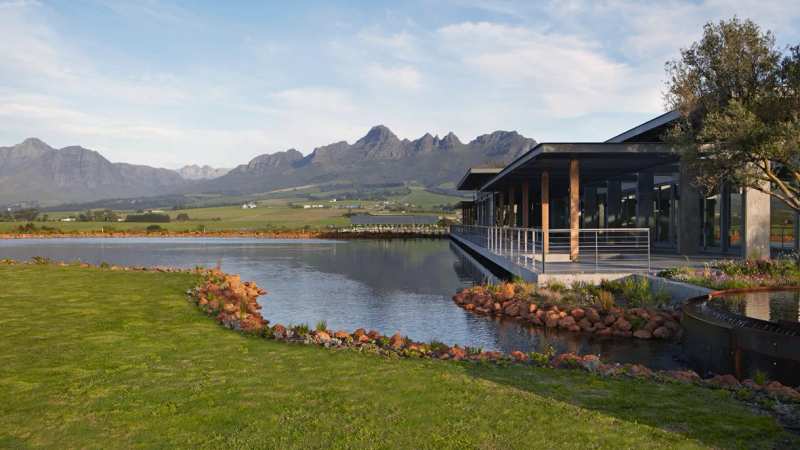
Above the lower valley, the R320 climbs into the upper valley and then to the ridge, 10 to 15 km from town. The farms here are higher, further from the sea and more spread out, and the views over the vineyards to the mountains are part of the reason to come.
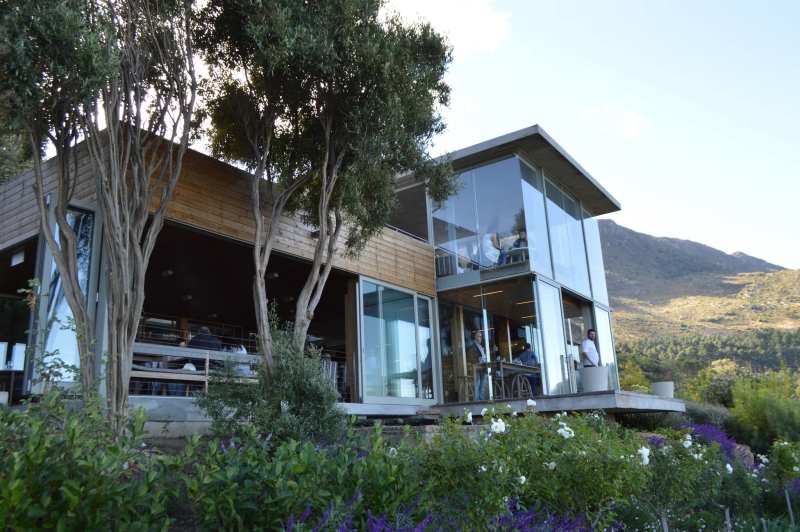
In the upper valley, Spookfontein’s farm cottages sit between the Kleinrivier and Babilonstoring mountains, about 10 km from town. The farm offers tastings and lunches, and the cottages make it a good place to stay in the middle of the valley. Higher still, Ataraxia’s chapel-like wine lounge, on the Skyfields farm, looks out over the vineyards, the valley and the mountains. It is one of the highest tasting rooms in the valley, and the setting is as much a reason to visit as the wine.
The ridge is the newest of the three wards and the furthest from the coast, at the head of the Klein River valley that runs east toward Stanford. Several of the valley's smaller producers farm up here, and Hamilton Russell's former winemakers have their own cellars further up the valley too.
The upper valley is also home to smaller producers. Hasher Family Wines pours its cool-climate wines in a tasting room in the upper valley, and tastings at the Restless River farm are by arrangement.
Hannes Storm, who once made wine at Hamilton Russell, makes a separate single-site Pinot Noir from each of the three wards at his Storm Wines cellar, a good way to taste how the valley changes as it climbs. Check opening arrangements before you visit any of the smaller cellars.
Stanford
Beyond the ridge, the Klein River valley runs east toward Stanford, a small village about 25 km from Hermanus. Its farms make a good addition to a Hermanus weekend.
About 17 km outside Stanford, the Raka tasting room serves its wines with snack platters, and has a curio and wine shop with standard and collector-sized bottles, along with outdoor seating. It is one of the furthest-flung farms in this guide, so combine it with a day in Stanford rather than the valley.
Elgin on the way
Most visitors drive to Hermanus from Cape Town over two mountain passes and through Elgin, a valley of apple and stone-fruit orchards that has become a cool-climate wine area in its own right. It makes a natural stop on the way in or out, about 67 km from central Cape Town and 29 km from Hermanus.
From Elgin, the road west leads over Sir Lowry's Pass to Somerset West, so the old Vergelegen estates at Somerset West make a good final stop on the way back to the city.
Wine and whales
Hermanus is famous for its whales. Southern right whales come into Walker Bay to breed and calve from about June to November, and the town is one of the best places in the world to see them from land. A cliff path runs about 12 km along the shore, with good viewing points all the way, and boat trips go out for a closer look.
That makes Hermanus one of the few wine destinations where you can combine tasting with whale watching on the same day. The simplest plan is to walk the cliff path in the morning, then drive up the Hemel-en-Aarde for lunch and tastings in the afternoon. In whale season, book accommodation and restaurants well ahead, because the town fills up.
The wider area, the Cape Whale Coast, has been named a UNESCO Creative City of Gastronomy, and food is part of the visit as much as the wine. Several local experiences pair Hemel-en-Aarde wines with regional produce, such as abalone or local cheese, in town and on the farms.
Tasting in town
You do not have to drive into the valley to taste its wines. Besides the Bouchard Finlayson pop-up on Harbour Road, Hermanus has wine bars and tasting rooms in town. The Wine Glass has offered tasting flights of six wines drawn from Botrivier, the Hemel-en-Aarde, Stanford, Elim and Agulhas, a quick way to compare the whole Walker Bay area before choosing which farms to visit.
In whale season, land-based whale walking and birding tours run along the shore with local guides, and boat-based trips go out into the bay. Hermanus is regarded by conservation groups as one of the best places in the world to watch whales, and the whale season is when the town is at its busiest, with whale festivals held during the season in some years.
When to go
Whale season, from about June to November, is the busiest time in Hermanus, and the most rewarding if you want whales and wine on the same trip. Book accommodation and the popular farm restaurants well ahead in those months. Harvest falls from about February to April, when the farms are at their busiest in the cellar, and summer brings long evenings and the best weather for lunch on a farm terrace with a view down the valley.
Getting there
The usual route from Cape Town crosses two mountain passes and runs through the orchards of Elgin before dropping down to the coast at Hermanus, which is why Elgin makes such a natural wine stop on the way. On the way back, many people take the coastal road instead, which follows the coast and is one of the most beautiful drives in the region.
Planning a Hermanus wine day
Drive up the valley rather than zigzagging across it. Start at the lower valley farms near town, such as Hermanuspietersfontein or La Vierge, move on to Newton Johnson and Spookfontein in the upper valley, and finish on the ridge at Creation for a late lunch with the view. Four farms make a full day.
Tastings at most farms need no booking for a small group, but Creation's pairings, restaurant tables and any tastings with the winemaker should be booked ahead, especially on weekends and in whale season. The valley is about 90 km from Cape Town, so most people stay at least one night in Hermanus, Stanford or on one of the farms.
If you are driving, agree on a non-drinking driver, or join one of the tours that run from Hermanus and Cape Town into the valley, some of which combine the farms with a stop in Elgin on the way.
A two-day plan
On day one, stop at Paul Clüver in Elgin on the drive out, check in to Hermanus, and spend the afternoon on the cliff path or at the Bouchard Finlayson pop-up in town. On day two, drive up the Hemel-en-Aarde: Hamilton Russell and La Vierge in the lower valley, Newton Johnson and Spookfontein in the upper valley, and lunch at Creation on the ridge. If you have a third day, add Stanford and Raka to the east.
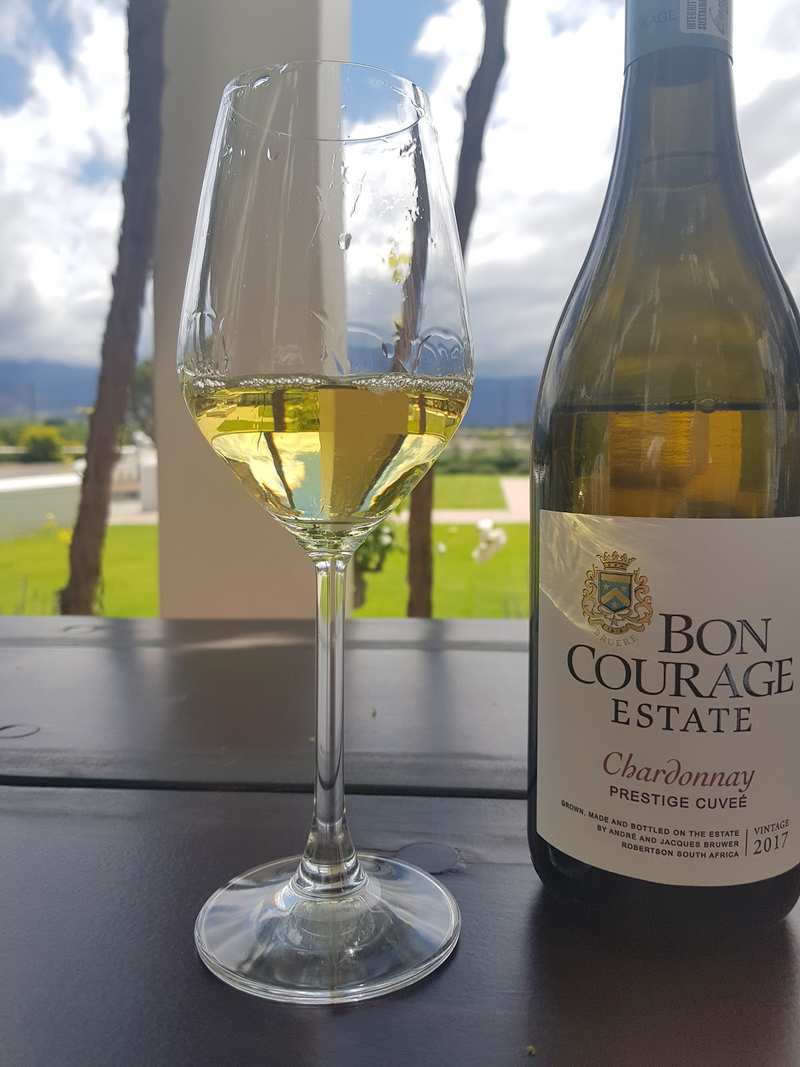
A Hermanus trip combines well with a contrasting inland region: the Robertson valley's Chardonnay and Cap Classique cellars make a good second day, with warmer, inland country and a different style of wine.
For the bigger picture, Hermanus is the southern edge of the other wine valleys of the Western Cape.
Frequently asked questions
Published September 21, 2026