Ask anyone in Stellenbosch where to eat and they will name a wine farm before they name a street. The Stellenbosch wine farms with restaurants hold the best tables in the district, and lunch is often the reason for the drive rather than something squeezed in between tastings.
The range is wide. The choice runs from deli counters where you order at the till and sit under the olive trees, to island dining rooms and tasting menus that need booking weeks ahead. Picking the wrong one is the usual mistake: arriving at a fine-dining room with hungry children, or turning up at a starred restaurant on a Saturday without a booking.
So this guide is organised by the kind of meal you want: a casual lunch, a breakfast, a long lunch with a view, a starred tasting menu or a picnic. Every place below is on a working wine farm, and the distances are straight-line from the middle of town.
How to choose where to eat
Start with three questions. How long do you want to sit? Who is with you? And how far ahead can you plan?
A deli or café lunch takes an hour and needs no booking, which suits a day of tastings or a car full of children. A long lunch with a view takes two or three hours and usually needs a booking at weekends. A tasting menu at one of the starred restaurants takes most of the afternoon or evening, costs considerably more, and needs booking well ahead, often weeks in summer.
Location matters less than you might think. No farm in this guide is far from town, so choose the meal first and then plan the rest of the day around it. If you want the tastings to fit around lunch, the district's wine farms, road by road shows which farms sit near each restaurant.
Casual lunch on a wine farm
These are the places to eat when the wine is the main event and lunch is the pause in the middle. None of them needs a booking days ahead, and all of them serve good food without ceremony.
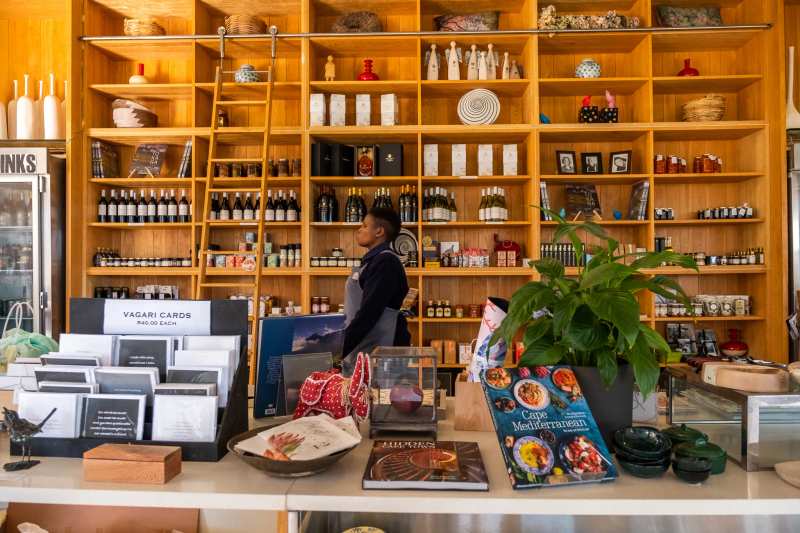
The deli at Tokara sits lower down the hill from the main estate, about 6 km north-east of town, between olive groves and vineyards. It serves breakfast, pizza and lighter lunches, sells gourmet ingredients to take home, and pours sparkling wine by the glass. There is a playground, which is why so many families end up here rather than in the restaurant further up the hill.
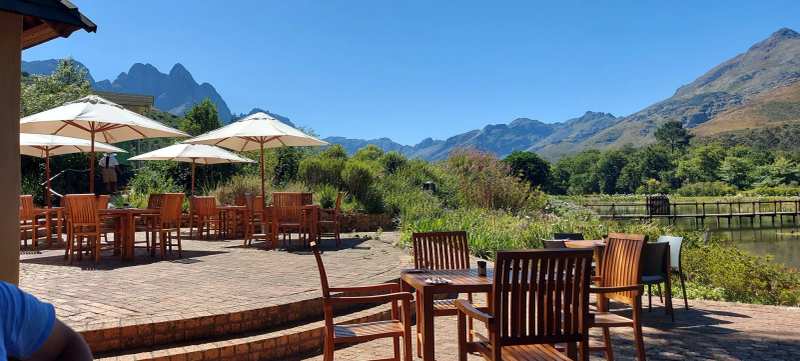
In the Jonkershoek Valley, about 5 km south-east of town, the Postcard Café sits at the edge of a dam on the Stark-Condé farm, with the mountains rising behind. The menu is short and changes with the season, and every dish comes with a suggested glass of the farm's wine. Sit outside if the weather allows; the view is the reason the café has its name.
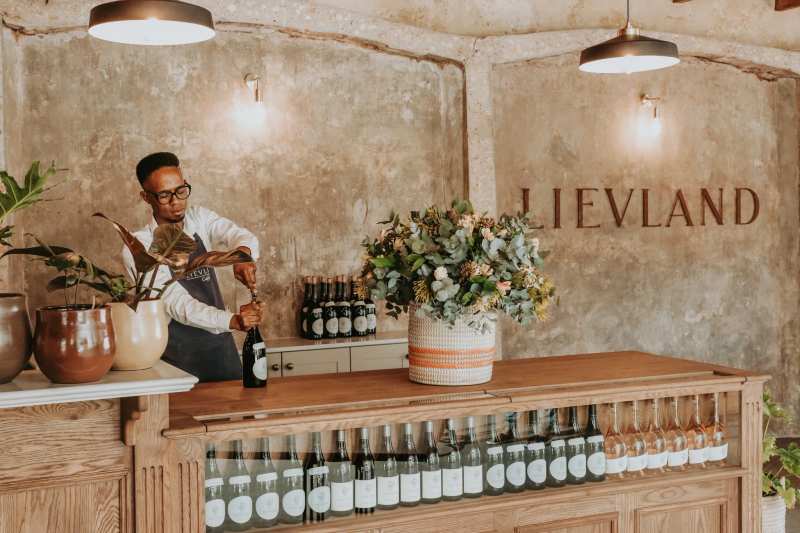
North of town on the R44, about 10 km out, Lievland Café is a bistro on Lievland Vineyards with tables outside among the vines. The menu runs to bistro dishes such as Parisian gnocchi with artichoke, tomato and aubergine, and it serves breakfast too, which makes it a handy first stop before the big red-wine estates on the same road. Warwick and Kanonkop are both a few minutes further along.
Closer to town on the western side, the deli at Salt Deli at Neethlingshof serves breakfast and lunch, and the farm's wine garden does pizza with a wide choice of wines. It is an easy place to stop between tastings on Polkadraai Road.
Just south of town, Blaauwklippen's tasting house builds the whole visit around food pairings rather than a menu: pizza and arancini, including truffle and oxtail versions, paired with the wines, and a cheesecake pairing to finish. Alcohol-free options make it a good stop for the driver.
In Devon Valley, about 6 km north-west of town, Giovanni’s at the House of J.C. Le Roux sits at the home of one of the country's best-known sparkling-wine labels. It serves dishes such as baby chicken and lamb shank, and the house runs chocolate and biltong pairings with its wines.
Breakfast among the vines
A wine farm breakfast is one of the best ways to start a day in Stellenbosch. The light is soft, the tasting rooms are not yet open, and the tables are easy to get. Only a handful of farms serve it, so it helps to know where to go.
The Postcard Café in Jonkershoek is the local favourite for a slow weekend breakfast, with cakes that are worth the trip on their own and the dam right below the terrace. Arrive early on a sunny Saturday, because the outside tables fill first.
Lievland Café on the R44 serves breakfast daily, which makes it the natural start to a day on the northern farms. The Tokara deli on the Helshoogte Pass does breakfast too, and the Salt Deli at Neethlingshof covers the western side of town.
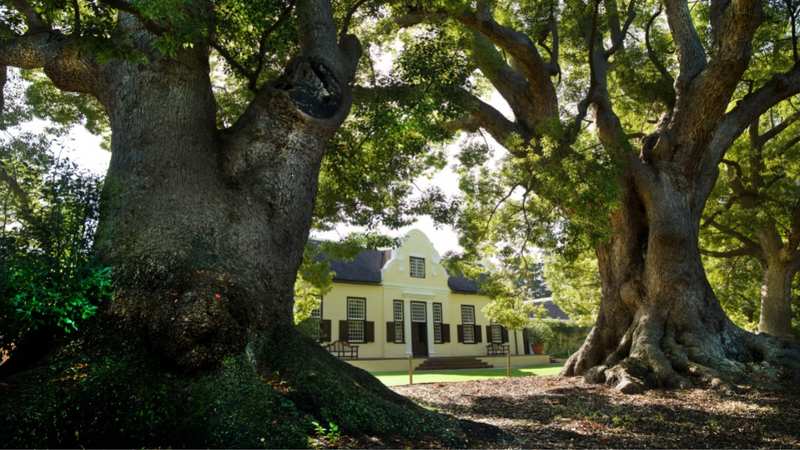
For a more historic setting, Muratie’s farm kitchen serves breakfast and lunch under the old oaks on Knorhoek Road, with a children's menu and vegetarian and vegan choices. After breakfast, the cobwebbed tasting room opens and the day can start properly.
Lunch with a view
This is the meal most visitors picture: a long table on a terrace, a bottle from the farm, and a valley full of vineyards below. These restaurants sit in the middle of the price range, between the delis and the tasting menus, and the setting is part of what you are paying for.
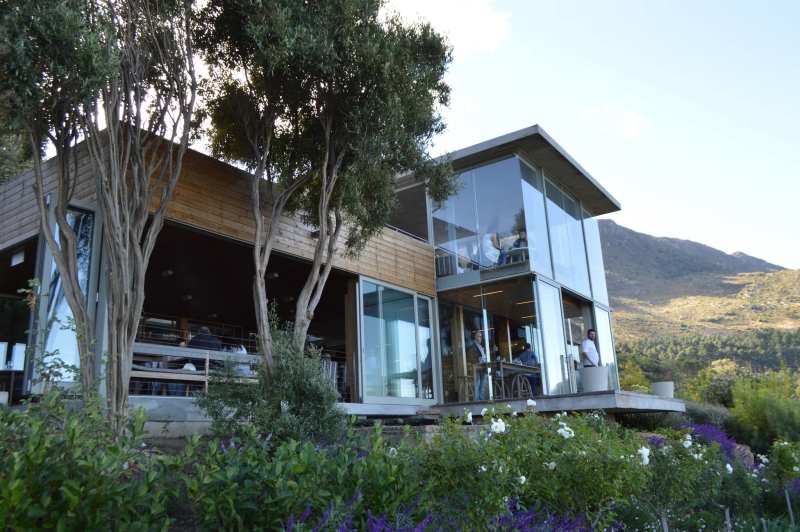
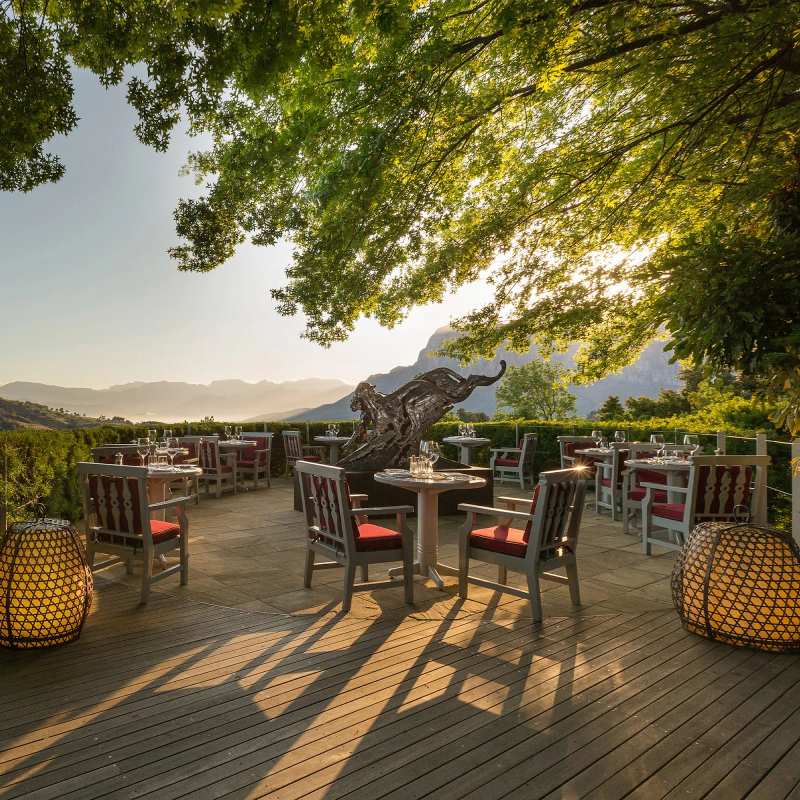
Across the road, Tokara’s main restaurant looks over the same valley all the way to False Bay. It is a fine-dining room built to make the most of that view, with seasonal food sourced close to home and a wine list that covers Tokara's own bottles and wines from neighbouring estates. The setting makes it one of the most popular lunch bookings in the district.
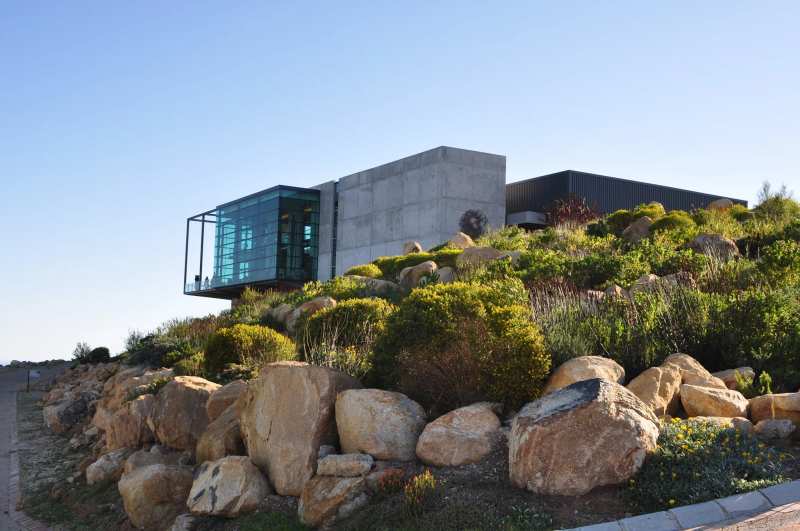
On Knorhoek Road, about 6 km north of town, Gåte at Quoin Rock seats only about 40 people in a light-filled room with wraparound glass and views of the Simonsberg. The name is Norwegian and means something like a riddle or an entrance, and the menus are multi-course and precisely plated. There is a five-course menu with a vegan option and a shorter daytime menu on some weekdays, and the food can be paired with teas instead of wine on request.
Chef Paul Prinsloo builds each menu by tasting the wines first and then choosing the ingredients to match, including produce grown on the farm. The dishes lean on careful sauces, such as a lamb jus reduced for 14 hours, and there is an oyster tank on site. Look up at the vine sculptures by Charles Haupt while you wait between courses.
For something more relaxed, Delheim’s garden restaurant on the slopes of the Simonsberg serves German and South African dishes with wide views over the valley, and the wines include the farm's Pinotage. North-west of town, Beyerskloof’s restaurant builds its menu around Pinotage, with dishes such as oxtail ravioli, and looks out across the Boland vineyards.
The starred tables
Stellenbosch has more starred restaurants on wine farms than any other part of the country. In Eat Out's 2026 awards, South Africa's main restaurant ratings, four Stellenbosch farm restaurants were starred: Hōseki at Delaire Graff, The Jordan Restaurant, Rust en Vrede's restaurant and Vuur Goose Island at Remhoogte. These are long, expensive meals that need planning, and they are the reason many food lovers come to the district at all.
South of town on Annandale Road, Rust en Vrede’s restaurant is a dinner destination, with creative modern cooking served as tasting menus with wine pairings from one of the district's great red-wine estates. It is the one to book for a special evening rather than a lunch.
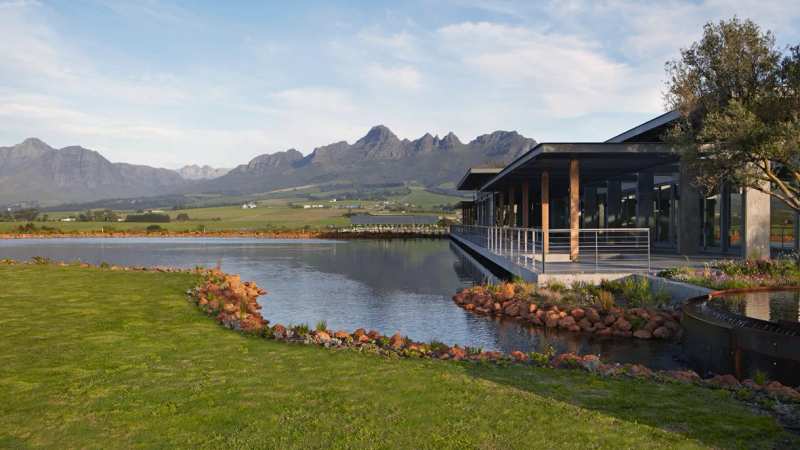
The most unusual of the four is Vuur Goose Island, on the Remhoogte farm about 6 km north of town. The restaurant sits on a small island in a dam, reached by a bridge. Guests start with a glass of wine at the Remhoogte tasting room before walking down, and the seven-course menu is cooked over open fire, with local produce, game and fish.
The original Vuur, in a converted stable next door, began as an intimate chef's table seating about a dozen guests. Both are small, so booking ahead is the only way in.
There was no grand plan behind it. Chef Shaun Scrooby knew the Boustred family, who own Remhoogte, from guiding one of them on safari, saw potential in an old stable on the farm, and converted it with his own hands. Vuur has since been named on a global list of the world's top 101 steakhouses, and the kitchen cooks over several types of wood. The long, communal format is not suited to young children.
Dinner on a wine farm
Most wine farm restaurants are lunch places, and the tasting rooms close in the late afternoon. A handful keep their kitchens open into the evening, and dinner among the vines, with the mountains turning pink as the sun goes down, is one of the best meals the district offers.
Rust en Vrede is the classic dinner booking, and Gåte and Hōseki both serve dinner on some evenings of the week. In the Jonkershoek Valley, Lanzerac’s hotel restaurants are another option for an evening meal, and staying the night in the historic hotel solves the question of who drives home.
For everyone else, book a taxi or a driver in advance. Evening transport out of town is harder to find on the spot than it is at lunchtime, and the farm roads are dark.
Picnics and platters
Sometimes the best wine farm meal is not in a restaurant at all. A picnic on a farm lawn is cheaper than a tasting menu, easier with children, and often the most memorable meal of the trip.
On the R44, Warwick’s gourmet picnics are the most famous in the district: a basket packed by the farm, a spot on the lawn, and a bottle from the cellar. Book ahead in summer. If you would rather not commit to a whole picnic, the farm's burger bar serves on a first-come basis.
South-west of town, Spier Wine Farm has huge, shady lawns and a farm café, and picnics on the grass are part of a classic Spier day. Tastings include a chocolate pairing for adults and a grape juice tasting for children. It is the easiest choice for a group with mixed ages or non-drinkers, since there is plenty to do besides taste wine.
Two more farms belong on the casual list. Simonsig’s restaurant, north-west of town, is one of the long-standing lunch stops on the northern side of the district, and the tasting happens under the oaks next door. On Bottelary Road, Hazendal’s restaurants are worth the trip for the food alone, with or without a tasting.
Platters are the other option. Many tasting rooms serve cheese or charcuterie platters alongside a tasting, which is often enough for a light lunch. Ask when you arrive, because platters are rarely listed on the farm's main menu.
Wine farm restaurants by road
If you are planning tastings around a meal, it helps to know which restaurants sit on which road out of town.
North on the R44 and the Knorhoek Road side, you have Lievland Café, Warwick's picnics and burger bar, Muratie's farm kitchen, Delheim's garden restaurant, Gåte at Quoin Rock and Vuur Goose Island at Remhoogte. That is enough for a whole day of eating and tasting without crossing town.
East on the Helshoogte Pass are the view restaurants: Tokara's main restaurant and deli, and the Delaire Graff Restaurant and Hōseki across the road. Closer in, the Postcard Café sits in the Jonkershoek Valley behind town.
South, on Annandale and Blaauwklippen roads, are Rust en Vrede's dinner restaurant and Blaauwklippen's pizza pairings. West, toward Cape Town, are Spier, the Salt Deli and wine garden at Neethlingshof, The Jordan Restaurant at the end of Stellenbosch Kloof Road, and Giovanni's in Devon Valley. Beyerskloof's restaurant sits just north-west of town.
What to drink with lunch
The easiest rule on a wine farm is to drink what the farm makes, because the kitchen usually plans the menu around it. That said, a few pairings are worth seeking out.
At Jordan, order the Chardonnay; it is what the farm is best known for. At Rust en Vrede, the Cabernet Sauvignon is the estate's calling card and the natural match for a tasting menu. At Delheim and Beyerskloof, try the Pinotage, the Cape's own grape, with the heartier dishes on the menu.
If you want bubbles with brunch, the Tokara deli pours sparkling wine by the glass, and Giovanni's sits at a sparkling-wine house. And if you are driving, ask for the alcohol-free options at Blaauwklippen, or the tea pairing at Gåte, rather than skipping the pairing altogether.
Eating with children
Not every wine farm restaurant suits children, and the starred tasting menus are not designed for them at all. The places that work best are the ones with space outside and simple food: the Tokara deli with its playground, Blaauwklippen's pizza pairings and playgrounds, Spier's lawns, the Salt Deli at Neethlingshof, and Muratie's farm kitchen with its children's menu.
For the full picture, including farms with kids' tastings and supervised play, there is more on wine farms where children are part of the plan across the Western Cape. For a family lunch in Stellenbosch, though, the rule is simple: choose a deli or a farm kitchen, and save the tasting menus for a night out without them.
Booking, timing and budget
Book the starred restaurants first. Hōseki, Jordan, Rust en Vrede and Vuur can fill weeks ahead in summer, and the island at Vuur seats only a few tables. If a special meal is the point of your trip, book it before anything else and build the rest of the days around it.
Book the view restaurants for weekends. Delaire Graff, Tokara and Gåte usually have space midweek, but Saturday and Sunday lunches go quickly from spring onward. Ask for a terrace table when you book.
The delis and cafés rarely need a booking at all, but they fill up at peak lunchtime on sunny weekends. Arriving before midday is the simplest way to get a table.
Opening days vary more than you might expect. Several fine-dining rooms serve lunch on some days and dinner on others, and some close one or two days a week, so check the listing before you set off. Kitchens at the casual places generally close in the late afternoon.
For budget, the gap is wide. A deli lunch costs about what you would pay in town, a view restaurant costs more, and a starred tasting menu with wine pairing is a special-occasion spend. Tastings are charged separately almost everywhere, and some farms waive the fee if you buy wine.
A day built around lunch
For a casual day, start with breakfast at the Postcard Café in Jonkershoek, taste at one or two farms on the Helshoogte Pass, and stop for a light lunch at the Tokara deli before heading home. For a special day, taste on the R44 in the morning, then give the afternoon to lunch at Vuur Goose Island or Gåte, both on the same side of town.
If you would rather plan around wine than food, a day on one of the wine route's sub-routes gives the same structure the other way round.
For the bigger picture, Stellenbosch is the food capital of the Cape's wine regions, with more starred tables among the vines than anywhere else in the country.
Frequently asked questions
Published July 20, 2026