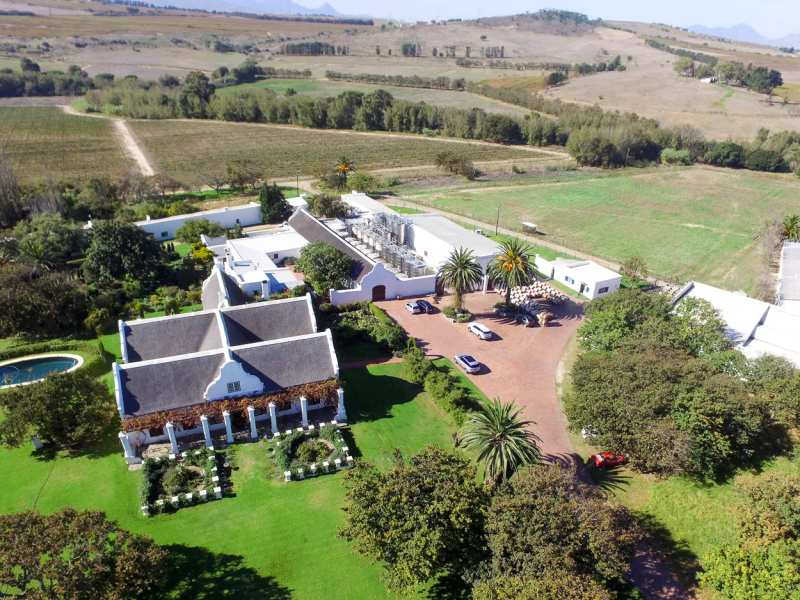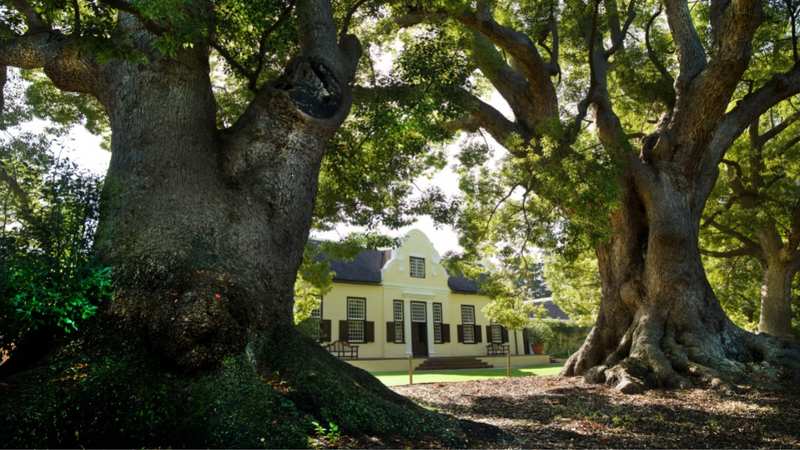
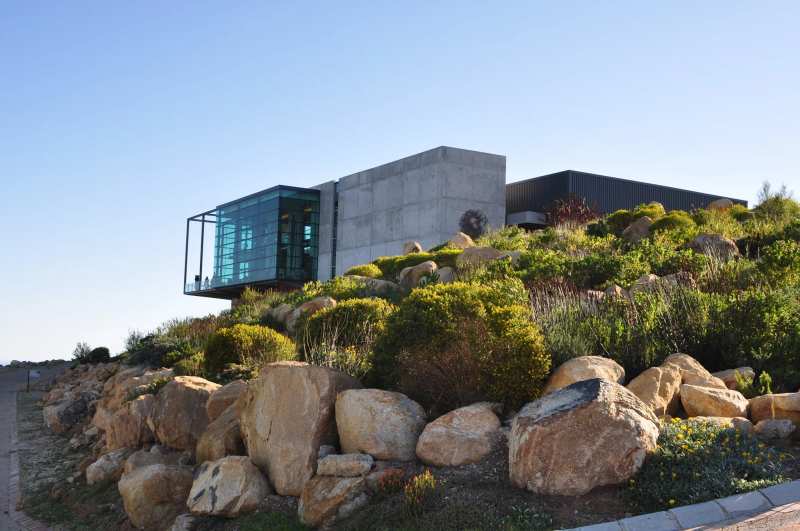
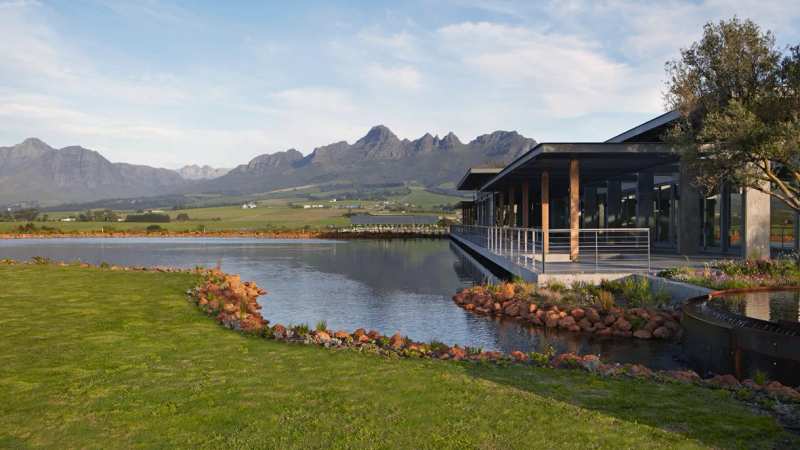
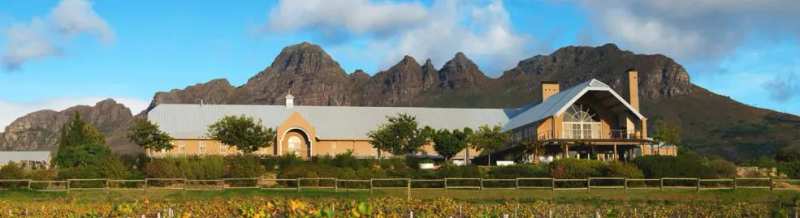
Five camphor trees planted in 1700 still stand in front of the old homestead at Vergelegen, and they are the best place to start. The Somerset West wine farms grew out of that one estate, granted to a Cape governor more than three centuries ago and later split into the farms you can visit today. Most of the rest sit along the R44 on the way to Stellenbosch, or toward the coast at False Bay.
This guide covers the farms in two clusters: the historic estates off Lourensford Road at the foot of the Hottentots Holland mountains, and the newer farms along the R44 between Somerset West and Stellenbosch, plus the duck-patrolled estate near the coast. It explains how the area fits into the Stellenbosch wine region, which farms have restaurants, and where to stay among the vines.
What the Helderberg is
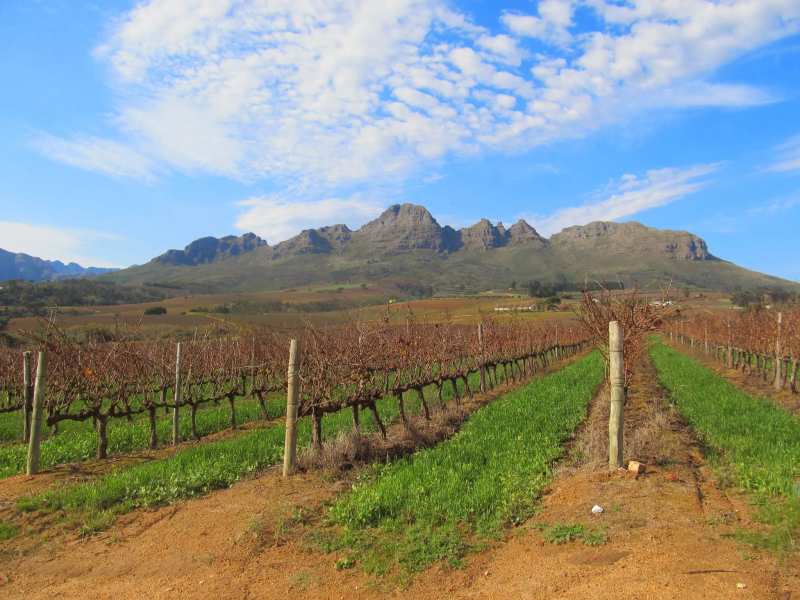
The Helderberg is the mountain that rises above Somerset West, and it gives its name to the southernmost of the Stellenbosch Wine Routes' five sub-routes. So the short answer to whether Somerset West is part of the Stellenbosch wine region is yes: its farms belong to the Helderberg sub-route, one of the wedges of wine country radiating out from Stellenbosch town.
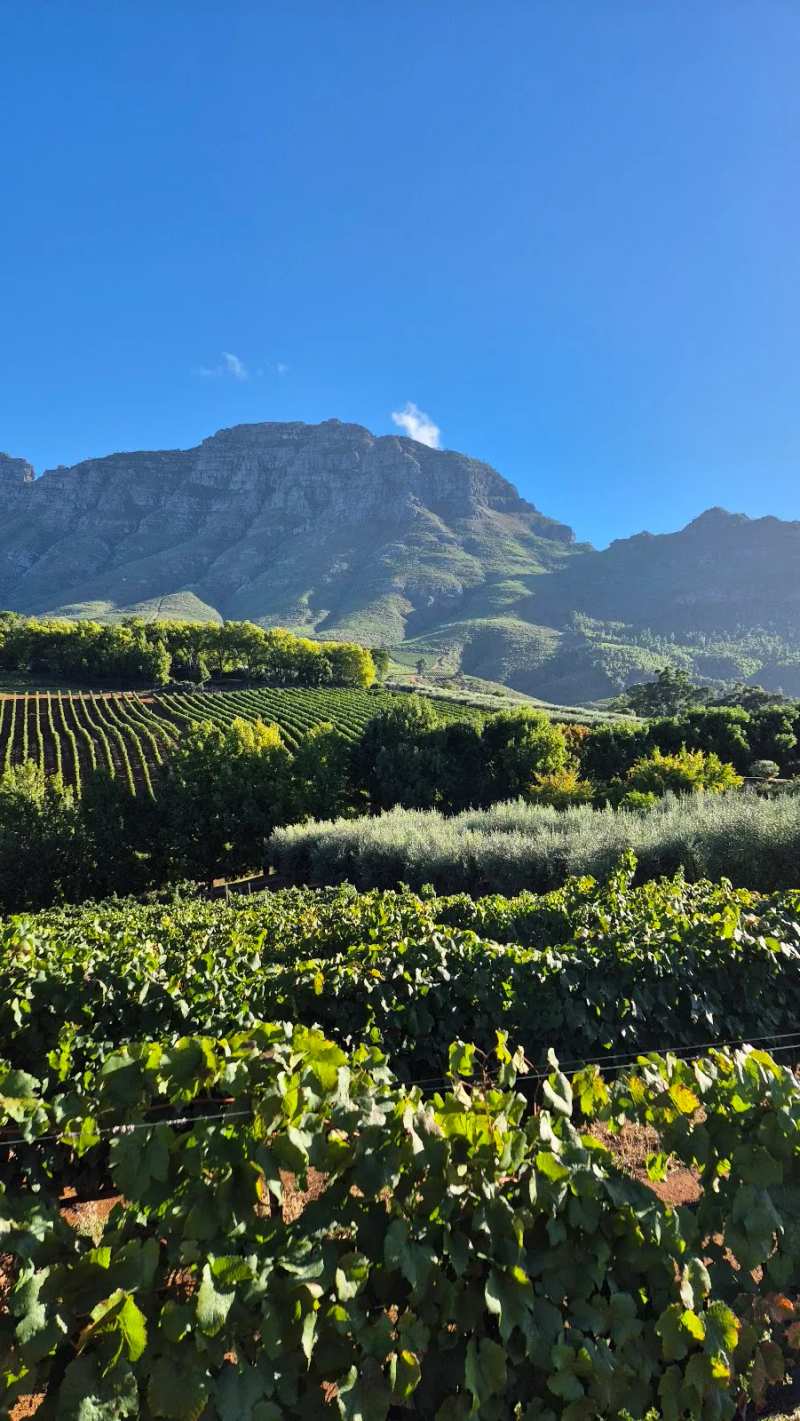
The difference is the feel. Somerset West is a town in its own right, founded in 1822, about 47 km from central Cape Town in a straight line, and its farms look south toward False Bay rather than north toward Stellenbosch. The sea is never far away, and the mountains rise straight up behind the vineyards. For how the region's other wedges fit together, the five sub-routes of the Stellenbosch Wine Routes work the same way.
Where the Helderberg begins
There is no single line where Stellenbosch ends and the Helderberg begins. Drive south from Stellenbosch on the R44 and the farms carry on almost without a break, past the Blaauwklippen valley and down the slopes of the Helderberg toward Somerset West. For planning, it helps to think of two clusters: the farms on the R44 in the north of the sub-route, roughly 7 to 11 km south of Stellenbosch town, and the old estates around Lourensford Road on the eastern edge of Somerset West, about 15 to 19 km from Stellenbosch.
Lourensford Road: the Vergelegen estates
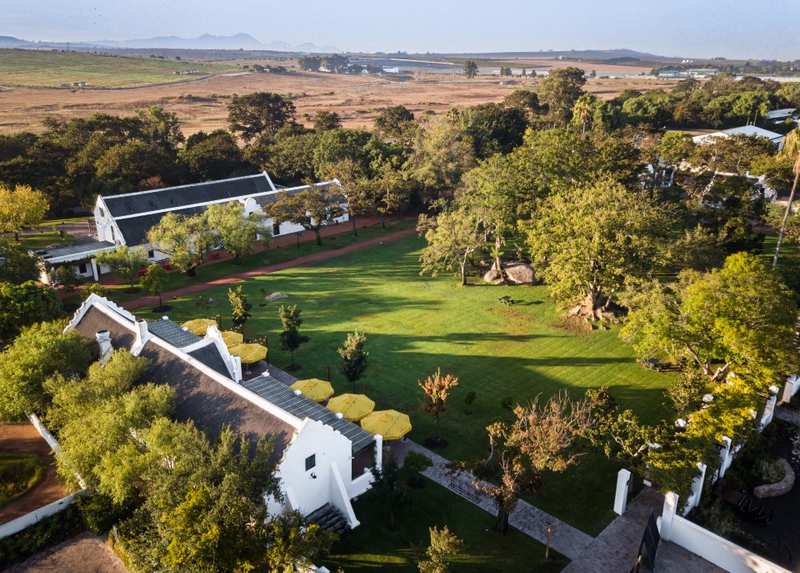
Lourensford Road runs out of Somerset West toward the mountains, and the farms along it were once a single estate. Willem Adriaan van der Stel, who succeeded his father Simon as governor of the Cape, was granted the land in 1700 and named it Vergelegen, meaning situated far away. The name fitted: in 1700 the estate was a three-day journey by ox wagon from the settlement at the Cape, while today it sits about 47 km from central Cape Town in a straight line. After his recall, the Dutch East India Company ruled that its officials could not own land at the Cape, and the estate was divided into four farms: Vergelegen, Lourensford, Morgenster and Cloetenburg.
About 1 km away, Morgenster’s olive groves share the old Vergelegen land. The farm is known for its Bordeaux-style red wines, made from Merlot, Cabernet Sauvignon, Cabernet Franc and Petit Verdot, and for the olive oils from its groves, so a tasting here often covers both.
About 1 km north of Vergelegen, Lourensford’s tasting room is on the third of the old farms, an estate of about 4,000 hectares running up toward the mountains. It pours both wine and gin, and with a market, picnic spots and gardens to explore it is a good stop with children.
Vergelegen's history has a darker side too. When Van der Stel claimed the estate in 1700 he worked it with company servants and about 200 enslaved people, and his farming there put him in a bitter dispute with the Cape's free farmers, led by Adam Tas. The homestead was even ordered demolished for having been built with too much pomp when the estate was divided in 1709. It survived, and the ruins of a mill on the banks of the Lourens River are another reminder of the governor's farm.
The estate has been owned by Anglo American Farms since 1987, which restored the house. The estate's octagonal winery and its V logo both borrow the shape of the old octagonal garden. Allow time for the gardens: they are laid out so you never see them all at once, and a guided heritage and garden tour explains how they fit together.
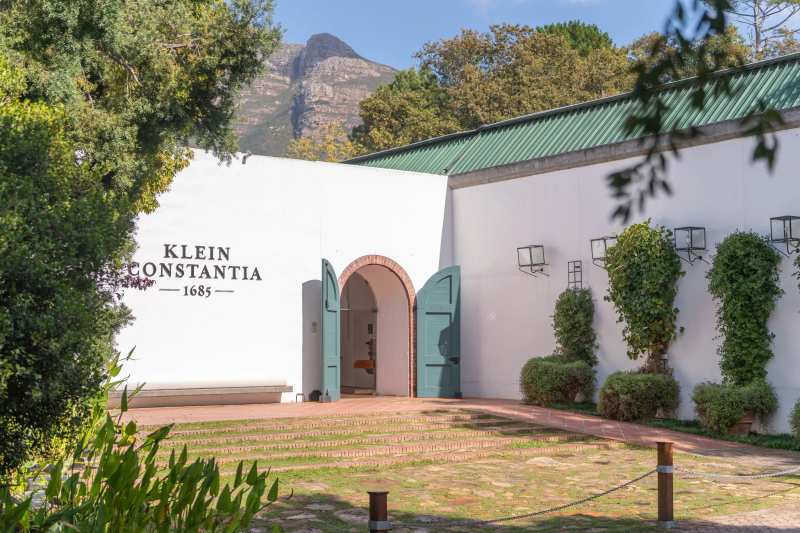
Vergelegen's story is part of the wider history of the Cape's early farms. The estate sits alongside the country's oldest wine farms, from Groot Constantia to the Huguenot farms of Franschhoek, and the Contra Deductie, a case against Van der Stel published in Holland in 1712, includes an early plan of the octagonal garden and homestead that still stand today.
What the Helderberg pours
The Helderberg makes a good balance of white and red wine, which is part of its appeal for a mixed group. On the farms in this guide that means Bordeaux-style reds at Morgenster, Cabernet Franc and Cabernet Sauvignon at Uva Mira, Sangiovese and several styles of Chardonnay at Longridge, and biodynamically farmed wines at Waterkloof. Taste across two or three farms and you will cover most of what the area does.
Waterkloof and Capelands
Close to Lourensford Road, on the slopes above the town, two more farms are worth combining with Vergelegen. They are about 2.4 and 3.5 km from Vergelegen in a straight line.
About a kilometre further on, Capelands’ trattoria brings traditional Italian family recipes to a wine farm, with dishes such as ostrich carpaccio and snails, and the farm has Country Comfort Suites and a cottage for overnight stays. It is a good choice for a long lunch that turns into a night on the farm.
The R44 toward Stellenbosch
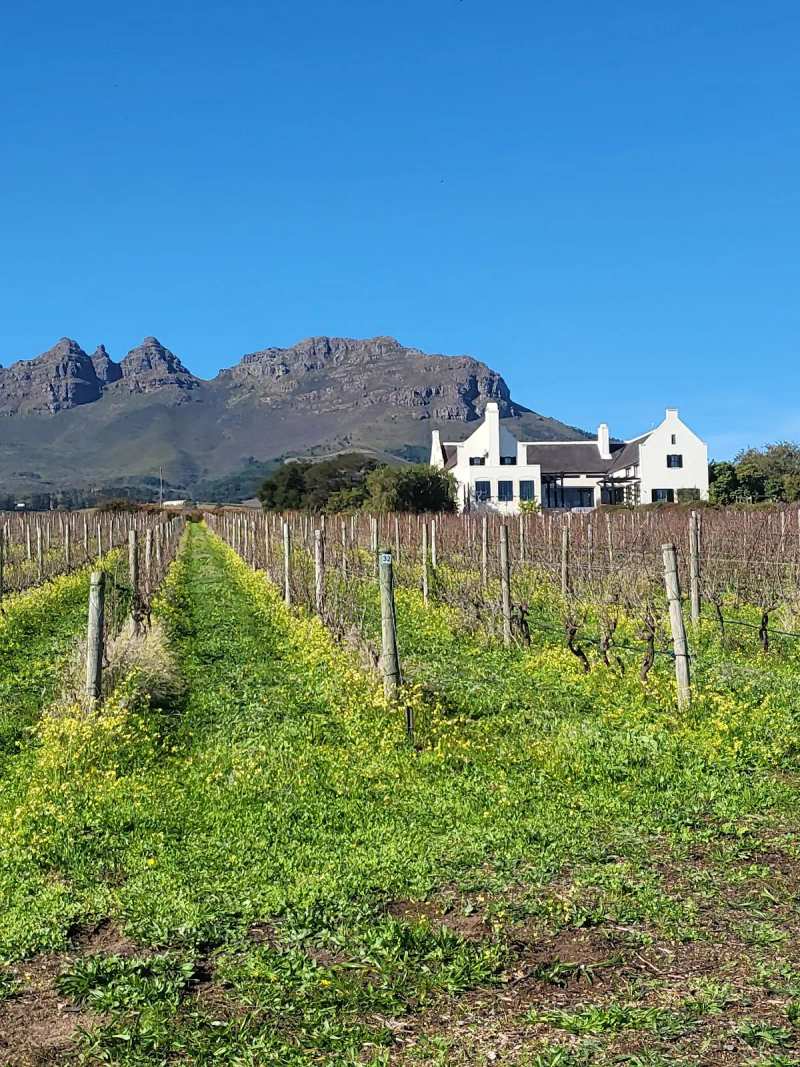
North of the town, the R44 climbs toward Stellenbosch past a string of farms on the lower slopes of the Helderberg. They are close together, and between them they cover a lot of ground: art, design, rare grapes and some very good food.
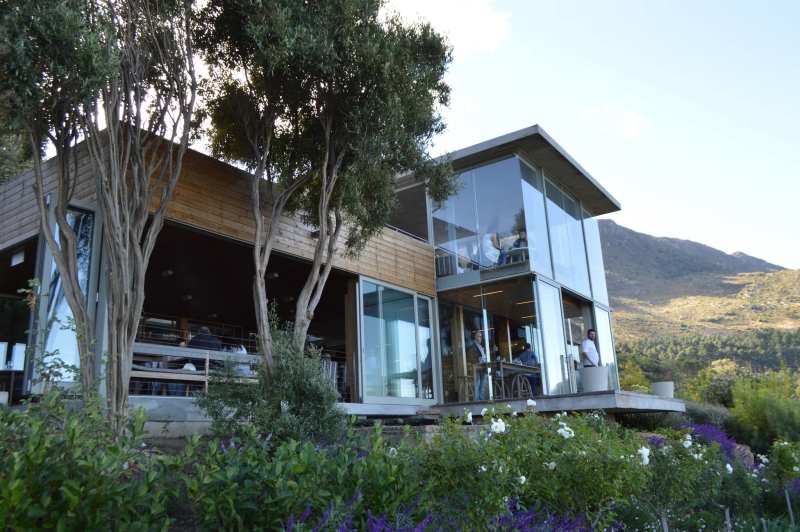
Cavalli Estate, about 10 km from Vergelegen, combines a contemporary restaurant starred in Eat Out's 2026 awards with a tasting room, an art gallery and a boutique hotel, set among 26 hectares of vineyards and 10 hectares of indigenous fynbos gardens. Nearby, Longridge Wine Estate pours some unusual wines for the area, including Sangiovese and several Chardonnays, and its restaurant, Rykaart's, serves lunch. A few kilometres on, Uva Mira's tasting room focuses on Cabernet Franc and Cabernet Sauvignon, with cheese and charcuterie platters and staff who know the wines well.
Two more stops on the same stretch are about food first. 96 Winery Road serves South African-influenced international cooking in a rustic setting in the middle of wine country. Close to Uva Mira, Precious Hidden Valley’s deck serves burgers and wood-fired pizzas in a relaxed setting, while its tasting room offers a curated two-course menu with the wines.
Winery Road and Annandale Road
Two side roads off the R44 hold a cluster of farms worth a day of their own. At the corner of Winery Road, about 1 km from 96 Winery Road, the Ken Forrester cellar on the old Scholtzenhof farm is a family-owned winery known as one of the original champions of Chenin Blanc, with a restaurant that pairs the wines with food. Book a table in busy periods. About 1.3 km away on the R44, the Avontuur farm combines a tasting room and restaurant, where bobotie and nougat are local favourites, with a popular wedding venue.
Annandale Road, about 7 to 9 km south of Stellenbosch town, has four more. On it, the golfer Ernie Els’s winery sits in a modern farmhouse-style building looking out over the Stellenbosch wine region, with tastings and a restaurant for lunch. Nearby, the Peter Falke estate is a boutique farm on the slopes of the Helderberg, where visitors single out the Blanc de Noir, the Cabernet Sauvignon and the Chardonnay.
Further along the road, the tasting room at the historic Annandale cellar shares its property with Toevlug, a casual restaurant with a fireplace and a children's menu. A short way off, Alto Wines is pouring from its temporary home at Klein Alto, with sit-down tastings and a restaurant.
From here the R44 runs on into Stellenbosch, so the northern Helderberg farms combine easily with the Stellenbosch farms to the north. A day that starts at Vergelegen and ends at one of the R44 farms covers the whole sub-route.
Toward the coast: Vergenoegd Löw
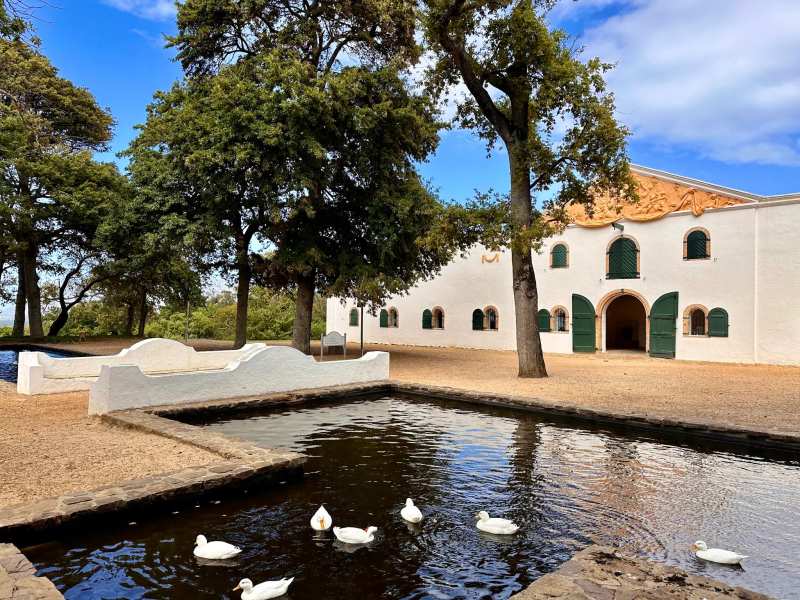
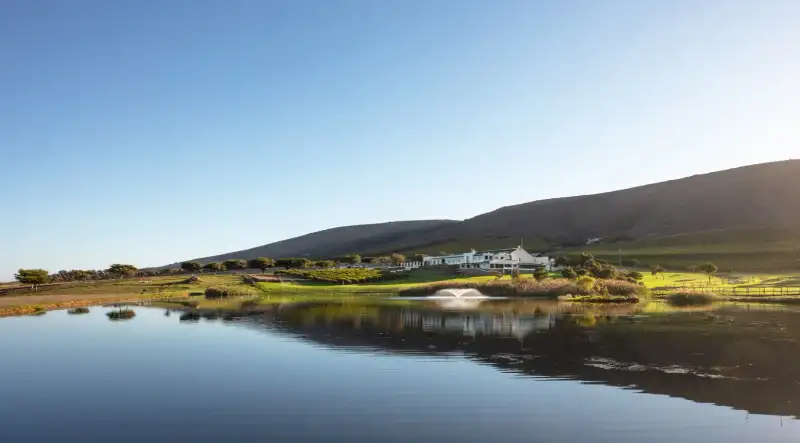
The ducks follow a routine, heading out to the vineyards in the morning and back to their paddocks later in the day. During the months when the grapes are on the vines they are moved to the farm's dams instead, so they do not eat the crop. The estate is also one of the area's WWF Conservation Champions, a programme for farms that protect natural habitat. Check the parade times before you go, because they change with the season.
The ducks were not the farm's first idea. It tried chickens, which did not do the job, before settling on Indian Runners, an upright, flightless breed first used to keep pests out of rice paddies in Asia. Today the estate breeds its own ducks and sells them to other farms, and its farm manager knows of about ten wine farms that now use runner ducks against pests in winter. As the ducks, sheep and cattle move through the vineyards they also fertilise the soil, which is part of the regenerative approach the estate is known for.
Getting around without a car
Somerset West is easy to explore by car, but you do not have to drive. Wine Escapes, based in Somerset West, runs private tours of the Winelands for small groups, and can build a day around the Helderberg farms or head on to Stellenbosch, Franschhoek and Paarl.
Two of the hop-on services based in Stellenbosch also reach this side of the region. Farms along the Helderberg mountains, Cavalli among them, are on the Vinehopper’s southern route, a hop-on minibus from Stellenbosch where you pay for tastings at each farm you choose. For a slower, open-air day, the Helderberg-side farms are also the territory of the wine tractor’s back-road loop, with about an hour at each stop.
Where to eat and stay
For lunch, Somerset West has some of the best farm restaurants in the region. Waterkloof and Cavalli are the choices for a serious meal with a view, Vergelegen offers both a formal restaurant and the casual Stables, 96 Winery Road is a restaurant-only stop on the R44, and Capelands and Precious Hidden Valley suit a more relaxed lunch. Book ahead on weekends.
For a night among the vines, the Klein Welmoed guest house is a working farm and vineyard in the foothills of the Helderberg, with cottages and a Victorian farmhouse to choose from, about 11 km from Stellenbosch town and close to the R44 farms. Capelands and Cavalli also have rooms on the farm, and Somerset West has plenty of guesthouses within reach of every estate in this guide.
When to go
Vergelegen's gardens change through the year, so the season shapes the visit. In summer the blue hydrangea garden, the agapanthus and the 18 beds of the rose garden are at their best, and picnics in the camphor forest come into their own. In winter the bare oaks show off the bones of the formal gardens, the camellias are the attraction, and the Lourens River runs full along the wetland garden.
Summer weekends are the busiest time across the Helderberg, so book restaurants ahead. Weekdays and the cooler months are quieter, and the duck parade at Vergenoegd Löw runs year-round, but the ducks work the dams rather than the vines while the grapes are ripening.
Planning a Somerset West day
Start at Vergelegen in the morning, when the gardens are quiet, and give it at least two hours. Then cross to Morgenster for olive oil and reds, or Lourensford for the market and gardens, and drive up to Waterkloof for lunch with the view. In the afternoon, head north on the R44 for a tasting at Uva Mira or Longridge, or go west to Vergenoegd Löw for the ducks.
Somerset West works as a day trip from Cape Town, and it is also close to the N2 for anyone heading east along the coast. If you are driving on toward Hermanus, the road over Sir Lowry's Pass leads toward the Overberg and on to the Hemel-en-Aarde valley, which makes this a natural first stop on a coastal trip.
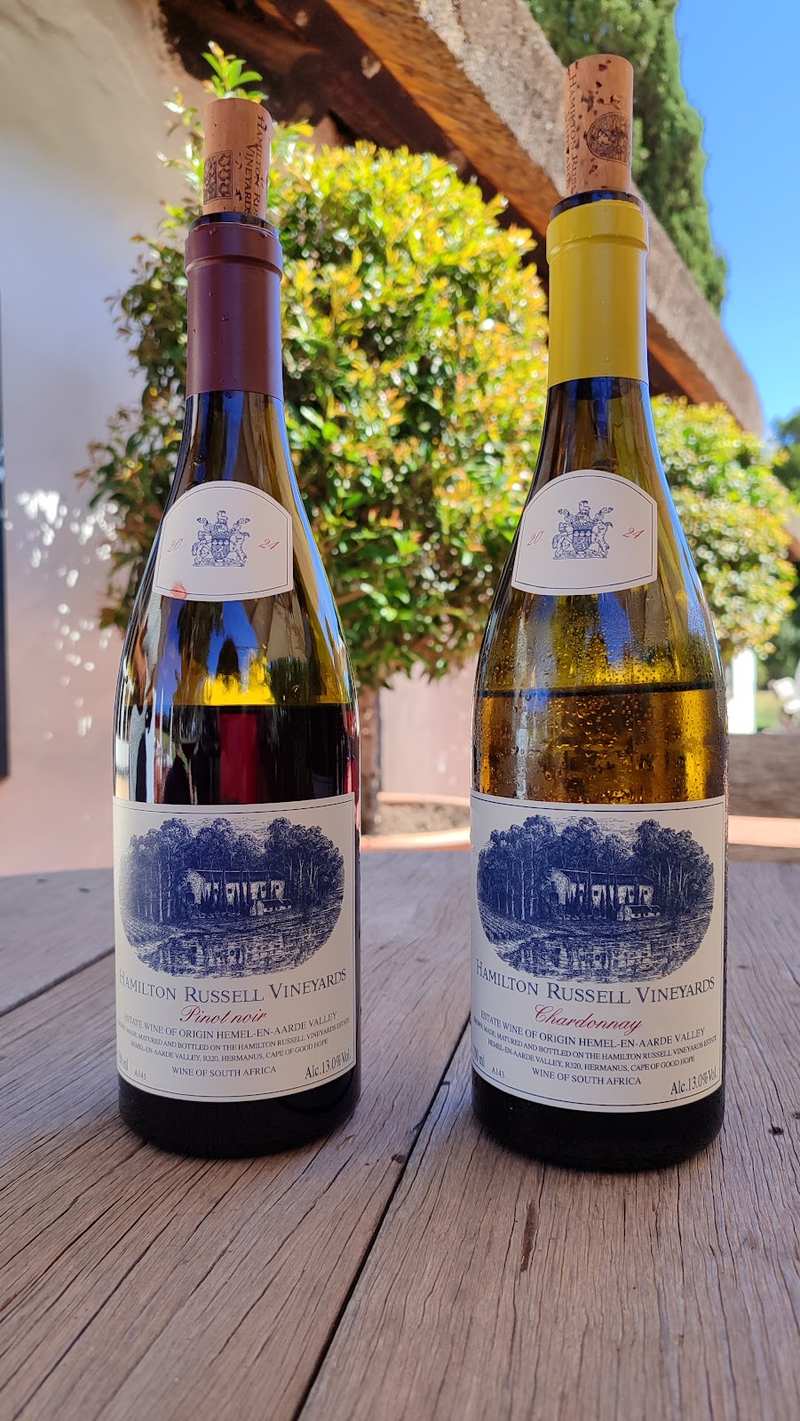
For that next leg, the Hemel-en-Aarde farms behind Hermanus are a good continuation, with Pinot Noir and Chardonnay grown close to the sea.
Somerset West also makes a good base for exploring the rest of the Western Cape's wine country, from Stellenbosch and Franschhoek to the farms around Cape Town.
Frequently asked questions
Published September 7, 2026