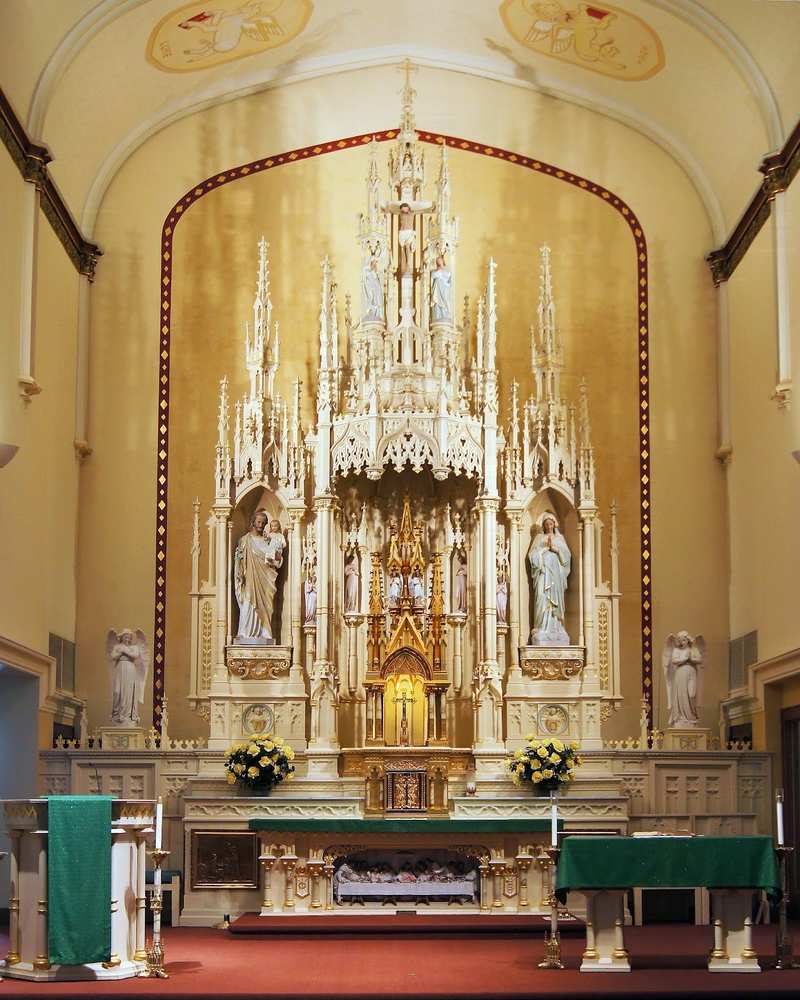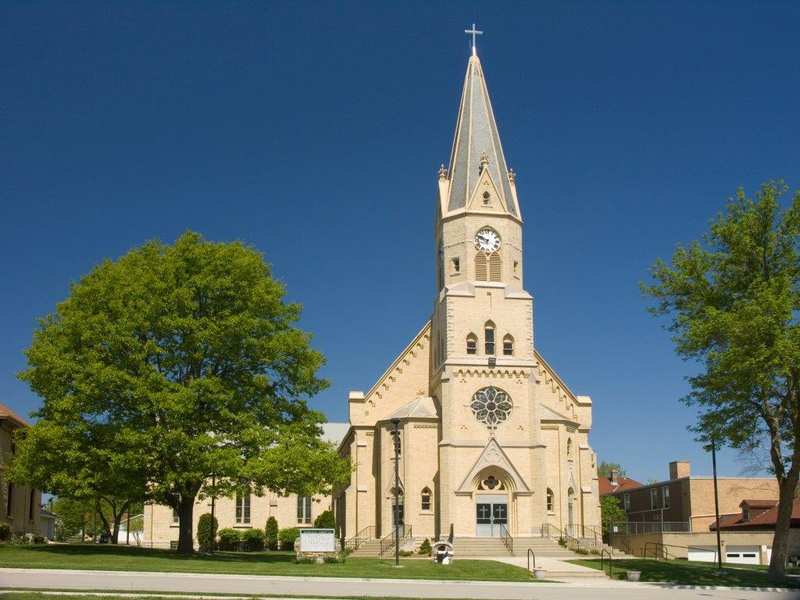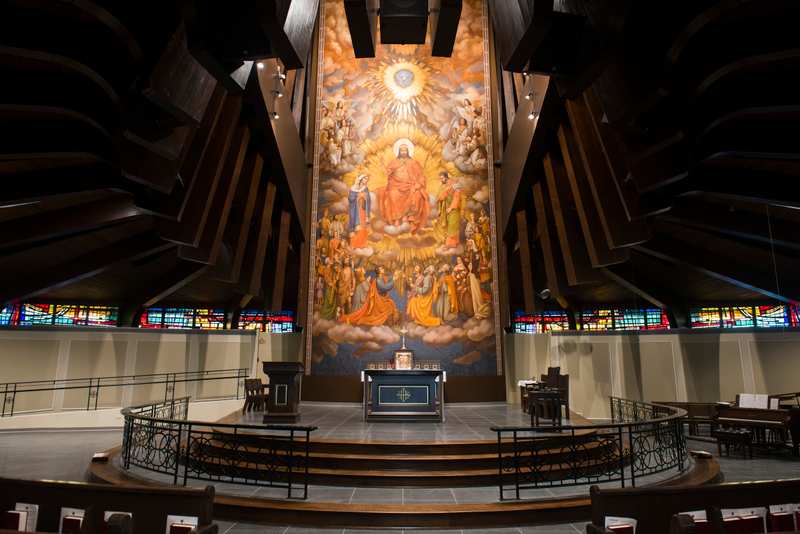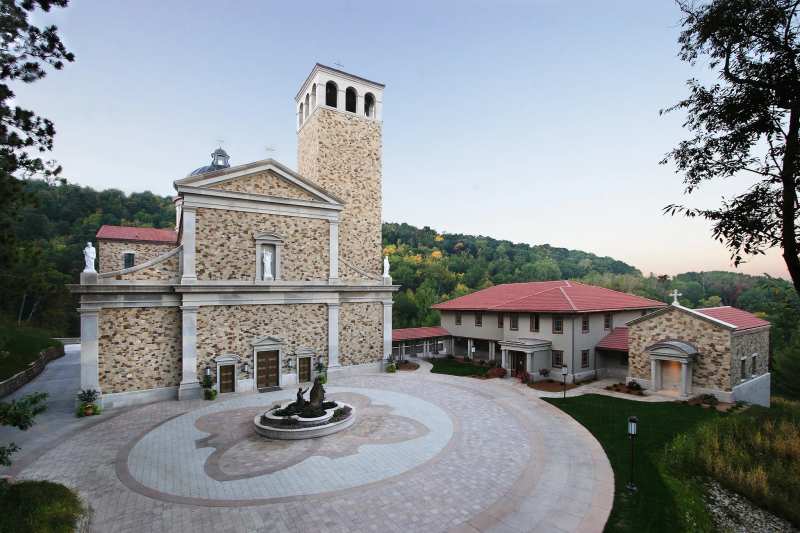
A good share of the architecture worth a detour in Wisconsin is churches, paid for in small donations by immigrant farmers and factory hands who wanted something from home. This guide to churches in Wisconsin, and the shrines, mosques, synagogues and temples alongside them, covers the places worth a special trip and how to find a congregation if you are moving here.
The short version: Milwaukee holds the densest cluster of landmark churches, the three Marian shrines (Holy Hill, Champion and La Crosse) anchor a pilgrimage route, and Door County keeps a handful of small, old chapels that open mostly in summer. Everything listed here is a working house of worship, so the visiting notes at the end matter.
Why Wisconsin's churches look the way they do
You can usually read who settled a Wisconsin town from its steeple. German Catholics and Lutherans built across the southeast in the 1840s and 1850s, Polish parishes rose on Milwaukee's south side in the 1880s and 1890s, Dutch Reformed congregations followed the Lake Michigan shore south of Sheboygan, and Norwegian and Belgian settlers left their marks on Door County.
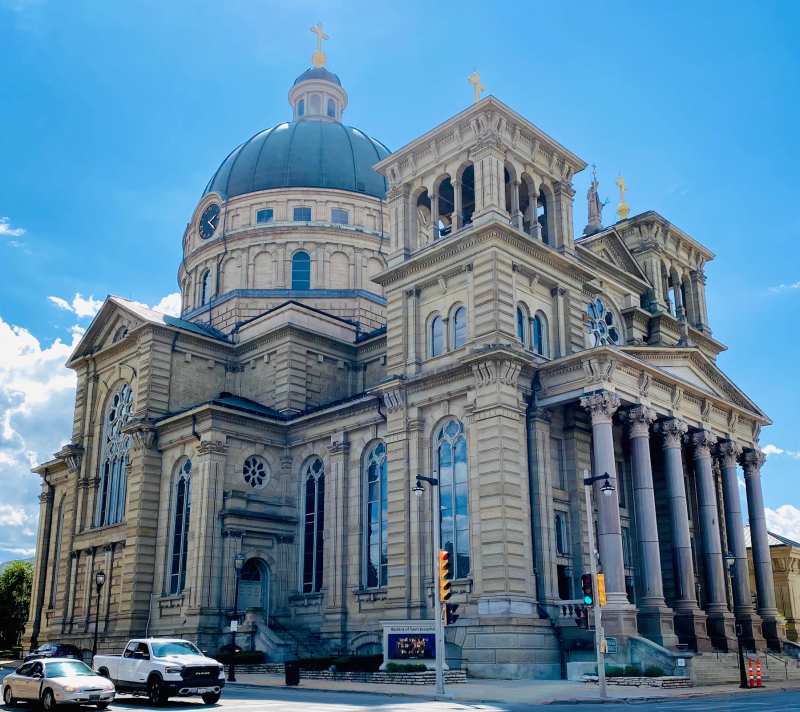
In Milwaukee the material is often Cream City brick, the pale yellow brick made from local clay that gave the city its old nickname. All Saints' Episcopal Cathedral on the East Side is built from it, and Calvary Presbyterian on West Wisconsin Avenue was built from it and then painted red by a congregation that preferred the look. When a church elder worried its tall steeple might come down in a storm, the architect hitched a team of horses to it to prove it would not. It is still standing.
The other thing to know is scale. Milwaukee alone claims more than a thousand houses of worship, which is why Visit Milwaukee calls it the City of Steeples. Outside the cities, a single parish church with a tall spire still sets the skyline of many small towns.
Style followed money and homeland. German parishes favored tall Gothic towers and imported stained glass, often from studios in Munich. Polish parishes built big, with domes and twin towers that announced how many families had pooled their wages. Yankee Episcopalians and Congregationalists, the first settlers from New England, left smaller stone and frame churches that look like they belong in Vermont.
Milwaukee's landmark churches
Milwaukee is where to start if you want architecture, and the oldest things here are older than the city.
A few miles north, on Marquette University's campus, the St. Joan of Arc Chapel is a 15th-century French village chapel that was taken apart, shipped to Long Island in the 1920s, then moved again and rebuilt stone by stone at Marquette, where it was dedicated in 1966. Gesu Church, two blocks away, is the twin-towered Gothic church whose silhouette, by Milwaukee Magazine's account, can be seen for more than three miles from the north.
Downtown, Old St. Mary's dates to 1846, the oldest church built in Milwaukee itself.
The Polish south side is its own district of churches. St. Stanislaus, St. Vincent de Paul with its pair of 182-foot towers were both built by parishes that kept splitting because the Polish population outgrew each church within a generation. Driving down Mitchell Street or Lincoln Avenue, the towers come one after another.
A little farther south, Holy Rosary keeps a regular schedule of worship and prayer, with its upcoming services posted on its listing.
Two downtown churches carry stories worth the detour. The Cathedral of St. John the Evangelist on Cathedral Square was built in 1847; a 1935 fire gutted the interior but firemen saved the tower. St. Paul's Episcopal on Knapp Street, a red sandstone church from 1883, holds at least ten windows from Louis Comfort Tiffany's studio, including what Milwaukee Magazine describes as the largest window Tiffany ever made.
West of downtown, Trinity Evangelical Lutheran on North 9th Street is the mother church of Milwaukee's Lutherans, built in 1878 with heavy carved woodwork that architectural historians call muscular Gothic. A fire in 2018 damaged the roof, and the congregation has been rebuilding since.
Every church named so far in Milwaukee sits within three miles of downtown, close enough to see four or five in an afternoon. Milwaukee's landmark churches also take in the city's historic Black congregations and its Spanish-language parishes, which rarely make the architecture lists.
Small-town landmarks outside Milwaukee
Several of Wisconsin's grand churches stand in towns of a few thousand people, where the parish church was built to be seen from every farm road.
In Port Washington, the 1882 Gothic church of St. Mary's stands on the bluff above the harbor. Its cross, more than seven feet tall, has been a landmark for sailors on Lake Michigan for over a century, and the town donated the four-faced tower clock in 1885.
In Menomonee Falls, St. Anthony's is an 1867 limestone church set on a hill that was once a gathering place for the Menominee and Chippewa, with an octagonal belfry that still dominates the neighborhood. Farther west in Delafield, St. John Chrysostom is a tiny 1851 Carpenter Gothic chapel built entirely of local oak, with hand-forged door hinges made by village blacksmiths.
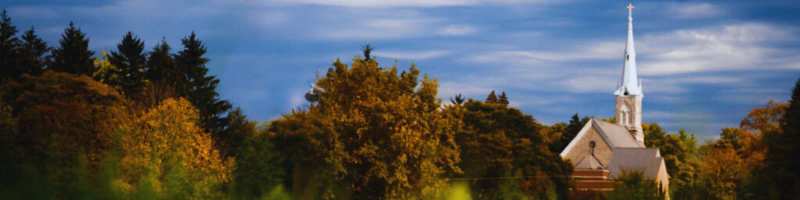
The pattern repeats across the state: a German or Polish parish church far larger than its town, built by people who had very little and gave a lot of it to the building. Driving the back roads of Washington, Ozaukee or Sheboygan County, you will see a spire before you see the town.
Shrines and pilgrimage sites
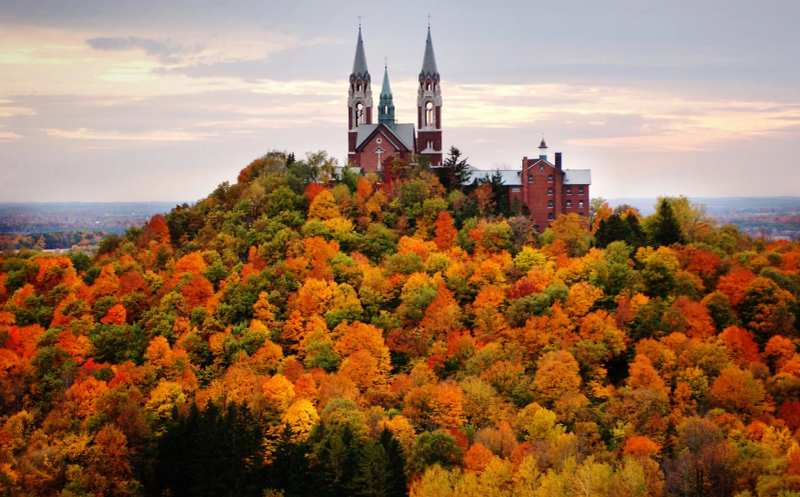
Wisconsin has three Marian shrines that share a free Pilgrim Passport, a small booklet you get stamped at each one: Holy Hill northwest of Milwaukee, Champion near Green Bay, and the Shrine of Our Lady of Guadalupe in La Crosse.
The passport is a free 24-page booklet you can pick up at any of the three, and you can start the route anywhere. It was created to frame a visit as a pilgrimage rather than a sightseeing stop, but nobody checks your reasons at the door, and the three places are different enough that the full set is worth collecting either way.
The basilica on Holy Hill draws hundreds of thousands of visitors a year, many of them in October for the color. Climbing the tower and walking the Ice Age Trail below it is a full day, and worth planning around the fall weekend crowds.
Below the church, an outdoor Stations of the Cross climbs about half a mile through the woods; the 14 nearly life-size figures were carved from Bedford stone by a Milwaukee artist over 14 years and finished in 1928. Inside, a side chapel keeps a wall of crutches and leg braces left by pilgrims who believe they were healed, which tends to stop people mid-sentence. The cafe at the top is known for its pie.
The story locals still tell is about the Peshtigo Fire of October 8, 1871. That night, people sheltering at the chapel carried a statue of Mary around the grounds in prayer; the fire burned everything outside the circle and left the chapel standing. The procession is re-enacted every October. The present chapel dates to 1942, and the crypt beneath it still holds crutches left by people who believe they were healed.
The third shrine, the Shrine of Our Lady of Guadalupe on the south edge of La Crosse, is the newest, completed in 2008 on wooded hillside land given for it. From Champion to La Crosse is about 178 miles in a straight line, so two separate trips is the practical way to see all three.
Guadalupe is laid out as a walk: a path climbs the hillside past devotional stops and a votive candle chapel to a neoclassical church at the top, with a rosary walk around the slope and a cafe at the pilgrim center. It is open every day of the year and admission is free.
For a quieter stop near Green Bay, the National Shrine of St. Joseph in De Pere sits in the crypt of the Norbertine community's abbey and has drawn people since 1891.
Wisconsin has more grottoes in that hand-built tradition. Rudolph Grotto Gardens in Wood County was built between 1921 and 1929 and has a walk-through Wonder Cave.
In Waukesha, the Schoenstatt Shrine is a small replica chapel kept open for quiet prayer. Between them, Wisconsin's Catholic shrines stretch from the Iowa line to Green Bay, close enough in pairs to visit over a weekend.
Door County's chapels
Door County's sacred buildings are small, old and mostly seasonal. The best two are an hour apart on the same peninsula road.
Boynton Chapel is more than a building to look at. Through summer and fall it runs a steady program of concerts, talks and films on the Björklunden grounds, and it is a popular chapel for weddings. Its listing carries the current calendar.
Across the ferry, the Washington Island Stavkirke is a newer stave church in the same Norwegian style, used for summer services. Most of Door County's chapels keep summer hours, so check before driving up in the off-season.
Two more are worth knowing. In Fish Creek, the Church of the Atonement is a Carpenter Gothic Episcopal summer chapel at the edge of Cottage Row, listed on the National Register. In southern Door, Belgian settlers built tiny roadside chapels, some barely big enough for a family, because the nearest parish was too far to reach for Mass. Several still stand along the farm roads near Brussels.
Mosques, synagogues and temples
Wisconsin's other houses of worship cluster around Milwaukee, and several are among the oldest of their kind in the state.
The Islamic Society of Milwaukee on South 13th Street, in a former public school, is the largest Islamic facility in Wisconsin. Milwaukee's mosques are spread across the south side, the East Side near UW-Milwaukee, Greenfield and Brookfield, and most welcome respectful visitors.
On the North Shore, Congregation Emanu-El B'ne Jeshurun in River Hills traces itself to a congregation organized in 1850, the oldest in Milwaukee. The synagogues of Milwaukee's North Shore run from Reform to Orthodox and Chabad, and most welcome guests at Shabbat services if you email ahead.
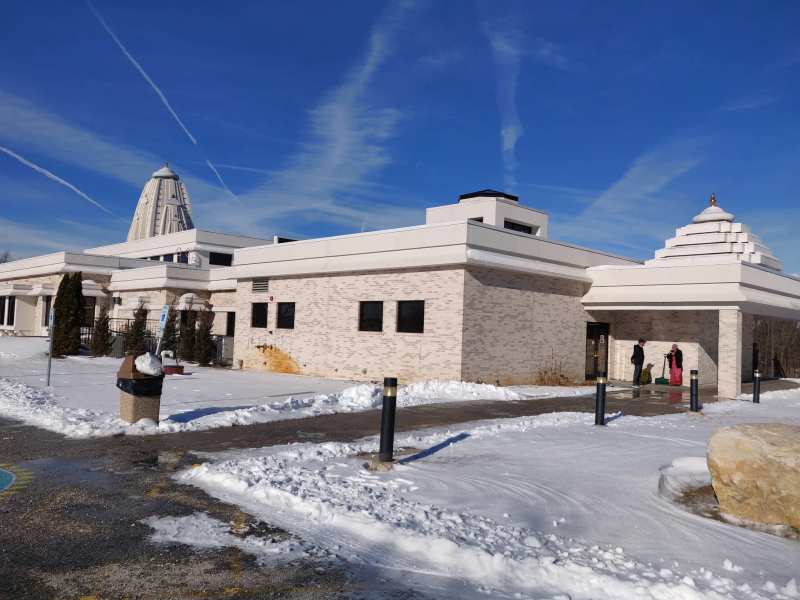
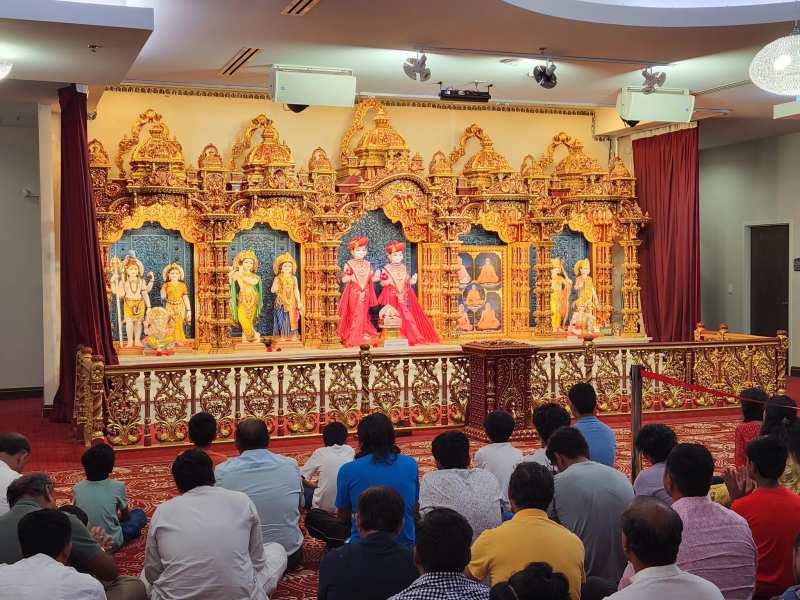
Pewaukee now has four Dharmic temples within a few miles of each other, and Oak Creek has the Sikh Temple of Wisconsin. The Hindu temples in Pewaukee open to visitors every day, and the gurdwaras serve a free communal meal to anyone who comes.
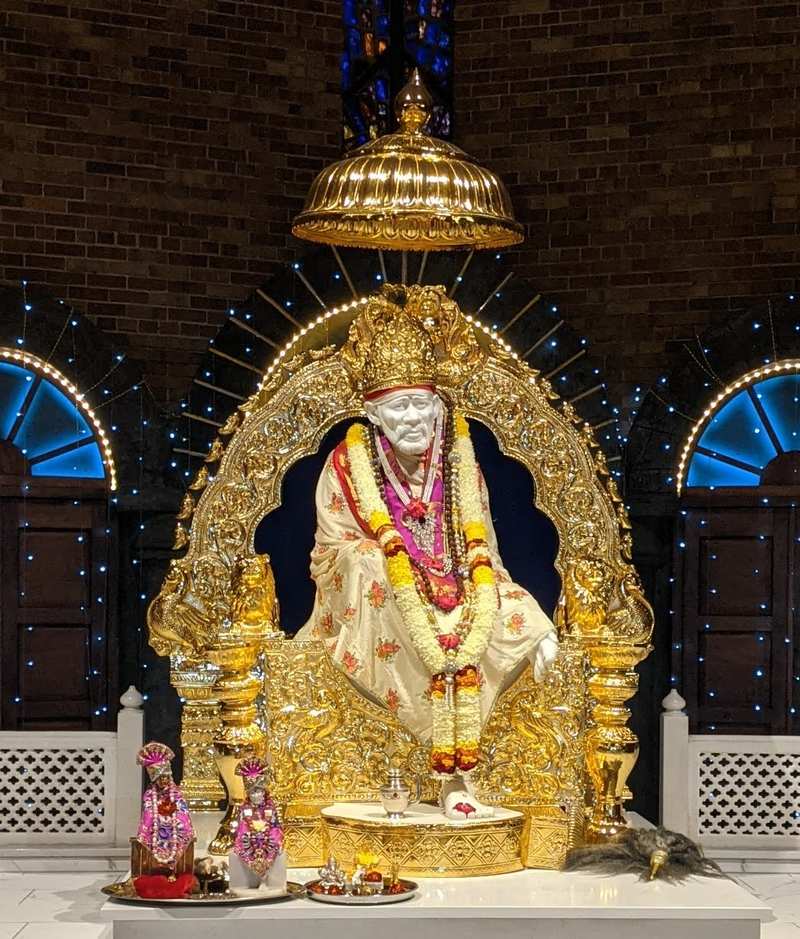
How Pewaukee became the center is a Wisconsin story in itself. The BAPS Shri Swaminarayan Mandir opened in 2018 in a former mattress warehouse on the same road as the Hindu temple. Wisconsin Shirdi Sai bought a church in downtown Pewaukee in 2013, after its members raised $200,000 in two days. Land was cheaper than in Milwaukee, and the community grew around it.
Jewish congregations reach well beyond Milwaukee too. Sheboygan once had several Orthodox synagogues, and Beth El Congregation, a Conservative synagogue built in 1944, still holds services there.
Finding a congregation by region
If you are moving to Wisconsin rather than sightseeing, the state's churches split into a few regions, each with its own guide here.
Lutheran churches are everywhere in Wisconsin, and they come in three main bodies: the ELCA, the Missouri Synod (LCMS) and the Wisconsin Evangelical Lutheran Synod (WELS), which was founded here. Catholic parishes are everywhere, often merged into multi-church parishes in smaller towns.
The Lutheran differences matter to members more than visitors, but they shape what a Sunday looks like. ELCA churches are generally more liberal than the other two, ordain women and share communion with other denominations. LCMS and WELS churches are more conservative, and many WELS and LCMS congregations run their own grade schools, which is why so many Wisconsin church names end in "Church and School." Visitors are welcome at all of them, though at LCMS and WELS services communion is usually for members.
Catholic parishes in Wisconsin belong to five dioceses: Milwaukee, Green Bay, La Crosse, Madison and Superior. In smaller towns, two or three old parishes are often merged into one, with Masses rotating between buildings, so check the parish page for which church is open on a given weekend.
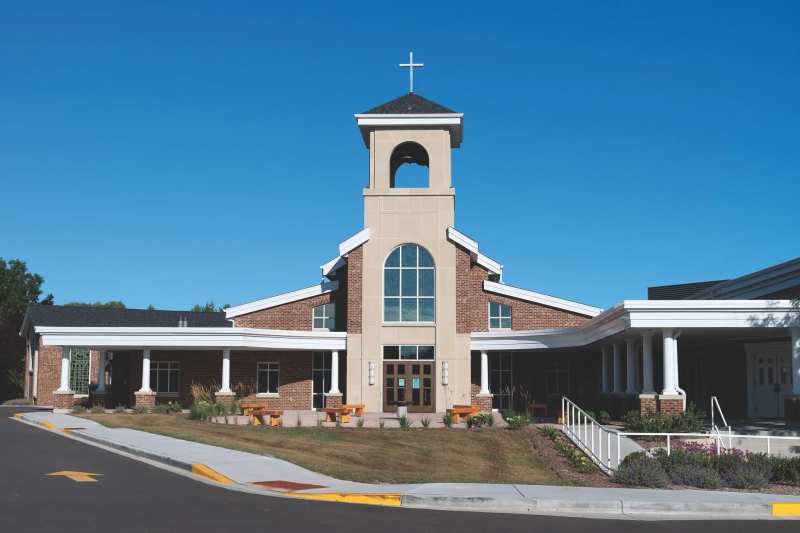
West of Milwaukee, churches in Brookfield and Menomonee Falls range from Elmbrook Church, the largest church in Wisconsin, to 1860s stone parishes. Elmbrook began as a few families meeting for Bible study in 1956 and now draws around 7,000 people a weekend, which puts it among the hundred largest churches in the country.
North of the city, Mequon and Ozaukee County have some of the busiest congregations on this site; Alliance Bible Church in Mequon alone posted more than 20 events in the last three months, from Bible studies to support groups.
Farther west, West Bend and Washington County fill in the Kettle Moraine country around Holy Hill.
Up the lake, Sheboygan's downtown church district sits a few blocks from the river, and the Hmong Christian Reformed Church is one of several Hmong congregations in the region.
In the Fox Valley, Appleton's congregations span Catholic, Lutheran and non-denominational churches.
Worship in other languages
Wisconsin's newer congregations worship in Spanish, Hmong, Lao, Vietnamese and a dozen other languages, often in buildings that older parishes outgrew or left.
In Milwaukee, congregations such as Templo de Restauración on the south side worship entirely in Spanish.
The Hmong community, the largest Asian American group in Wisconsin, supports congregations from Sheboygan to the Fox Valley Hmong Baptist Church in Appleton.
West of Milwaukee, the Lao Christian Church meets in Brookfield, and Chùa Phước Hậu in Wauwatosa serves Vietnamese Buddhists.
Visitors are welcome at nearly all of these, but services are usually entirely in the community's language. Arrive a few minutes early and say hello at the door; a greeter can tell you what to expect.
Visiting a working church, mosque or temple
Every place in this guide is an active house of worship, so the rules are simple: come between services if you are not there to worship, dress modestly, keep your voice low, and ask before taking photographs inside.
In mosques and Hindu and Jain temples, expect to take your shoes off. At a gurdwara, cover your head; scarves are usually available at the door, and visitors are welcome at the free communal meal, called langar. Many synagogues ask guests to email ahead because their doors are staffed for security.
For a low-pressure first visit, Doors Open Milwaukee in September opens dozens of buildings for free tours, including churches, mosques and synagogues that are not usually open to walk in. It is the one weekend a year you can see the inside of a lot of these places without attending a service.
When to go
Fall is the busiest season for Holy Hill, when the tower view over the Kettle Moraine turns red and gold; go on a weekday morning if you can. The tower closes from November through April.
Summer is the window for Door County, when Boynton Chapel opens to visitors and the Stavkirke holds services. September brings Doors Open in Milwaukee. Winter is quiet everywhere, which suits the shrines, and most of the city churches keep the same schedule all year.
Frequently asked questions
Published July 13, 2026