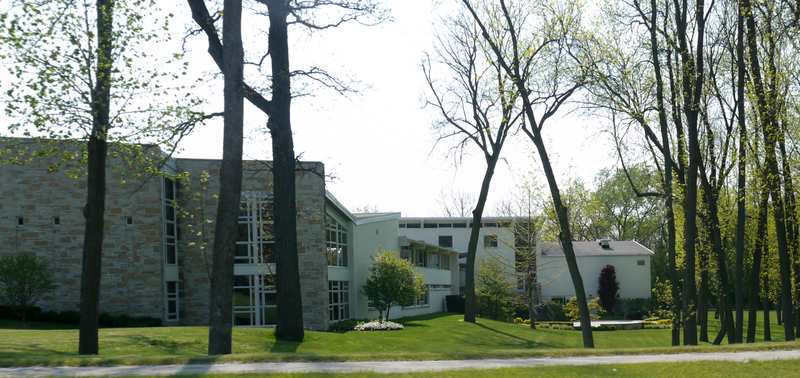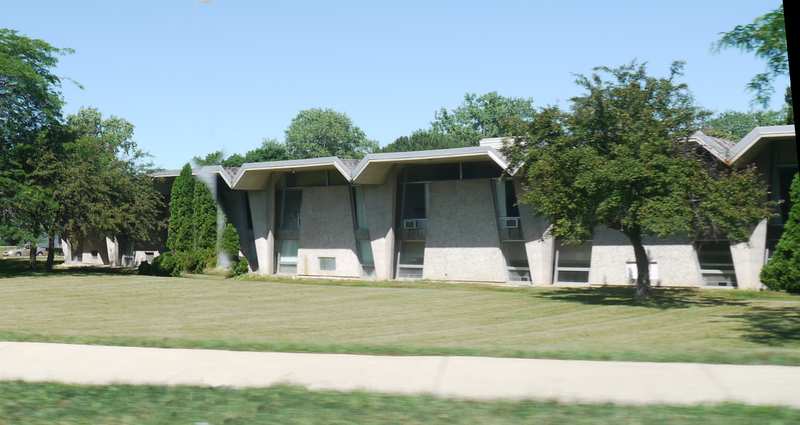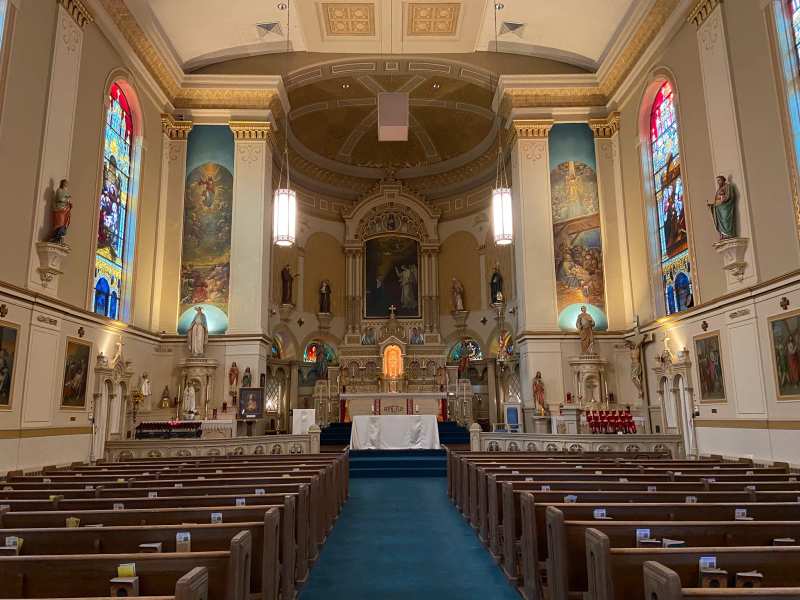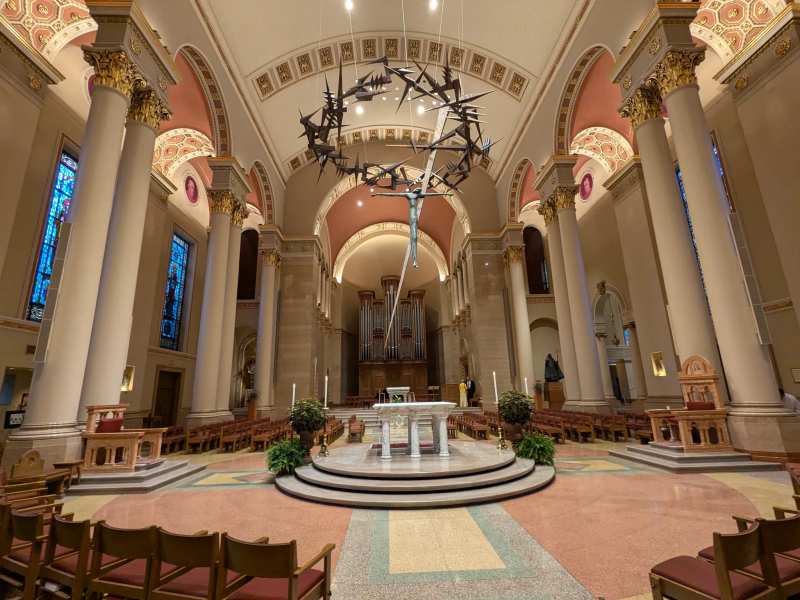
Door County's sacred buildings are small, old and built by hand, and a surprising number of them open just in summer. If you are looking for Door County churches to visit, the ones worth a detour sit on the quiet side of the peninsula: an 1850s Moravian church in Ephraim, a stave chapel in the woods at Baileys Harbor, and a timber church on Washington Island modeled on medieval Norway.
This guide splits them into the places you visit for the building and the places you go on a summer Sunday to worship, because on the peninsula those are often different lists.
Door County churches at a glance
Door County's churches follow the settlers up the peninsula. Belgian farmers in the south built roadside chapels the size of a garden shed. Moravians founded Ephraim and built its first church. Norwegian and Swedish families in the north left a taste for steep wooden roofs that Winifred Boynton and the Washington Island builders turned into full stave churches decades later.
The practical point is the calendar. Many of these buildings keep summer-only schedules, roughly June through August, and several are chapels rather than parishes, so they have no weekly service at all outside the season. In winter, plan on village churches with year-round congregations and treat the chapels as something to see from the outside.
Boynton Chapel, Baileys Harbor
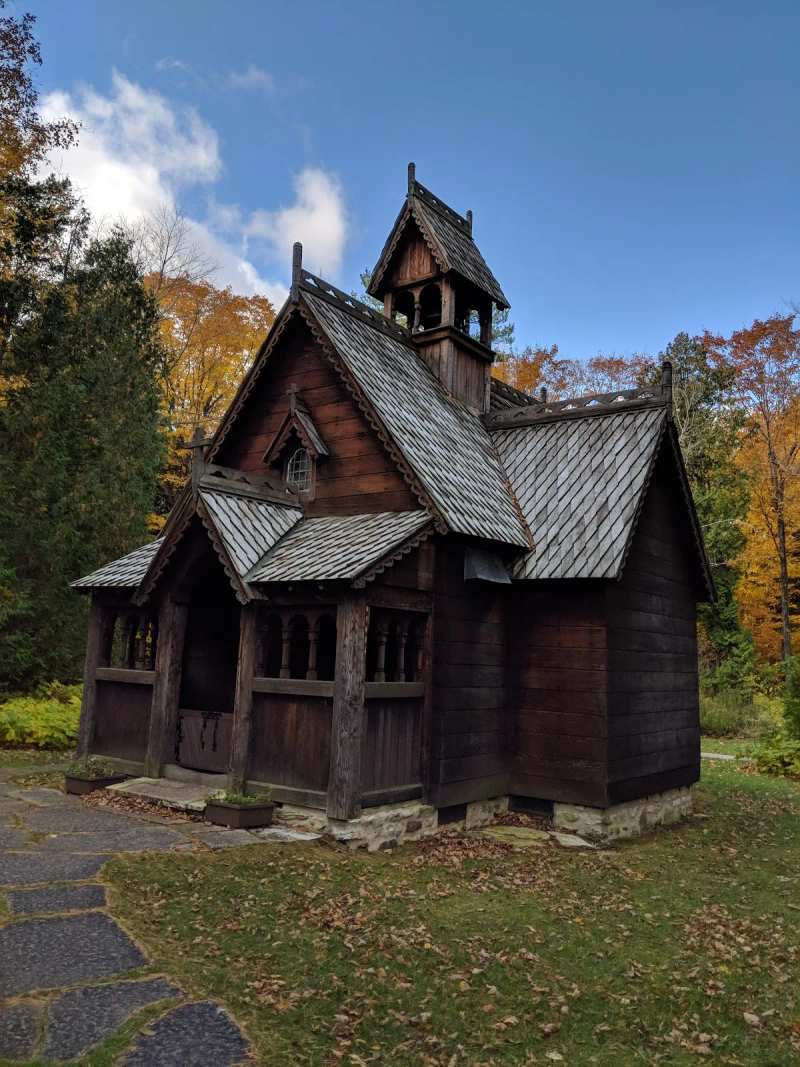
The building is the reason to come. The Boyntons and a few local craftsmen worked in hand-adzed fir timbers and redwood planks, stacking steep gables one above another the way the old Norwegian stave churches do. Inside, Winifred painted 41 frescoes herself, in the flat, folk style of Swedish painted wall hangings. She was a housewife from Highland Park, Illinois, with no formal training, and later wrote a book about the project, Faith Builds a Chapel.
Visiting hours are limited and seasonal; Travel Wisconsin lists Monday and Wednesday afternoons from 1 to 4 in June through August, so check before you drive out. Outside those hours the chapel is a popular wedding venue, and through summer and fall it runs a steady program of concerts, talks, film nights and even a fun run on the Björklunden grounds. Those events are on its listing, and they are the easiest way to get inside if your trip misses the open afternoons.
What makes a stave church
A stave church is a medieval Norwegian building type made of upright timber posts, the staves, rather than stacked logs or stone. The look that gives them away is the roof: steep, sharply pointed gables layered one above another, each smaller than the one beneath, so the building rises in tiers like a wooden pagoda.
The Wisconsin Historical Society's record for Boynton Chapel notes the Boyntons built theirs on exactly that model, and compares it to the stave chapel at Little Norway near Blue Mounds. The Washington Island Stavkirke follows the same tradition. Inside both, the wood is the decoration: carved posts, dark timber and, at Boynton, painted panels that fill the walls with color.
If you have seen pictures of the old churches in Norway, both Door County buildings will look familiar at once, which is the point. They were built by people with Scandinavian roots who wanted that shape on this side of the Atlantic.
Ephraim's Moravian church
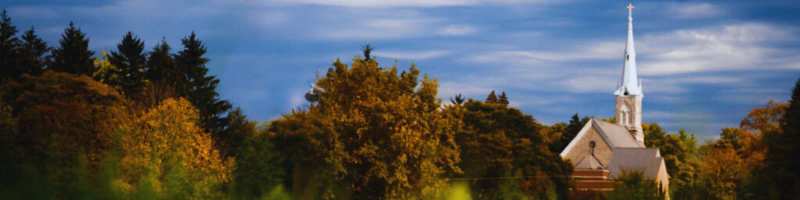
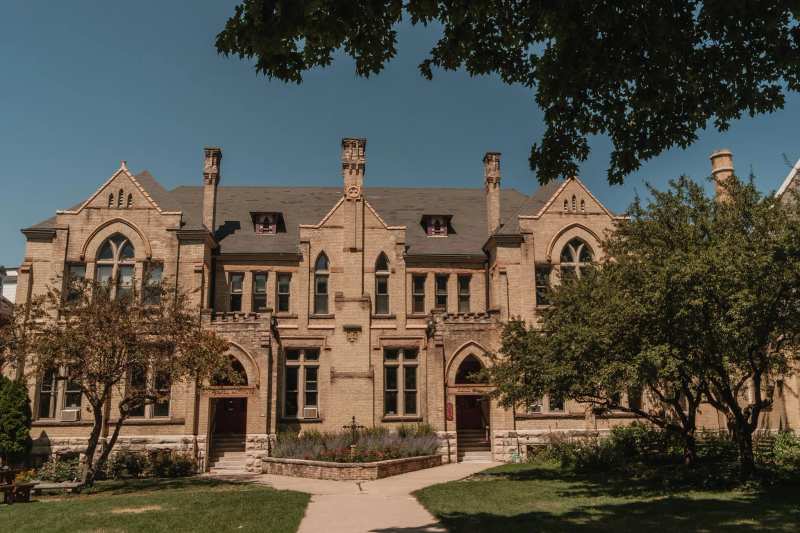
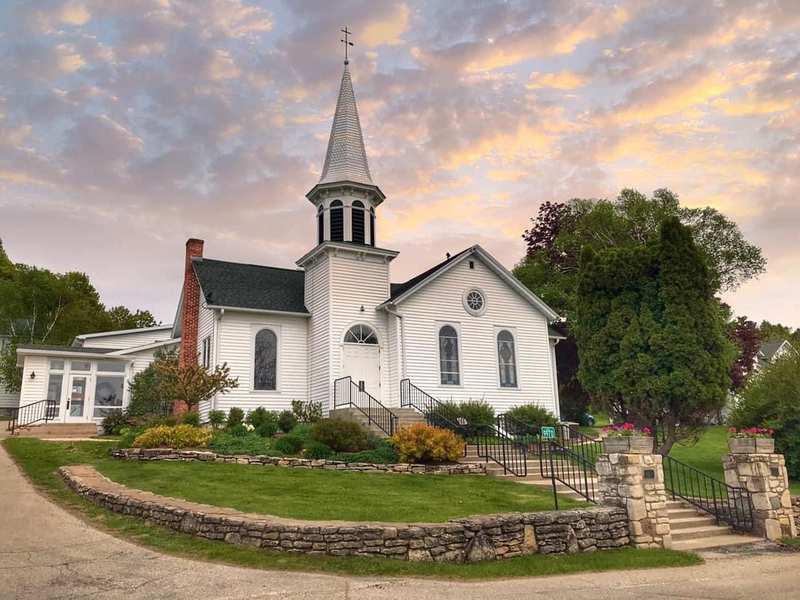
The white steeple on Moravia Street shows up in many photographs of Ephraim's harbor. The church was listed on the National Register of Historic Places in 1985, for its role in the settlement of the peninsula. The Ephraim Historical Foundation runs Moravian heritage tours and village walking tours in season, and they are the way to hear the story of the founding families properly.
Come for a Sunday service if you want to see it as a living parish rather than a postcard; visitors are welcome, and the congregation is used to summer faces.
Sunday worship in Fish Creek, Ephraim and Sister Bay
If you want a service on a Door County weekend, the north-peninsula villages each have a congregation that welcomes visitors, and they are all within about 10 miles of each other.
A few doors along Cottage Row, the Church of the Atonement is a Carpenter Gothic Episcopal summer chapel listed on the National Register. It holds services in season, which is part of its charm: a small wooden chapel that comes to life when the summer cottages fill up. Destination Door County pairs it with a sunset at Sunset Park, a few steps away, and that is a sensible evening.
Baileys Harbor's churches
Baileys Harbor, on the Lake Michigan side, has a Lutheran church with a woodland worship site and two Catholic churches near the harbor.
Immanuel Lutheran Church in Baileys Harbor also keeps Immanuel Woods, an outdoor worship site in the trees that is part of the same congregation.
For Catholics, Stella Maris and St. Mary of the Lake are the Baileys Harbor churches; check their listings for which one holds Mass on a given weekend.
Washington Island's Stavkirke and the Belgian chapels
Getting there is part of the visit. From Ellison Bay, it is about 10 minutes north to the Northport ferry, then a crossing of Death's Door, the strait between the peninsula and the island. The Stavkirke has no restrooms, so plan around that, and pair it with the island's other stops for a full day.
At the opposite end of the county, in southern Door around Brussels, Belgian settlers who moved north from Green Bay built tiny roadside chapels because the nearest parish was too far to reach for Mass. Families built and kept them, and several still stand along the farm roads, some barely big enough for a family to kneel in. The Chapel of Our Lady and St. Odile's are the two Destination Door County points visitors toward. The Belgian Heritage Center, itself a former church, tells the story of the largest Belgian settlement in America.
Two former churches now have other lives. In Ellison Bay, the old Lutheran church houses the Linden Gallery, a seasonal gallery of Asian art, and in Ephraim the restaurant LURE occupies the former St. Rosalia's Catholic church and mission, with some of the old church details still visible.
A south-to-north church route
You can see nearly every place in this guide in a long day by driving the bay side north and coming back down the lake side, and the distances are short once you are past Sturgeon Bay.
Start in southern Door with the Belgian roadside chapels around Brussels, then head north to Egg Harbor. Destination Door County points out two stone churches there: Stella Maris St. John the Baptist, built of locally quarried dolomite and fieldstone, and the former Calvary United Methodist Church on the north end of the village, which dates to 1924 and is no longer in use.
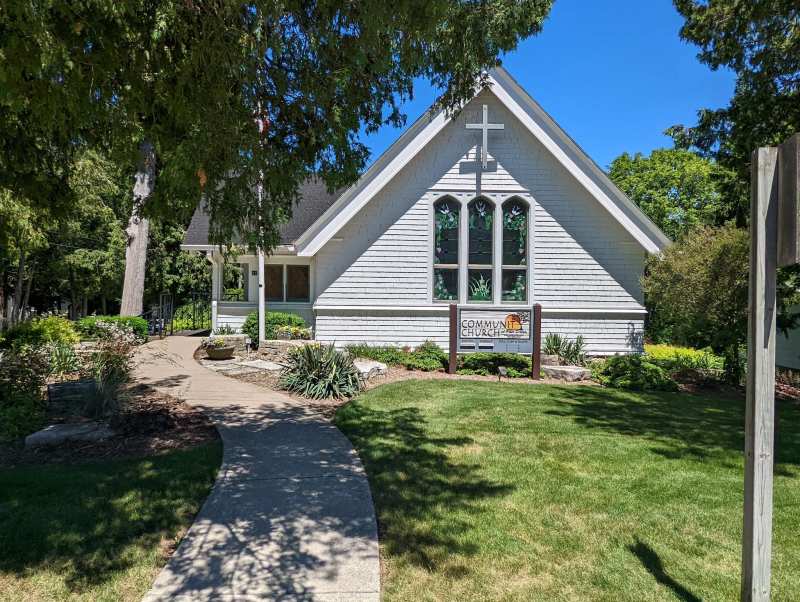
Fish Creek is next, with the Church of the Atonement and the Community Church on Cottage Row. From Fish Creek it is about 4 miles in a straight line to Ephraim's Moravian church, and Sister Bay's Door of Life is about 2 miles past that. Keep going to Ellison Bay for the Linden Gallery, then the Northport ferry if you have the time for Washington Island; the Stavkirke sits about 17 miles northeast of Sister Bay as the crow flies, with the crossing in between.
Come back down Highway 57 on the Lake Michigan side to Baileys Harbor for Boynton Chapel, about 8 miles south of Ephraim, and plan to arrive on an open afternoon or for an evening event. In summer traffic, give the whole loop a full day and do not try to add a ferry crossing on a Saturday in August.
Visiting tips
Summer is the window. Boynton Chapel and the Stavkirke keep summer-only access, the Church of the Atonement opens only in season, and the village congregations add visitors to their regular rhythm from June through August.
Dress the way you would for any working church, keep voices down, and walk in during a service if you are there to join it, not to look around. Several of these chapels are booked for weddings on summer Saturdays, so a closed door on a Saturday afternoon usually means a ceremony, not a closure.
Door County's chapels are one corner of Wisconsin's churches and shrines, which run from Milwaukee's south-side basilica to hilltop shrines in the Kettle Moraine.
If you drive up from Green Bay, the Champion shrine sits right on the way, in the countryside about 13 miles northeast of the city, and makes a natural first stop.
Frequently asked questions
Published July 20, 2026