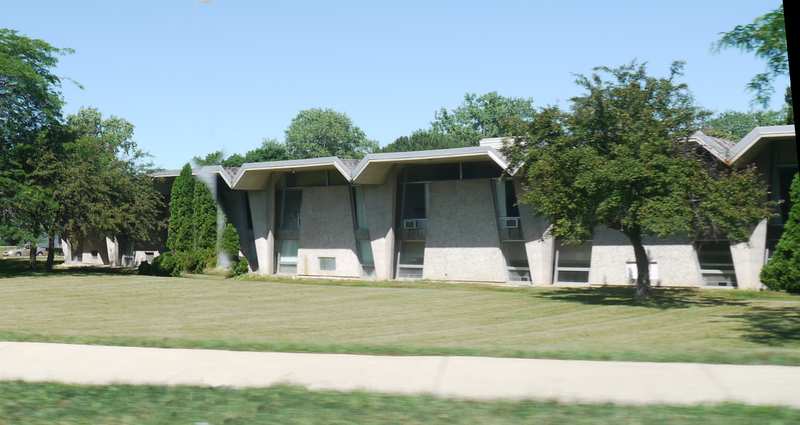
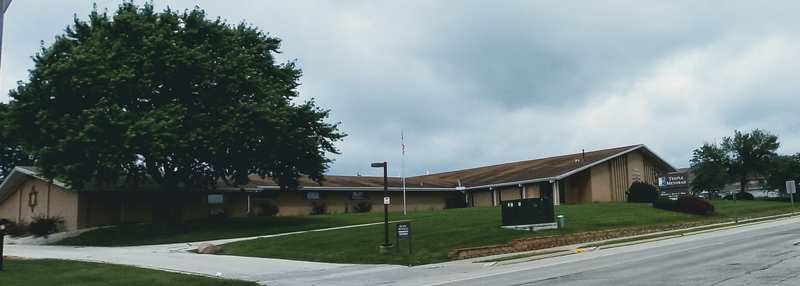
Milwaukee is home to the large majority of Wisconsin's Jewish community, and the synagogues in Milwaukee cover the full range of Jewish life: Reform, Conservative, Reconstructionist, Modern Orthodox, Orthodox and Chabad. Most sit on the city's East Side and in the North Shore suburbs, with a smaller Orthodox community on the west side.
This guide explains which congregation belongs to which movement, where each one is, and how to attend a Shabbat service as a guest if you have never been to one. If you are moving to Milwaukee, it is a place to start choosing a community.
Jewish Milwaukee at a glance
As of 2011, Milwaukee was home to about 25,800 Jewish people, roughly 78 percent of all Jews in Wisconsin. The community has deep roots: it grew from about 70 families in 1850 to 2,074 by 1875, as German Jews and then Eastern European Jews settled in the city.
The community is also unusually varied for its size. Within about a dozen miles of downtown you can find every major Jewish movement in America, from a Reconstructionist congregation that welcomes interfaith families to a west side Orthodox community that walks to services every Saturday.
Today the community is concentrated on the North Shore. A 2012 community study found that 44 percent of Jewish households lived in the North Shore suburbs, with Orthodox clusters on both the East Side and the west side, where families live within walking distance of their synagogues so they can walk on Shabbat.
That geography explains the map. The large Reform and Conservative congregations are in River Hills, Fox Point and Glendale, the Modern Orthodox and Reconstructionist ones on the East Side, and the traditional Orthodox community on the west side.
Reform congregations
Reform Judaism, the more liberal end of the main movements, emphasizes personal choice in observance, uses more English in services and counts women and men equally. Milwaukee's two large Reform congregations are both on the North Shore.
West of the city, Congregation Emanu-El of Waukesha serves Reform families in Waukesha County and dates to 1939.
Conservative congregations
Conservative Judaism sits between Reform and Orthodox, keeping traditional Hebrew liturgy and observance while adapting to modern life; many Conservative congregations are now egalitarian, with men and women sharing every role.
Modern Orthodox and Orthodox congregations
Orthodox congregations follow traditional Jewish law, with services in Hebrew and men and women seated separately. Modern Orthodox synagogues combine that observance with full engagement in secular life.
The west side once had a much larger Orthodox presence: between the 1950s and the 1980s it supported five Orthodox synagogues. Today Beth Jehudah and the Milwaukee Kollel, a center for adult Torah study, keep that tradition going.
Reconstructionist and independent congregations
Shir Hadash is a good fit for people who want a small, lay-led community with strong participation from members. It shares the East Side with Lake Park Synagogue and the Chabad of the East Side, so three very different Jewish communities sit within a short walk of each other.
Chabad in Milwaukee
Chabad-Lubavitch is an Orthodox Hasidic movement known for outreach to Jews of every background. Milwaukee has a network of Chabad centers, and they are often the easiest place for an unaffiliated Jew, a student or a visitor to find a Shabbat dinner.
Chabad-Lubavitch of Wisconsin is the statewide headquarters.
Neighborhood centers include Chabad of the East Side and Chabad of Downtown.
North of the city, Chabad of Glendale and The Shul in Bayside serve the North Shore.
Out west, Chabad of Waukesha-Brookfield serves families in Brookfield, Waukesha and the surrounding suburbs.
Mequon, Waukesha and beyond
North of Milwaukee County, Congregation Anshai Lebowitz is an Orthodox congregation founded in 1908 that moved to Mequon in 1998. The Peltz Center for Jewish Life in Mequon is a community center serving Ozaukee County.
For families moving to Mequon, that means a full Jewish community within the same suburb, alongside its churches.
Up the lakeshore, Beth El Congregation in Sheboygan is a Conservative synagogue built in 1944.
A short history of Jewish Milwaukee
Jewish settlers arrived in Milwaukee in the 1840s, mostly from Germany, and the community's first congregation was organized in 1850. By 1862, five of the city's fourteen merchant tailors and clothiers were Jewish-owned, an early sign of how quickly the community became part of the city's commercial life.
Eastern European Jews arrived in larger numbers from the 1880s, fleeing pogroms and poverty, and they founded the Orthodox congregations that shaped the north and west sides. Over the 20th century, as families moved north, many of those congregations followed them to the North Shore suburbs, which is why so many of Milwaukee's synagogues now sit in River Hills, Fox Point and Glendale.
The community has also left a mark on the wider city. The Jewish Museum Milwaukee downtown tells the story of Jewish life in the region, and the Harry and Rose Samson Family Jewish Community Center is a hub for families of every affiliation.
Jewish life beyond the synagogue
Synagogues are one part of Jewish Milwaukee. The Milwaukee Kollel runs adult Torah study open to people of any background or level, from beginners to people who have studied for decades, and it is a good door into the community for someone who wants to learn before choosing a congregation.
For students, Hillel Milwaukee serves Jewish students at the area's colleges and universities, with Shabbat dinners, holiday events and help finding a congregation. The Chabad centers on the East Side and downtown also host students and young professionals for Friday night dinners.
Families find much of their community through schools, camps and the Jewish Community Center, and many congregations run joint programs with the JCC. If you are new, the easiest way in is often a holiday event or a Friday night dinner rather than a Saturday morning service.
Interfaith and unaffiliated families
Many Jewish families in Milwaukee include a partner who is not Jewish, and the city's congregations differ in how they welcome them. Reform and Reconstructionist synagogues are generally more open, with roles for non-Jewish partners and children raised in both traditions. Conservative and Orthodox congregations are welcoming to visitors but follow traditional rules on membership and ritual roles.
If you are not affiliated with any congregation, you are not alone, and you do not have to join anything to attend. Chabad centers in particular are built around welcoming people regardless of their level of observance, and congregations are generally happy to have you come for a service or a holiday before you decide anything.
Religious school and b'nai mitzvah
For families with children, religious school is often the deciding factor. The large North Shore congregations run full Sunday and midweek schools leading up to bar and bat mitzvah, the coming-of-age ceremony at 13 for boys and 12 or 13 for girls. Smaller congregations run smaller programs or share with others. Ask each congregation about its school schedule, its costs and what it expects of parents before you join.
Attending Shabbat services as a guest
Synagogues in Milwaukee generally welcome guests, but security is a real concern, and many keep their doors staffed. The useful thing to do is email or call the office before you go, give your name, and ask what time services start and what to expect.
Shabbat begins on Friday evening and continues through Saturday. Friday evening services are often shorter; Saturday morning services are longer and may last a few hours, with a meal or kiddush afterward. You do not need to stay for the whole service.
Dress as you would for a formal occasion. Men are usually asked to wear a kippah, a small head covering, and synagogues usually keep them at the door. In Orthodox congregations, women typically wear skirts or dresses covering the knees and elbows, and married women may cover their hair; men and women sit separately. In Reform, Reconstructionist and egalitarian Conservative congregations, families sit together.
In Orthodox and many Conservative synagogues, avoid using your phone, taking photographs or writing on Shabbat, since observant members refrain from these on the Sabbath. Follow along in the prayer book, stand when the congregation stands, and accept any invitation to stay for kiddush; it is the friendliest part of the morning.
The High Holy Days and festivals
Rosh Hashanah and Yom Kippur, in early autumn, draw packed sanctuaries, and many congregations require tickets or advance registration for those services, often free or at reduced cost for students and newcomers. If you are new to Milwaukee and want to attend, contact a congregation a few weeks ahead.
Other festivals, like Sukkot, Hanukkah and Passover, bring community events that are often open to visitors, from building a sukkah to public menorah lightings and community seders. Chabad centers in particular host public events that welcome anyone curious. If you need a seder to attend at Passover, ask a congregation or a Chabad center a few weeks ahead; community seders fill up, but someone will usually find you a seat at a table.
Choosing a synagogue
If you are moving to Milwaukee, start with the movement you know, then visit two or three congregations. The North Shore's large Reform and Conservative synagogues offer full religious schools, youth groups and adult education. The East Side's smaller congregations suit students, young professionals and people who want to walk to services. And the Orthodox communities on the east and west sides are built around walking distance, so where you live and where you pray go together.
For the broader picture of faith in the city, Milwaukee's landmark churches tell the same story of immigrant communities building houses of worship.
The city's Muslim community did the same a century later, and the mosques Milwaukee's Muslims built now include the largest Islamic center in Wisconsin.
Statewide, houses of worship across the state are mapped region by region.
Frequently asked questions
Published September 7, 2026