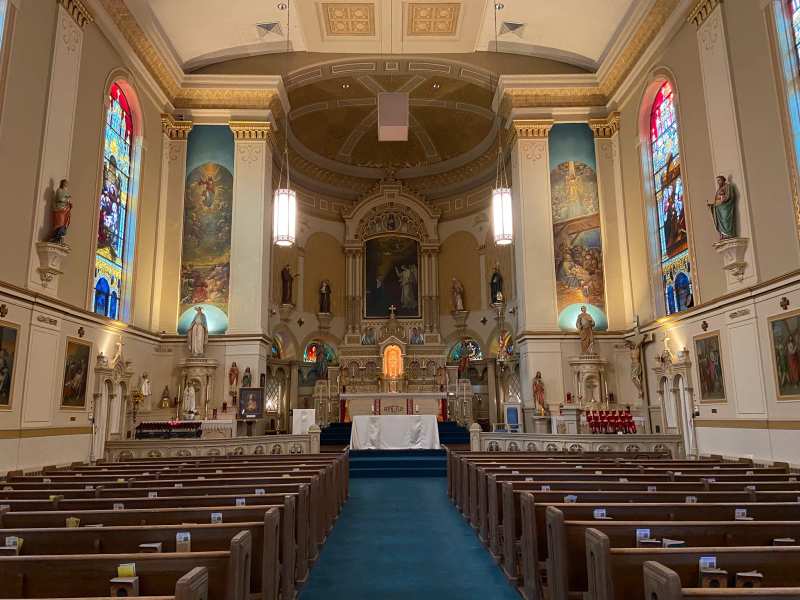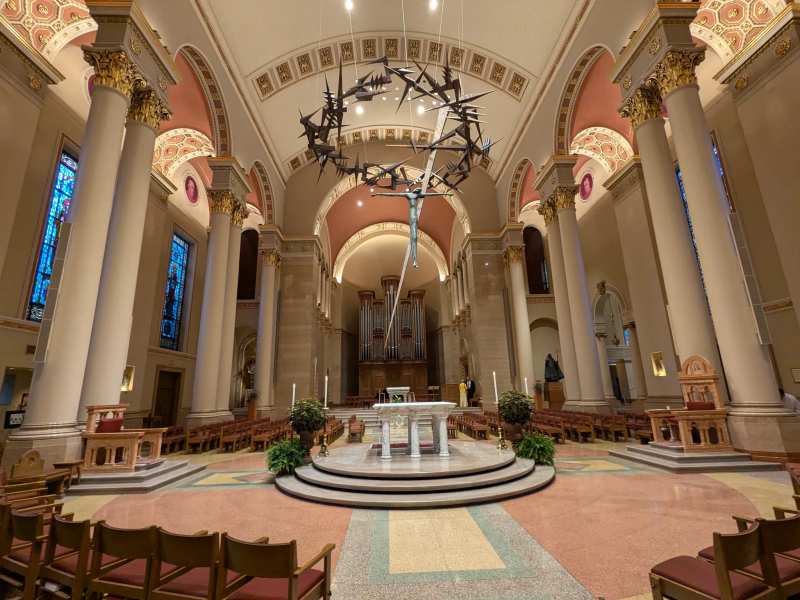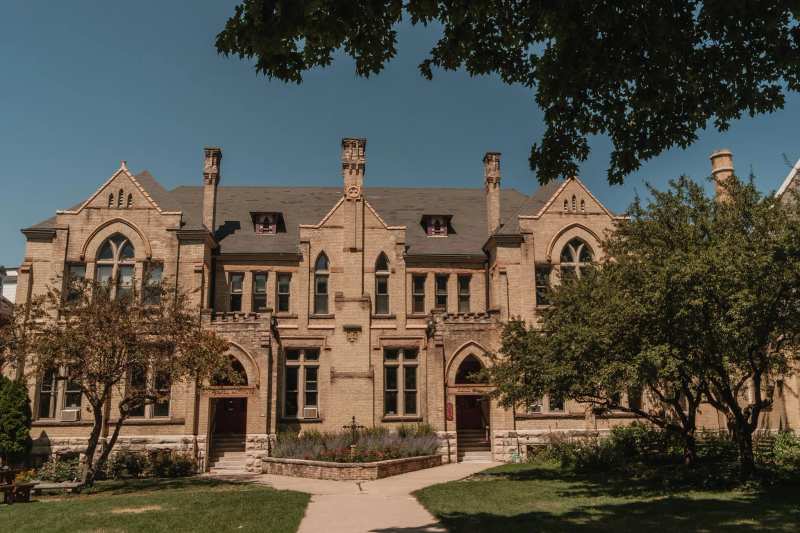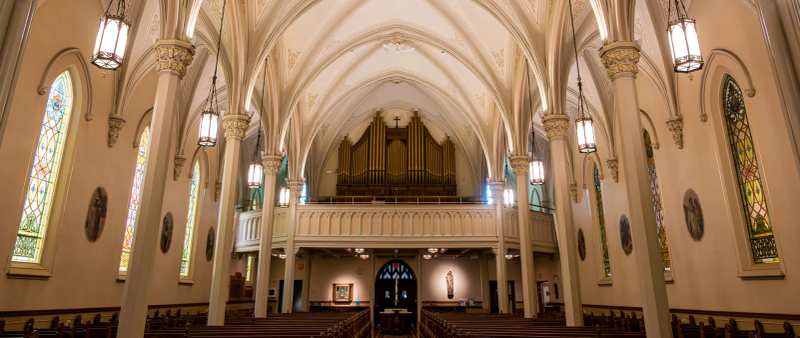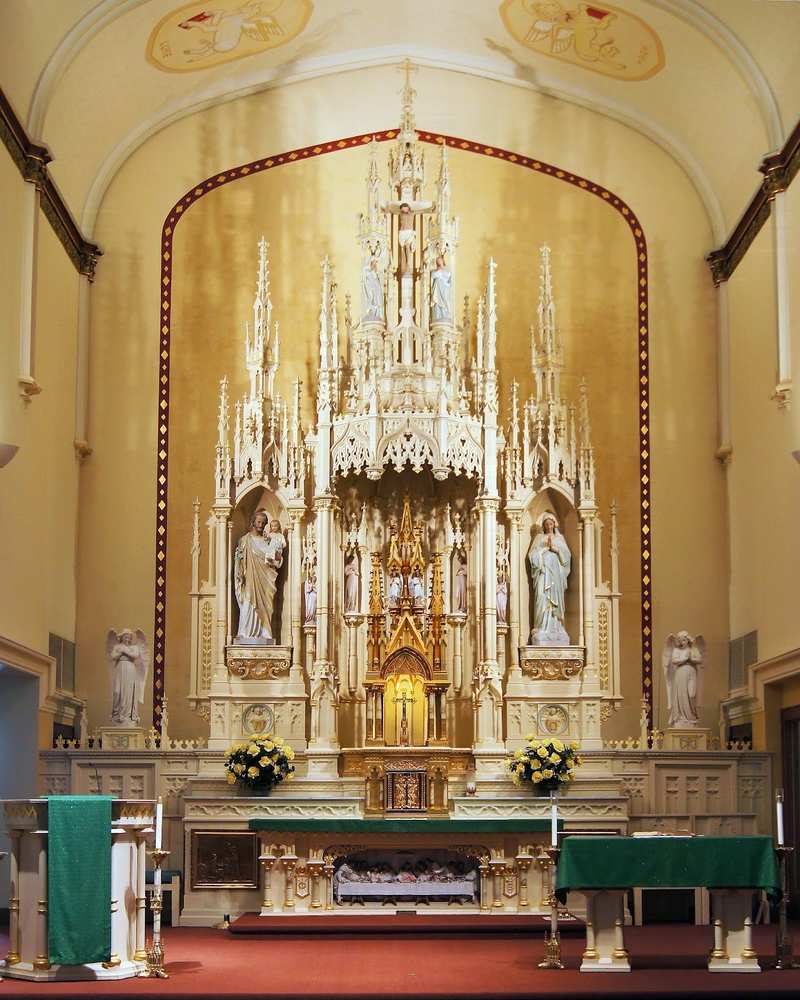
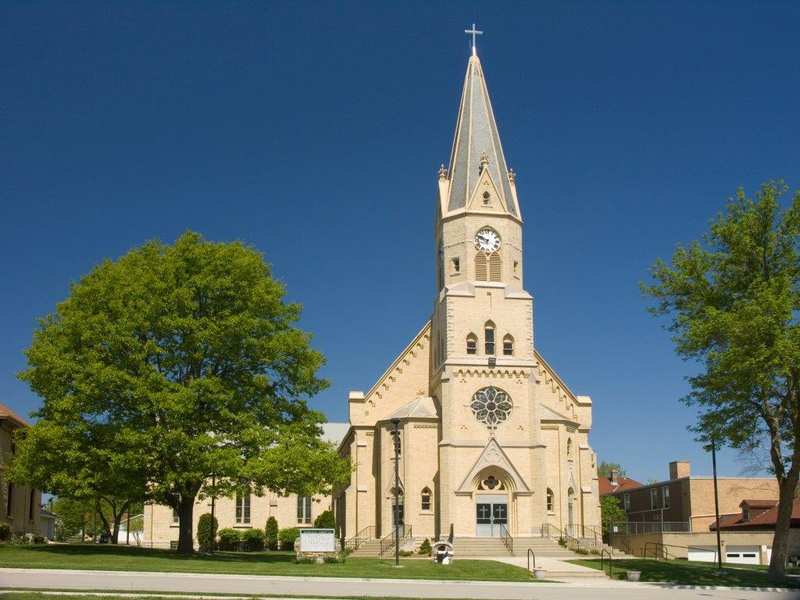
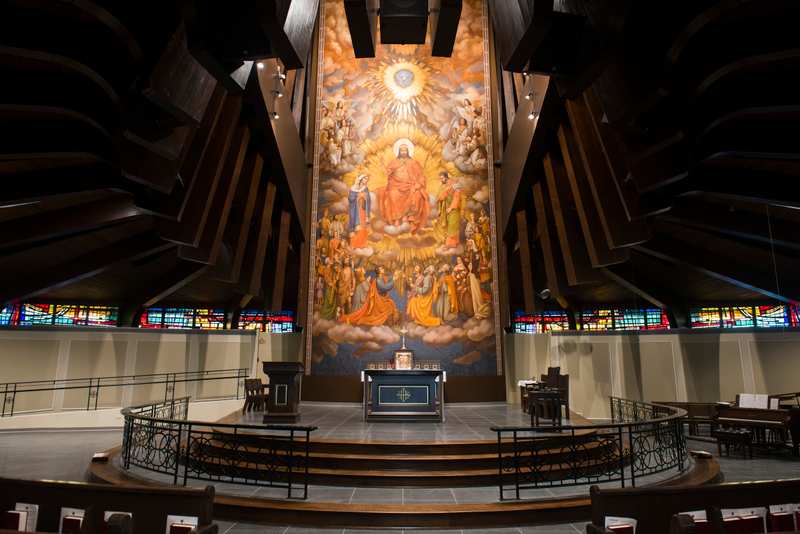
West Bend sits in the Kettle Moraine country of Washington County, and its churches reflect the German Catholics and Lutherans who settled the area in the 1840s. The churches in West Bend run from Holy Angels, a 1915 Catholic church downtown whose interior holds 88 angels, to the old Barton parish on the north side and a set of busy newer congregations in the surrounding towns.
This guide is for newcomers choosing a congregation and for anyone exploring the county's history. It covers West Bend, then Kewaskum, Hartford, Slinger, Richfield and Germantown, with Holy Hill just to the south.
How West Bend's churches came to be
West Bend was founded in 1845 as a village planned at the halfway point between Milwaukee and Fond du Lac. Of its original 30 families, 12 were Catholic, and for the first few years a priest rode over from St. Lawrence Church, in the nearby community of the same name, to serve them.
At the same time, German Catholic immigrants settled the village of Barton just to the north, founded in 1845 by Barton Salisbury, and the farms around it. German Lutherans, Methodists and Evangelicals followed, and a list of the county's early congregations includes a German Methodist church in West Bend from around 1855 and a Lutheran society in the Town of Trenton from 1850.
The result is a town with two historic Catholic parishes a mile apart, a strong Lutheran presence across the synods and a growing set of non-denominational churches. The directory DisciplePair counts 16 churches in West Bend across four denominations, and Local Eyes lists more than that in West Bend alone.
Holy Angels: West Bend's downtown parish
The parish's story starts small. In 1851, West Bend's Catholics pooled money to buy two city lots for $15, and by late 1852 they had built a simple wood-frame church they called Mary, Mother of Sorrows. When Father Caspar Rehrl, who served West Bend from 1857 to 1861, founded a parish in Barton named St. Mary's Immaculate Conception, the West Bend parish changed its name to Holy Angels to avoid confusion.
By 1863 Holy Angels had outgrown its first building. The parish bought two more lots at the corner of 7th and Elm, where Trinity Lutheran stands today, and built a second church in 1866. That one lasted almost 50 years, until the present church was blessed in 1915. On dedication day, the children received first Communion in the old church, walked to the new one, and were confirmed there.
Holy Angels School is nearly as old as the parish; its first classes were held in the original church around 1865. The parish and school remain at the center of downtown Catholic life, and the church is worth a visit just for the angels.
St. Mary's Immaculate Conception and the Barton neighborhood
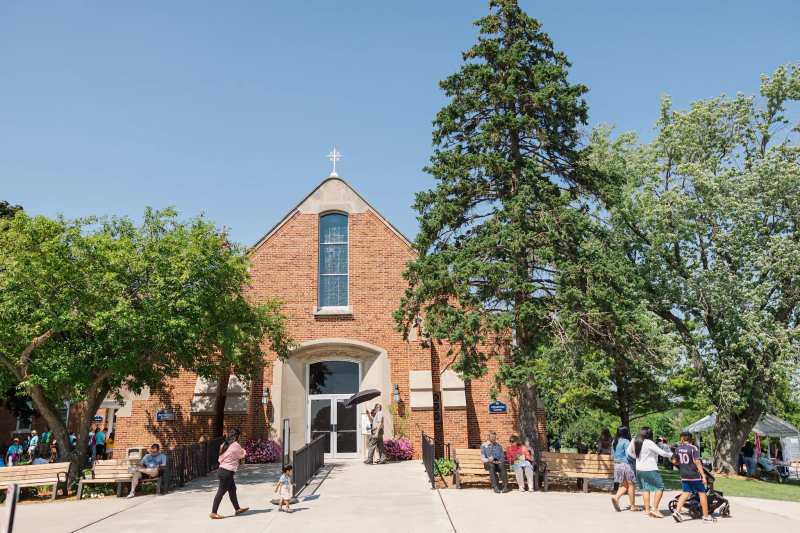
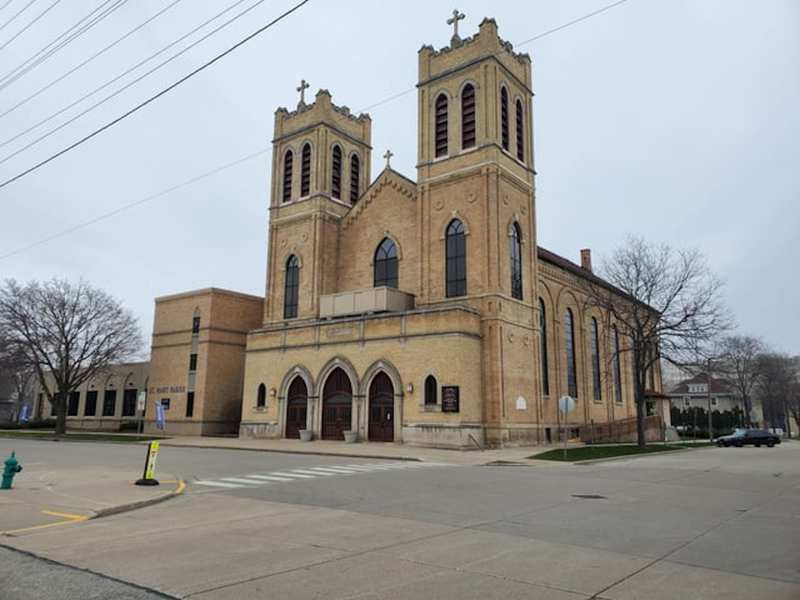
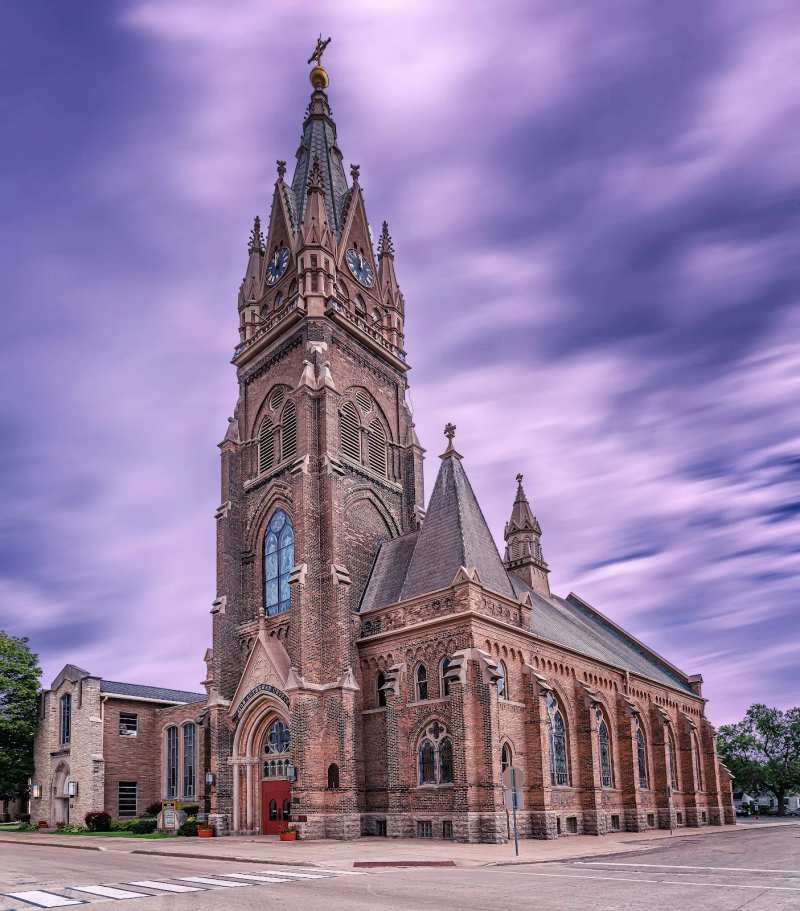
The present church dates to 1900, a cream brick Gothic Revival building whose central tower holds the cornerstone and clock faces from the congregation's first church. It sits in the Barton Historic District, and part of the property was zoned a Barton Historical Site in 1992.
Parishioners describe a warm, family feel and a strong sense of history, and they good-naturedly push back on anyone who says the parish is too far from downtown. It is about a mile.
Father Rehrl and the founding parishes
One priest ties West Bend's Catholic history together. Father Caspar Rehrl, an Austrian missionary, served West Bend from 1857 to 1861, a period when Holy Angels shared its pastor with the new parish in Barton. He renamed the West Bend parish Holy Angels, founded the Barton parish and celebrated its first Mass, and according to the Catholic Herald founded many other parishes in the area.
Before Rehrl, West Bend's Catholics had relied on priests who travelled from St. Lawrence, west of town, and the first resident pastor at Holy Angels came later.
Walking the Barton Historic District
St. Mary's sits at 1612 Monroe Street in the Barton Historic District, the old village center that the Wisconsin Historical Society's survey records as a contributing part of the district, with the parish rectory a short walk away on Jefferson Street. The district is a good half hour's stroll on a quiet morning, with the church tower as your landmark.
Look up at the tower for the clock faces saved from the congregation's first church. The Washington County Landmarks Commission included the area in its county history and driving tours in 1999, and the church is the anchor of that story.
St. Frances Cabrini and the south side
With Holy Angels downtown, St. Mary's in Barton and Cabrini to the south, West Bend's Catholics can choose between an 1852 parish, an 1857 one and a modern suburban one, all within about a mile and a quarter of the center of town.
Lutheran churches
West Bend's Lutherans span all three main bodies. Trinity Lutheran stands on the corner of 7th and Elm, on the site of Holy Angels' second church.
Good Shepherd Lutheran Church and School on South Indiana Avenue is a Wisconsin Evangelical Lutheran Synod congregation with its own school.
The town's other Lutheran congregations include St. John's on South 6th Avenue and Our Savior's on Silverbrook Drive.
As elsewhere in Wisconsin, the synod shapes the Sunday. ELCA churches are generally more liberal and share communion widely, while LCMS and WELS churches are more conservative and usually reserve communion for members. Visitors are welcome at all of them, and several run grade schools, which is often what decides it for families.
Methodist, UCC and other mainline churches
Fifth Avenue United Methodist Church on South 5th Avenue is the town's Methodist congregation, carrying on a tradition that goes back to the German Methodist church West Bend had by the 1850s.
Non-denominational and evangelical churches
West Bend has a lively set of newer churches with contemporary worship. New Life Church keeps an active events calendar on Local Eyes.
Kettlebrook Church on West Washington Street and Bend City Church on Butternut Street both post their services online.
First Baptist Church on South Main Street runs a church and school.
A town of many congregations
West Bend has always had more congregations than its size suggests. A county list of historic churches and religious institutions includes, besides the parishes in this guide, a Christian Science Society in West Bend from 1910, a St. James Episcopal Church from 1852, a Methodist Episcopal church, a Calvary Assembly of God, a Bible Baptist church and a German Methodist congregation from around 1855.
Some of those congregations have merged, moved or closed, and others carry on under new names. The pattern is typical of Wisconsin towns: German Catholics and Lutherans at the start, then Methodists and other Protestants, and in recent decades independent and non-denominational churches meeting in new buildings on the edges of town.
Worship styles
Style is often a better guide than denomination. At the traditional end, Holy Angels, St. Mary's and the Lutheran churches follow a set liturgy with an organ, hymns and communion at the center, in buildings that have changed little in a century.
In the middle, Immanuel United Church and Fifth Avenue United Methodist keep a simpler order of service with a choir and a sermon. At the contemporary end, Kettlebrook, Bend City, New Life and the churches of Richfield and Germantown lead with a band and screens, and several stream their services online so you can see what to expect before you go.
Kewaskum and the north
Kewaskum is a small village, and Holy Trinity's calendar is a good sign of how much parish life still revolves around the church there.
Hartford and Slinger
Hartford's other congregations include St. Lawrence, the parish whose pastor first served West Bend's Catholics in the 1840s.
Redeemer Lutheran, an ELCA congregation with an active calendar, and Divine Savior Lutheran serve Hartford's Lutherans.
Episcopalians have St. Aidan's. A visit to Hartford pairs well with the rest of Hartford.
In Slinger, St. Peter is the Catholic parish and Mosaic Church is a contemporary congregation.
Richfield and Germantown
Germantown also has St. Boniface, a Catholic parish serving the southern end of the county.
Holy Hill, just to the south
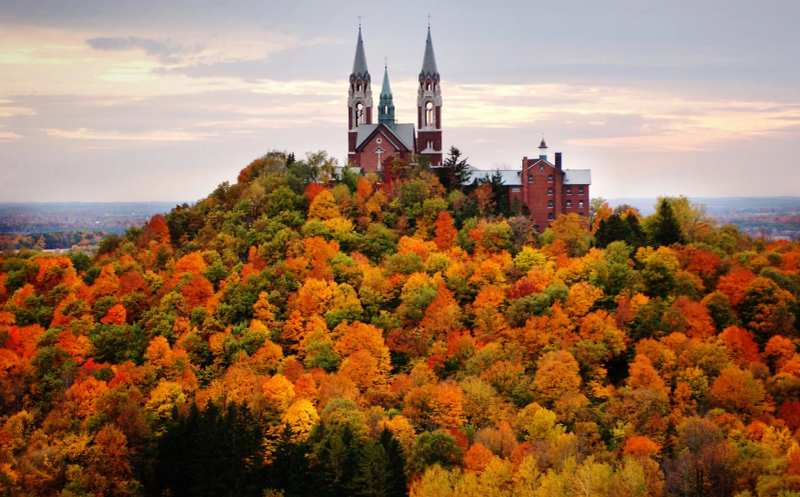
No guide to Washington County's churches is complete without the basilica on Holy Hill, about 15 miles southwest of West Bend in the Town of Erin. The twin-spired basilica draws around half a million visitors a year, and its Scenic Tower looks out over the same Kettle Moraine country these parishes serve.
The October color makes it a natural Sunday drive from West Bend, and the basilica holds Mass every day for visitors who want to attend.
Holidays and the church year
Christmas Eve is when West Bend's churches are fullest. The Catholic parishes add Masses, the Lutheran churches hold candlelight services, and the contemporary churches often stage larger productions with music and children's programs. If you are new to town and want an easy, low-pressure introduction to a congregation, a Christmas Eve service is a good way in, but arrive early, because the pews fill quickly that night.
Lent brings Friday fish fries in parish halls across Washington County and midweek services at many of the Lutheran churches. Summer brings parish festivals and picnics, and fall brings the color to the Kettle Moraine. Check each church's listing for upcoming events; several of the busiest in the county post new ones every single week.
Getting around
Washington County's churches are spread across a compact area. From downtown West Bend, Holy Trinity in Kewaskum is about 7 miles north, St. Kilian in Hartford and Northbrook in Richfield are each about 12 miles away, to the southwest and south, and the Germantown churches are 13 to 14 miles south. Holy Hill is about 15 miles southwest.
Inside West Bend, the three Catholic parishes, the Lutheran churches and the mainline congregations are all within about a mile and a quarter of downtown, so you can easily compare two or three on the same weekend.
Choosing a church in West Bend
Start with the tradition you know, then visit two or three congregations on consecutive Sundays. Washington County's churches are close together, so comparing a downtown parish, a Lutheran church with a school and a contemporary congregation is easy in a single month.
For families, the schools often decide it. Holy Angels runs a Catholic school, Good Shepherd and First Baptist run their own, and several other Lutheran churches in the county do too. For a large youth program, Northbrook, Life Church and New Life keep the busiest calendars.
If you love history, start with Holy Angels and St. Mary's in Barton, a mile apart and both founded by the same priest's era. If you want a contemporary service, start with Kettlebrook or Bend City downtown.
Beyond Sunday, the restaurants and shops of downtown West Bend sit a short walk from Holy Angels along the Milwaukee River.
East of the county, Mequon and Ozaukee County pick up the Lutheran story where it began, at Freistadt.
The same German Catholic and Lutheran pattern runs through the state's churches from the lakeshore to the Mississippi.
Frequently asked questions
Published October 5, 2026