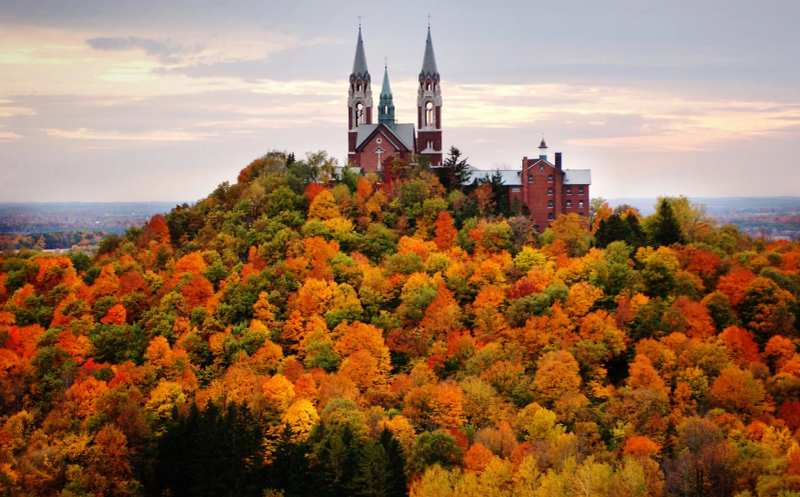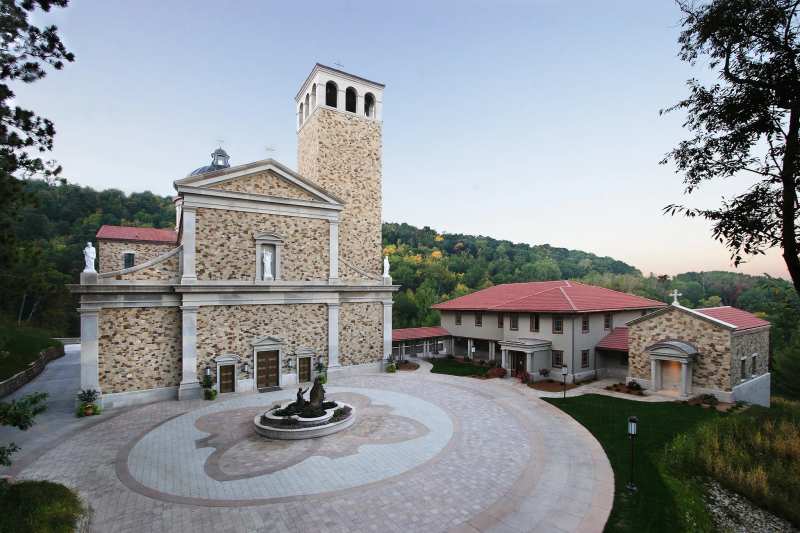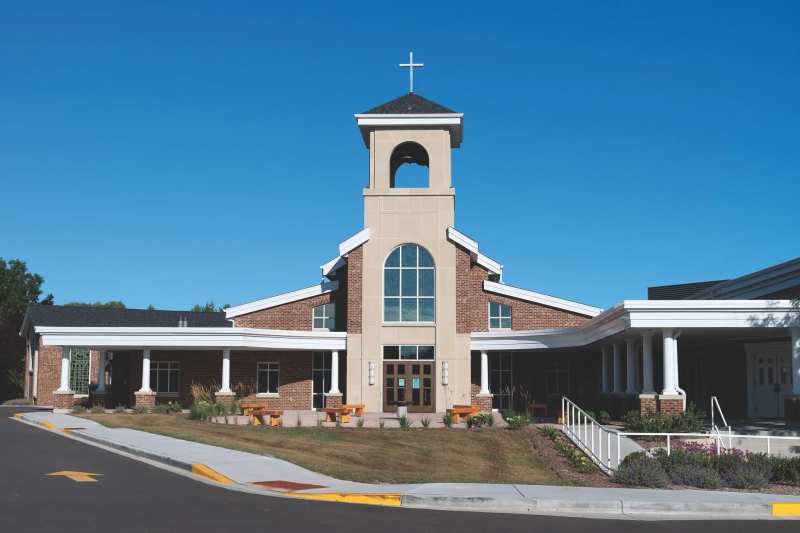
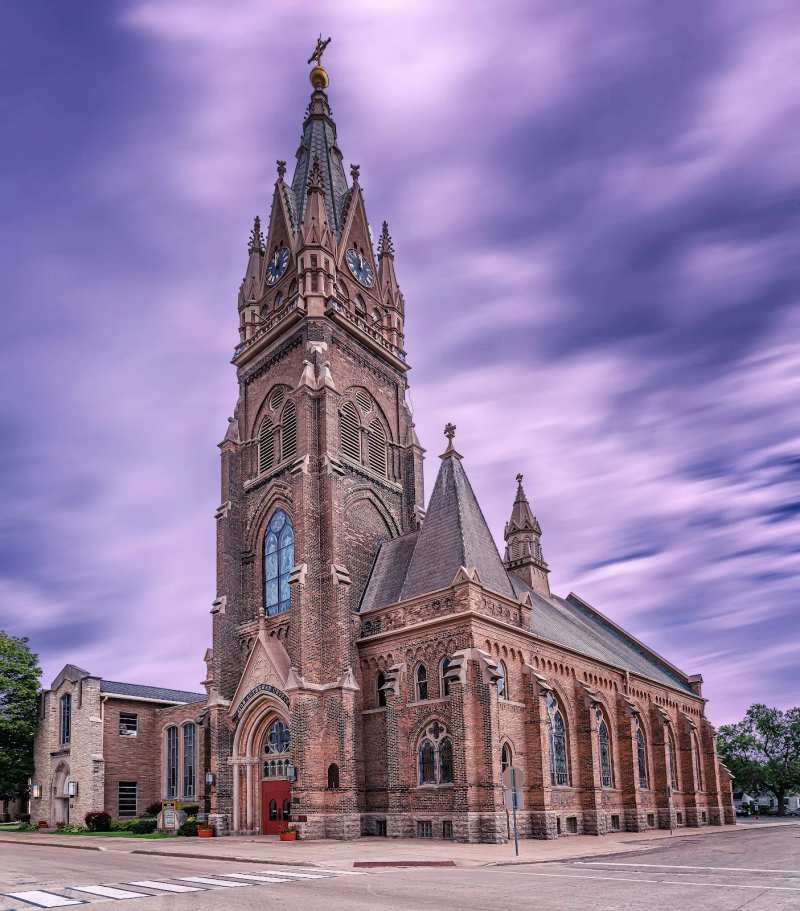
Appleton is a Lutheran and Catholic city with a large non-denominational scene, and its two oldest Catholic parishes still stand a few blocks apart downtown. This guide to churches in Appleton sorts them by tradition, so whether you grew up Catholic, Lutheran, Methodist or in an evangelical church, you can find your way in quickly.
It also covers Appleton's mosque, its Hmong congregations and a Jewish history that includes Harry Houdini's father serving as one of the city's early rabbis.
Churches in Appleton by tradition
The directory churcheslist counts 109 churches in Appleton across 28 traditions. Lutherans are the largest group with 20 congregations, followed closely by 19 non-denominational churches and 18 Catholic ones, then Baptist, Methodist and Episcopal churches in smaller numbers.
The oldest congregations cluster near downtown and College Avenue. St. Joseph and St. Mary, Appleton's first two Catholic parishes, are each about 0.2 miles from the city center, and Zion Lutheran and First United Methodist are within a mile. The newer non-denominational churches are spread out toward the north and west sides, where the city has grown.
That split is a useful guide. If you want an old building and a set liturgy, head downtown. If you want a contemporary service and a large children's program, look north.
Catholic parishes
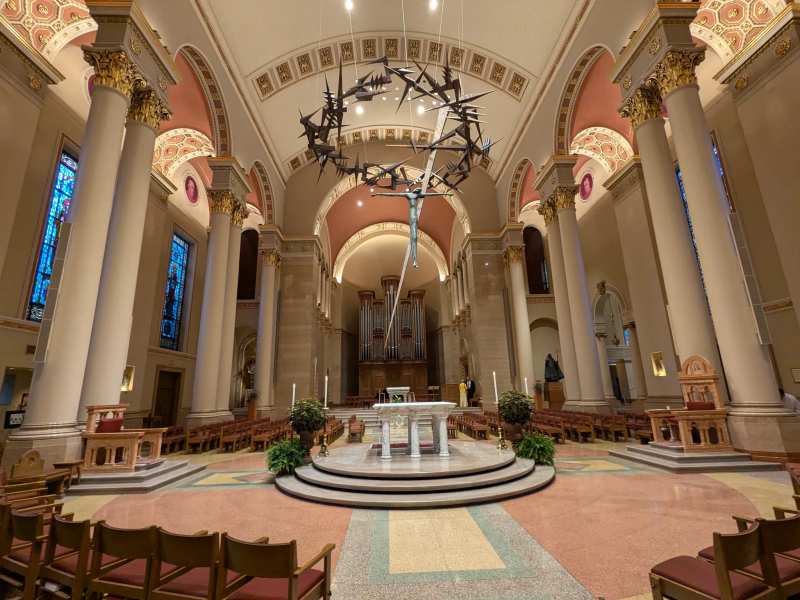
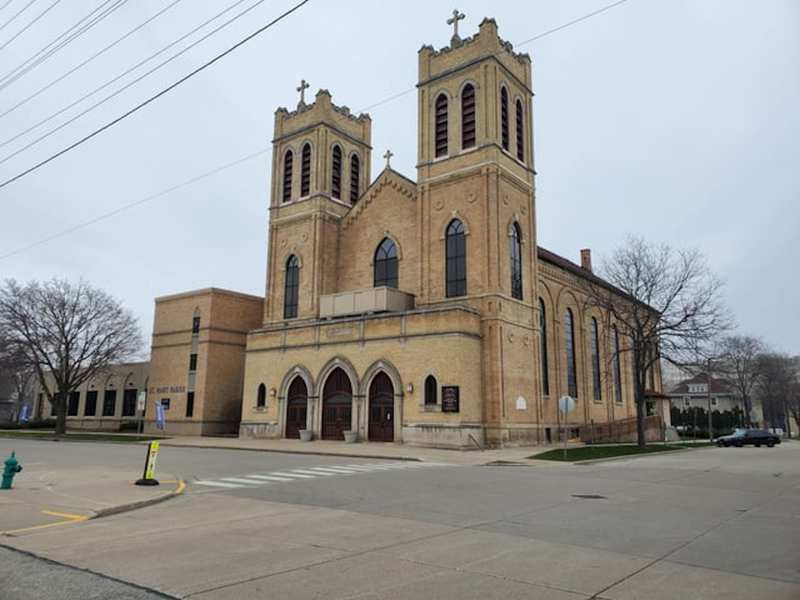
Appleton's Catholic history is a story of two immigrant groups and the two parishes they built.
The German Catholics who arrived in the 1860s could not follow sermons in English and wanted to pray and sing in their own language. On March 18, 1867, the feast of St. Joseph, Archbishop John Henni of Milwaukee gave them permission to build their own church.
The rivalry between the Irish and German parishes eased over the years, and today the two downtown churches work closely together. St. Joseph runs a food pantry and collects donations at the downtown farmers market each summer, and both parishes are part of the Appleton Catholic Education System, now the Xavier schools.
The Old Third Ward around St. Joseph
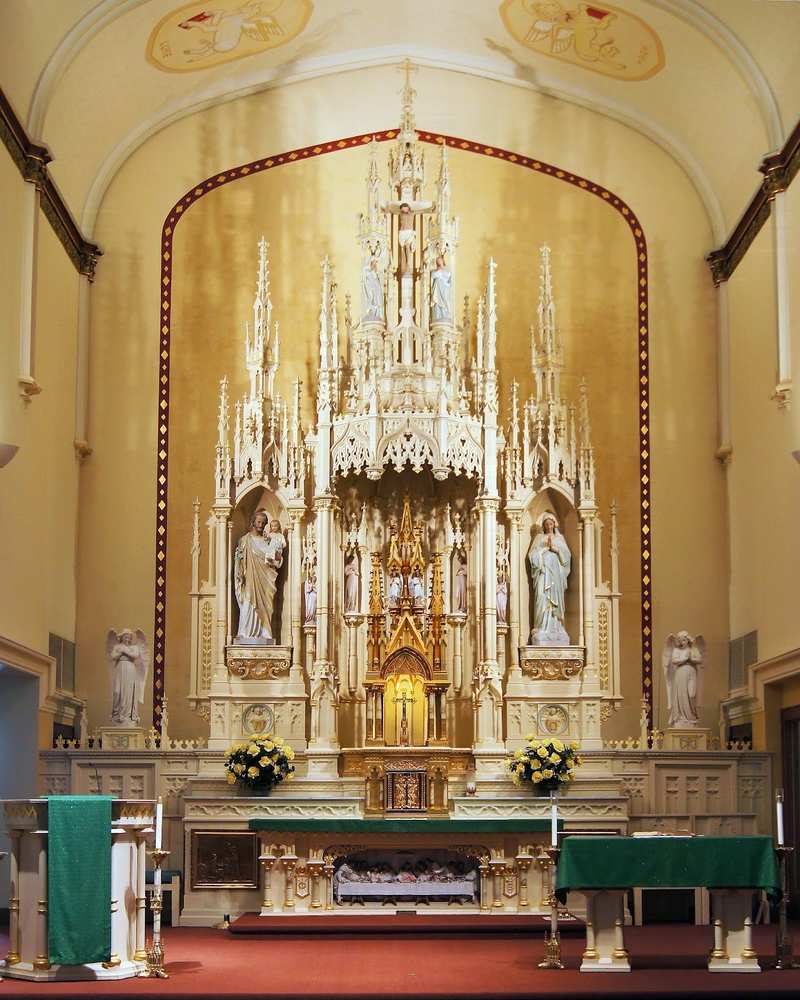
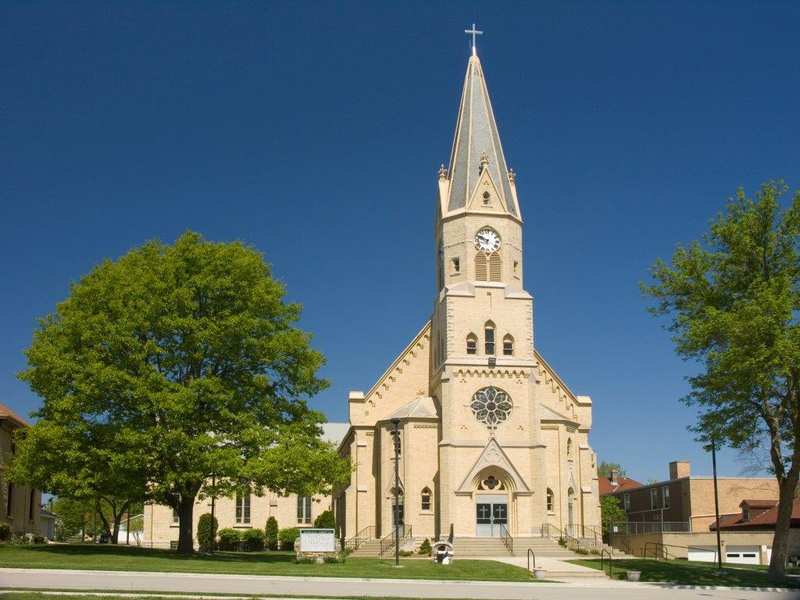
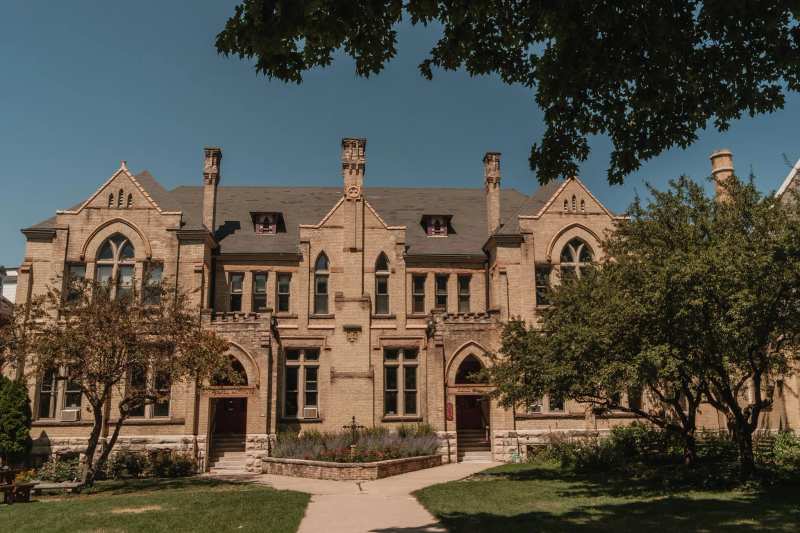
St. Joseph sits in Appleton's Old Third Ward, a historic neighborhood on the near west side that the Friends of Appleton's Old Third Ward describe in a walking tour pamphlet. Their account starts with the parish: in 1867 a group of German Catholics separated from St. Mary and formed St. Joseph on Lawrence Street, and in 1872 they laid the cornerstone of their first brick church.
The Wisconsin Historical Society's survey records two buildings on the block, both in the Early Gothic Revival style: a brick church at 410 West Lawrence Street dated to 1870, noted in an 1892 Appleton guide as the German Catholic church, and a 1915 building next door at number 404 that served as a religious residence for the friars.
The parish's early schooling was busy from the start. A county history records that the School Sisters of Notre Dame took over teaching in 1873, when 68 children were enrolled, and by 1879 the school had grown to 250. Walking the ward today, you can still read that history in the brick.
The Capuchins in Appleton
St. Joseph's character comes from the Capuchin Franciscan friars who have served it since 1877. Bishop Krautbauer of Green Bay, who was on friendly terms with the order, asked them to take the parish, and they took possession on April 22 of that year, with Father Didacus Wendel as the first Capuchin pastor.
Nearly a century and a half later, the friars are still there. The parish runs missions led by Capuchin priests, and its own collection of family stories includes parishioners whose great-great-grandparents arrived in the 1860s and families who moved to Appleton and chose St. Joseph for its Franciscan spirituality.
If you have never been to a Franciscan parish, the difference is mostly in tone: an emphasis on simplicity, service to the poor and a friar's habit at the altar. The food pantry is part of that tradition, and so is the welcome.
Catholic schools in Appleton
Catholic education in Appleton goes back to St. Mary's first parochial school in 1864, and for more than a century each parish ran its own. In 1989 the Catholic Central campus became part of the Appleton Catholic Education System, and the parishes now share a pre-kindergarten through 12th grade system under the Xavier name.
For Catholic families moving to Appleton, that means school choice is not tied to a single parish, and you can register at the church you like best while your children attend the shared system.
Away from downtown, St. Thérèse and St. Pius X serve the newer neighborhoods.
Sacred Heart was founded to serve the city's south side. Mass times differ from parish to parish and shift on holidays, so check each listing before you go. Churcheslist's filters show that Appleton has churches offering both a Spanish Mass and a Traditional Latin Mass, if either matters to you.
Lutheran churches
Lutherans are Appleton's largest tradition, and like the rest of Wisconsin they divide into three bodies: the ELCA, the Missouri Synod (LCMS) and the Wisconsin Evangelical Lutheran Synod (WELS).
St. Paul Evangelical Lutheran keeps a regular weekly round of worship and programs on its listing.
St. Matthew Evangelical Lutheran and Our Saviour's are two more choices.
The CORE, a 922 ministry, offers a contemporary Lutheran service aimed at younger adults.
The body matters more to members than visitors. ELCA churches are generally more liberal and share communion widely, while LCMS and WELS churches are more conservative and usually reserve communion for members. Many WELS and LCMS congregations in the Fox Valley also run their own grade schools, which is often the deciding factor for families.
Methodist, Congregational and mainline churches
Appleton's mainline Protestant churches sit close to downtown and Lawrence University.
The First Congregational United Church of Christ is one of the more active mainline congregations on Local Eyes, with worship, live music and holiday services on its calendar. Congregational churches like it trace back to the New England settlers who founded many Wisconsin towns before the German and Irish immigrants arrived.
Community Church of Appleton rounds out the mainline options. If you are looking for an Episcopal or Presbyterian church, Appleton has several, and churcheslist lists them by tradition.
Non-denominational and evangelical churches
Non-denominational churches are now nearly as numerous in Appleton as Lutheran ones, and several of the city's large congregations are in this group.
Life Church's Appleton campus runs contemporary services in the same style as its other Wisconsin campuses.
Refuge Church and Cross Walk Church are smaller evangelical congregations.
For Pentecostal and Baptist worship, Apostolic Truth Church and Valley Baptist Church are two of the options.
Appleton Sanctuary Outreach Ministries is a smaller outreach congregation.
Hmong, Muslim and Jewish Appleton
Appleton's faith communities go well beyond its Christian churches.
The Fox Valley has a large Hmong community, the largest Asian American group in Wisconsin, and the Fox Valley Hmong Baptist Church worships in Hmong.
For Muslim families who want more choice, the Milwaukee area's mosques include the largest Islamic center in the state, about 90 miles south.
Houdini's father and Appleton's synagogues
Appleton's Jewish history has an unexpected footnote. Temple Zion, a Reform congregation founded in 1883, had as one of its early rabbis Mayer Samuel Weiss, the father of Harry Houdini. The family had come from Hungary, and the boy who became the escape artist spent part of his childhood in Appleton while his father led the small congregation.
Appleton has claimed Houdini ever since. Temple Zion itself is gone as a congregation, though its building survives and has been restored by Wahl Organbuilders.
Appleton's other historic congregation, Moses Montefiore, was Orthodox until May 1965, when it joined the Conservative movement's United Synagogue. Today the Fox Valley's Jewish community is small, and families looking for a full range of synagogues usually look to Milwaukee's North Shore.
Worship styles, old and new
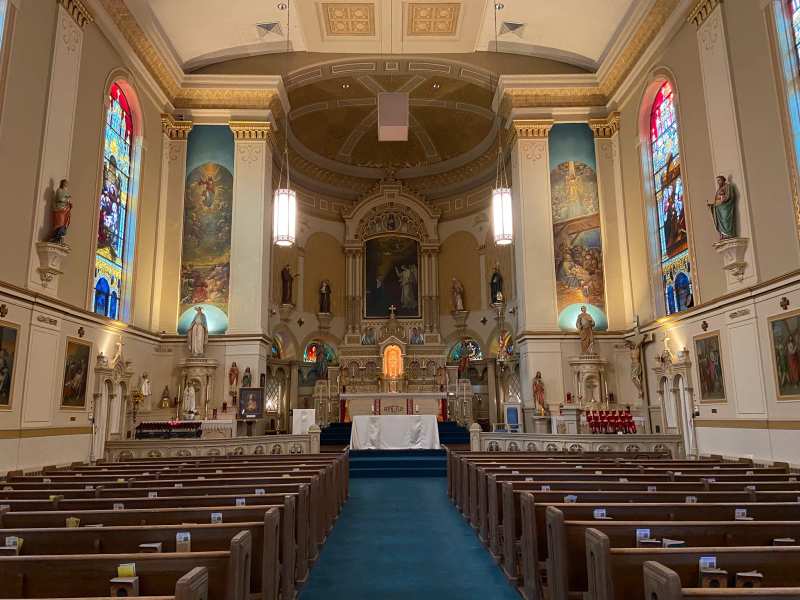
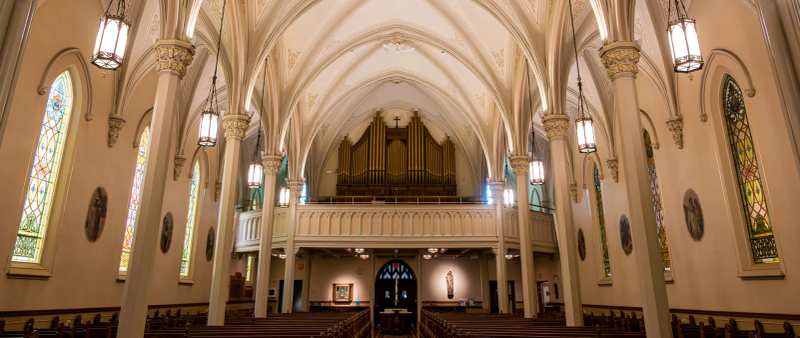
Style is often a better guide than denomination. At the traditional end, the downtown Catholic parishes and the older Lutheran churches follow a set liturgy, with an organ, hymns and communion at the center, in buildings that have barely changed in a century.
In the middle, the Methodist and Congregational churches keep a simpler order of service with a choir and a sermon, and the Congregational church adds concerts to its calendar. At the contemporary end, Alliance, Pathways, Life Church and The CORE lead with a band, screens and a conversational sermon, and tend to have the busiest children's and youth programs.
Try one of each over a few Sundays when you arrive. The difference you feel in the room will tell you more about where you belong than any website or directory can.
A first visit to Mass in Appleton
If you are not Catholic and are going to Mass with a friend or partner, the routine is easy to follow. Arrive a few minutes early, sit anywhere that is not reserved, and stand, sit and kneel when everyone else does; the order of service is usually printed or on screens.
At communion, Catholics go forward to receive. If you are not Catholic, you can stay in your seat or go forward with your arms crossed over your chest to receive a blessing instead, which priests in Appleton's parishes see every week. Nobody will mind either way.
Choosing a church in Appleton
If you have just moved to the Fox Valley, start with the tradition you know and visit two or three congregations on consecutive Sundays. Appleton's churches generally post service times and a newcomer page online, and nearly all have greeters at the door.
For families, the big question is often school. The Catholic parishes share the Xavier system, and many Lutheran churches run their own grade schools, so ask about education early if it matters to you. For a large youth program, the non-denominational churches on the north side tend to run full ones.
Visit on an ordinary Sunday rather than a holiday, stay for coffee and talk to someone afterward. It tells you more about a congregation than the sermon does.
If you have a free day, the Champion shrine, about 40 miles northeast, is the closest of Wisconsin's three Marian shrines to Appleton.
Farther afield, churches across Wisconsin run from Milwaukee's basilica to Door County's stave chapels.
Frequently asked questions
Published August 24, 2026