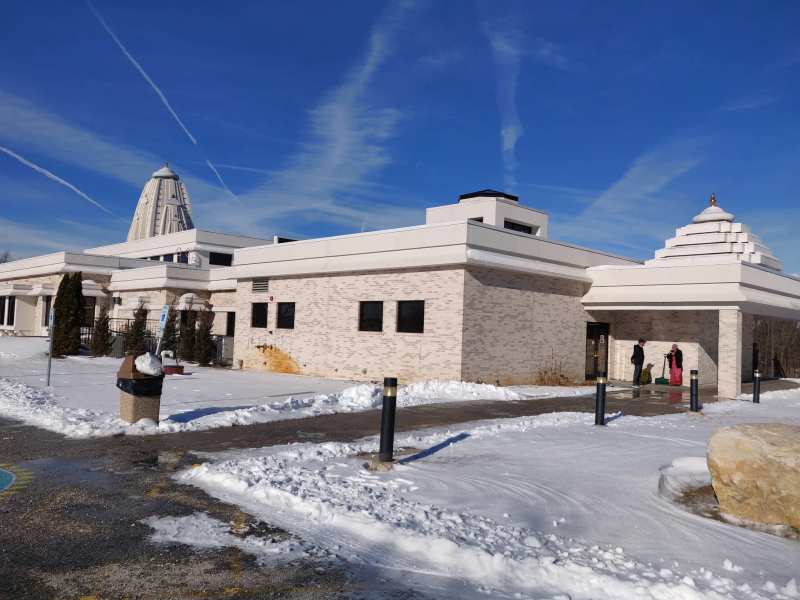
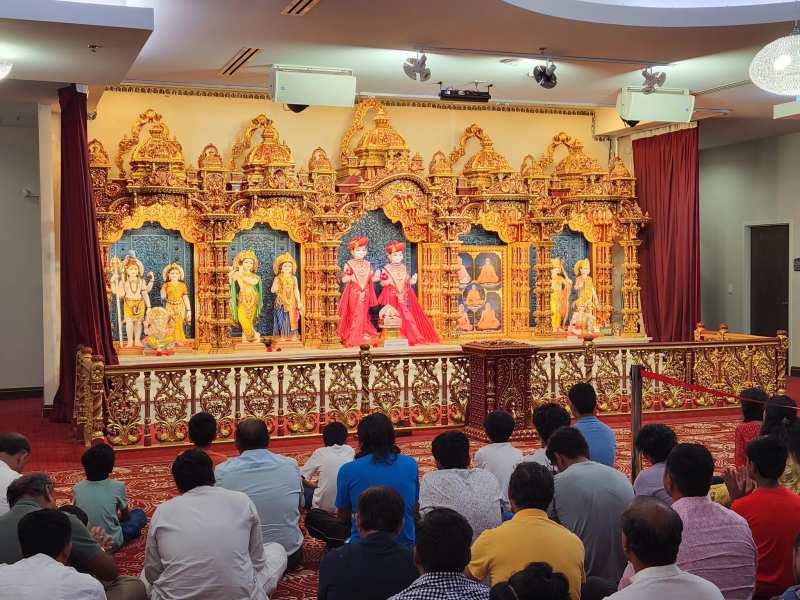
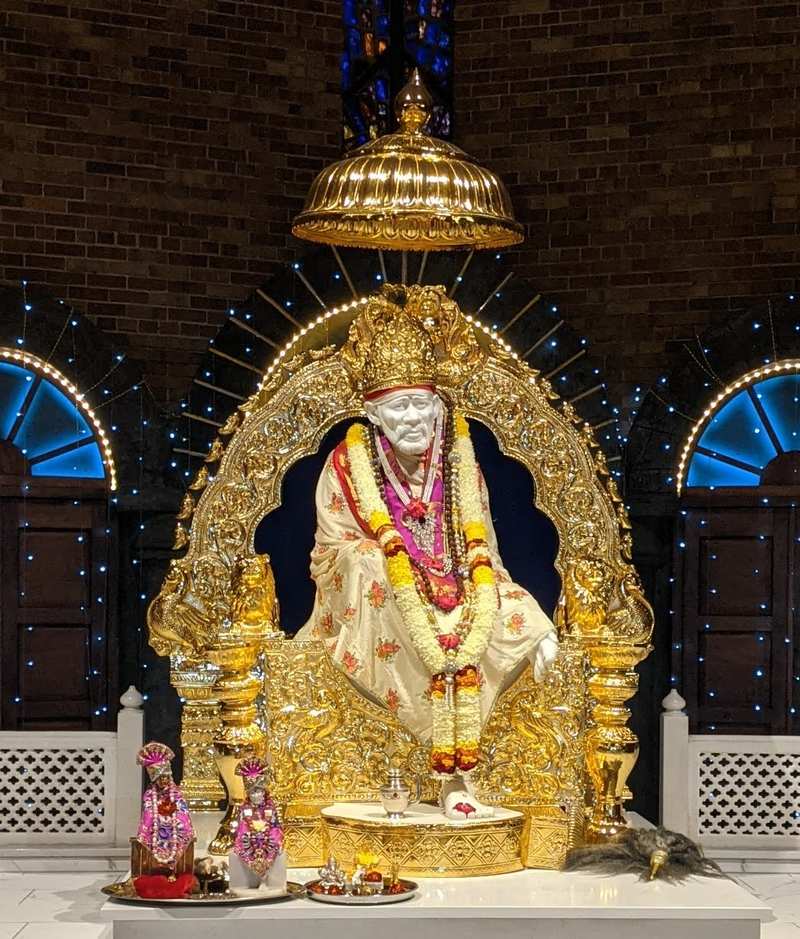
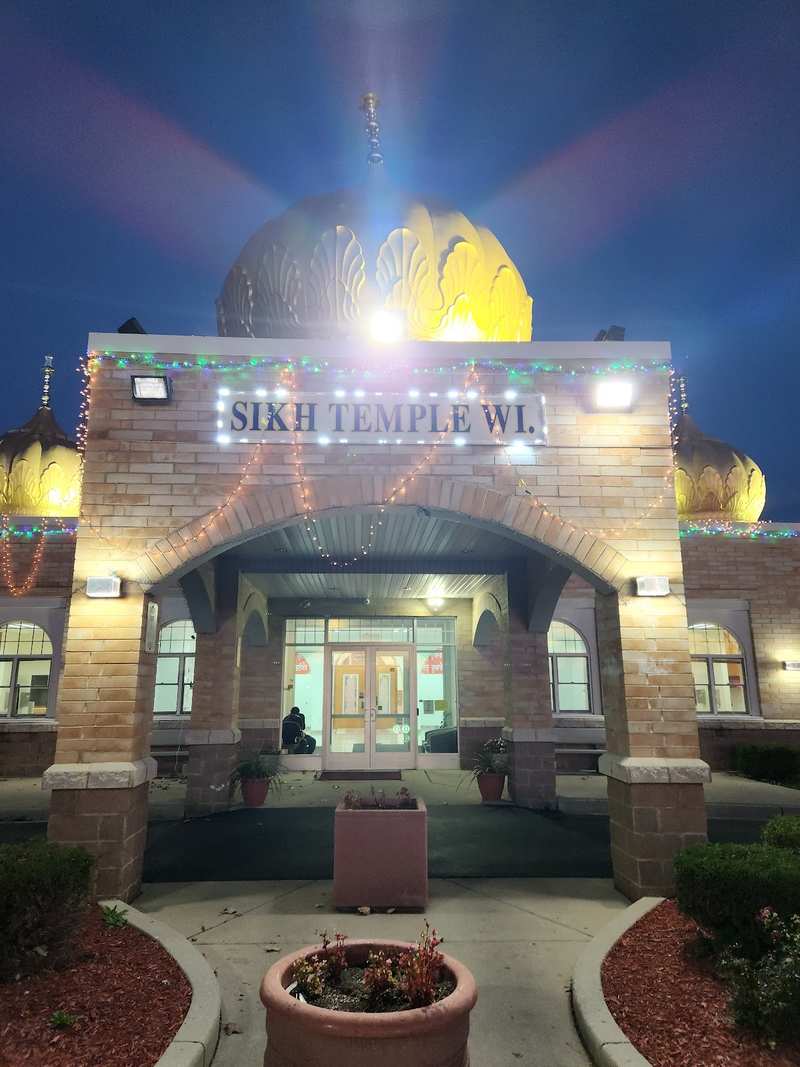
If you are looking for Hindu temples near Milwaukee, head west. Pewaukee, a suburb about 16 miles from downtown, has four Dharmic temples within a short distance of each other: the Hindu Temple of Wisconsin, a Jain temple on the same grounds, a BAPS Swaminarayan mandir and a temple to Shirdi Sai Baba.
This guide covers all four, the region's other Hindu temples, the Sikh gurdwaras in Oak Creek and Brookfield and the city's Buddhist temples, with what to expect on a visit. Each one welcomes respectful visitors, and several are among the most active houses of worship in the state on a festival day.
The temples at a glance
The Milwaukee area's Dharmic and Buddhist temples fall into three groups. The Hindu and Jain temples cluster in Pewaukee and New Berlin west of the city, with another Hindu temple in Menomonee Falls. The Sikh gurdwaras are in Oak Creek, south of the city, and Brookfield, to the west. And the Buddhist temples, serving Lao, Vietnamese and American Zen communities, are mostly inside Milwaukee and Wauwatosa.
Distances in this guide are straight-line from downtown Milwaukee. You will need a car for the Pewaukee temples; they sit on a hill beyond a commercial strip, close to the interstate.
Getting there
The four Pewaukee temples are close together. The BAPS mandir sits about 0.5 miles from the Hindu and Jain temples on the same street, and Wisconsin Shirdi Sai is about 1.8 miles away in downtown Pewaukee, so you can visit all four in one afternoon if their hours line up.
The Sikh Temple of Wisconsin in Oak Creek is about 9 miles south of downtown Milwaukee, a short way from the airport, and the Buddhist temples are mostly within the city and Wauwatosa. Each temple has its own parking, and on festival days the lots fill early, so arrive ahead of the start time and expect to walk a little from wherever you can find a space.
The Hindu Temple of Wisconsin
The temple took years of patience to build. According to its own history, the community tried several times from 1980 on to build a temple in the Milwaukee area, meanwhile renting space in churches and bringing in priests from temples in Illinois for major festivals. In 1995, leaders of the region's Hindu communities tried again: they incorporated the Hindu Temple of Wisconsin as a nonprofit in March 1996, visited temples across North America to learn how to run one, and won approval from the City of Pewaukee on October 23, 1997.
Four artisans from India spent 18 months building the shrines. The temple dates its opening to 2000, while the Religion News Service, quoting the temple's secretary, says the Hindu and Jain temples were built in 2001. The deities were formally installed in June 2003, when the Milwaukee Journal Sentinel invited the public to the ceremonies, ending with the opening of the deities' eyes.
Today it serves Hindu families from across India's languages and regions, and Indians of other faiths come to its events as a meeting ground for the state's Indian American community. For the biggest festivals, like Diwali, it is still the hub. School and church groups visit regularly to learn about Hinduism, and the volunteers who cook the temple's food make it from scratch.
The Jain temple
Next door, on the same hilltop, the Jain Temple of Wisconsin serves the region's Jain community. The Hindu and Jain communities bought the land together to build two temples side by side.
At first the Hindu temple offered to house Jain images as well, but the communities soon found that different traditions had different needs, and the Jain temple became its own place of worship. Jainism, an ancient Indian religion built around non-violence toward all living things, has its own monks, scriptures and festivals, and the temple is a quiet, serene space. Visitors are welcome; leather items should be left in the car.
BAPS Shri Swaminarayan Mandir
Its members once scheduled their worship around other groups at the Hindu temple. As the community grew, they wanted a space of their own, and the converted warehouse gave them one. The mandir holds daily worship and weekend gatherings, with hours split between mornings and evenings.
Wisconsin Shirdi Sai
Its story shows how quickly a small community can build something. In 2013, devotees walked into a non-denominational church that had come up for sale in downtown Pewaukee and found a great hall with no pews to remove. Followers of Sai Baba, whose teaching centers on serving others, raised $200,000 in just two days, according to the Religion News Service, many of them from a community that had never set foot in an Indian house of worship.
Other Hindu temples in the region
North of the city, the Shyama Shyam Dham Radha Krishna Temple in Menomonee Falls is devoted to Radha and Krishna.
South of Pewaukee, the Sri Lakshmi Narasimha Temple in New Berlin is dedicated to Narasimha, the man-lion form of Vishnu, together with Lakshmi. Both are smaller than the Pewaukee temples and offer a quieter visit.
Sikh gurdwaras: Oak Creek and Brookfield
On August 5, 2012, a gunman opened fire at the gurdwara on a Sunday morning and killed six worshippers, among them Satwant Singh Kaleka, the temple's founder and president, and Prakash Singh, an assistant priest. The Sikh community answered with the idea of chardi kala, relentless optimism in the face of adversity. Every year since, members have organized memorial events open to all, including the Chardhi Kala 6K run and walk in Oak Creek, a candlelight vigil and a blood drive, with langar served throughout.
Visitors are welcome, and the community has made a point of opening its doors. A memorial near the entrance honors the six who were killed. If you visit, go as a guest of a living congregation; the people there will be glad to show you around.
West of the city, the Sikh Religious Society of Wisconsin in Brookfield worships in a 1961 building that began life as Elmbrook Baptist Church. Brookfield's churches surround it on the same corridor.
Buddhist temples
Milwaukee's Buddhist temples serve Southeast Asian families and American converts, and they are small, quiet and welcoming.
Inside the city, Chùa Từ Bi is another Vietnamese temple. At any of them, visitors are welcome to sit quietly, and the monks and members will usually explain the practice if you ask.
How Pewaukee became the center
When the Hindu and Jain temples were finished, the area around them was, in the temple secretary's words to the Religion News Service, the middle of nowhere. Today it is lined with fast-food restaurants and warehouses, and the South Asian community has grown around the temples.
The pattern is common in American suburbs. The land was cheaper than in the city, near the interstate and within reach of families across southeastern Wisconsin. As the community grew, groups that once shared the Hindu temple's calendar, the BAPS members and the Sai Baba devotees, wanted spaces of their own and found them close by. The result is four Dharmic temples within a few miles of each other in a suburb best known for its lake.
Visiting a Hindu or Jain temple
Take your shoes off at the entrance; there are racks by the door. Dress modestly, with shoulders and knees covered, and leave food, drink and leather items outside, especially at the Jain temple, where non-violence extends to animal products.
Inside, you can walk among the shrines at your own pace. Worshippers may be offering prayers, ringing bells or receiving a blessing from a priest; it is fine to watch quietly, and nobody expects you to take part. If you are offered prasad, a blessed food offering, accept it with your right hand. Ask before taking photographs, and never photograph the inner shrines without permission.
Visiting a gurdwara
At a gurdwara, cover your head and remove your shoes before entering the prayer hall. Scarves are usually available at the door. Tobacco and alcohol are not allowed anywhere on the premises.
In the prayer hall, people sit on the floor facing the Guru Granth Sahib, the Sikh scripture, which is treated with great reverence; avoid pointing your feet toward it. Afterward, everyone is invited to langar, usually simple vegetarian food served by volunteers and eaten sitting on the floor. Accepting it is the polite and natural thing to do, whatever your faith.
Food at the temples
Food is part of worship at many of these temples, and visitors are often invited to share it. At the Hindu Temple of Wisconsin, temple volunteers cook from scratch for festivals and gatherings, and a meal after a celebration is one of the friendliest introductions to the community.
At the gurdwaras, langar is served to everyone who comes, regardless of faith, and the Sikh Temple of Wisconsin served it throughout its memorial weekends. It is usually simple and vegetarian, made and served by volunteers, and eaten together.
If you are offered food, accept it graciously and eat what you take. If you would like to give something back, ask whether the temple accepts donations of food or help in the kitchen; volunteering is welcome at many of them.
Asking good questions
Members of these temples are used to curious visitors and usually happy to explain their traditions. Good questions are simple and respectful: what is happening in this part of the service, which deity or teacher this shrine honors, what a festival celebrates. It is fine to say you know little and would like to learn.
Avoid treating the visit as a performance to photograph, and avoid comparing traditions in ways that rank one above another. If you are bringing a school or church group, call ahead; the Hindu temple in particular has a long habit of hosting groups who want to learn about Hinduism.
Festivals worth visiting
The Hindu temple's biggest night is Diwali, the festival of lights in autumn, when the temple fills with families, food and lamps. Navaratri, Holi and Janmashtami bring their own celebrations through the year; check the temple's website for each year's dates.
At the gurdwaras, Vaisakhi in spring marks the founding of the Khalsa, and Guru Nanak's birthday in autumn is a major celebration; both bring large gatherings and langar for everyone. At the Buddhist temples, Vesak in spring marks the Buddha's birth, enlightenment and death. Visitors are welcome at all of these; arrive early and follow the lead of the people around you.
For the rest of the city's faith communities, the city's mosques welcome visitors in the same spirit.
On the East Side and the North Shore, Milwaukee's synagogues complete the picture.
Across the state, Wisconsin's houses of worship run from Milwaukee's basilicas to Door County's stave chapels.
Frequently asked questions
Published September 14, 2026