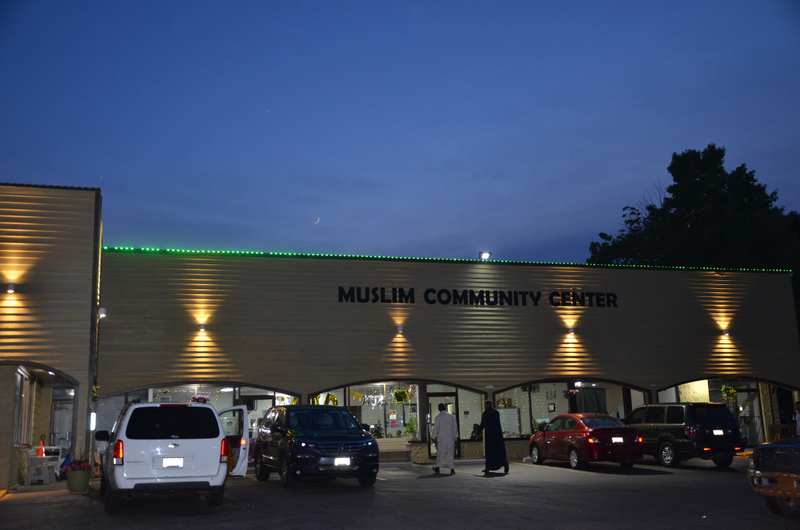
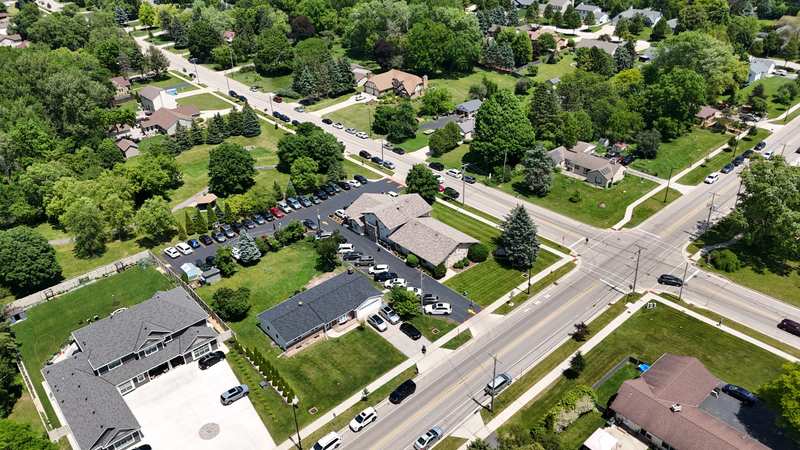
If you have never been inside a mosque, the mosques in Milwaukee are an easy place to start. The city's Muslim community runs open houses, school tours and a stop on Doors Open Milwaukee every September, and most congregations are glad to show a respectful visitor around.
This guide maps them across the city and its suburbs, from the big south-side center that grew out of an old public school to the small neighborhood masjids on the north side, and explains what to expect when you walk in. If you are Muslim and new to the city, it doubles as a list of where to pray.
Milwaukee's mosques at a glance
The metro's mosques fall into four clusters. The south side has the Islamic Society of Milwaukee, the largest Islamic center in the state. The East Side has a mosque near UW-Milwaukee that serves students and young families. The north side has a group of smaller masjids, several with roots in the city's Black Muslim community. And the southwest suburbs, Greenfield in particular, have a cluster of centers within a few miles of each other.
Beyond those, ISM runs a western branch in Brookfield, and South Milwaukee has its own masjid. Masjid is simply the Arabic word for mosque, and you will see both on signs around the city.
Distances in this guide are straight-line from downtown Milwaukee, so treat them as a sense of where things are rather than a drive time.
The Islamic Society of Milwaukee
ISM, as everyone calls it, is more than one building. According to the Shepherd Express, it operates three mosques across the metro and the Salam School, a full private school for Muslim children. On a Friday, the main campus fills with families, students and workers on their lunch break, and the parking lot shows it.
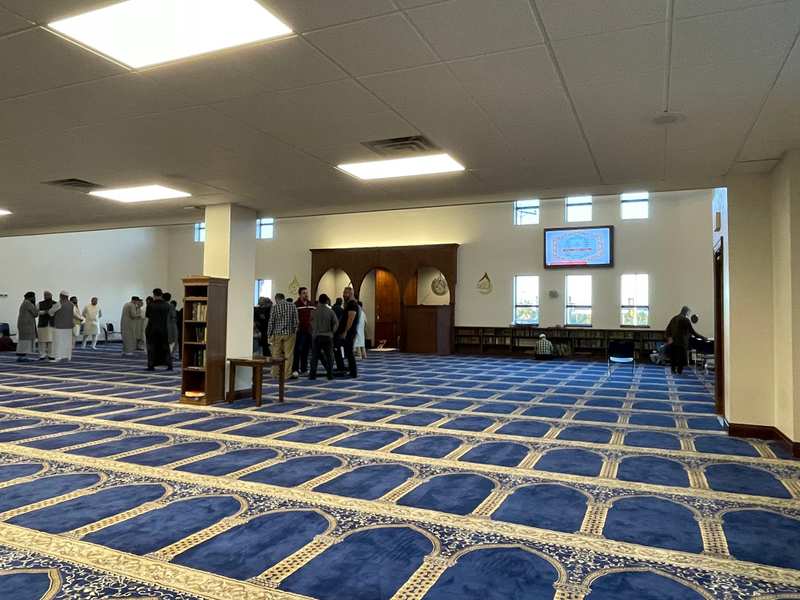
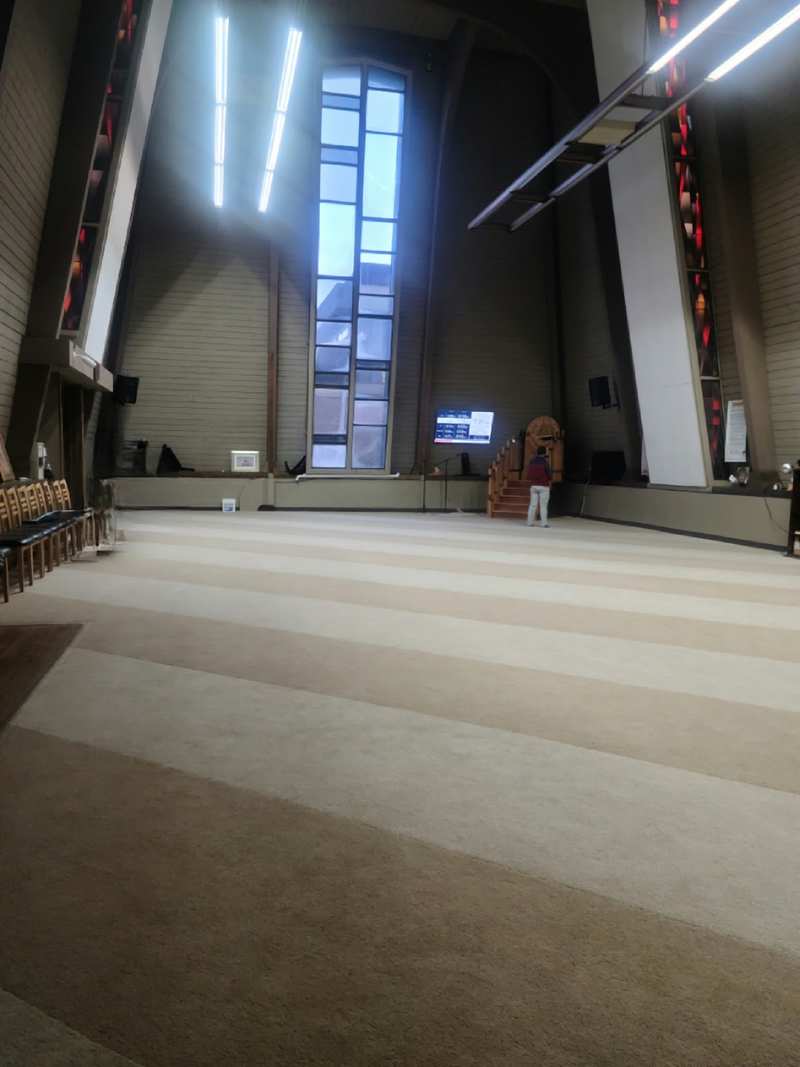
The renovated prayer hall is the part visitors remember. The University of Wisconsin-Milwaukee's continuing-education program has run guided tours of the building through its Osher program, walking groups through the hall and explaining the features mosques share around the world, from the prayer niche that points toward Mecca to the separate spaces for ablution, the ritual washing before prayer.
ISM is also a regular stop on Doors Open Milwaukee, the September weekend when buildings across the city open to the public for free. The Wisconsin Muslim Journal reported families who had never been inside a mosque spending longer at ISM than anywhere else on their route.
The East Side and the north side
Visitors on a Doors Open tour of the University Center have come away surprised by the numbers: the guides talk about how many students come through and how many people attend on a typical weekend. For a student at UWM, it is the natural place to start.
The north side also has Al-Taqwa Mosque and Masjid Madinah, two neighborhood masjids that serve their surrounding blocks.
Masjid Nursi serves a Turkish community and takes its name from a 20th-century Turkish scholar, and Al-Qur'an Mosque rounds out the city's smaller congregations.
The north side is also home to Muhammad Mosque No. 3. Ask the mosque directly about visiting.
Greenfield's mosques
Greenfield, a suburb on the southwest edge of Milwaukee, has the metro's densest cluster of Islamic centers, several of them within a couple of miles of each other.
Greenfield also has Baitul Qadir Mosque and House of Wisdom (Dar ul-Hikmah), whose name means house of wisdom in Arabic and reflects its focus on learning.
Because these centers are close together, someone moving to the southwest suburbs can visit several in a single week before choosing a community.
Brookfield and South Milwaukee
To the south, Masjid Al-Huda in South Milwaukee is Al-Huda's lakeshore location, serving families in South Milwaukee, Cudahy and Oak Creek.
For families moving to Brookfield, the mosque is one of several faith communities along the same corridor. Brookfield's churches include large and small congregations within a few miles of ISM West.
How to visit a mosque as a guest
Milwaukee's mosques generally welcome respectful visitors, and a little preparation makes the visit easy for everyone.
Call or message ahead. Many mosques are run by volunteers, and a quick note means someone will be there to greet you and answer questions. Many will arrange a tour for a school or church group.
Skip Friday midday for an introductory visit if you would rather see the building quietly. Friday congregational prayer, called Jumu'ah, is held around midday and early afternoon and is the busiest time of the week. A weekday afternoon or a weekend open house is calmer.
Take your shoes off before entering the prayer hall; there are shelves or racks at the door. Dress modestly: long pants or a long skirt, sleeves to the elbow or longer. Women are usually asked to cover their hair inside the prayer hall, and many mosques keep scarves for guests, but practice varies, so it is fine to ask.
Expect men and women to pray in separate areas, sometimes with separate entrances. Visitors can usually sit at the back and watch a prayer quietly; nobody will expect you to join in. Photography during prayer is a no, and it is polite to ask before taking pictures at any time.
During Ramadan, many mosques hold community iftars, the evening meal that breaks the day's fast, and some open them to neighbors of other faiths. If you are invited, go; it is the warmest introduction to a mosque there is.
What Friday prayer looks like
If you do go on a Friday, here is what you will see. People arrive over a short window, take off their shoes, wash at the ablution area and file into the prayer hall. The service opens with a sermon, the khutbah, given by the imam from a raised pulpit, often partly in English and partly in Arabic.
Then the congregation stands in straight rows, shoulder to shoulder, and prays together, bowing and kneeling in unison behind the imam. The whole thing is shorter than many church services, and then people head back to work or school. As a guest, sit at the back or to the side, stay quiet and simply watch. Nobody will expect you to follow the movements.
Afterward is the best time to ask questions. Someone will usually come over, say hello and offer to explain what you just saw.
The two Eid holidays, at the end of Ramadan and during the Hajj season, pack the prayer halls well beyond a normal Friday. Congregations that outgrow their halls for the day often hold Eid prayer in a larger rented space, so watch each mosque's announcements in the weeks before. Neighbors are often welcome to the celebrations that follow, and food is usually part of them.
Choosing a mosque if you are moving to Milwaukee
If you are Muslim and new to the area, the practical questions are language, community and family. Some mosques draw a mostly Arab or South Asian congregation, some are rooted in the African American community, and some, like the University Center, skew young and mixed.
Ask about the women's space, since it varies a great deal from one building to the next, and about weekend school for children if you have them; ISM runs the Salam School as a full-time option. The Islamic Resource Center and the Milwaukee Muslim Women's Coalition are good places to ask for advice before you settle.
Many people try two or three mosques before choosing one, and the Greenfield cluster makes that easy, with several centers close together. Check each mosque's listing for upcoming classes and events, which is the quickest way to see whether it is active in the ways that matter to you.
Doors Open Milwaukee: an easy way in
If calling a mosque feels like a big step, Doors Open Milwaukee is the low-pressure route. Since 2011, the two-day event has opened more than 170 buildings across the city, from downtown towers to neighborhood churches, for free tours in September.
The Islamic Society of Milwaukee, the ISM University Center and the Islamic Resource Center with the Milwaukee Muslim Women's Coalition have all taken part. Volunteers lead the tours, answer questions and explain the prayer hall, and the Wisconsin Muslim Journal described families spending more time there than anywhere else on their route. It pairs well with the city's historic churches, several of which open the same weekend.
A short history of Islam in Milwaukee
Milwaukee's first mosques grew out of the Black Muslim movement of the mid-20th century, and for decades they were the only Muslim congregations in the city. The next chapter came from immigrants.
Mahmoud Othman Atta was born in Palestine in 1936 and came to Milwaukee with his father as a teenager. He finished high school here, served in the U.S. Army, went back to Palestine to marry and then made Milwaukee his family's permanent home. Looking for a sense of community, he worked with others to open a mosque in the early 1980s, the first in Milwaukee open to all Muslims regardless of background. PBS Wisconsin Education tells his story in its Wisconsin Biographies series, A Mosque for Milwaukee.
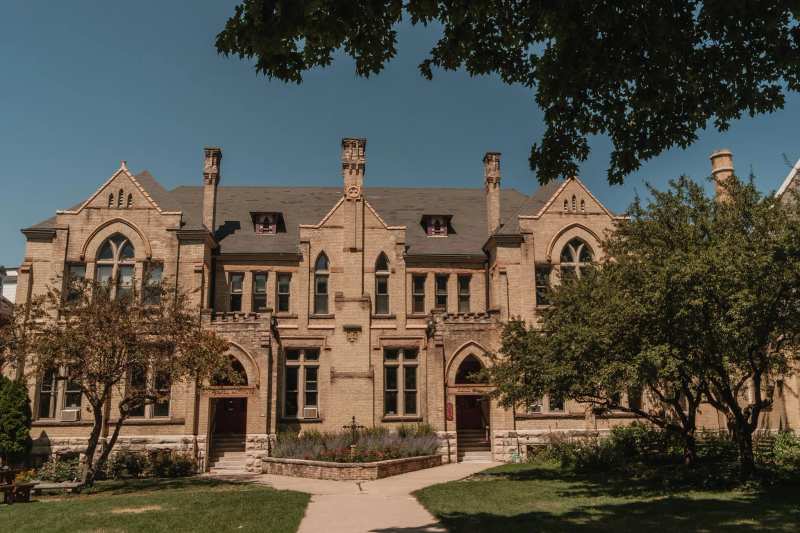
From there the community grew with each wave of arrivals: students at the universities, doctors and engineers, refugees and their children. The old New Road School became ISM's home, the Salam School followed, and the suburbs filled in with new centers. Today the city's mosques serve Arab, South Asian, African American, African, Turkish and Bosnian Muslims, often under one roof.
Mosques elsewhere in Wisconsin
Outside the Milwaukee area, mosques serve the Fox Valley, the Green Bay area, Sheboygan County and central Wisconsin. In Appleton, the Islamic Center of Wisconsin is the Fox Valley's mosque.
Near Green Bay, the Islamic Society of Wisconsin serves the northeast. Along the lakeshore, the Islamic Society of Sheboygan meets in Oostburg, south of the city.
In central Wisconsin, Masjid Al-Noor in Marshfield serves the Islamic Society of Central Wisconsin. Madison, home to a large university community, has several mosques that Local Eyes has not yet added.
For the bigger picture, Wisconsin's houses of worship sit alongside these mosques in nearly every city covered here.
Milwaukee's synagogues cluster on the East Side and the North Shore, the same side of the city as the University Center.
Out west, the Hindu temples in Pewaukee sit beyond ISM West along the same corridor, so a curious visitor can see three traditions in a weekend.
Frequently asked questions
Published August 3, 2026