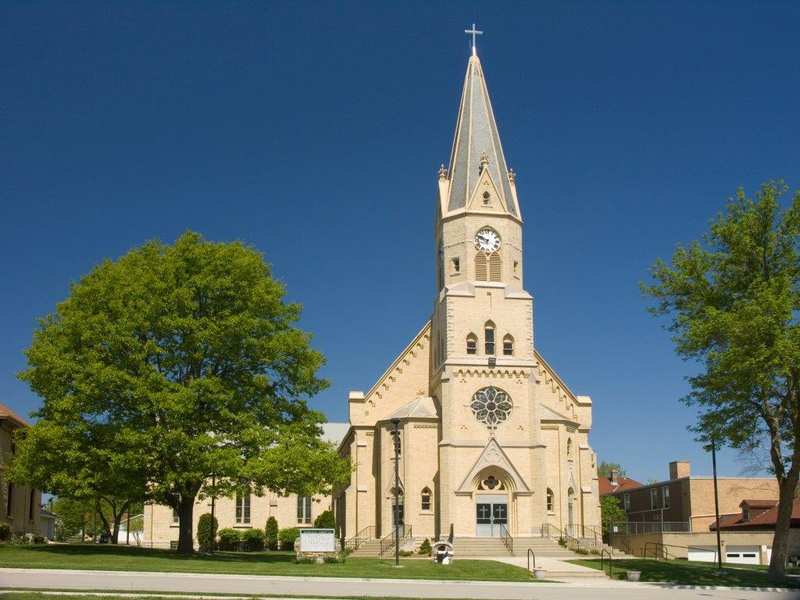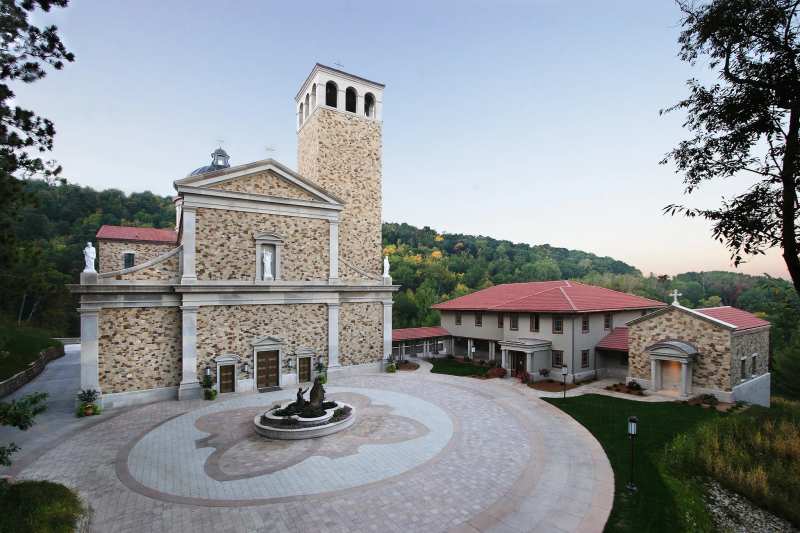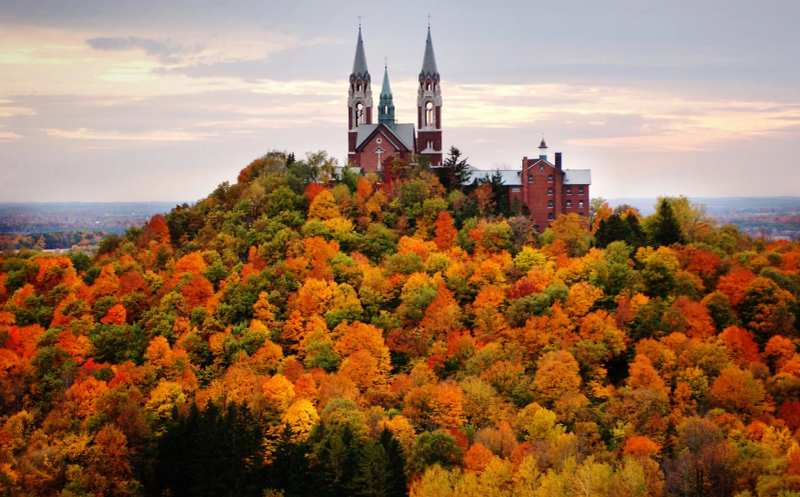
On a clear October morning you can stand at the top of a church tower in the Kettle Moraine and pick out the Milwaukee skyline, 30 miles to the southeast, over a sea of red and gold hills. That tower belongs to Holy Hill, the twin-spired basilica that draws around half a million visitors a year, including busloads of pilgrims from across the country.
This guide covers both kinds of visit: the pilgrim's, built around Mass, the Shrine Chapel and the Stations of the Cross, and the day-tripper's, built around the tower, the trails and a slice of pie. Plenty of people come for one and leave having done both.
What Holy Hill is
The church sits on 435 acres of woods and grounds, and Milwaukee Magazine and WorldAtlas both put annual visitors at around half a million. It became a minor basilica in 2006, when Pope Benedict XVI raised its status.
It is also a working church with no parish of its own. The friars run the shrine on donations from the people who come, which is worth knowing when you pass the donation boxes at the tower and in the church.
A short history
People have treated this hilltop as holy for centuries. A French diary and map dated 1676 describe a stone altar and cross raised to Mary on a cone-shaped hill in Wisconsin, which matches Jesuit missionary work in the area at the time. Before it was Holy Hill it had other names: surveyors working here gave it Government Hill, and an early county history lists Lapham's Peak, Hermit Hill and the Sugar Loaf.
The story that has stuck is about François Soubrio, a hermit who came to the hill in the mid-1800s after finding that old diary while working in Quebec. As the legend goes, he was partly paralyzed, crawled to the summit and was cured. A farmer found him living on the hill around 1862, and the healing stories never stopped. They explain the crutches you will see later in the Shrine Chapel.
Father Francis Paulhuber, a priest from Salzburg, bought the first 40 acres from the federal government for $50 in 1855, meaning to hand it to the Archdiocese of Milwaukee. He died before he could, and the land changed hands until the archdiocese finally got it in 1876.
Meanwhile the local parish built a log chapel on the summit. It was 16 feet square, finished on Good Friday 1863, and even then had crutches and other tokens of healing stacked in one corner. On May 24, 1863, Father George Strickner dedicated it as the first Shrine of Mary, Help of Christians, and used the name Holy Hill formally for the first time; Irish settlers had been calling it that for years.
A brick shrine followed in 1879, and parishes in Hartford organized pilgrimages to it. By 1895 the Milwaukee Journal reported a thousand people at a single service. In 1906 a group of Discalced Carmelite friars came from Bavaria at the invitation of Archbishop Sebastian Messmer, and they have run the shrine ever since.
The Carmelites built what stands today. The second shrine came down in 1925, Archbishop Messmer laid the cornerstone of the present church on August 22, 1926, and it was completed and consecrated in 1931. That is why some sources date the church to 1926 and others to 1931; both are right about different moments. The site was added to the National Register of Historic Places in 1992, restored inside and out between 2002 and 2006 for $6.1 million, and raised to a minor basilica in 2006, the Carmelites' centennial year on the hill.
Climbing the Scenic Tower
The Scenic Tower is the reason a lot of people come. It is a climb of 178 steps up a narrow spiral staircase to a lookout 192 feet above the base, with a 360-degree view over the Kettle Moraine's drumlins, kettles and farmland.
The tower opens from May 1 through October 31 and closes for winter. It also closes on the spot for gusty wind, fog, rain, wet stairs or frost, so if the tower is the whole point of your trip, check the live camera view on the Holy Hill website before you leave home. The entrance is on Level 2 of the basilica, the climb is free, and there is a donation box at the bottom.
Be honest with yourself about the stairs. They are steep and so narrow in places that two people cannot pass, so it is not for anyone uncomfortable with heights or tight spaces, and not for strollers or wheelchairs. Children 12 and under must climb with an adult, and food and drink are not allowed in the tower. On a fall weekend the line can take a long time, and the fix is simple: climb the tower first, before anything else, or come on a weekday morning.
Inside the basilica and the Shrine Chapel
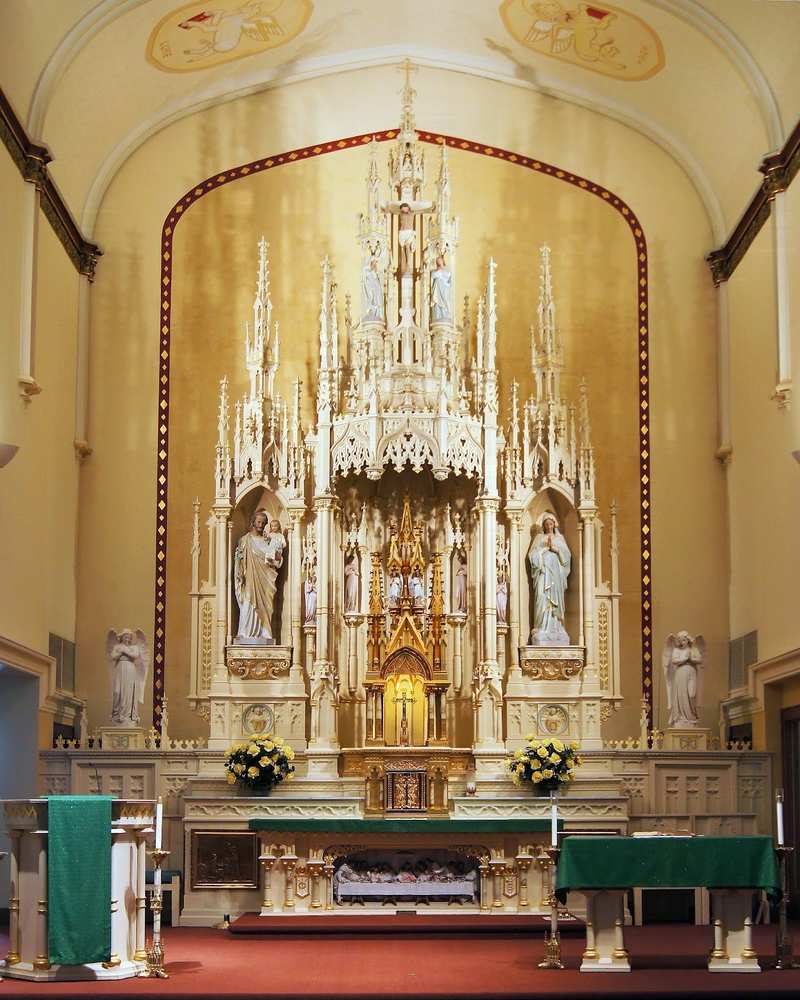
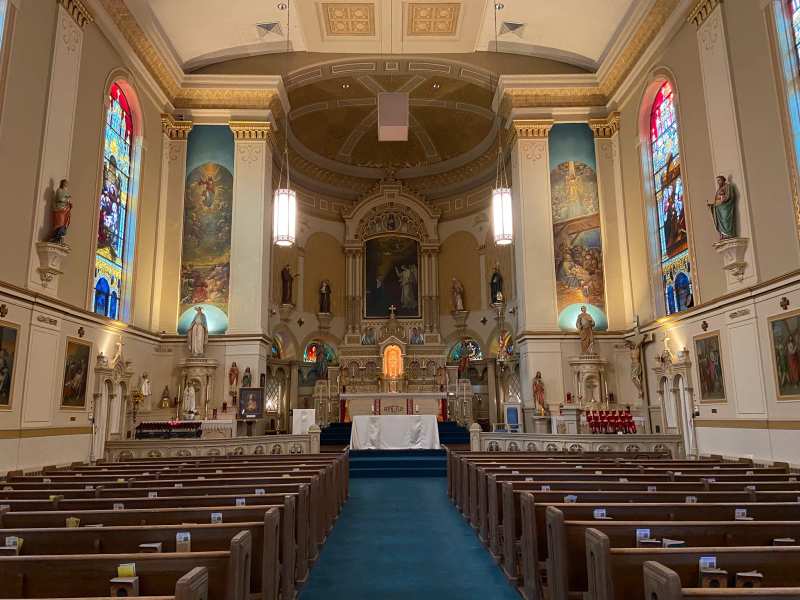
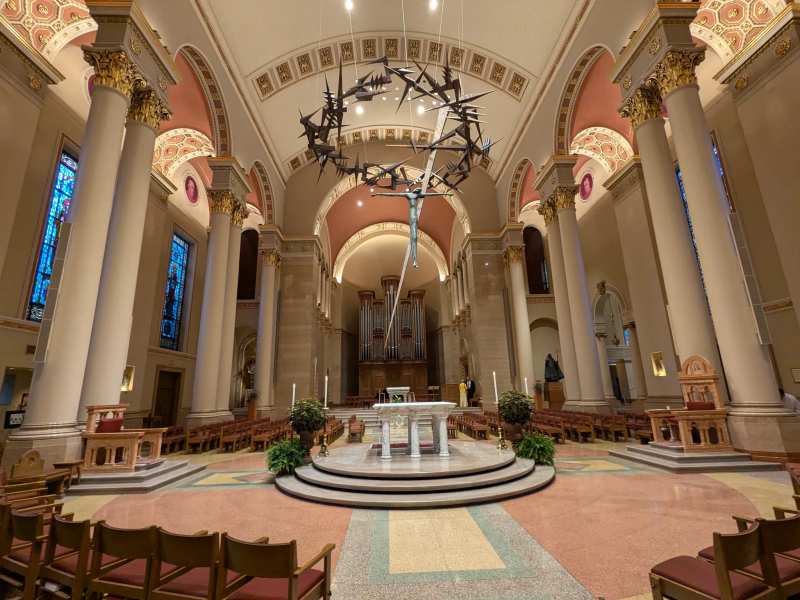
The basilica seats about 600 people under 46 stained glass windows that show scenes from Mary's life and the history of the Carmelite order, with hand-carved oak pews, terrazzo floors and bronze and iron work throughout. The 2006 renovation added decorative painting and mosaics by Conrad Schmitt Studios.
Below, the Shrine Chapel is the spiritual center of the place. It holds the ivory and gold leaf statue of Our Lady of Holy Hill, made in Munich and first shown at the 1876 World's Fair in Philadelphia, and the wall of crutches, leg braces and canes left by pilgrims who believe they were healed here. Even visitors who come for the view tend to go quiet in this room.
On the grounds, look for the Lourdes Grotto, a reproduction of the apparition site in France, and a white Carrara marble statue of the Sacred Heart set into a wall of Lannon stone. The four bronze entry doors, added in 2013, are worth a slow look on the way in. The basilica also has a Shroud of Turin replica exhibit, which many regular visitors have never seen.
Elevators reach the shrine at the top of the hill, so visitors who cannot climb from the lower lots can still see the church, the chapel and the view from the plaza.
Next to the main church, the Chapel of St. Thérèse is a smaller, quieter space dedicated to the Carmelite saint from Lisieux. The shrine has hosted visits of her relics, and it is where the Spanish Mass is held.
Going to Mass or confession at Holy Hill
Holy Hill holds Mass every day, a full Sunday schedule with a Saturday vigil, a Sunday Mass in Spanish in the Chapel of St. Thérèse, and confession on weekday and Saturday mornings. Holiday schedules change, so check the Mass schedule on holyhill.com before you plan around a specific time.
Everyone is welcome at Mass, though communion is for Catholics. If you are coming as a pilgrim, the friars also hold days of recollection on the first Saturday of the month and seasonal celebrations through the year, and Holy Hill is one of the three Wisconsin shrines that stamp the free Pilgrim Passport. The Champion and La Crosse shrines complete the set, and many pilgrims plan all three into one or two trips.
If you want a parish Mass nearby on a different weekend, parishes in West Bend and Washington County are close by, with Catholic churches in nearly every town.
St. Peter in Slinger is one of them, and Holy Trinity in Kewaskum posts a full calendar of parish events on its listing.
A pilgrim's day at Holy Hill
If you are coming to pray rather than sightsee, build the day around Mass rather than the tower, and go in the order the place was designed for.
Start with the Outdoor Stations of the Cross, walking up from the lot on Station Way Road so the climb ends at the church. Go to Mass in the basilica, or the Spanish Mass in the Chapel of St. Thérèse on Sunday. Then go down to the Shrine Chapel, which is where most pilgrims spend the longest, in front of the statue of Our Lady of Holy Hill and the wall of crutches.
Confession is heard on weekday and Saturday mornings, so a Saturday visit can include it. Pick up a Pilgrim Passport and have it stamped. If you are staying the night in the Guest House, the early weekday Mass is the quietest hour on the hill, before the tour buses arrive.
The First Saturday Days of Recollection, run by the friars, give a structured day of talks and prayer, and the Elijah Men's Group meets at the shrine; both are listed on the Holy Hill events calendar.
A day-tripper's loop
If you are here for the view and the walk, the order flips. Arrive early and climb the Scenic Tower before the line builds, then look around the basilica and the grounds while your legs recover.
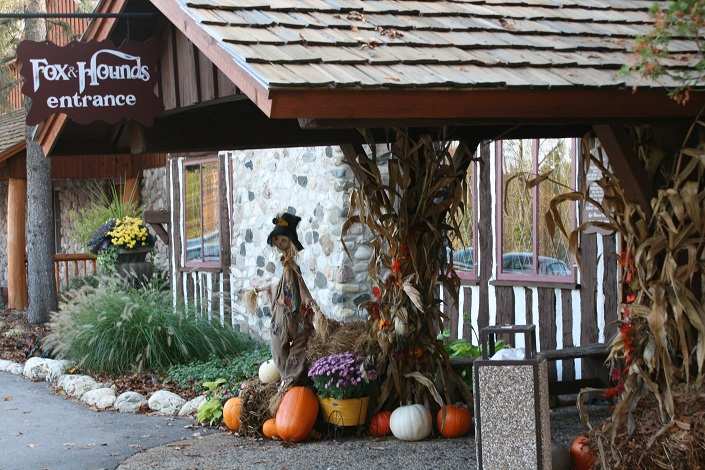
Walk the forest path at the base of the hill or a stretch of the Ice Age Trail, then come back up for lunch and pie at the cafe. In the afternoon, drive the back roads to Pike Lake, about five miles north, and finish with dinner at the Fox and Hounds, about 2 miles east of the basilica. That is a full, easy day that takes in the tower, the woods, the church and the food.
Even on a sightseeing day, the church is a working shrine. If a Mass is underway when you come in, either join it or come back after; the tower and grounds are open while services run.
Outdoor Stations of the Cross and the Ice Age Trail
Holy Hill is also a hiking destination, with three walks of very different difficulty below the church.
The Outdoor Stations of the Cross wind about half a mile up the hillside from the base to just outside the lower church. Its 14 nearly life-size figures were carved from Bedford stone by the Milwaukee artist Joseph Aszklar, who spent 14 years on them and finished in 1928. The path is steep with stairs, so it is not stroller friendly, and it is reached from the parking area on Station Way Road off Highway 167.
The forest path at the base of the hill is the gentle option, a shaded walk that works for strollers and wheelchairs, and in October it becomes a tunnel of yellow and orange leaves.
The serious walk is the Ice Age Trail's Holy Hill Segment, part of the 1,200-mile national scenic trail. It runs about 6.8 miles with roughly 610 feet of climbing, past glacial boulders, forest, prairie and the kettles and moraines the region is named for. Allow 2.5 to 3 hours end to end, or do a half-mile out-and-back from the Holy Hill lots. Trailhead parking is at Donegal Road, Shannon Road and Holy Hill itself, and from September through May, wear blaze orange in hunting season.
The same trail continues north through Washington County, and the Ice Age Trail segments around West Bend make a good second day.
Where to eat near Holy Hill
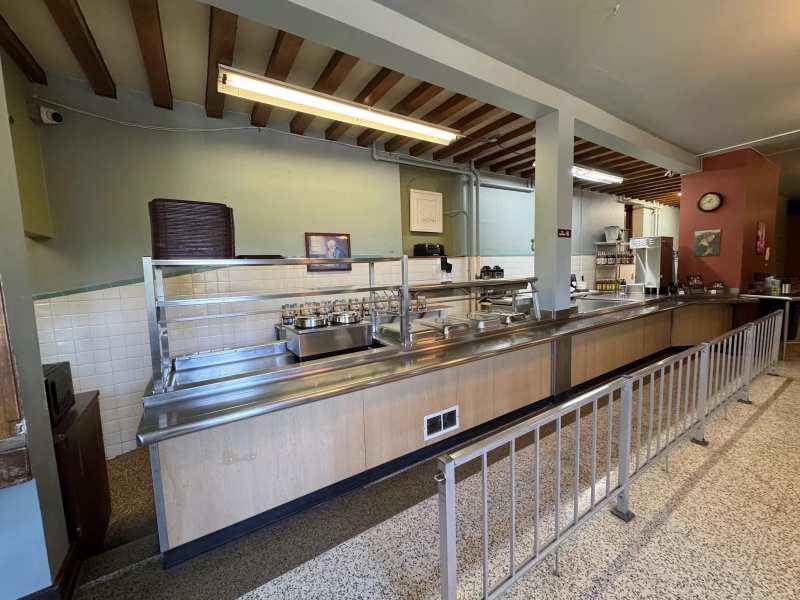
The Holy Hill Cafe on the hilltop is the quick option, and a handful of supper clubs and taverns along Friess Lake Road and Hubertus Road, a few miles east, cover dinner.
Across the road, Johnny Manhattan's is an Italian steakhouse with an oak bar and a fireplace, known for its lasagna and steaks, and it is worth booking for dinner. The Alpine Retreat, a German supper club on Friess Lake Road with more than 125 years of history, does a Friday fish fry with potato pancakes.
Hartford, about 6 miles northwest, has a full downtown of restaurants and the rest of Hartford's things to do for a longer day, from the automotive museum to the ice cream parlor on Main Street.
Visiting Holy Hill with kids
Holy Hill works well with children if you match the walk to their legs. The forest path at the base is flat enough for strollers, the grounds have room to run, and the tower is the thing older kids talk about afterward.
Children 12 and under climb the tower with an adult, and the stairs are steep and tight, so carry nothing you do not need. The Outdoor Stations have stairs and are not stroller friendly. The cafe's pie is the usual reward, and the grounds and Pike Lake's beach nearby make a full family day in summer.
Inside the basilica and the Shrine Chapel, ask kids to keep voices low, the same as any church; it helps to tell them about the crutches on the wall before you go in.
Fall at Holy Hill, and how to beat the crowd
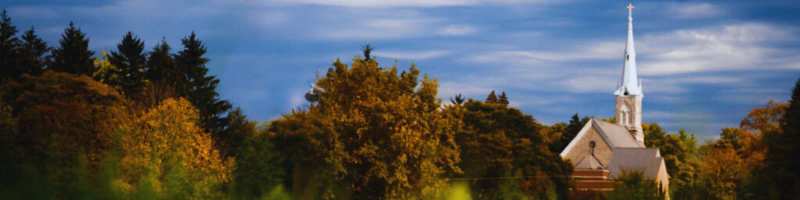
October is Holy Hill's busiest month, and peak color usually lands in the middle to end of the month, though it shifts every year. The 435 acres of hardwood forest around the basilica turn red, orange and gold, and the tower view is the best way to see it.
The practical reality is crowds. Fall weekends are packed, parking attendants direct traffic on busy Sundays, and the tower line builds all day. If you can, come on a weekday. If it has to be a weekend, arrive before 9, climb the tower first, and leave the church and the cafe for later. Remember that the tower closes for the season after October 31, so a trip timed for the very end of the color can miss it.
For more fall color nearby, Pike Lake and the Hartford side of the Kettle Moraine sit about five miles north, and from the Powder Hill tower there you can see Holy Hill's twin spires across the valley.
Winter at Holy Hill
Winter is the quiet season at Holy Hill, and that is the best argument for going. On a snowy day the basilica looks like a scene off a Christmas card, the woods are quiet and the parking lots are nearly empty.
The tower is closed from November through April, but the church, the Shrine Chapel and the cafe stay open, and the friars hold Christmas Masses and concerts. The shrine has also staged a live Nativity in December. The roads up the hill are steep, so drive carefully after snow.
The Kettle Moraine around Holy Hill
Holy Hill sits inside the Kettle Moraine, a ridge of glacial hills and hollows that runs across southeastern Wisconsin, and the state forest that protects it covers more than 22,000 acres. The hill itself is a kame, a cone of gravel left by melting glaciers, which is why it stands so far above the farmland around it.
The Kettle Moraine Scenic Drive, a signed route of about 115 miles, passes nearby and makes a good fall drive with Holy Hill as a stop. State forest units like Pike Lake need a Wisconsin state park vehicle sticker; Holy Hill itself does not.
Planning your visit
Holy Hill is at 1525 Carmel Road in Hubertus. Parking is free in three areas: the upper lot by the basilica, a lower lot at the base of the hill, and a lot near the Stations of the Cross reached by Station Way Road off Highway 167. Parking along Carmel Road is not allowed. Groups of 15 or more are asked to call ahead.
Plan on 1.5 to 3 hours for the tower, the church, the grounds and a cafe stop, and longer for the Stations or the Ice Age Trail. The basilica opens early every day and the grounds stay open into the evening; current hours are on the Holy Hill website.
It is a place of worship, so dress modestly in the church, keep your voice down and skip photography during Mass. Drones are not allowed, alcohol is not allowed anywhere on the property, and dogs must be leashed and stay off the basilica platform, out of the buildings and out of the cafe. Shorts are fine on the trails; bring something with sleeves for inside.
Who the Carmelites are
The friars who run Holy Hill are Discalced Carmelites, a Catholic religious order with deep devotion to Mary, which is why the Archdiocese of Milwaukee considered them a natural fit for a Marian shrine. The word discalced means shoeless, a reference to the reformed branch of the order founded by St. Teresa of Ávila and St. John of the Cross in 16th-century Spain.
The community at Holy Hill came from Bavaria in 1906 and celebrates the Carmelite feast days through the year, including Our Lady of Mount Carmel in July. A Secular Order of Discalced Carmelites, for lay people who follow Carmelite spirituality, also meets at the shrine. If you see friars in brown habits on the grounds, that is who they are.
Getting to Holy Hill
Holy Hill is about 30 miles northwest of downtown Milwaukee by road, or about 25 miles in a straight line, on Highway 167 near Hubertus in Washington County. From Madison it is about 55 miles east as the crow flies.
The nearest towns are Hartford, about 6 miles northwest; Germantown, about 11 miles east; and West Bend, about 15 miles northeast. You will need a car; there is no public transit to the shrine, and the last stretch is a winding climb up a wooded hill that motorcyclists love for the same reason drivers should take it slowly.
Photographing Holy Hill
The classic shot is the twin spires above a sea of fall color, and there are three places to get it. The tower gives the view out; the drive in on Highway 167 gives the view up; and the Powder Hill observation tower at Pike Lake, about five miles north, gives the long view of the basilica across the valley.
Inside the church, photography is fine between services but not during Mass, and flash is out of place in a working shrine. Drones are not allowed anywhere on the property. Early morning light on the east face of the church is worth an alarm clock on a clear October day.
Accessibility
Holy Hill is more accessible than its hilltop setting suggests. Elevators run up to the shrine level, so visitors who cannot manage the climb from the lower lots can still reach the basilica, the Shrine Chapel and the plaza with its view.
The forest path at the base of the hill is suitable for wheelchairs and strollers. The Scenic Tower, the Outdoor Stations of the Cross and the older Guest House buildings are not; all three involve stairs. If you are bringing someone who uses a wheelchair, park in the upper lot by the basilica and plan the visit around the church and the cafe.
The Arts and Crafts Fair
The Holy Hill Arts and Crafts Fair is the shrine's biggest single day, usually held on the third Saturday in September, with juried artists, food vendors and crowds to match. It supports the shrine, and it falls just before the fall color season starts.
Parking on the hill fills fast that day, so the shrine runs free shuttles from outlying lots. If you are coming for the fair, use them; if you are coming for anything else, pick a different Saturday.
What to bring
Bring a layer even on a warm day. Holy Hill stands well above the surrounding farmland, the wind on the tower platform can be sharp, and the tower closes outright when gusts pick up, so a calm morning is worth more than a sunny afternoon.
Wear shoes you can climb 178 steep steps in, and leave bags in the car; there is no room on the tower stairs, and food and drink are not allowed up there anyway. Pack something with sleeves for inside the basilica if you are dressed for the trail.
For the Ice Age Trail, bring water and, from September through May, a blaze orange hat or vest for hunting season. A little cash helps too, for the donation boxes that keep the tower and the shrine free.
The gift store
The Holy Hill Gift Store sits on the hilltop below the Guest House rooms, and it also runs an online store, which is handy if you forgot to buy something on the way out. Spiritual cards and Mass enrollments, for remembering someone in the friars' prayers, can be arranged through the shrine as well.
Staying overnight
You can sleep on the hilltop. The Holy Hill Guest House has 14 simple rooms above the gift store, each with two single beds and a private bathroom, plus cheaper rooms in the Old Monastery Inn. It is a retreat house, so alcohol and smoking are not allowed, and the older buildings have stairs only. The payoff is seeing the basilica after the day visitors leave and climbing the tower when it opens.
Otherwise, Hartford, West Bend and Germantown all have chain hotels within easy reach, and Cedarburg, about 18 miles east, has historic inns.
Holy Hill and Wisconsin's other shrines
Holy Hill is one stop on a short list of Wisconsin shrines. The National Shrine of Our Lady of Champion near Green Bay marks the only Church-approved Marian apparition in the United States, and the Shrine of Our Lady of Guadalupe in La Crosse is the newest of the three, completed in 2008. Together they share the Pilgrim Passport.
For everything else, from Milwaukee's basilica to Door County's stave chapels, the state's churches and shrines are mapped region by region, and Holy Hill Art Farm, a separate attraction in Richfield that shares the name, is down the road if you want to stretch the day.
Frequently asked questions
Published July 27, 2026