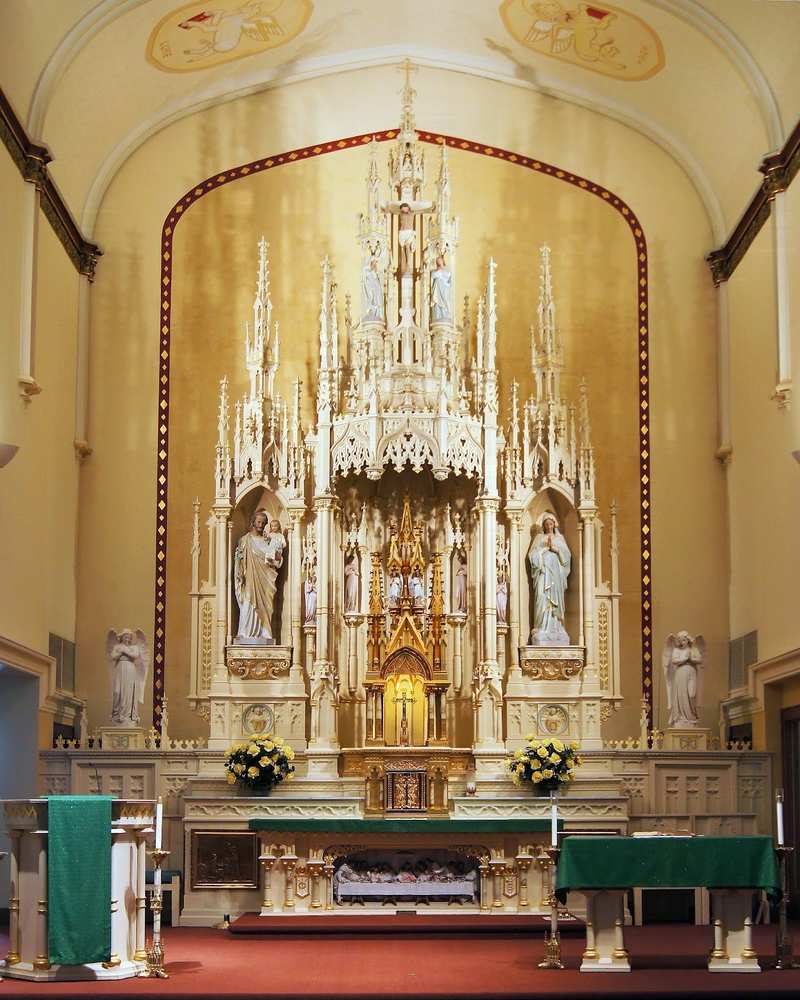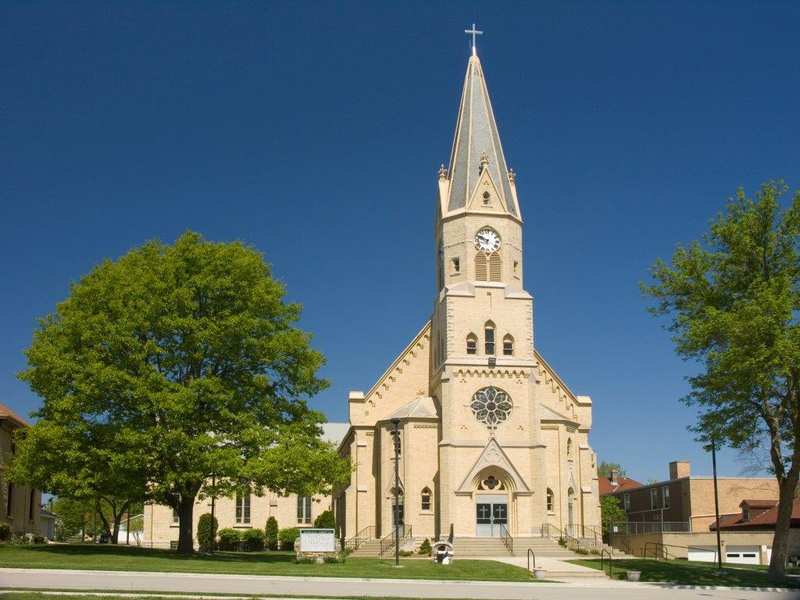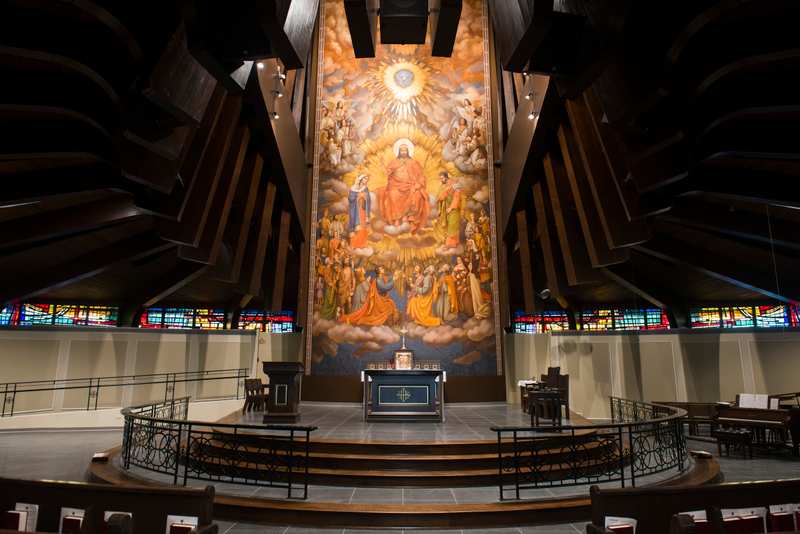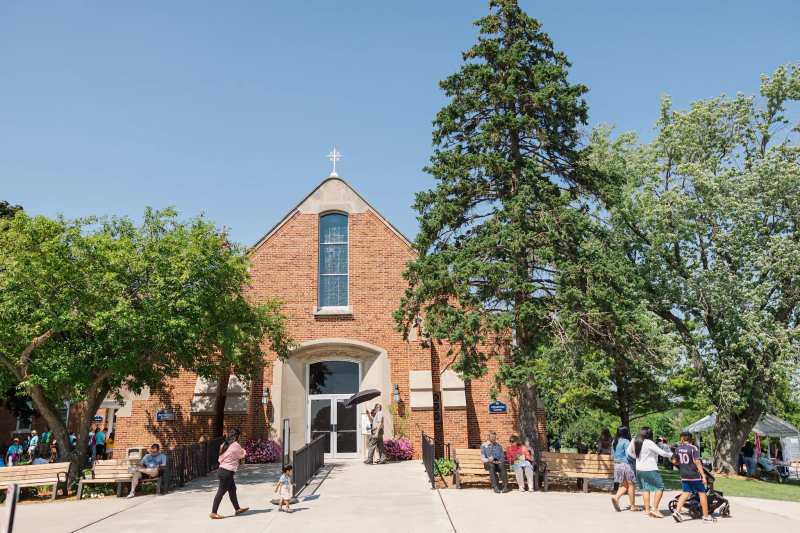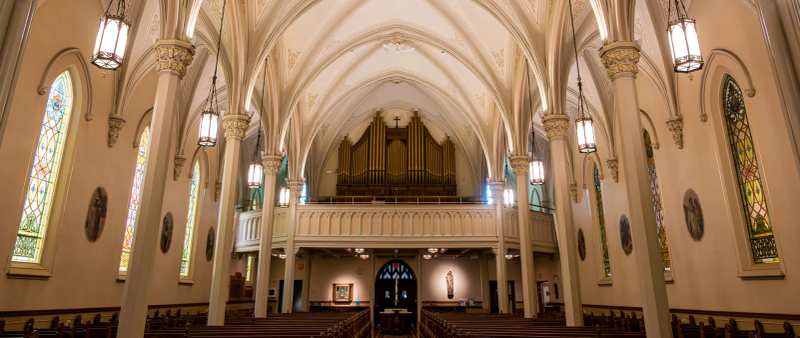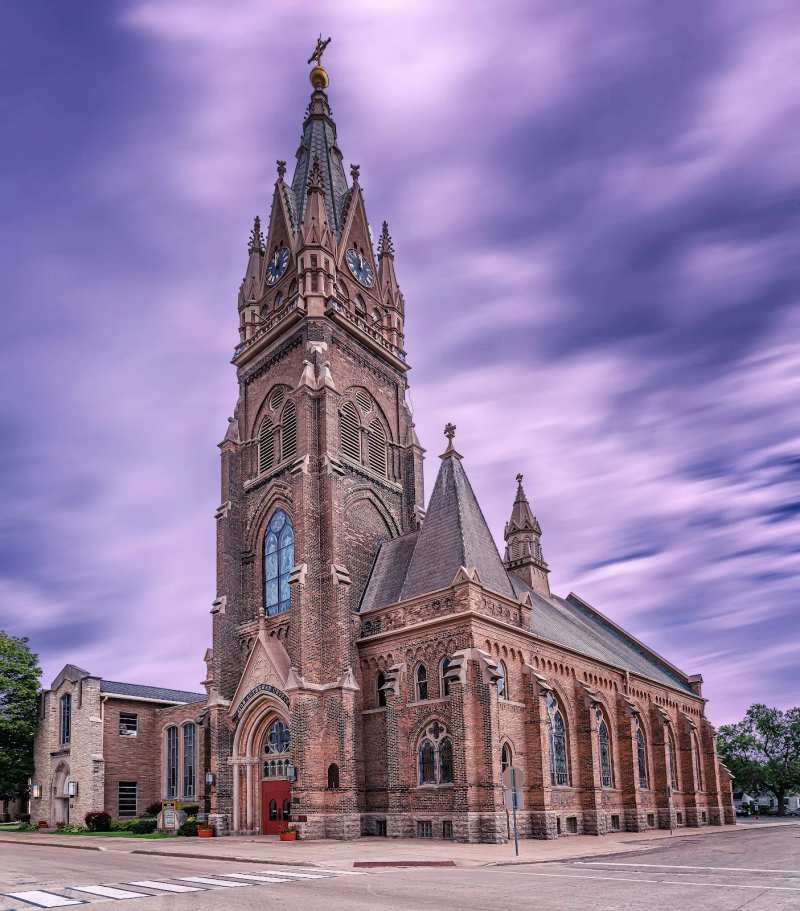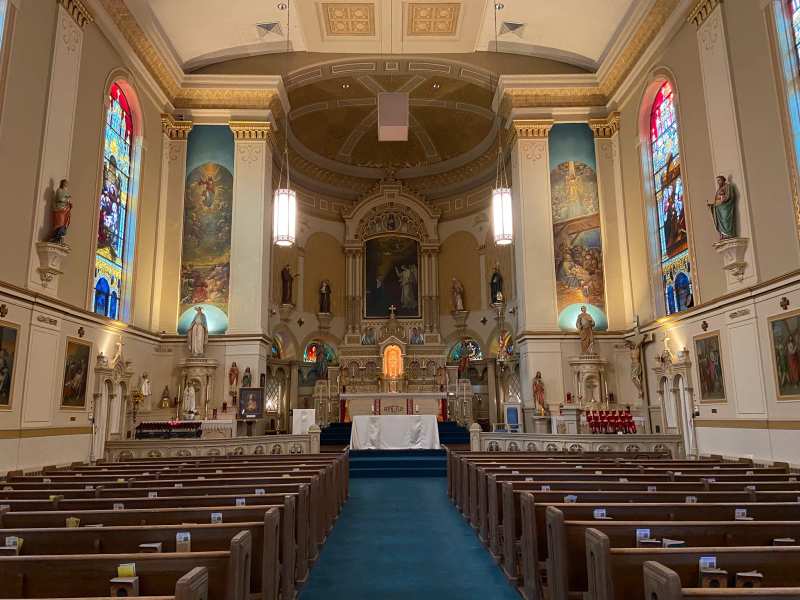
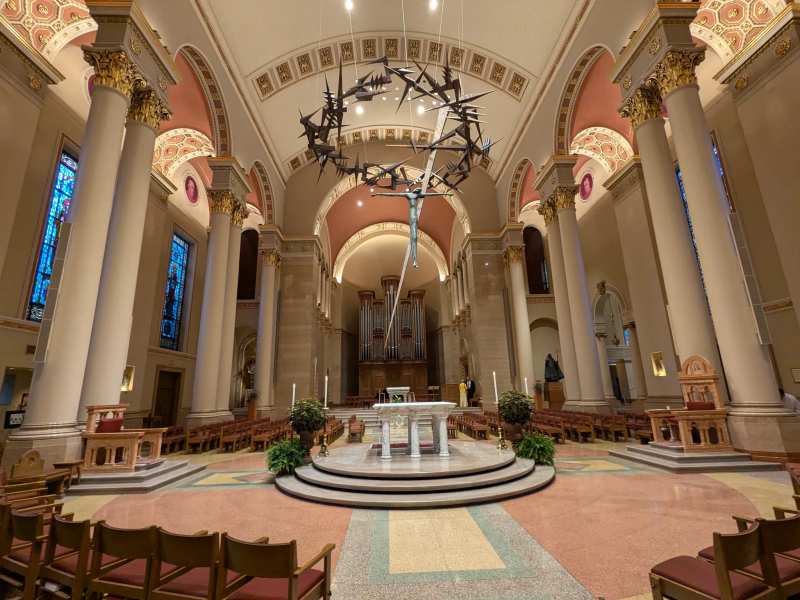
Milwaukee calls itself the City of Steeples, and from the freeway you can see why. Visit Milwaukee counts more than a thousand houses of worship in the city, and the churches in Milwaukee include a medieval French chapel, a basilica built from a demolished Chicago post office, and a Greek Orthodox church designed by Frank Lloyd Wright that locals call the flying saucer.
This guide walks you through the landmark churches neighborhood by neighborhood, from downtown and Wisconsin Avenue to the Polish south side, and then covers the city's historic Black churches, its Spanish-language parishes and the newer congregations. It ends with how to get inside, because these buildings are working parishes before they are anything else.
Why Milwaukee has so many great churches
Milwaukee was built by immigrants who arrived in waves, and each wave built its own church in its own style. German Catholics and Lutherans came first in large numbers, followed by Irish, Polish, Italian and Greek families, and every group wanted services in its own language, with its own saints and its own architecture.
The material was often Cream City brick, the pale yellow brick fired from local clay that gave the city its nickname. Builders in Chicago sometimes paid a premium to face their buildings in it. The money came from working families who pledged what they could, which is why so many of these churches are far grander than the neighborhoods around them.
The other reason is architects. A small group of local designers, among them Victor Schulte, Edward Townsend Mix, H.C. Koch and Erhard Brielmaier, built many of the churches in this guide in the second half of the 19th century, and their names come up again and again as you walk the city.
Downtown: the Cathedral and Old St. Mary's
Start downtown, where the city's two oldest Catholic churches stand a few blocks apart near Cathedral Square.
Old St. Mary's was remodeled in 1867, when the school on its ground floor was removed and the clock tower and steeple were added. Its architect, Victor Schulte, was an immigrant from Westphalia who had built railroad bridges in Pennsylvania before settling in Milwaukee.
The cathedral nearly did not survive. When it caught fire in January 1935, firemen hosed down the tower to protect it while the fire gutted the interior, destroying stained glass by John Hardman of London and paintings given by King Ludwig I. A 1942 restoration extended the surviving nave eastward to Van Buren Street, which is why the building's inside and outside tell slightly different stories.
The East Side: Episcopal and Presbyterian landmarks
North and east of downtown, the Protestant congregations of Milwaukee's early Yankee and English settlers built in stone and Cream City brick on the streets near the lake.
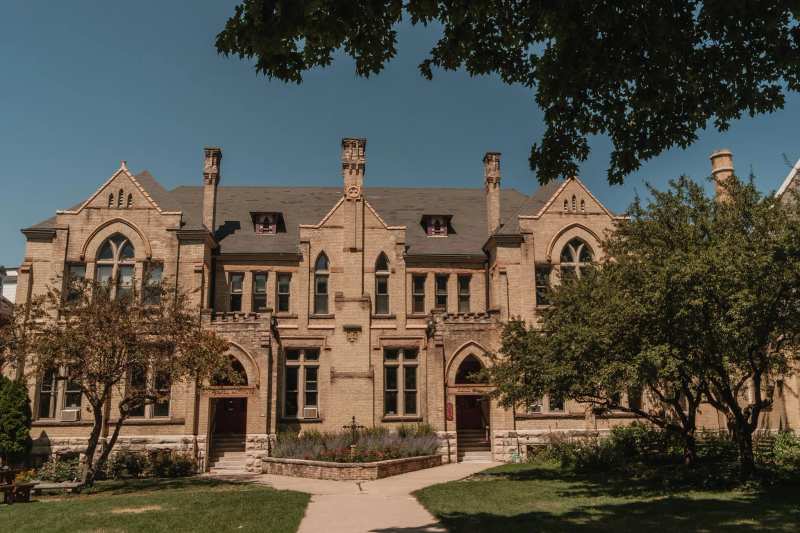
Two blocks over on North Astor Street, Immanuel Presbyterian was organized in April 1837 and is the oldest continuing congregation in Milwaukee. Its Victorian Gothic church dates to 1874. A little farther north, the First Unitarian Church at 1342 North Astor, designed by Ferry and Clas in 1892, follows the pattern of an English stone parish church, with massive oak hammer beams holding up the roof.
The East Side churches are close enough to walk between, and they generally hold Sunday morning services with weekday office hours. St. Paul's, Immanuel and All Saints' all list accessible entrances.
Wisconsin Avenue and Marquette
West of the river, Wisconsin Avenue holds a line of 19th-century churches within about half a mile, and Historic Milwaukee runs a walking tour of them.
At 833 West Wisconsin, the former St. James Episcopal Church is believed to be the first stone church in Milwaukee, designed by the Detroit architect Gordon William Lloyd and built in 1867 on what had been an early cemetery; the remains were moved to Forest Home Cemetery before construction. It is no longer a parish. Today it operates as St. James 1868, an event and wedding venue, and its restored interior and Tiffany windows are now seen at weddings and concerts.
A block west at 935 West Wisconsin, Calvary Presbyterian was built in 1870 of Cream City brick, then painted red by its congregation. When a church elder worried that its tall western tower could be pulled over by a team of horses, the architect, H.C. Koch, brought in horses, rigged them to the steeple and let them try. They could not, and it still stands.
Look for Trinity's two cornerstones. One reads Erected in 1878; the other, in larger and bolder letters, reads F. Velguth architect, which Milwaukee Magazine notes is unusual to find on a church.
Inside the chapel is the Joan of Arc Stone, which legend says the saint knelt on while praying before a statue. Marquette's Chapel of the Holy Family is a second campus chapel nearby.
The Polish south side
South of the Menomonee Valley, the Polish neighborhoods built the biggest churches in the city, one after another, as each parish filled up.
The architect, Erhard Brielmaier, had to turn a pile of post office into a church, and he managed it, though close inspection still gives the game away: some brass hardware carries the U.S. Treasury seal, and the column capitals on the portico are carved with American eagles. When it was first finished, the mismatched stone gave the building a checkerboard look. Cleaned and restored, it looks better now than it ever has.
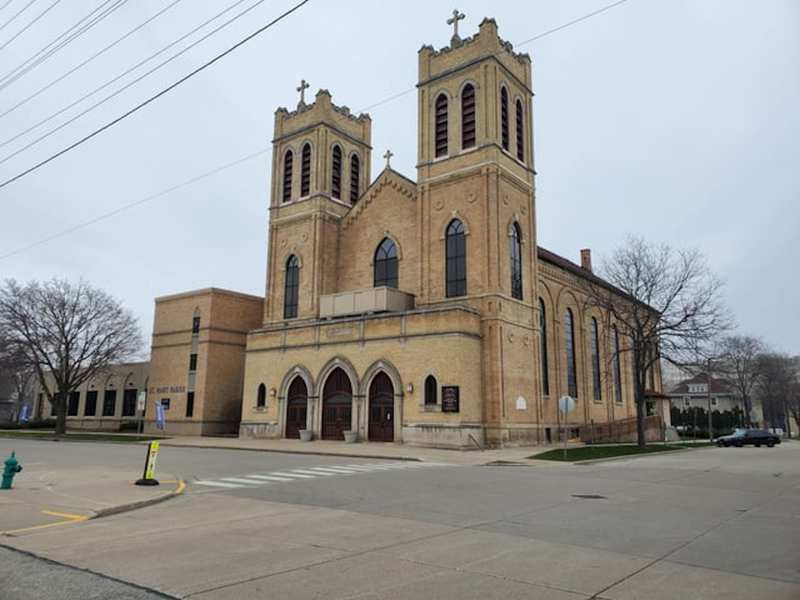
By the late 1880s Milwaukee's Polish population needed a fourth parish, and St. Vincent de Paul on West Mitchell Street was the answer. Its 1900 church, designed by the Polish architect Bernard Kolpacki, has twin towers 182 feet tall in light tan pressed brick.
Within ten years of moving to Mitchell Street, St. Stanislaus had nearly a thousand families, and the street grew into a commercial strip nicknamed the Polish Grand Avenue. The parish also founded what its own history calls the first Polish parochial school in America, in 1873.
The parishes in this section are all its descendants. Waclaw Kruszka, writing a history of American Poles in 1908, compared Milwaukee's parishes to beehives that swarmed when they got too crowded: St. Stanislaus sent out St. Hyacinth in 1882 and St. Josaphat in 1888, and St. Hyacinth in turn produced St. Vincent and Saints Cyril and Methodius. Driving along Mitchell Street and Lincoln Avenue, you pass their towers one after another.
Since 2008, St. Stanislaus has been an oratory of the Institute of Christ the King, which celebrates the Traditional Latin Mass. If you want to hear the old Latin liturgy in a Polish cathedral-style church, this is the place in Milwaukee to do it.
Nearby, Holy Rosary keeps a regular schedule of worship and prayer on its listing. On the same side of town, the School Sisters of St. Francis motherhouse on South Layton Boulevard holds St. Joseph's Convent Chapel, which Milwaukee Magazine calls the city's finest example of Italian Romanesque Revival. Its architect, Richard Philipp, travelled to Italy to study the style before designing it in 1917. The School Sisters of St. Francis sometimes open it for tours.
Bronzeville and Milwaukee's historic Black churches
Milwaukee's architecture lists tend to stop at the 19th-century immigrant churches. That misses a parish whose story matters as much as any building in this guide.
St. Benedict the Moor on State Street began in 1908, when Lincoln Valle, a Black lay evangelist who had done similar work in Chicago, came to Milwaukee to found a Catholic congregation for the city's small African American community. The Capuchin friars took over in 1911 and built the present church, and by 1912 they had opened what the archdiocese's archive calls the country's first African American mission school, with day and boarding students from across the United States.
In the 1930s, decades before most institutions, the school observed Black History Week and taught African American history and literature. In 1931 the Capuchins also opened St. Anthony's Hospital, which the archive describes as Milwaukee's first integrated hospital. The school closed after Interstate 43 was built through its playground in 1967, a freeway that also split the surrounding neighborhood.
St. Ben's never left. In 1970 it began hosting a community meal, and today the program run by Capuchin Community Services serves a hot meal six nights a week, about 90,000 meals a year. The chapel holds Sunday Mass at 10:30, and visitors are welcome. If you would rather help than sightsee, the meal program relies on volunteers, and Capuchin Community Services is the place to ask about serving.
The north side is also home to congregations from historically Black denominations. Ellison Chapel belongs to the African Methodist Episcopal Church, which Black Methodists founded in Philadelphia, and Christ Temple belongs to the Church of God in Christ, the country's largest historically Black Pentecostal denomination.
Ephesians Missionary Baptist Church and Mount Zion Assembly are two more north side congregations. Services in these churches tend to run longer than in the old downtown parishes, with gospel music at the center; dress up, arrive on time and expect a warm welcome.
Spanish-language parishes and newer congregations
The south side's Latino community has filled many of the old Polish and German parishes and started churches of its own. Templo de Restauración worships entirely in Spanish, and several south side Catholic parishes hold Spanish Masses alongside English ones.
Prince of Peace is one of the south side's Catholic parishes; check its listing for which Masses are in which language.
At the other end of the spectrum, a set of newer congregations meet in converted buildings and rented spaces across the city. Brew City Church and City House Church run contemporary services aimed at younger adults.
Mercy Hill is another of the city's newer congregations.
Christ Church Milwaukee is another newer congregation. If you have just moved to the city and want a modern service near downtown, these are the places to start.
Beyond the city limits
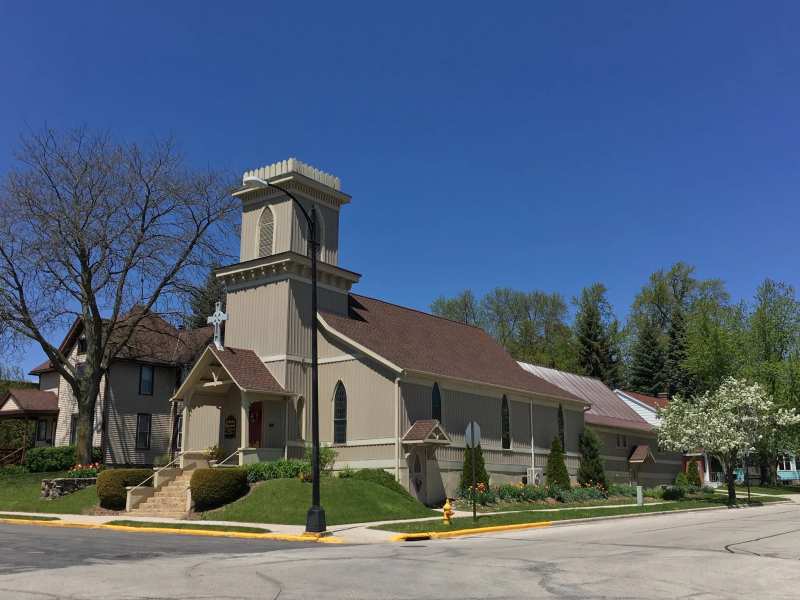
A few of the area's finest churches sit just outside Milwaukee.
Also in Wauwatosa, the First Congregational Church on Church Street, built in 1921, copies the New England colonial church in Williamstown, Massachusetts, almost exactly. The street is named for the congregation's first church, an 1853 clapboard building.
On the west side, Calvary Cemetery on Blue Mound Road has a small 1899 chapel by Erhard Brielmaier, built of Cream City brick on a 100-foot hill. It nearly came down in 1992, when the archdiocese applied to raze it, but a preservation campaign saved it.
Farther out, Milwaukee Magazine's list of great area churches includes St. Mary's in Burlington, whose 187-foot spire rises over the town; it burned in July 1977 and was rebuilt in about two years. In Sussex, St. Alban's Episcopal, dedicated in 1866, copies a parish church in Sussex, England.
West of the city, churches in Brookfield range from Wisconsin's largest congregation to stone parishes from the 1860s.
What to look for inside
Once you are through the door, a few details reward a slow look. At Old St. Mary's, find the painting of the Annunciation above the main altar, the gift of a Bavarian king to a frontier parish. At Trinity Lutheran, look at the pulpit with its own staircase and canopy and the stair to the choir loft, which Milwaukee Magazine calls classic examples of muscular Gothic carpentry.
At St. Paul's, the Tiffany windows are the point, and the big one, Christ Leaving the Praetorium, fills a wall. At the First Unitarian Church on Astor Street, look up at the massive oak hammer beams holding the roof, borrowed from English parish churches. At Gesu, listen if the organ is playing; it has some 4,000 pipes and came from a Chicago theater.
At St. Josaphat, look for the leftovers from its first life as a federal building: the U.S. Treasury seal on some of the brass hardware and the eagles carved into the column capitals outside. At St. Joan of Arc, find the stone the saint is said to have prayed on. These small things are what turn a tour of churches into a tour of the city's history.
Two walking routes
Downtown and the East Side make an easy morning on foot. Start at Old St. Mary's on Broadway and the Cathedral on Jackson Street, both about 0.2 miles from the center of downtown. Walk northeast to All Saints' on Juneau Avenue, about 0.6 miles out, then on to St. Paul's on Knapp Street and Immanuel Presbyterian on Astor Street, both within about 0.7 miles of downtown.
The second route runs west along Wisconsin Avenue. From the former St. James at 833 West Wisconsin, walk past Calvary Presbyterian at 935 and on to Gesu at 1145, with Trinity Lutheran a block north on 9th Street and St. Joan of Arc Chapel just past Gesu on the Marquette campus. Historic Milwaukee runs a guided version of this walk.
The south side is better by car. St. Stanislaus on Mitchell Street, about 1.9 miles south of downtown, and the Basilica of St. Josaphat, about 2.6 miles south, are the two to plan around, with St. Vincent de Paul farther west on Mitchell.
Racine, Nashotah and the wider region
Milwaukee Magazine's list of the area's great churches reaches beyond the city. In Racine, First Presbyterian on College Avenue, built in 1852, is one of the finest Greek Revival buildings in Wisconsin, with a cream brick front set behind two Doric columns and a steeple in the style of Christopher Wren's London churches. Its bell once called the volunteer firemen.
Also in Racine, St. Luke's Episcopal, built in 1866 to a design by Edward Townsend Mix, carries the same architect's touch you see at All Saints' and St. Paul's. West of the city, Nashotah House Episcopal Seminary, founded in 1859 on the shore of Upper Nashotah Lake, is the oldest chartered academic institution in Wisconsin, and its chapel is part of the same English Gothic tradition.
Other faiths in Milwaukee
Milwaukee's houses of worship go well beyond Christianity.
The city's mosques center on the Islamic Society of Milwaukee, the largest Islamic facility in Wisconsin.
Milwaukee also has its own synagogues, concentrated on the East Side and the North Shore.
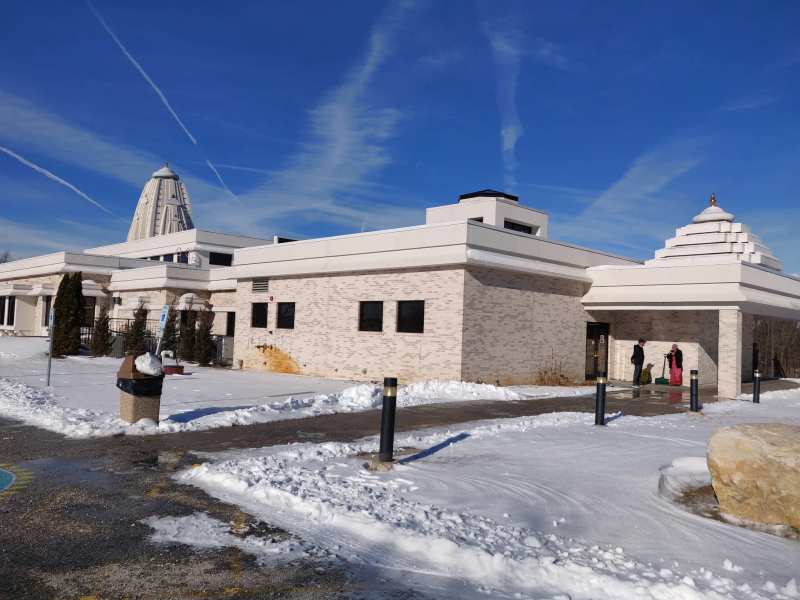
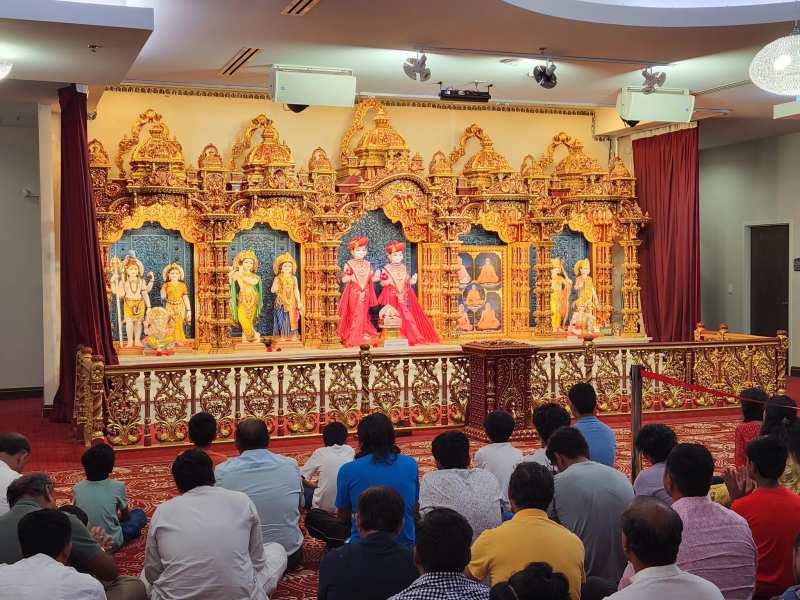
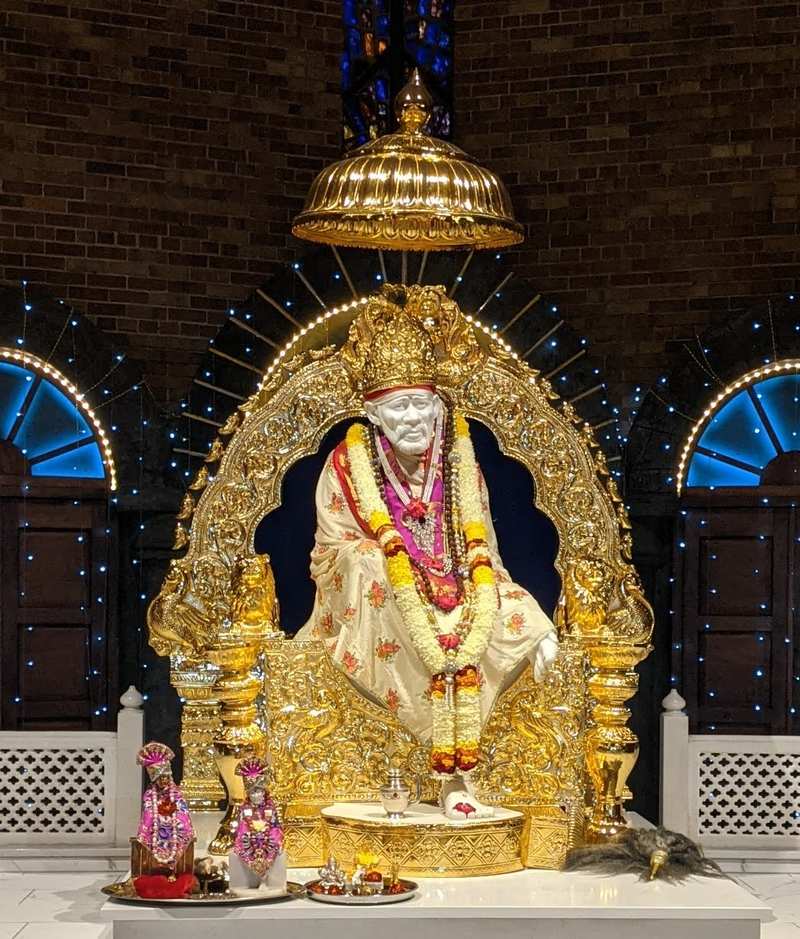
West of the city, the Hindu, Sikh and Buddhist temples cluster in Pewaukee, Oak Creek and Wauwatosa.
How to visit Milwaukee's churches
These are working churches. The easiest way inside is to attend a service; you do not have to be a member, and nobody will ask. Arrive a few minutes early, sit near the back and follow what everyone else does.
For a tour, call the parish office during the week. Several of the downtown and East Side churches keep weekday office hours and will open the building for visitors, and Historic Milwaukee runs guided walking tours of the Wisconsin Avenue churches.
The best single opportunity is Doors Open Milwaukee in September. Since 2011 the two-day event has opened more than 170 buildings for free tours, and churches are some of the most visited. Families on the 2018 tour went from mosques to the Serbian Orthodox Cathedral to the Greek Orthodox church in a single day.
Dress modestly, keep your voice down, and ask before taking photographs inside. If a funeral or wedding is in progress, come back another time.
Choosing a church if you live here
If you are moving to Milwaukee rather than visiting, the landmark parishes are one choice among many. Whether one fits your household depends on what you want from a Sunday, and the city offers almost every kind.
Start by deciding what matters most: the liturgy and the building, a large children's and youth program, a particular language, or a congregation that reflects your neighborhood. The downtown and East Side churches suit people who love traditional worship. The newer congregations suit people who want a contemporary service and a young crowd. And the neighborhood parishes on the north and south sides suit people who want church to be part of the life of the street they live on.
Visit on an ordinary Sunday, stay for coffee, and ask someone how long they have been coming. In a city with this many churches, you can afford to take your time.
The City of Milwaukee once published its own guide to the subject: a 1994 Milwaukee Ethnic Church Tour from the Department of City Development, which the Wisconsin Historical Society still cites in its records. The idea behind it holds up. Each of these buildings is a record of who arrived, when, and what they cared about enough to build.
Accessibility and photography
Old churches were not built with ramps in mind, but many of Milwaukee's have added them. Several of the downtown and East Side churches list accessible entrances on their listings, and some have hearing loops; for the older buildings, call ahead and ask which door to use, since the accessible entrance is often at the side or back.
Photography is usually welcome outside and, between services, inside. Ask at the office beforehand if anyone is around, skip the flash near stained glass and artwork, and never photograph people at prayer. During a Mass, a wedding or a funeral, put the camera away entirely.
Downtown parking is the other practical question. Plan it before you go, because a Sunday visit or a walk from a nearby garage is easier than circling the block near the Cathedral and Old St. Mary's. Tripods and drones need permission. If you are planning serious photography, a call to the parish office during the week will usually get you a better time and sometimes access to the choir loft, which is where the best interior views tend to be.
When to go
September is the best month, because Doors Open Milwaukee opens churches that are usually locked on weekdays. Lent brings fish fries in parish halls on Friday nights, and Christmas and Easter fill the old churches with music, though they are also the busiest times to visit.
For a quiet look inside, try a weekday late morning, when parish offices are open and nobody is arriving for a service. Sunday afternoons work too, after the last morning Mass, at churches that keep their doors open.
Fish fries, festivals and the parish calendar
Milwaukee's parishes are social places too, and the easiest way to see the inside of a neighborhood church is often a Friday night. During Lent, Lent fish fries at Milwaukee parishes fill church halls across the city with cod, potato pancakes and rye bread.
Summer brings parish festivals, with food, music and rides in the parking lot, and many south side churches mark their patron saints' feast days with processions. Check each church's listing for upcoming events.
Every church in this guide sits in a neighborhood worth an afternoon, with restaurants, museums and bars in the rest of the city by neighborhood near each one.
Outside the city, Wisconsin's churches and shrines continue the same immigrant story in smaller towns.
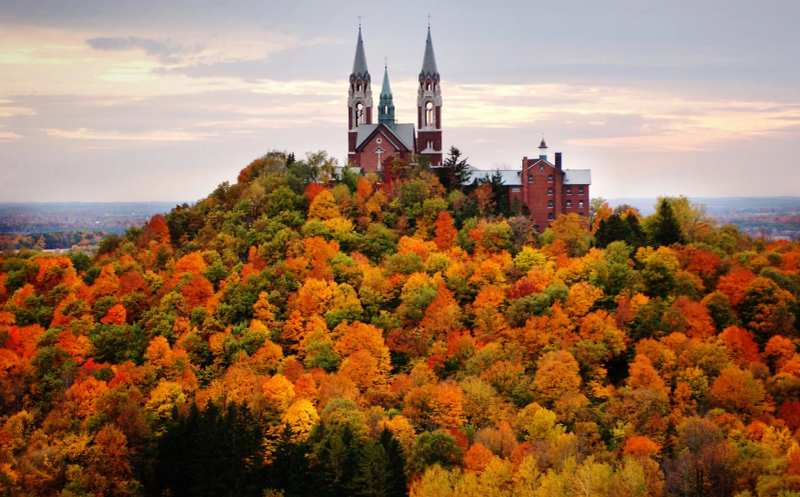
The three Marian shrines are within a day's reach of the city. Wisconsin's shrines begin with Holy Hill, about 30 miles northwest by road.
Frequently asked questions
Published August 31, 2026