The best introduction to Wellington is flat, free and about three kilometres long. The Wellington waterfront walk follows the harbour edge from the railway station past Queens Wharf and Te Papa to the beach at Oriental Bay, and on a still day it is the most pleasant hour you can spend in the city.
This is the walk stop by stop, twelve of them, with what each one is, where to eat and drink along the way, what to do when the wind turns, and the practical details: toilets, bikes, prams and what the sources disagree about.
The walk at a glance
The central waterfront path runs from Bunny Street, beside Wellington Station, to Oriental Bay, roughly three kilometres one way on a sealed, flat surface. Walking straight through takes 45 minutes to an hour. With stops for a museum, a coffee and a look at the boats, it easily fills half a day.
Distances quoted for the walk vary between two and four kilometres, depending on where people start and stop. Queens Wharf to Oriental Bay beach is about two kilometres. Starting at the station and carrying on to the far end of Oriental Parade stretches it towards four.
It is free, wheelchair and pram accessible, has toilets and playgrounds along the way, and has separate lanes for walkers and cyclists for much of its length. Parts of it carry other names, including the Great Harbour Way and the Wellington Writers Walk, but locals just call it the waterfront.
The walk, stop by stop
1. Wellington Station and Bunny Street
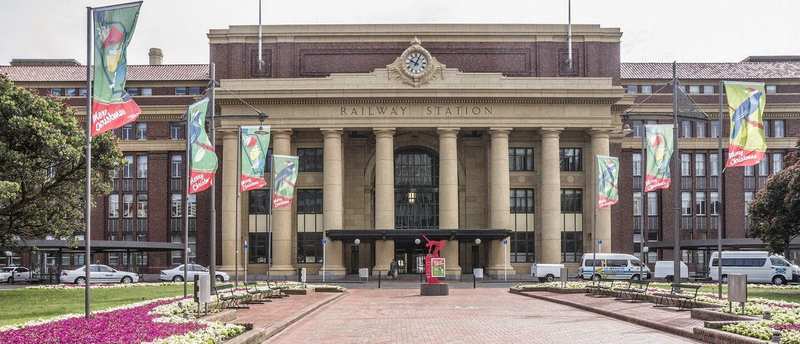
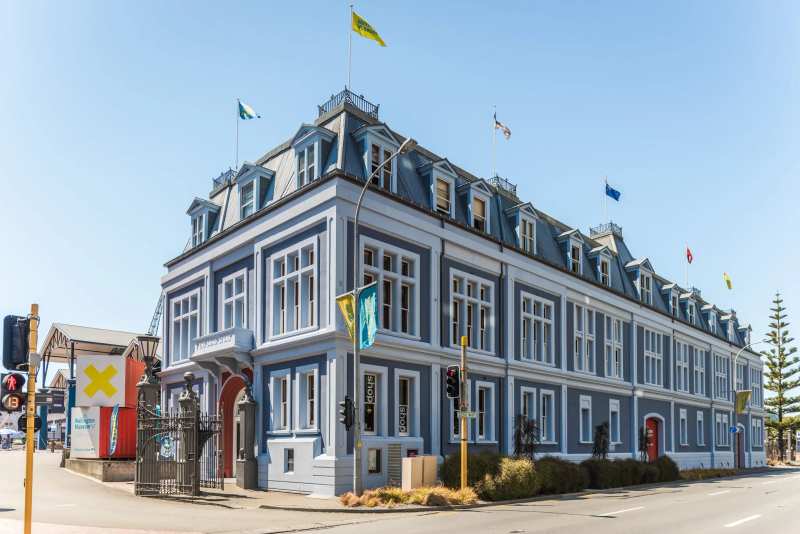
The walk starts at the northern end of the central city, beside the railway station, the terminus for trains from the Hutt Valley, the Kāpiti Coast and the Wairarapa. The Bluebridge ferry terminal is across the road, and Hotel Waterloo sits on the corner of Bunny Street.
Head towards the water and turn south. For the first few hundred metres you pass office buildings and the edge of the port, with container ships and the Interislander ferries moving in and out behind you. It is the least pretty stretch, and it gets better quickly.
2. Queens Wharf and Wellington Museum
Queens Wharf is where the waterfront proper begins. The old cargo crane still stands on the wharf, and the Wharf Offices building, with its dome and red-brick detailing, is one of the best-looking old buildings in the city.
Look for the plaque to Paddy the Wanderer, the harbour dog who was looked after by wharfies, seamen and taxi drivers from 1928 until his death in 1939. His memorial is a small drinking fountain, with a bowl at dog height.
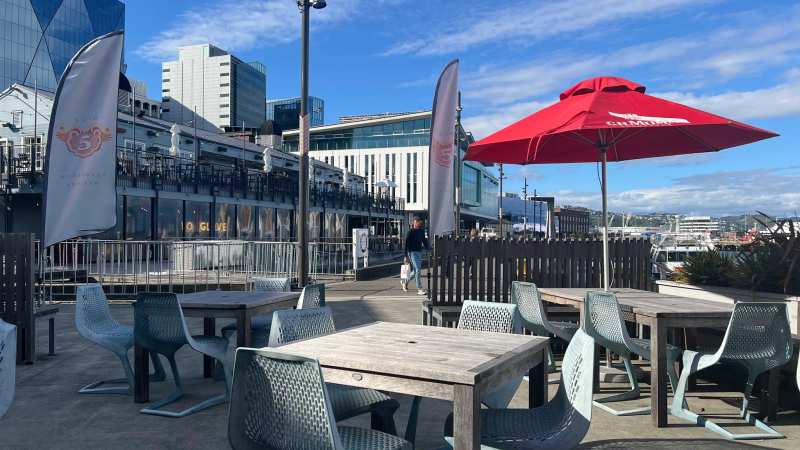
Queens Wharf is also the city's seafood strip.
Shed 5, Crab Shack, Dockside and the 22-tap BIN44 line the wharf, and on sunny afternoons locals finish work early to grab a drink here overlooking the water.
The ferry to Matiu/Somes Island and Days Bay leaves from the wharf too.
3. Frank Kitts Park
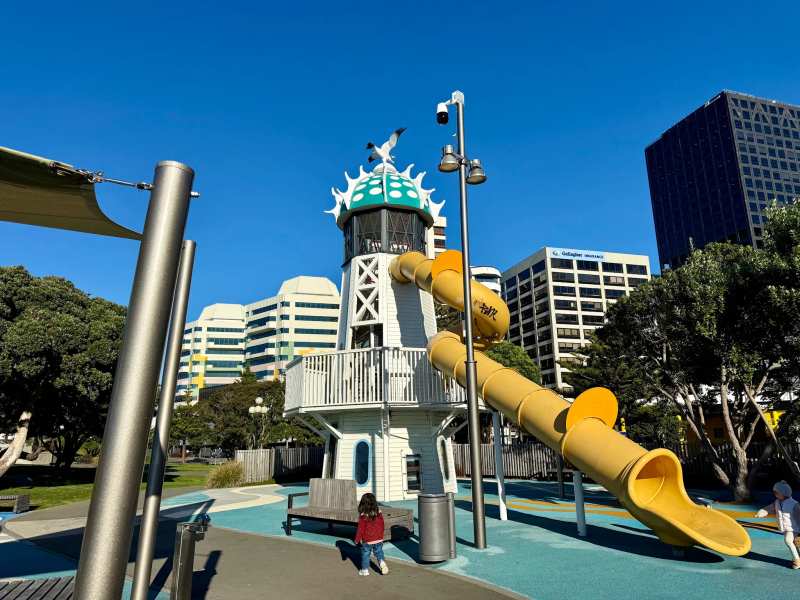
Just south of Queens Wharf, Frank Kitts Park is a stretch of lawn, a rocky shoreline and one of the best playgrounds in the city.
4. The City to Sea Bridge and Te Wharewaka
The City to Sea Bridge crosses from the waterfront to Civic Square, over the busy road, and is decorated with large Māori carvings. It is the easiest way up to Cuba Street and the Michael Fowler Centre from the water.
Beside it, Te Wharewaka o Pōneke houses two waka, traditional canoes, and runs walking tours that tell the harbour's Māori history. The statue of Kupe, the Polynesian navigator credited with discovering the harbour, stands nearby. If you only do one guided thing on the waterfront, the hour-long walking tour from here is it.
5. Taranaki Street Wharf
Taranaki Street Wharf is where the waterfront gets playful. In summer, the jump platform is where teenagers queue to leap into the harbour and older onlookers pretend they are not impressed. The sculpture Solace in the Wind, a tall bronze figure leaning out over the water, is here too.
Circa Theatre sits on the edge of the wharf, with a bar and cafe that are useful on a cold day. The Love Lock Bridge crosses the lagoon, with padlocks left by couples clamped to its rails.6. Te Papa and the WELLINGTON sign
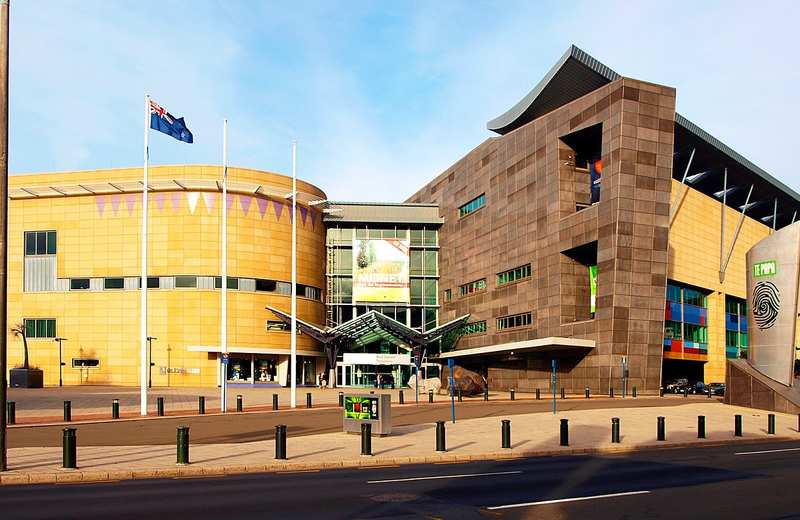
Te Papa, the national museum, dominates this stretch of the waterfront, and its forecourt and outdoor spaces are worth the stop whether or not you go inside.
Nearby is the WELLINGTON sign, the red letters on the waterfront that almost every visitor photographs. It is next to Te Papa, which makes it easy to combine the two.
7. Waitangi Park and the Harbourside Market
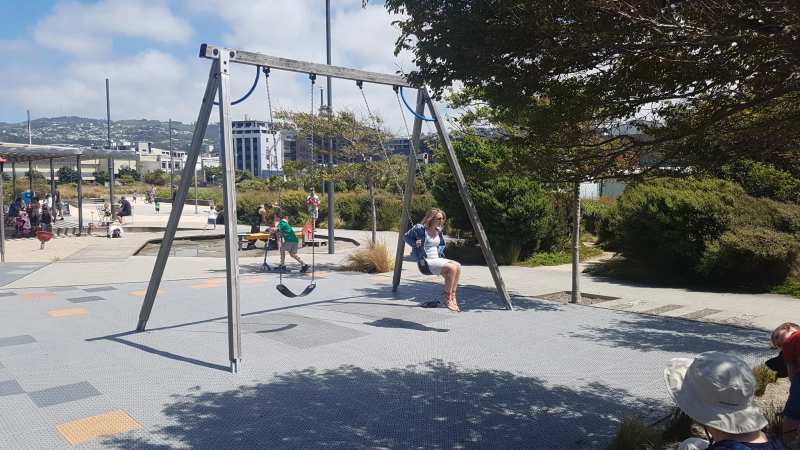
Waitangi Park is the big green space at the Te Papa end of the waterfront, with lawns, a playground, skate areas and a restored wetland.
The market is the best breakfast on the waterfront if you time the walk for a Sunday. Go early: the best stalls thin out by mid-morning. The Sunday market is one of several around the city, each on its own day.
8. Chaffers Marina
Chaffers Marina is next, a small marina of yachts and launches tucked behind a breakwater. It is quieter than the wharves, with apartments on the landward side and a clear view back to the city.From here the walk begins to curve east around the bay towards Oriental Parade.
9. Clyde Quay Boat Harbour
The boatsheds of Clyde Quay are one of the waterfront's visual trademarks.
10. Freyberg Pool and Freyberg Beach
At the start of Oriental Parade, Freyberg Pool has changing rooms, toilets and cold showers used by beach swimmers. The beach beside the pool has a playground with a rope climbing frame and a small pier.
Gelissimo at Freyberg sells gelato right beside the sand, and it is the moment on the walk when most people stop for an ice cream.11. Oriental Bay Beach and the Carter Fountain
Oriental Bay is the finish line for most people. The beach is sand brought in from Golden Bay, the water is calm and shallow, and the promenade is lined with cafes and restaurants.
12. Point Jerningham and the Oriental Bay lookout
Carry on past the end of the beach and the parade curves around towards Point Jerningham, where the harbour opens up towards Evans Bay. The Oriental Bay lookout gives a wide view back across the water to the city, and on a clear evening the lights come on across the whole harbour.
From here you can walk back the way you came, catch a bus into town along Oriental Parade, or head uphill on the walking tracks to the Mount Victoria lookout.
Art, words and history along the way
The waterfront is dotted with public art, and a lot of it is easy to walk straight past. The Wellington Writers Walk sets quotations from New Zealand writers into large concrete text sculptures along the path, many of them about the city, the harbour or the wind. Reading them as you go is a good way to slow down.
Solace in the Wind on Taranaki Street Wharf is the sculpture people photograph most. The carvings on the City to Sea Bridge and the statue of Kupe tell the older story of the harbour. Smaller works, plaques and memorials turn up between them, including Paddy the Wanderer's fountain on Queens Wharf.
Most of the ground you are walking on did not exist when the city was founded. Wellington's shoreline originally ran along what is now Lambton Quay, and successive reclamations pushed the land out into the harbour, which is why the old waterfront buildings stand so far back from today's water. When container shipping moved the working port north, the old wharves and sheds were restored and opened up to the public, and the waterfront became the promenade it is now.
Best times to walk it
Early morning is the waterfront at its quietest. In summer, rowers are out on flat water at dawn, and the light on the hills behind the city is at its best. Weekday lunchtimes bring office workers down to the water, and sunny weekend afternoons are the busiest of all.
Sunday morning is the obvious choice if you want the Harbourside Market in the middle of the walk. Summer evenings are good too: the restaurants on Queens Wharf fill, the light lasts until late, and Oriental Bay is at its liveliest. On a still winter's day, when the wind drops and the harbour goes glassy, the walk is as good as it ever gets, and you may have large stretches of it to yourself.
Walking it with children
The waterfront is one of the easiest outings in Wellington with children. It is flat, traffic-free for most of its length, and has playgrounds at Frank Kitts Park, Waitangi Park and Freyberg Beach. The Attic at Wellington Museum and the hands-on spaces at Te Papa break the walk up on a cold day.
Keep an eye on small children near the edges, particularly on the wharves, where there are drops to the water and not always a rail. In summer, the swimming at Oriental Bay and the ice cream at Freyberg make a natural reward for walking the whole way.
Eating and drinking on the waterfront
The waterfront has three clusters of places to eat. Queens Wharf is for seafood and harbour-side drinks. The Te Papa end, around Cable Street, has hotel restaurants and bars with views. Oriental Parade has cafes, ice cream and a few restaurants facing the beach.
On Queens Wharf, Shed 5 is the white-tablecloth seafood option and Crab Shack the casual one, and BIN44 has 22 craft beer taps. Foxglove on Queens Wharf is a bar and kitchen known for its cocktails, with a harbour view that justifies the prices at happy hour.
Shipwreck Cafe on Jervois Quay is a quick stop near Frank Kitts Park. On Cable Street, the QT hotel's Hippo upstairs has steak, oysters and one of the better harbour views in the city, and St Johns Bar sits at the Te Papa end.At the station end, the Duke of Wellington pub and Flamingo Joe's, with tiki cocktails, are both on Waterloo Quay, handy before a train or ferry.
For a wider choice, restaurants beyond the waterfront cluster a few minutes inland in Te Aro, around Cuba Street and Courtenay Place.
When the wind is up
The waterfront is exposed, and in a strong wind it can be a battle. A northerly funnels along the harbour and makes the stretch from Queens Wharf to Te Papa hard going. A southerly brings cold air and rain in off the strait.
On a bad day, break the walk into indoor stops. Wellington Museum, Te Papa and the restaurants on Queens Wharf are all sheltered, and the Te Papa end has cafes where you can wait out a squall. The lee side of the wharf sheds and the buildings along Cable Street give some shelter too.
Hold on to hats, and keep small children and light prams away from the edges in a gale. The wind is strong enough to push people. The wind is the one thing to check before you set out, more than the temperature.
Bikes, prams and accessibility
The waterfront path is sealed and flat throughout, suitable for wheelchairs, prams and mobility scooters. Between Herd Street and Freyberg Pool, separate lanes keep cyclists and walkers apart. Toilets are available at several points, including Freyberg Pool and near the parks.
Bikes and e-bikes can be hired in the central city, and the waterfront is the easiest ride in Wellington. The path now connects to Te Ara Tupua, the harbour-edge shared path to Petone and Lower Hutt, which opened in full in May 2026. Heading south, it continues as the Oriental Bay shared path and around Evans Bay.
Dogs are allowed on leads in most waterfront areas, with some restrictions around playgrounds and, in summer, the beach.
Making a day of it
The waterfront is the spine of central Wellington, and most of the city's best days use it. Pair the morning walk with Te Papa, lunch on Queens Wharf and an afternoon swim at Oriental Bay. Or walk to Oriental Bay and climb up from there to the Mount Victoria lookout.
The waterfront is also where a first day in Wellington usually starts.
Wellington's other beaches are further out, on the south coast and the Miramar Peninsula, and the hill walks above the harbour start a short climb from Oriental Parade.
Everything along the way that costs nothing adds up quickly, and the city's best free outings start right here. If you would rather sleep beside it all, waterfront hotels line the northern half of the walk.
Frequently asked questions
Published August 23, 2026