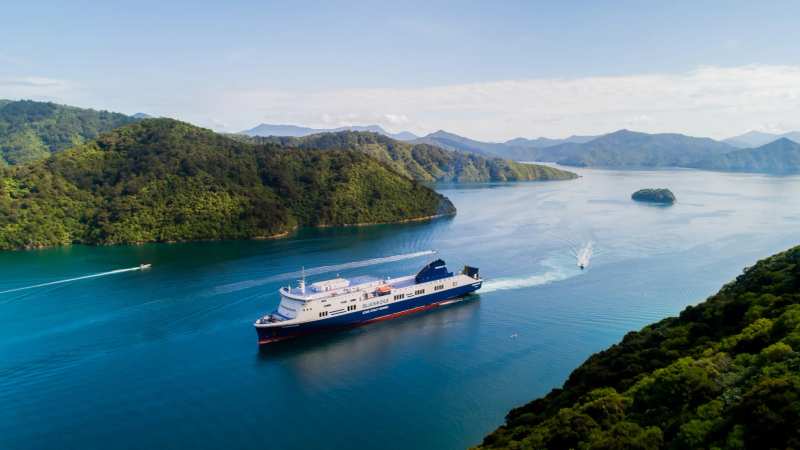

The Wellington to Picton ferry is the only way to take a car between New Zealand's two main islands, and one of the country's best short journeys even without one. The crossing covers about 92 kilometres of Cook Strait and the Marlborough Sounds, takes around three and a half hours, and is run by two operators, Interislander and Bluebridge, from two different terminals in Wellington.
This covers the crossing from the Wellington end: which operator suits you, where each terminal actually is, how to get there, check-in rules, what happens when the strait turns rough, and where to sleep and eat before an early sailing. Timetables and fares change through the year, so treat the figures here as a guide and check with the operators before you book.
The short version
Two operators, Interislander and Bluebridge, sail between Wellington and Picton several times a day in each direction. The crossing takes around three and a half hours. Book as early as you can, especially with a vehicle and in summer, as sailings sell out days or weeks ahead. Check-in closes 60 minutes before departure, so aim to arrive at least an hour and a half early. In bad weather, sailings can be delayed or cancelled.
Interislander or Bluebridge?
Honestly, there are no huge differences, and most people choose on price, timing and availability. But there are some real distinctions.
Interislander is run by KiwiRail as part of its Great Journeys of New Zealand brand, and carries around a million passengers and 230,000 vehicles a year on some 5,500 sailings. Its ships are larger, with more decks, food courts, cafes, children's areas and free wifi, which makes a difference on a rough crossing.
Its Wellington terminal is further from the city centre, at Kaiwharawhara north of the railway station, with a free shuttle bus from Wellington Station for foot passengers. In Picton, the terminal is an easy walk from the town centre and the train station.
Bluebridge is usually a little cheaper and its Wellington terminal is far more convenient: directly across the road from Wellington Station, a short walk from the central city. Its ships are smaller and carry more freight, but it offers more private cabins, and runs an overnight sailing with sleeper cabins for anyone who wants to cross while they sleep.
In Picton, the Bluebridge terminal is about a kilometre from town, with a shuttle into the centre.
In short: choose Interislander for bigger ships and more onboard facilities, particularly if you get seasick. Choose Bluebridge for price, convenience at the Wellington end, cabins and the overnight option. If your first choice is full, the other will almost certainly get you across.
Booking and fares
Book online directly with the operators, or through a comparison site that shows both. You can technically buy at the terminal, but sailings are often sold out days ahead, so do not rely on it.
Both operators offer ticket types that trade price for flexibility: a cheapest fare locked to one sailing, a mid-priced fare you can change, and a fully refundable fare. The exact names and rules differ, so read the conditions before you pay.
As a rough guide, a single adult foot passenger often pays somewhere in the $55 to $85 range, depending on the operator, season and ticket type. A car with driver typically starts from around $120 to $135, and campervans cost more. Peak times, December to February, Easter and school holidays, add to vehicle fares. Children, students and seniors pay less.
Travelling around New Zealand by Intercity bus? The Flexipass bus pass can be used on the Interislander and is usually cheaper than buying a separate ferry ticket.
Choosing a sailing time
The scenery is a big part of the crossing, so sail in daylight if you can. The approach through the Marlborough Sounds is the highlight, and it is wasted in the dark. A mid-morning sailing from Wellington puts you in the Sounds around lunchtime, often in the best light.
Early morning sailings suit drivers heading further south that day, and are often cheaper and easier to book at short notice. Bluebridge's overnight sailing, with sleeper cabins, suits anyone who would rather lose a night than a day: you board in Wellington in the evening, sleep, and arrive in Picton in the early morning.
In summer and around school holidays, the popular daytime sailings sell out first. Book those early, and keep an early-morning or late sailing in mind as a fallback.
Luggage and what to bring
Foot passengers check large bags at the terminal, free of charge, and collect them at the other end. Keep a small bag with you for the crossing: a warm layer for the outside decks, which are cold and windy even in summer, snacks and water, a charger, and anything you need for seasickness.
Vehicle passengers leave everything in the car once it is parked, and cannot go back to the vehicle deck during the sailing, so take what you need upstairs before you leave the car.
Travelling with children
Both operators are used to families. Interislander's larger ships have dedicated children's areas and entertainment, which makes the three and a half hours go faster. On any sailing, the outside decks are a big hit on a calm day, especially as the ship enters the Sounds, but keep a close hold on small children near the rails.
Book cabins or quieter lounges in advance if you are travelling with a baby and want some space. Pack snacks and something to do, and time the sailing around naps if you can.
The Picton end in brief
Picton is a small town at the head of Queen Charlotte Sound, the main town of the Marlborough Sounds and the start of the Queen Charlotte Track. The Interislander terminal is an easy walk from the town centre and the station, where the Coastal Pacific train leaves for Christchurch in season. Bluebridge's terminal is about a kilometre out, with a shuttle into town.
Rental car depots are near the terminals, and most drivers head south to Blenheim and the Marlborough wine region, or west to Nelson. If you have time, a night in Picton or a day on the water in the Sounds is worth it.
Getting to the terminal
Wellington Station is the hub for both operators. Bluebridge's terminal is across the road on Waterloo Quay. Interislander foot passengers catch a free shuttle from the station to the Kaiwharawhara terminal, a short ride away.
The station is at the northern end of Lambton Quay, served by trains, buses and taxis, and is a flat walk from the hotels in the business district.
If you are driving, follow the signs to your operator's vehicle check-in lanes: Interislander's are at Kaiwharawhara, off the motorway, and Bluebridge's are on the waterfront near the station. Allow extra time on Friday afternoons and at the start of school holidays, when the city traffic and the check-in queues build.
Taxis and ride-shares will take you directly to either terminal. Ask for your operator by name, as the terminals are in different places.
Check-in
Check-in closes 60 minutes before departure for both operators. For foot passengers, aim to arrive an hour and a half before sailing. You check in at the counter with your booking reference, drop your large luggage free of charge, and board around 45 minutes before departure.
With a vehicle, arrive at the vehicle lanes at least an hour before departure, and follow the staff directions onto the vehicle deck. Once parked, you leave your vehicle and go up to the passenger decks for the crossing. You cannot stay in your vehicle during the sailing.
On board
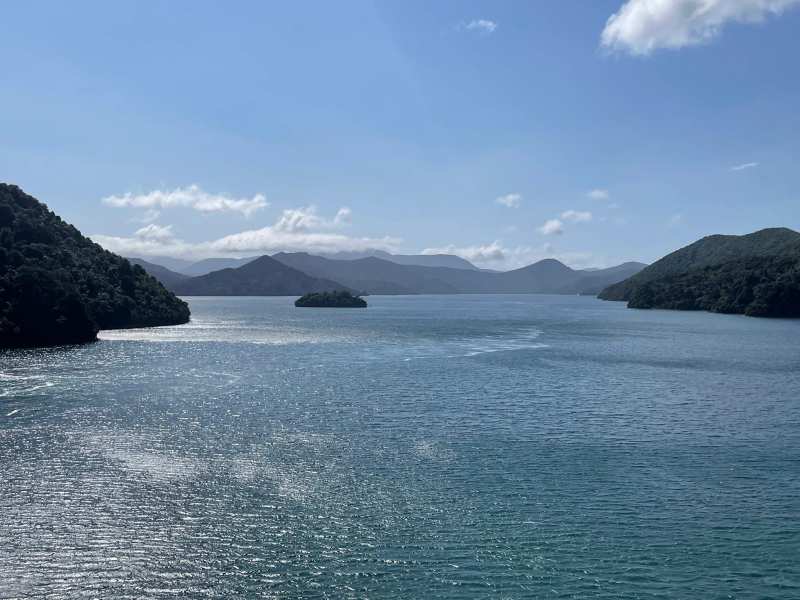
The crossing has three parts. The first hour or so crosses Wellington Harbour and out through the heads past Pencarrow. The middle stretch crosses the open water of Cook Strait, where the ride can be rough. The last hour winds through Tory Channel and Queen Charlotte Sound in the Marlborough Sounds, drowned river valleys lined with bush-covered hills, and it is one of the most beautiful sea approaches in the country.
On both operators you will find seating areas, food and drink, and outside decks, though the outside decks may be closed in strong wind. Interislander's larger ships have more space and more facilities; Bluebridge's cabins give you a private room with a bed.
When Cook Strait turns
Cook Strait is one of the most unpredictable stretches of water in the world, and a big southerly can make the crossing very rough. Both operators publish sailing conditions before each crossing, and they will delay or cancel sailings if the weather is dangerous. If a sailing is cancelled, the operator will rebook you, and Bluebridge may transfer passengers to Interislander when its own sailings are affected.
If you are prone to seasickness, choose a larger ship, sit in the middle of the vessel on a lower deck, avoid the very front and back where the movement is greatest, and look at the horizon. Take seasickness medication before you board rather than after you start to feel unwell.
On a calm day, none of this matters, and the crossing is a pleasure. The Cook Strait wind is worth checking before you book, particularly the wind direction.
Where to sleep before an early sailing
Early sailings leave well before most hotels serve breakfast, so staying close to the terminals makes life easier.
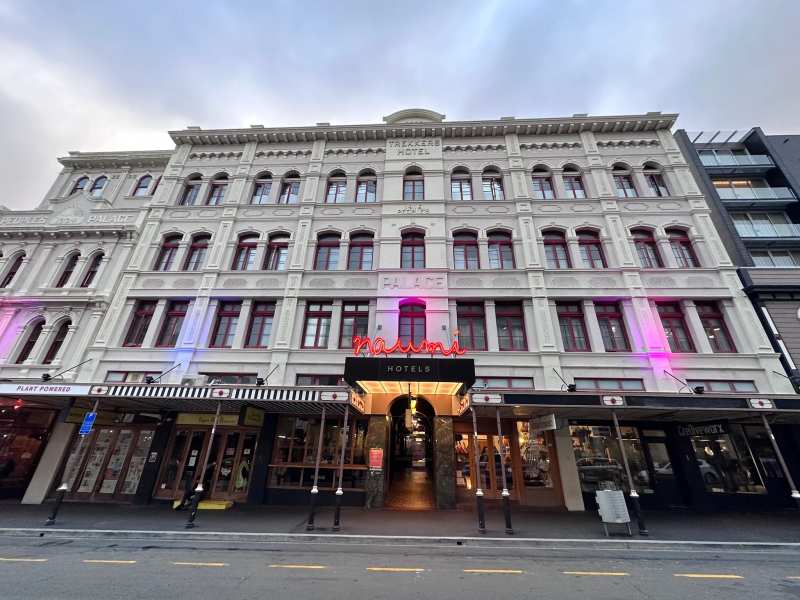
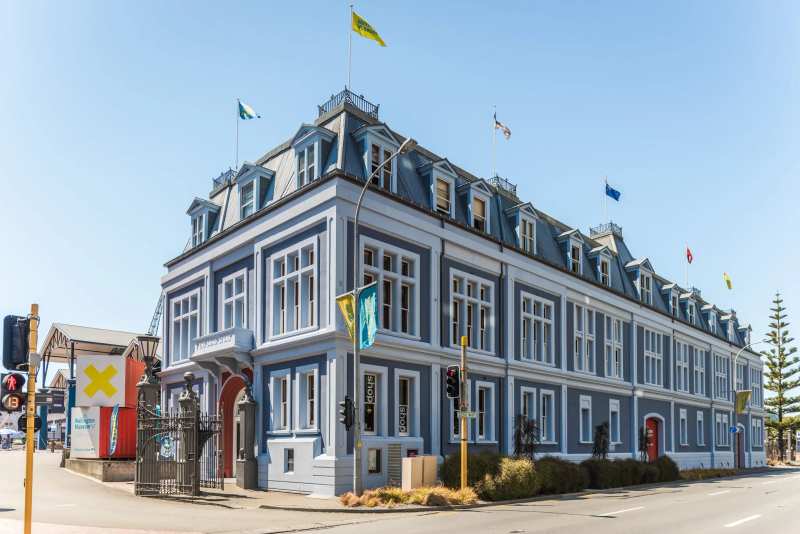
Hotel Waterloo and Backpackers on Bunny Street is directly beside Wellington Station, in an Art Deco building with hotel rooms and dorms, and it is the most convenient budget bed for either operator. The Novotel on The Terrace, the ibis on Featherston Street and Travelodge on Gilmer Terrace are all a short walk or taxi ride from the station.With a campervan, Evans Bay Marina has a car park for certified self-contained vehicles, on the harbour a short drive from the terminals.
For a wider choice, somewhere to sleep near the station is easy to find in Wellington Central and Thorndon.
Killing time before you sail
If you have a few hours before a sailing, or a delay, the central city is close by. Wellington Museum on Queens Wharf is about fifteen minutes' walk from the station, and its exhibition on the 1968 Wahine disaster, when an inter-island ferry sank at the harbour entrance in a storm, is sobering context for the crossing ahead. The harbour promenade starts right there and runs to Oriental Bay.
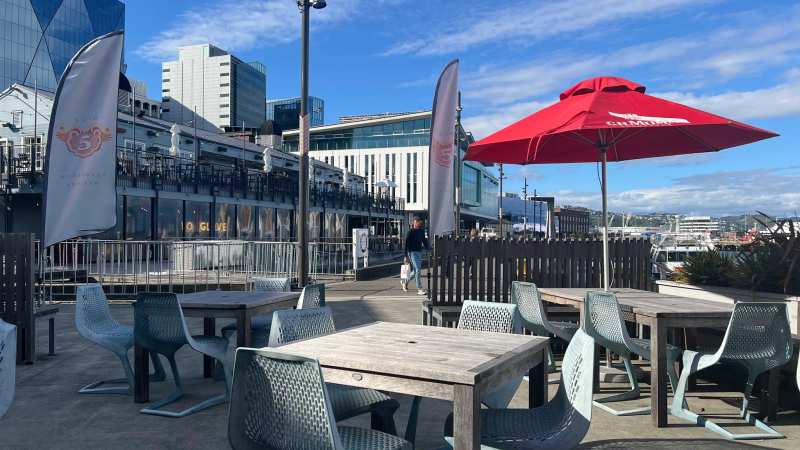
Close to the terminals on Waterloo Quay, the Duke of Wellington pub and Flamingo Joe's serve food and drink. For something more substantial, the restaurants of Queens Wharf are a short walk down the waterfront.
Arriving in Wellington another way
Not everyone crossing from the south stays on the ferry. Wellington Airport is on the Rongotai isthmus, a short drive from the city centre, with buses and taxis into town. The Northern Explorer train runs between Auckland and Wellington through the centre of the North Island, arriving at Wellington Station. Intercity buses connect Wellington with the rest of the North Island.
If you are arriving in Wellington from Picton, the same logic applies in reverse: Bluebridge passengers arrive across the road from the station, and Interislander foot passengers take the free shuttle into town, about five minutes to the station.
Taking a car, bike or pet
Vehicles need to be booked in advance, with the correct length and height, including anything on the roof or behind. Bikes can travel on both operators for a small fee. Rental car companies often do not allow their cars on the ferry, and instead have you drop the car in Wellington and pick up another in Picton, so check your rental agreement.
Both operators carry pets, with rules on how they travel. Check the current pet policy before booking.
Making the most of Wellington
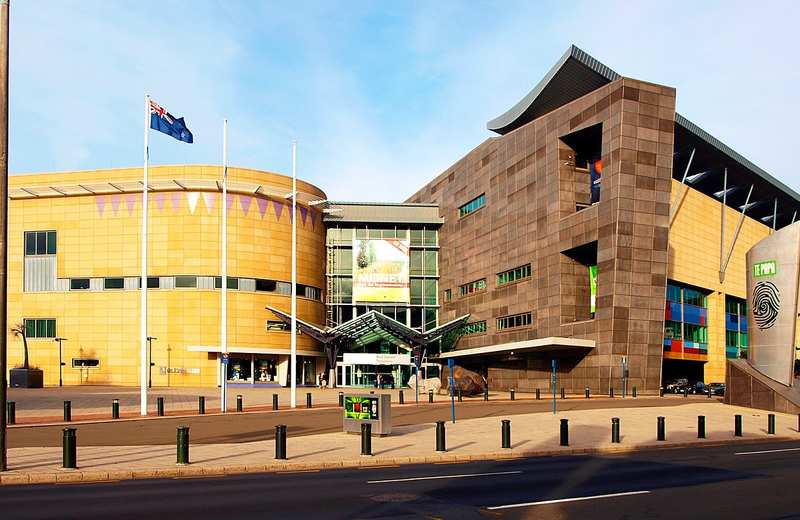
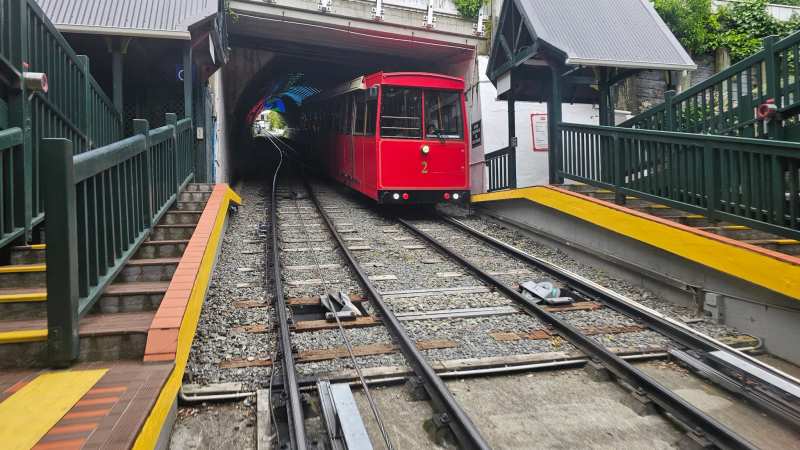
Many travellers treat Wellington as a place to pass through on the way to the ferry, and regret it. At least two nights gives you time for Te Papa, the cable car, the waterfront and a night out on Cuba Street. Two days in the capital is a good place to start, and day trips out of the city are worth a look if you have extra time on the North Island side.
Frequently asked questions
Published June 14, 2026