In the 1970s Martinborough was a farming town going nowhere. In 1978 locals and councillors met to talk about what could give it a future, and research by the soil scientist Derek Milne pointed to grapes: free-draining river gravel, the lowest rainfall in the North Island, and long, dry autumns. Almost fifty years on, the Martinborough vineyards are the reason most people come, and more than a dozen of their cellar doors sit within walking distance of the Square.
This is every cellar door open to visitors, sorted by where it is and how you get there: walking the Terrace, a short cycle out Puruatanga and Todds roads, or a drive to Te Muna Road and Dry River Road. With it, how tastings work, which ones feed you, and where to buy the wine to take home.
How many vineyards are in Martinborough?
Around twenty cellar doors open to visitors around Martinborough, most of them within two kilometres of the Square, and the wider wine district has more than thirty producers. The area makes only about one per cent of New Zealand's wine, most of it in small batches from family-owned vineyards.
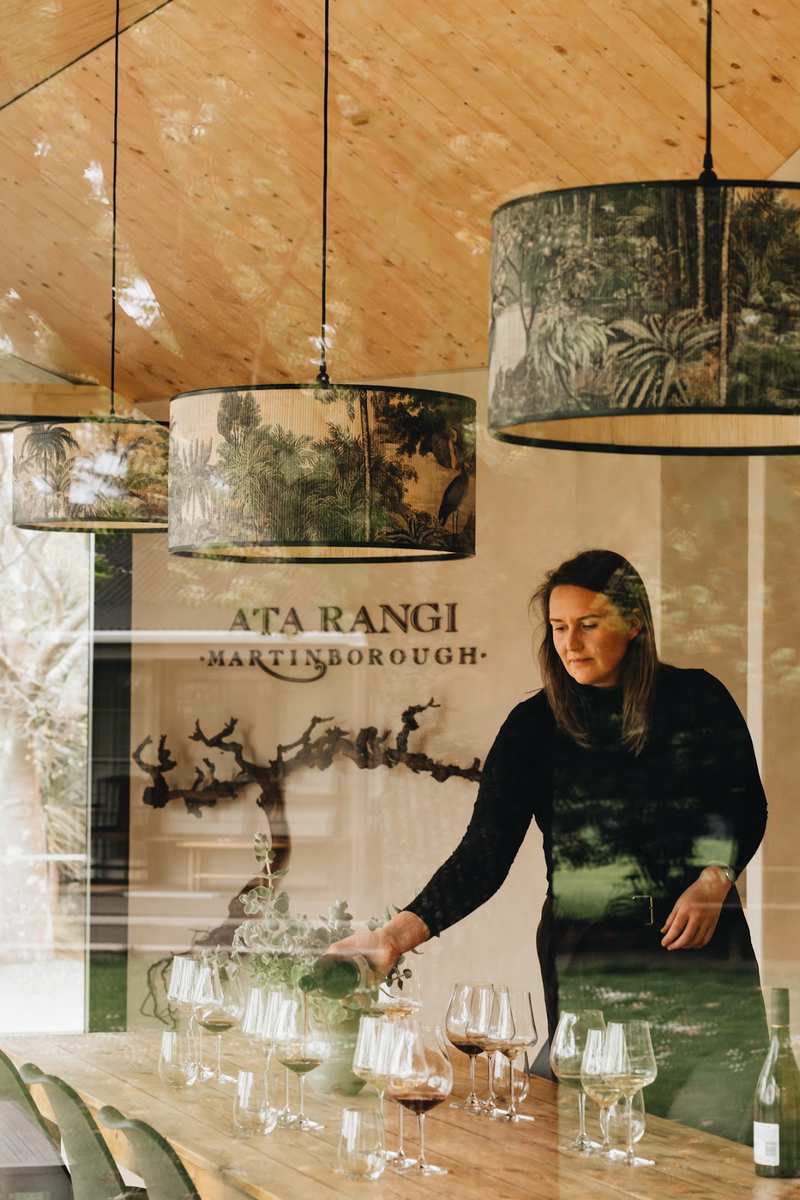
Martinborough wine starts with the Martinborough Terrace, the old river terrace the town sits on. The first vines went in around 1979 and 1980, and Dry River, Martinborough Vineyard and Ata Rangi were among the first. Martinborough Vineyard and Ata Rangi both pour for visitors, and both remain among the names people come for.
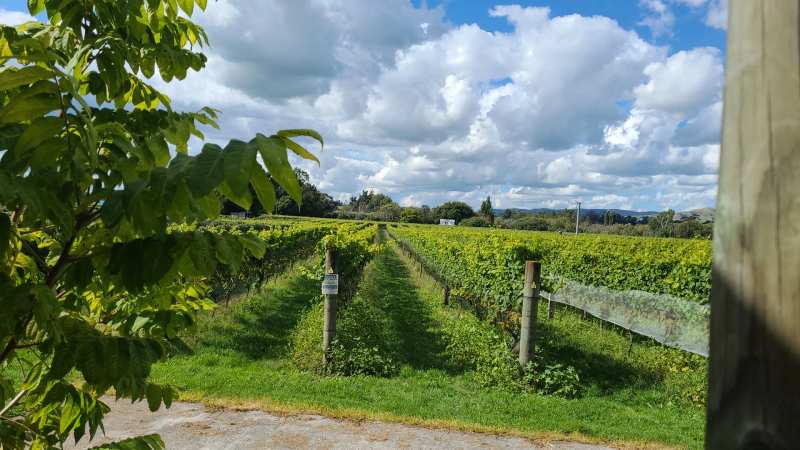
The reason is the climate. The Tararua and Remutaka ranges catch the rain from the west, which leaves Martinborough with about 760 millimetres a year and long, dry autumns for the grapes to ripen slowly. The dry climate is also why a March weekend here is so reliable.
How the wine district is laid out
Think of Martinborough's vineyards as three rings around the Square. The first ring is walkable, the second is a bike ride, and the third needs a car.
The inner ring is the Martinborough Terrace itself: The Good Way on Ohio Street, Cambridge Road, Grava and Tiwaiwaka on Kitchener Street, Palliser and Nga Waka a little further along, Ata Rangi on the town end of Puruatanga Road, and Martinborough Vineyard, Margrain and Schubert around Princess Street, Huangarua Road and Cambridge Road. Everything here is between 200 metres and about 1.1 kilometres from the Square in a straight line.
The middle ring runs east along Puruatanga Road, Omarere Road, Martins Road and Todds Road: Tirohana at 900 metres, Colombo at 1.3 kilometres, Poppies and Haythornthwaite at 1.4, Moy Hall at 1.8 and The Runholder at 2.7. These are flat roads between paddocks and vines.
The outer ring is Te Muna Road to the south-east, where Escarpment sits 4.8 kilometres out, and Dry River Road to the south, where Coney is 6.4 kilometres away. The printable map from Wairarapa Wine, the growers' association, shows every cellar door and is worth picking up before you set off.
How tastings work
A tasting at a Martinborough cellar door usually means four to six wines, poured and explained by someone who works in the vineyard or the winery, often the owner. Most charge a small fee and many waive it if you buy a bottle.
The thing that catches visitors out is the days. There is no single pattern. Some cellar doors open every day, some Wednesday to Sunday, some only on weekends, and some do most of their tastings by appointment. Hours change through the year and public holidays are unpredictable. The only safe rule is to check the day before, and to book anything described as a guided or seated tasting.
Every cellar door has a spittoon, and nobody minds if you use it. Three or four tastings in a day is plenty. Lunch in the middle helps.
On the Terrace: walk between them
The closest cellar doors are on or just off Kitchener Street, Ohio Street, Princess Street and Cambridge Road, between 200 metres and about a kilometre from the Square. You can walk between all of them in an afternoon.
Start in the village. The Good Way on Ohio Street, 200 metres from the Square, is the cellar door for the family's Arapai vineyard. They grow pinot noir and chardonnay, do all the vineyard work themselves, and make a sparkling rosé in cans. It opens from 3pm to 7pm on Friday, Saturday and Sunday, which makes it the natural first glass of a weekend.
Half a kilometre out on Cambridge Road, Cambridge Road is a small family estate farmed organically and biodynamically, and its wines lean natural and experimental. Tastings come with light food, from Friday to Sunday.
Along Kitchener Street, Grava and Tiwaiwaka sit next to each other about 800 metres from the Square.
Grava pours chilled reds and a barrel-aged sauvignon blanc with nibbles, makes wine in Spain as well, and opens Friday to Sunday. Tiwaiwaka is run by its owners, Morton and Elise Anderson, who do everything from grape to glass, and it opens Wednesday to Sunday.
Palliser Estate's cellar door and kitchen, a kilometre along Kitchener Street, is open every day from 11am to 4pm. Palliser has been making wine here for more than thirty years, known for pinot noir and chardonnay, both still and sparkling, and the kitchen serves seasonal plates. It is one of the easiest places in town for a tasting and a proper lunch in one stop.
Ata Rangi on Puruatanga Road, 800 metres from the Square, is one of the three founding vineyards and is open every day from 10am to 4pm. You can drop in to the cellar door or book a guided tasting in the Wine Room, and the booked tasting is worth the planning if you care about pinot noir.
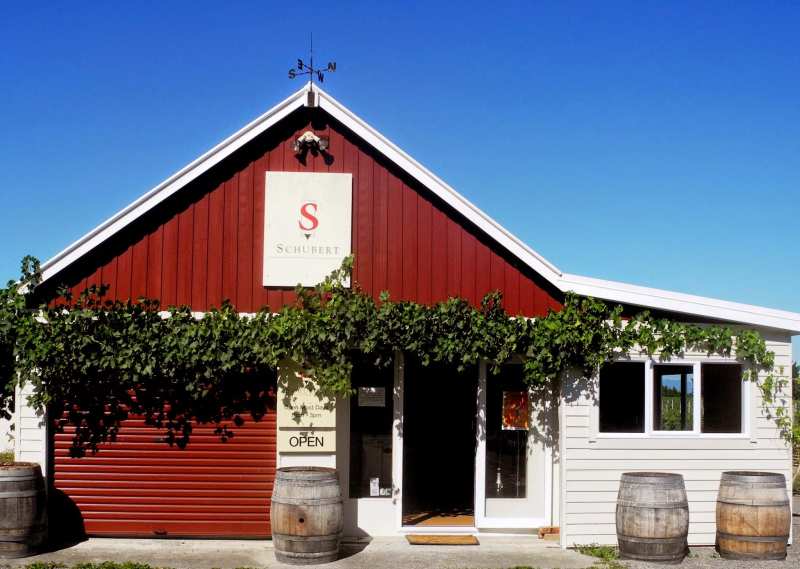
Schubert on Cambridge Road, open every day from 11am to 3pm, makes intense, structured pinot noir from single blocks, with a newer chardonnay and rosé. Margrain on the corner of Princess Street and Huangarua Road is a second-generation family vineyard, established in 1992, with its cellar door open seven days and villas to stay in beside the vines.
Nga Waka, a little further along Kitchener Street, has been making pinot noir and chardonnay around the village for more than three decades. It opens from Wednesday, and its weekend hours vary through the year, so check before a Sunday visit.
Martinborough Vineyard on Princess Street is the other founding name, farming some of the oldest pinot noir vines in New Zealand for its Home Block and Te Tera wines. Its wines are also poured at The Runholder on Martins Road, which is the easier place to taste them.
Puruatanga Road and Todds Road: a short cycle
A second group of cellar doors sits one to two kilometres east of town along Puruatanga Road, Omarere Road and Todds Road. It is a flat, easy ride, and most of these vineyards serve food.
Tirohana Estate, closer in on Puruatanga Road at 900 metres from the Square, is a restaurant, cellar door and small winery in one, open seven days for lunch and dinner. In winter the fire is lit.
Haythornthwaite on Omarere Road is a small family vineyard whose wines are all vegan, made without animal-based fining. It opens on Saturday and Sunday only.
Out on Todds Road, 1.3 kilometres from the Square, Colombo pours wine flights with pizza, croquettes and platters at tables overlooking the rows. It opens Friday to Sunday and welcomes groups.
Moy Hall on Martins Road, 1.8 kilometres out, pairs its single-vineyard wines with a seasonal lunch menu. It is closed on Wednesday and Thursday.
Te Muna Road and Dry River Road: take the car
The outlying cellar doors are three to seven kilometres from town on narrow country roads. Most visitors drive, with a designated driver, or book a guided tour.
Escarpment sits on a long, steep slope out on Te Muna Road, 4.8 kilometres from the Square. It makes layered pinot noir, chardonnay and sauvignon blanc, and its hours are the ones people get wrong: 11am to noon from Monday to Thursday, 10am to 4pm on Friday, 10am to 3pm on Saturday, and closed on Sunday.
Coney, 6.4 kilometres out on Dry River Road, makes its wine with minimal intervention and runs a sit-down restaurant at the vineyard, which makes it a good long-lunch stop if you have a driver.
Which cellar doors are open which day?
Come on a Friday, Saturday or Sunday and almost every cellar door is open. Come on a Monday to Thursday and you have seven reliable choices, plus a few that open midweek.
Open every day: Ata Rangi (10am to 4pm), Palliser (11am to 4pm), Schubert (11am to 3pm), Margrain (11am to 3pm, 4pm at weekends), Poppies (11am to 4pm), Tirohana (lunch and dinner) and The Runholder (lunch daily, dinner Friday and Saturday). A midweek visit can be built entirely around these.
Open from Wednesday: Tiwaiwaka (Wednesday to Sunday) and Nga Waka (from Wednesday, weekend hours vary).
Friday to Sunday only: The Good Way (3pm to 7pm), Cambridge Road, Grava and Colombo. Moy Hall opens Friday to Tuesday and closes on Wednesday and Thursday.
Weekends only: Haythornthwaite opens Saturday and Sunday. Dr Beak's gin tasting room opens on Saturday only.
The odd one out is Escarpment, open for an hour each weekday morning, for longer on Friday and Saturday, and closed on Sunday. These hours are the ones each vineyard publishes on its Google listing in September 2026, and they change with the seasons, so treat them as a starting point and confirm the day before.
An afternoon on foot
If you have one afternoon and no car, the Terrace is all you need. This loop covers five cellar doors and about four kilometres of walking on flat streets.
Start at The Good Way on Ohio Street if it is a Friday to Sunday afternoon, or go straight up Kitchener Street to Grava and Tiwaiwaka, 800 metres from the Square. Walk on to Palliser for lunch and a tasting, then take New York Street and Princess Street across to Huangarua Road for Margrain and Schubert, which sit close together. If you have booked a guided tasting at Ata Rangi, it is a short walk from there along Puruatanga Road. Walk back into the village along Cambridge Road, past Cambridge Road's cellar door if it is open, and you are back at the Square in time for a drink before dinner.
Wear shoes you can walk in, take water in summer, and pace the tastings. Five pours at five cellar doors adds up.
The year in the vineyards
The vines change the look of the town through the year, and the season decides what you will see from the cellar door window.
Winter, from June to August, is pruning season: bare vines, frosty mornings and quiet cellar doors. Budburst comes in September and October, when new shoots appear and a late frost is the growers' biggest worry. By November the canopy is full and green, which is when Toast Martinborough is held. The grapes change colour through summer, and harvest runs through March and April and the town fills with pickers. Autumn turns the vine leaves yellow and red through April and May, and it is one of the best-looking times to be here.
Pinot noir, and what else they make
Pinot noir is the grape Martinborough is known for, and it is what most cellar doors lead with. Chardonnay is the other serious wine, and wine critics have praised several Martinborough chardonnays in recent vintages.
Beyond those two you will find sauvignon blanc (often in a fuller, barrel-aged style), syrah, rosé, riesling, pinot gris and aromatic whites. Several producers make organic or biodynamic wines, one makes everything vegan, and there is a small but growing group making lower-intervention and natural wines. If you only have time for one flight, ask for the pinot noir. If you have time for two, ask what they are most proud of that is not pinot.
Where to eat among the vines
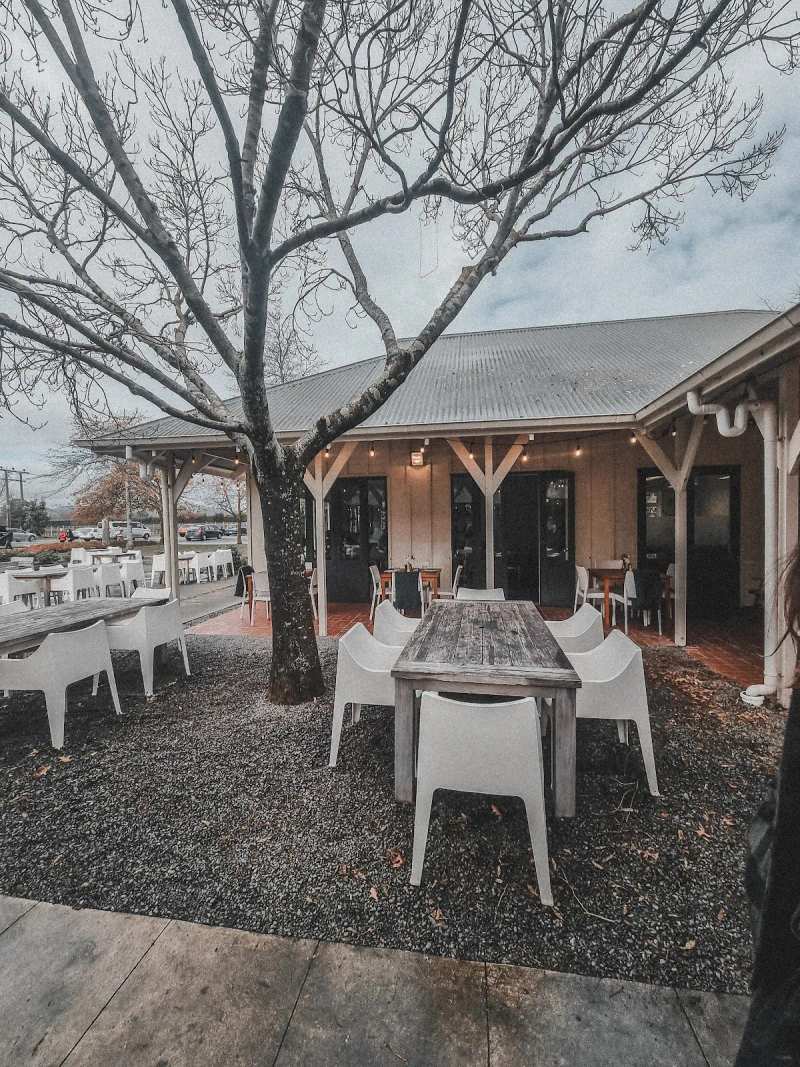
Palliser, Poppies, Tirohana, Moy Hall, Colombo, Coney and The Runholder all serve food at the vineyard, from platters to full lunches. On a fine weekend, book.
The rule of thumb: platters and small plates at Poppies and Colombo, a full kitchen at Palliser, Tirohana, Moy Hall, Coney and The Runholder, and dinner at Tirohana and The Runholder. For dinner back in the village, Martinborough's restaurants are grouped around the Square and a short walk from most places to stay.
Beyond wine: gin and beer
Martinborough also makes gin and beer. Two gin tasting rooms and a craft brewery are within a short walk of the Square.
Tōhi on Cambridge Road pours more than 30 New Zealand gins as tasting flights and cooks Thai food alongside. It opens from 4pm Monday to Wednesday and from 1pm Thursday to Sunday.
Lighthouse Gin is distilled at The Runholder, and the olive groves are the district's other harvest: among the growers is Juno Olives, 13.5 kilometres north in Greytown.
Toast Martinborough
Toast Martinborough is the district's big wine day. In 2026 it is on Saturday 14 November, from noon to 6pm, and for the first time it is held in one place, at The Runholder, rather than across the cellar doors.
The festival began in 1992 as a day when ticket-holders moved between the vineyards on shuttle buses. After the January 2025 festival the organisers skipped 2025 to rethink it. The new version brings eight neighbouring vineyards together at a single venue with local gin, beer, food and live music, and moves the day from Sunday to Saturday. It is for over-18s only, general tickets were $123 and VIP $549 plus fees, and the 2026 festival has sold out. If you want to go in a future year, sign up for the ticket release: the pre-sale for 2026 sold out within a day.
Toast weekend is also the one weekend when nearly every bed in and around town is taken, so book accommodation as soon as you have a ticket.
Buying wine to take home
Most cellar doors sell by the bottle and many sell wine you cannot buy anywhere else, so buy what you like where you taste it. For everything in one place, go to the Square.
Martinborough Wine Merchants on Kitchener Street, just off the Square, stocks pinot noir, sauvignon blanc and rosé from across the district, alongside gin and local produce, and runs barrel-top specials. It is open from 9.30am to 6pm every day, and it also runs a guided walking wine tour of the Terrace. If you are cycling, Green Jersey will collect the bottles you buy at the cellar doors so you are not carrying glass on the bike.
Getting between them
Walk the Terrace, hire a bike for Puruatanga and Todds roads, and take a car with a designated driver or a guided tour for Te Muna Road and Dry River Road.
Bikes, e-bikes and multi-seat pedal carts are hired in the village, and guided half-day and full-day tours run from the village, some with pick-up from your accommodation or from the train station at Featherston. Wine tours and bike hire are compared side by side, with prices.
If you want to stay among the rows, several of the vineyard cottages and villas are a short walk from a cellar door.
New Zealand's drink-driving limits are strict and enforced on these roads. Spit, share a driver, or stay the night.
The vineyards are the heart of a weekend in Martinborough, but the village around them is worth an afternoon too. The biggest wine day of the year is Toast Martinborough in November, and Toast and the harvest events are when the cellar doors are busiest.
Frequently asked questions
Published September 6, 2026