Most towns keep their history in a museum. Katikati painted its history on the outside of its buildings, where you cannot miss it from a car doing 50 km/h. Bullock teams, a pioneer kitchen, a ship full of settlers, an All Black captain's family, the town's famous doctor and a Reverend's ostriches all look down on Main Road. The Katikati murals started as a rescue plan for a struggling town in 1990 and turned it into New Zealand's Mural Town.
Here is why the walls are painted, how to get the map, a route that covers most of them in about an hour, and which ones to stop for.
Why Katikati is Mural Town
Katikati started painting murals in 1990, when the town's future looked uncertain and volunteers wanted to give passing traffic a reason to stop.
Two things worried the town at the time. A bypass had been proposed that would take State Highway 2 traffic away from Main Road, and the kiwifruit industry was struggling after the stock market crash. A group of locals looked at Chemainus, a small town in British Columbia that had used murals to bring visitors back, and decided to try the same thing with Katikati's own story.
They formed Katikati Open Air Art, and its first mural, of the old Waitekohe School, went up that year. By 1996 there were 24 murals around town, and Katikati held its first Mural Town Magic festival to mark five years of projects. In 2005 the town won New Zealand's Most Beautiful Small Town award for towns under 8,000 people.
The bypass that started it all never came. Waka Kotahi said in 2022 that there would be no bypass for Katikati, so Main Road still carries the highway past the paintings, which was the point all along.
It still works on visitors. The murals rank first of 16 things to do in Katikati on TripAdvisor, rated 4.4 from more than 70 reviews. One reviewer wrote that their great-great-grandparents emigrated from Omagh in Northern Ireland with the 1875 settlers; another wrote that a Waikato school brought a whole class to learn local history from them.
How many murals are there in Katikati?
There is no single fixed number, because murals are added after every contest and older ones are sometimes painted over or lost when buildings change.
Katikati Open Air Art currently describes more than 60 outdoor murals and artworks. The town's promotions agency, Katch Katikati, puts the figure at over 80 murals and sculptures around the township, and a detailed walk-through in 2019 counted about 70, including sculptures. Treat the mural map as the authority: it is updated as the collection changes.
The collection is not only paint on walls. It includes sculptures, carvings, mosaics, tile work and weaving, and several pieces are Māori works that tell the story of the district before 1875.
Get the mural map at The Arts Junction
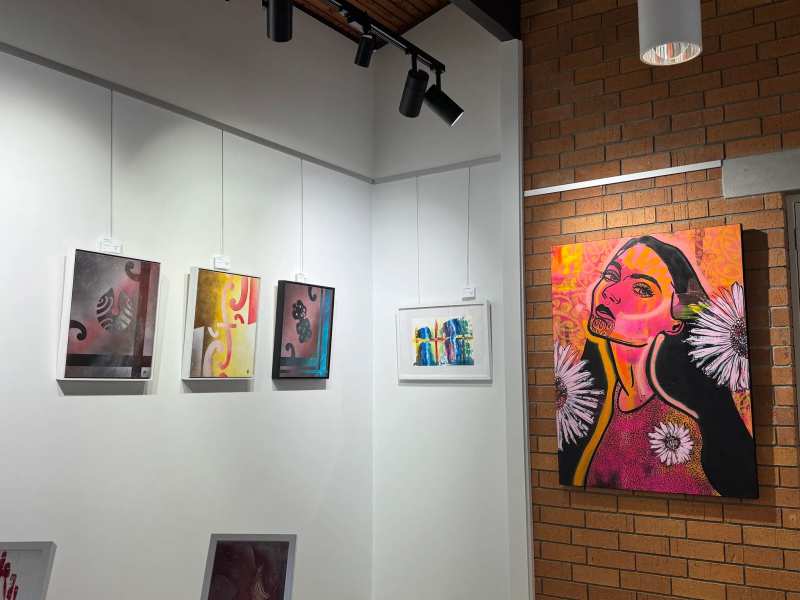
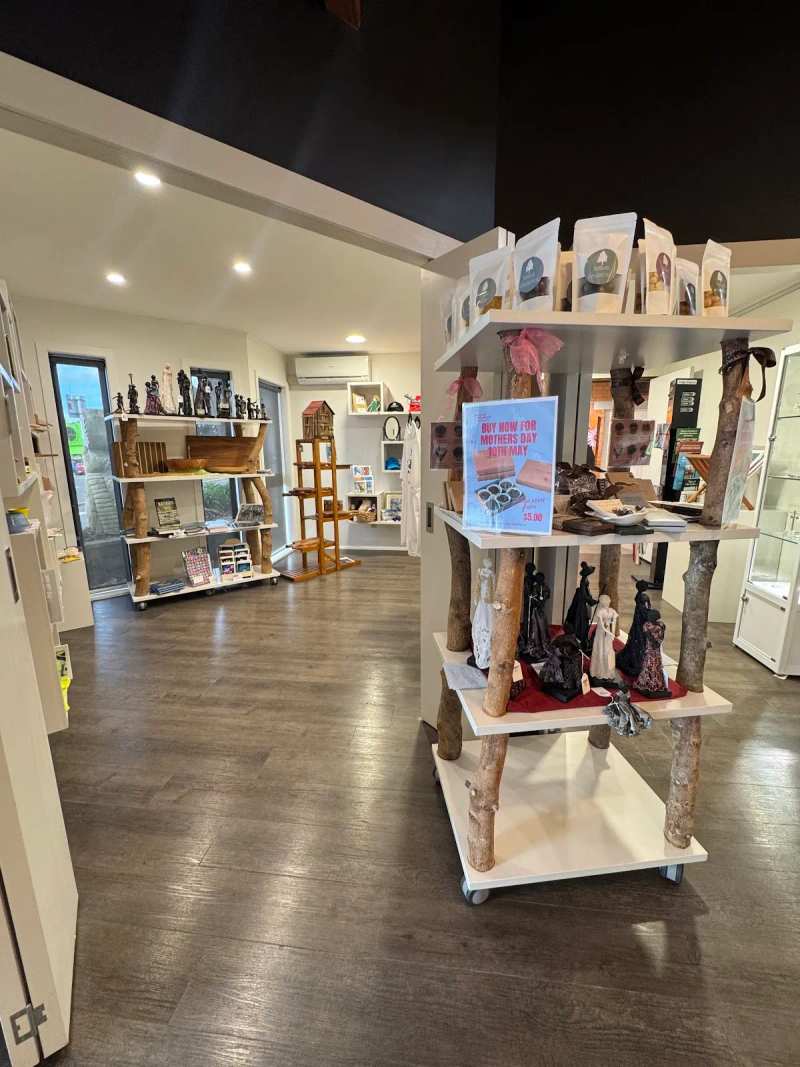
Start at The Arts Junction, 36 Main Road, where you can pick up the mural map, see replicas of murals that no longer survive and browse the Carlton Gallery.
Most murals carry a QR code. Scan it on your phone and you get the story behind the scene, the artist and the year, so you can read the town as you walk rather than guessing at who the people in the paintings were.
If you would rather have someone explain them, guided mural tours have been offered in summer. Ask at The Arts Junction whether one is running during your visit.
A walking route along Main Road
Walk Main Road from The Arts Junction to the southern shops and back on the other side, and you will pass most of the murals in about an hour without needing a car.
Start at The Arts Junction at 36 Main Road and head south on the same side. The murals are spread along the building walls, down side lanes and around the car parks, so look up and into the side lanes too. You will find most of them just by walking the main street, so the map helps but is optional.
At Diggelmann Park, at 79 Main Road across the highway, there are public toilets and a place to sit. Cross back when you reach the southern end of the shops and walk north on the other side, past the Katikati War Memorial Hall, where the Sunday farmers market sets up.
Main Road is State Highway 2, and trucks use it all day. Cross with care, and resist stepping out between parked cars for a better angle on a mural.
For a coffee stop halfway, a flat white on Main Road is never more than a few doors away.
Katikati murals worth stopping for
A handful of murals carry the town's biggest stories: the settlers' ships, the Māori history of the district, the people who built the town and the families it produced.
Journeys and the Lady Jocelyn
Two murals deal with the voyages that brought the Ulster settlers here. Journeys shows a ship at sea, and another is dedicated to the Lady Jocelyn, one of the two ships George Vesey Stewart used to bring settlers to Katikati in 1875 and 1878. The Carisbrook Castle was the other, and both names survive in the town's street names.
The Māori works
Several works tell the history that came before the settlers. Ngā Kurī a Whārei ki Tikirau is a Māori artwork whose name echoes the meeting house at Tuapiro Marae, Te Whakapapa is a woven piece, and The Face of Culture and Cultural Encounters are among the works on culture and identity. A work named Tamawhariua, the name of the meeting house at Te Rere a Tukahia Marae, stands by the museum.
Dr Joe, Jimmy Culpan and the MacMillans
Some of the most personal murals are portraits of the people the town remembers. Dr Joe is a portrait of Katikati's best-known doctor. Jimmy Culpan appears with two horses, and The MacMillan Story, in two parts, tells the history of one of the district's families.
The Gallaher Family
The Gallaher family mural remembers the family of Dave Gallaher, who grew up in Katikati and went on to captain the 1905 All Blacks, the team known as the Originals.
Rev. Kattern's Ostriches
Few visitors expect a mural about ostriches in a Bay of Plenty farming town, and Rev. Kattern's Ostriches is the title that surprises most people. Scan its QR code for the story rather than guessing at it.
Those Who Served and Spirit of Anzac
Those Who Served and Spirit of Anzac pay tribute to the men and women from the district who left to fight in overseas wars.
Harvest, kiwifruit and bullock teams
The working history of the district runs through It's Harvest Time, The History of Kiwifruit, Haymaking, A Pioneer Kitchen, Sunday in a Bush Camp and the Bullock Team, which together cover timber milling, farming and the orchards that replaced them.
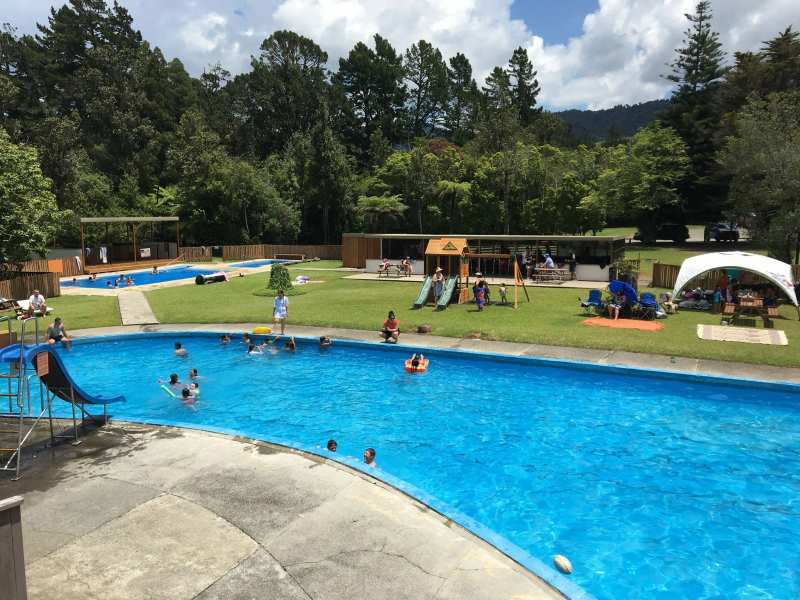
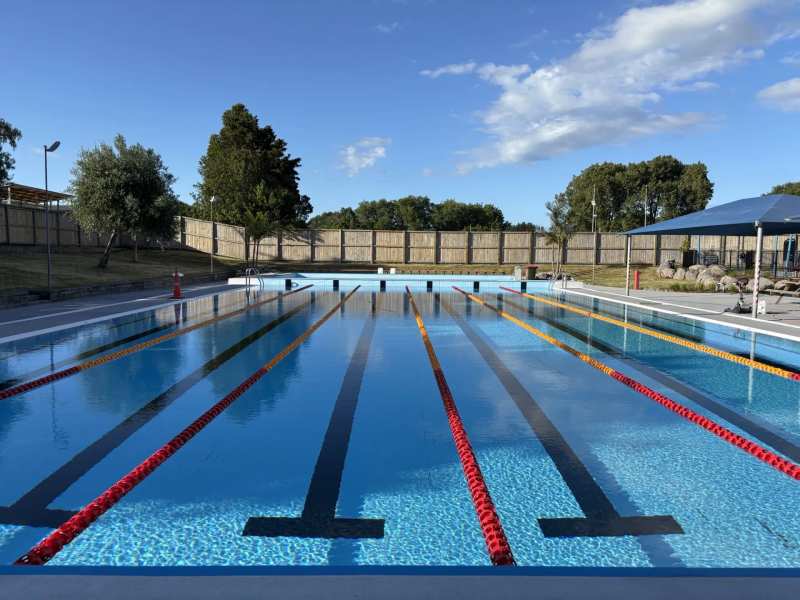
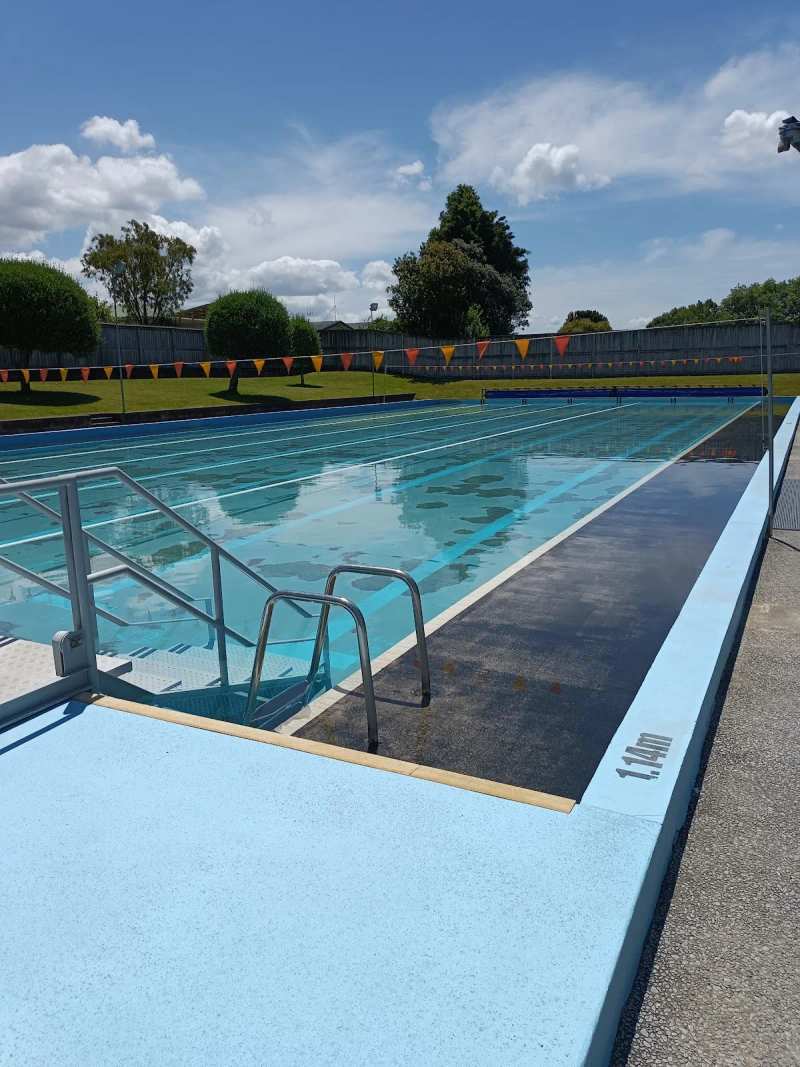
Some murals are away from Main Road. One is at Dave Hume Pools on Carisbrooke Street, the town's heated public pool, and others appear at the kindergarten and the Anglican church.
A note on currency: murals do change. Several works counted in 2019 had already been lost, including an early George Vesey Stewart mural and one called Primal Aotearoa, so check the current map before hunting for a particular piece.
The Haiku Pathway
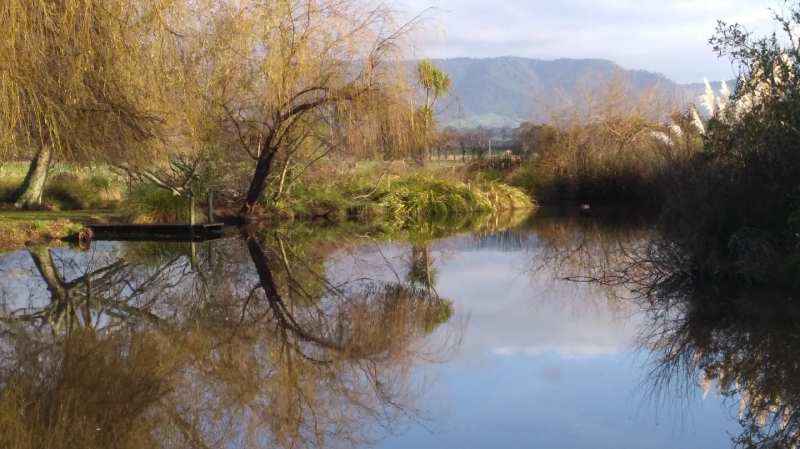
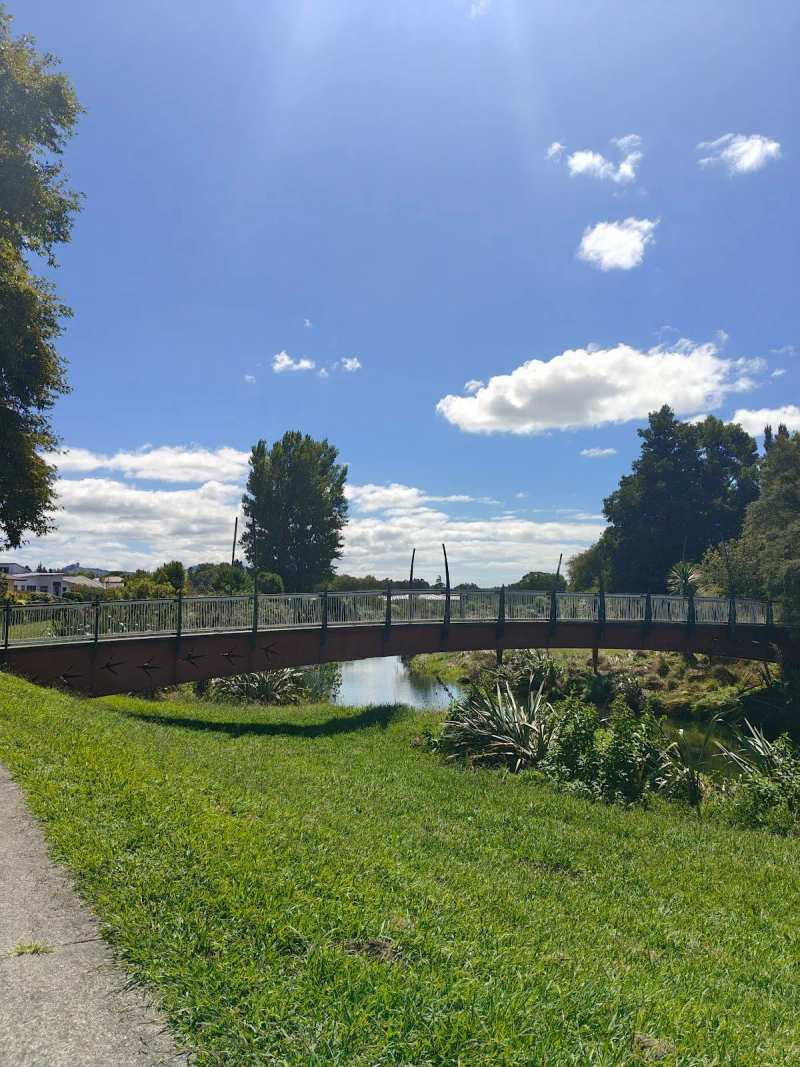
Behind the Main Road shops, the Haiku Pathway follows the Uretara Stream with more than 40 haiku carved into river boulders, described as the only haiku walk of its kind outside Japan.
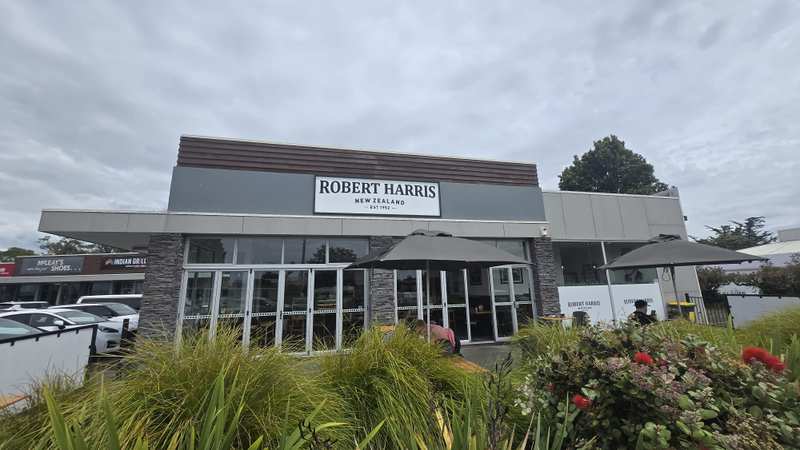
To get there, take the lane between Robert Harris café and Hammer Hardware on Main Road, which leads down to the Haiku Park car park. The path from Main Road to the car park is steep, so drive in if you have a pushchair or anyone unsteady on their feet.
The nearest public toilets are across Main Road at Diggelmann Park.
Humphrey and the Landing
Across Main Road from Haiku Park, Uretara Landing Reserve holds Humphrey the sea lion sculpture and marks where early settlers came ashore by river.
The Haiku Pathway, the Landing and Main Road form one easy loop, so you can finish where you started without doubling back.
Bird sculptures on the Bird Walk
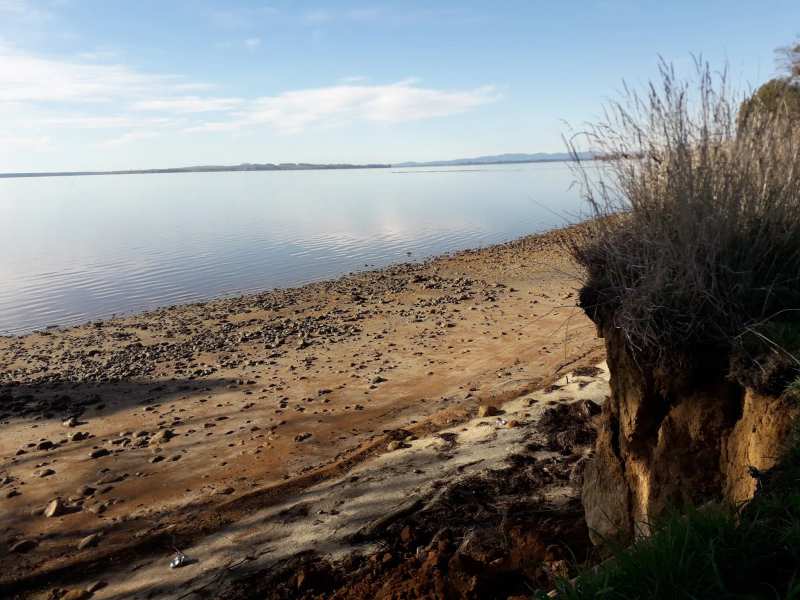
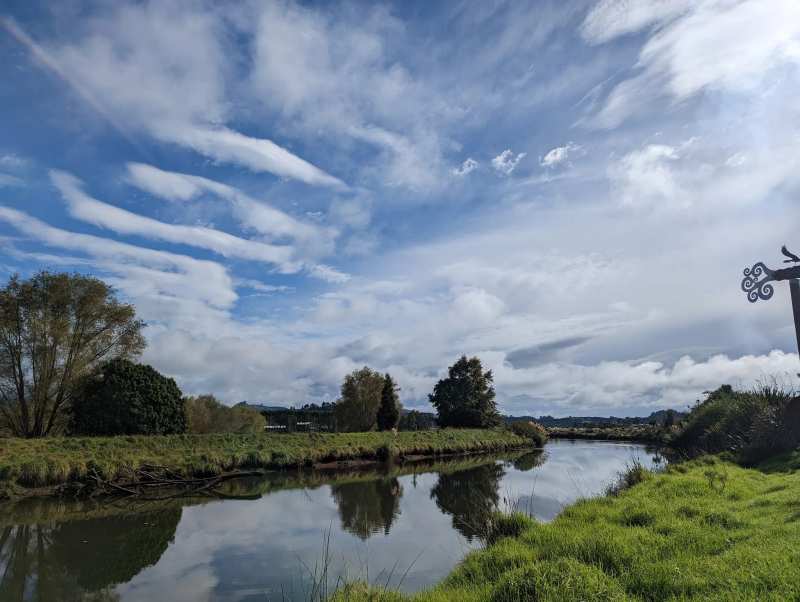
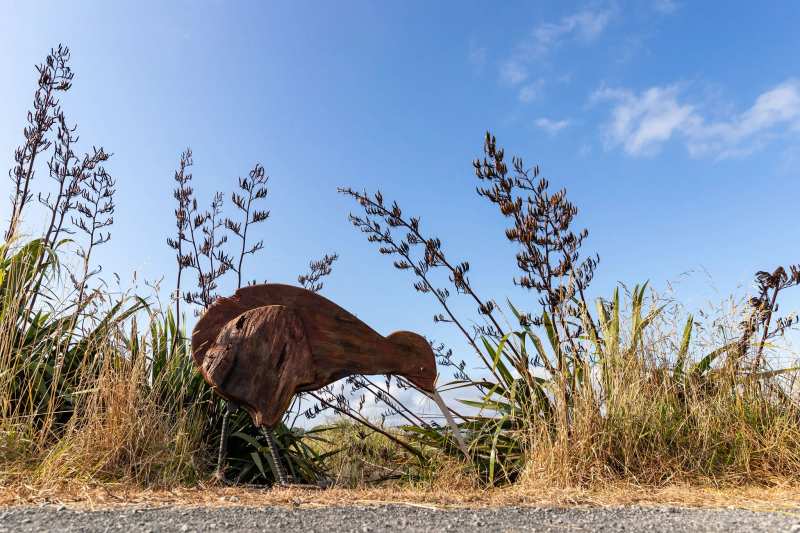
Katikati Open Air Art's sculpture trail continues outside the town centre along the estuary. The Bird Walk and the estuary paths carry sculptures of the native birds that live in the river, saltmarsh and estuary, starting at the bottom of the township on Noble Johnstone Drive.
The walk is flat and good for all ages, with plenty of real birdlife on the wetlands across the stream. Park at the Bird Walk car park on Noble Johnstone Drive, and note there are no public toilets along the way.
The NZ Mural Contest and arts festival
Katikati holds a biennial NZ Mural Contest and arts festival, running for a week or a month and bringing artists from around New Zealand and overseas.
Winning murals join the town's walls. In 2013 Auckland artist Renee Te Pairi won the contest and also took the People's Choice and Spirit of Katikati awards. In 2015 Shane Walker from Waihi Beach won the June Carlton Memorial trophy, with J Muzacz, an artist from Texas then living in Nelson, second.
The deeper history the murals draw on is told inside the red Old Fire Station at 32 Main Road, home of the Western Bay Museum, which is closed for a $1 million renovation until March 2027.
When you have seen the murals, the Bird Gardens, an orchard tour and the hot pools are all within 15 minutes of Main Road.
For the longer story the paintings come from, the history of the town, from Tamatekapua to the kiwifruit boom fills in what the walls leave out.
Frequently asked questions
Published August 9, 2026