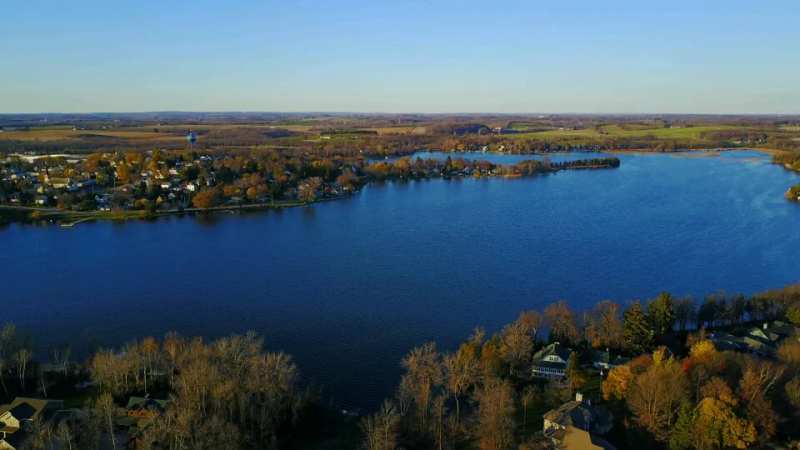
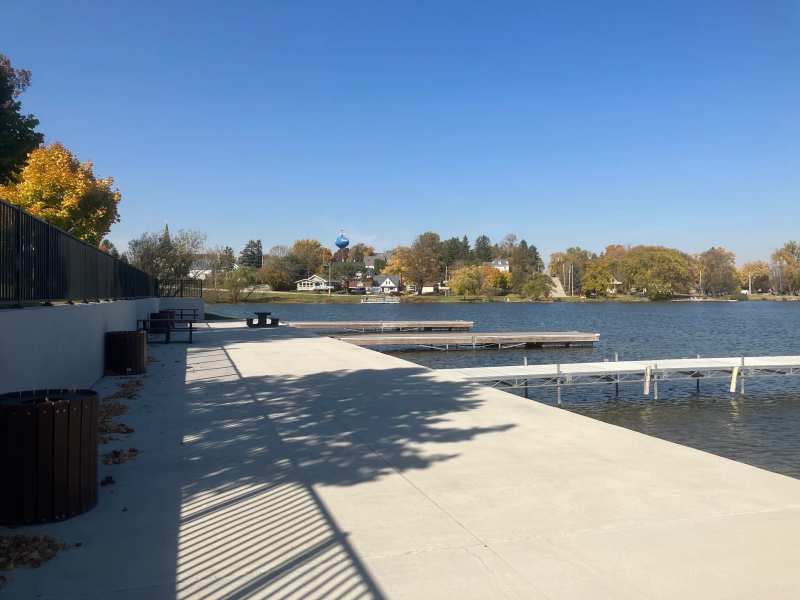
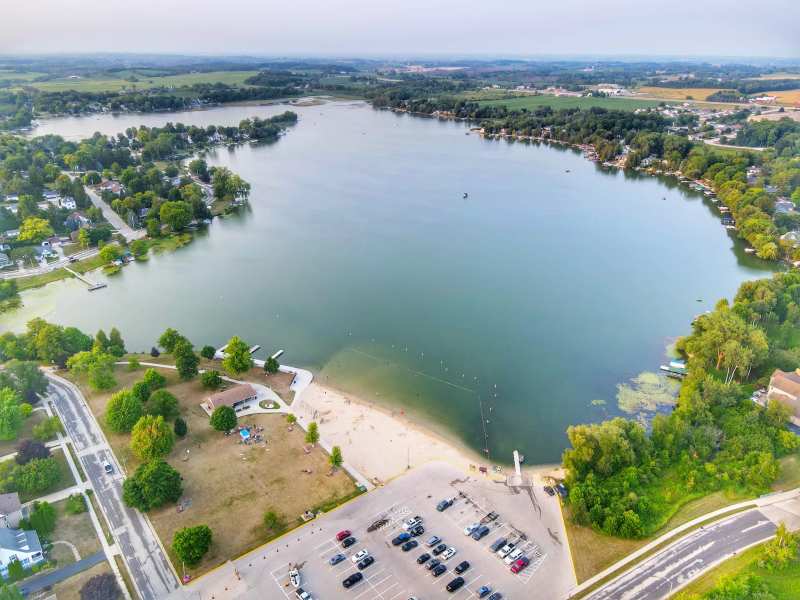
The water is green, the bottom is weedy and the average depth is about six feet. If that sounds like a reason to go somewhere else, the anglers who fish it every week would disagree with you, loudly. Random Lake fishing is not a trophy proposition and nobody here pretends otherwise. What it is instead is a small, shallow, unusually productive lake where you can be on the water twenty minutes after you decide to be.
The numbers, plainly
Those are the questions people actually type, so here they are without the padding. How big is Random Lake: 212 acres. How deep: twenty-two feet at the single deepest point, and about six on average, which is the figure that matters for how it behaves. What is in it: musky, walleye, largemouth bass, northern pike and panfish.
Shallow water is the whole explanation for the lake's character. It warms early, weeds up thick by midsummer, grows a lot of food and holds a lot of fish. It also means low clarity, so if you are picturing something you can see the bottom of, adjust now rather than on arrival.
The Wisconsin DNR keeps the official record for the lake, including a contour map if you want to see where that twenty-two feet actually sits before you go looking for it. It is worth a glance, because on a lake this uniformly shallow the few deeper pockets are where the fish go when the surface heats up in August.
What the fishing is actually like
The consensus among people who fish it regularly is consistent enough to repeat. Musky are the draw, and they come in numbers rather than sizes. One regular describes it as a favourite musky lake for the area, with a lot of fish per acre that are not always the biggest, which is about as honest a summary as you will find.
Largemouth bass come readily in the morning and are the reliable answer if the musky are not playing. Bass to six pounds have been taken here on musky baits, which tells you how densely stocked the water is. Walleye are plentiful and difficult in equal measure, and more than one angler has used the word finicky. The advice that comes up every time is to work the weed lines, and there is potential in this lake for musky past forty-five inches and walleye past thirty.
Panfish are the family answer, and the most reliable catch on the lake is bluegill taken by children straight off the docks at the beach.
Season matters more on shallow water than on deep. The lake warms and greens early, so spring fishing arrives sooner here than on bigger water nearby, and the weed beds that hold everything are established by midsummer. That thick cover is why the weed-line advice comes up so consistently: by July there is very little structure in this lake that is not weed.
Autumn is when the musky fishing gets serious, as the water cools and the fish feed harder. Late September into November is the window most regulars point at, and it coincides with the quietest weeks on the lake. If you want the water largely to yourself with the better odds of a fish worth photographing, that is when to come.
Getting on the water
Those hours catch people out and they are worth planning around rather than through. A dawn run at speed is not available here. What is available is flat, empty morning water with nothing else moving on it, which on a lake of 212 acres is arguably the better version of the same morning. After ten the lake opens up.
There is a second launch at the lakefront park, so you have a choice of where to put in depending on which end you want to fish. Neither is a marina. These are village ramps with a shelter and a toilet block, and on a summer Saturday morning the parking is the constraint rather than the ramp.
Regulations are the Wisconsin DNR's rather than the village's, and they change, so check the current rules for the water body before you fish it rather than relying on anything written here.
Swimming and the beach
Shallow water warms fast, which is the swimmer's dividend for the low clarity. The lake is comfortable earlier in the season than deeper water nearby, and it stays that way later into September.
Paddling
The lake suits a kayak or a paddleboard better than it suits a fast boat, particularly inside the slow-no-wake hours. Two honest limitations: there is no rental operation in the village, so you need to bring your own, and the lake is small enough that a strong paddler will cover it in a morning.
If you want instruction rather than just access, certified adaptive kayak instruction runs out of Fredonia, about six miles south. They work with disabled and able-bodied paddlers both, and there is nothing comparable closer.
Around the shore
There is more water nearby than the lake alone. A scattered block of public land covering twenty-five square miles takes in nine miles of the North Branch of the Milwaukee River and three more small lakes, managed for wildlife and low-impact recreation. It is parcels rather than a park, with no waymarking and nowhere obvious to leave a car, so go for the birds and the quiet and take a map.
Winter
A lake that averages six feet deep freezes readily, which makes ice fishing a real use here rather than a novelty. Across Wisconsin the dependable window is January into February, when ice is generally widespread and stable, and late February can go off quickly in a warm spell.
Conditions on this lake vary every year and nobody publishes a thickness you can rely on. That judgement is yours to make, locally and on the day.
One thing this lake will never give you is trout. It is shallow, warm and weedy, and that is the opposite of what trout need. For cold moving water the nearest answer is Nichols Creek, eight miles north-west, where 612 acres of coldwater seeps hold brook trout that reproduce without being stocked. It sits among the other things worth doing in Cascade.
Off the water, the village runs to five parks, two museums and a working forge out at Silver Creek.
And if you have been out since ten in the morning, two separate Friday fish fries are waiting, both of them good.
Published August 17, 2026