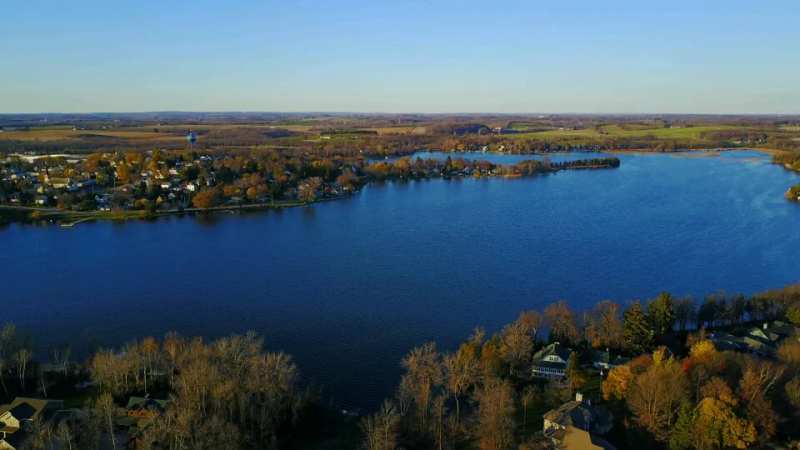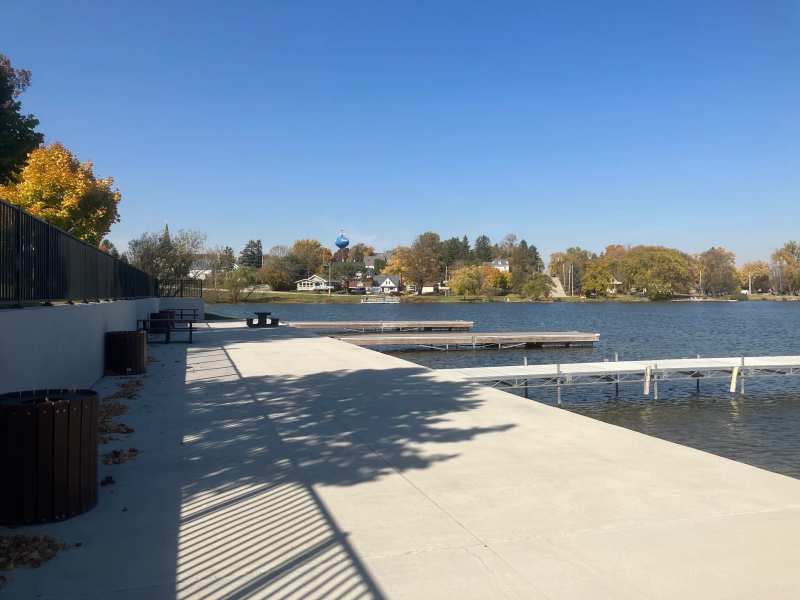
Search for how Random Lake got its name and you will be told, on more than one page, that a surveyor could not think of what to call it and gave up. It is a tidy story. It is also almost certainly wrong, and the real explanation is better.
Running a random line is a surveying term. It describes a trial line run through unmapped ground when you do not yet know where the true line lies. In 1835, government surveyors carrying out the original survey of this section of the county were doing exactly that, through thick woods, and they came upon a lake. They named it for the circumstance rather than for the indecision.
So the name is not arbitrary at all. It is a technical term, recorded by people doing a job, and it has outlasted both the survey and the profession's use of the phrase.
The village was called something else first
There was no settlement here for a long time after the lake was named. The county history notes the oddity directly: the spot was a natural site for a village, and yet nothing grew until the railroad arrived in the early 1870s and forced one into being.
When the line came through, the railway company named the stop Greenleaf, after E. D. Greenleaf, its financial agent. That name did not last. It was changed to match the lake the settlement had been laid out beside, and Random Lake has been Random Lake ever since.
The first settler in the vicinity arrived well before any of that. John P. Carroll came in 1848 and later ran a lumber yard and the American House. Carroll Street, which is still the village's main run of shops and where two of the places below sit, carries his name. The village was incorporated on 3 September 1907.
The township around it changed names almost as often as the village did. It began as part of the Town of Scott, was organised separately as Abbott in 1850, and was renamed Sherman by an act of the state legislature in 1865. Random Lake, Adell and Silver Creek were its three villages, which is why Silver Creek still turns up on addresses four miles west despite barely existing as a place any more.
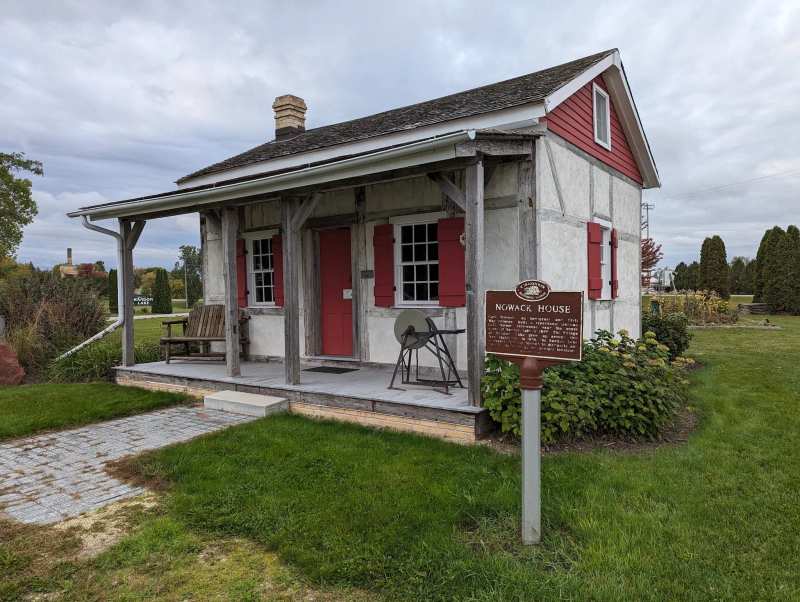
The house the village took apart to save
The part worth sitting with is how it got to Short Street. In 1998 residents formed the Random Lake Area Historical Society for the express purpose of dismantling the oldest house in the village and rebuilding it somewhere it would survive. Then they funded the result on donations and their own labour. A state marker went up in 2006.
Half-timber construction of this kind is rarer in Wisconsin than the state's German settlement history would lead you to expect, because most of it was clad over or pulled down. That a village of this size chose to take one apart and put it back together instead is the single clearest thing anyone could tell you about the place.
Where the rest of it is kept
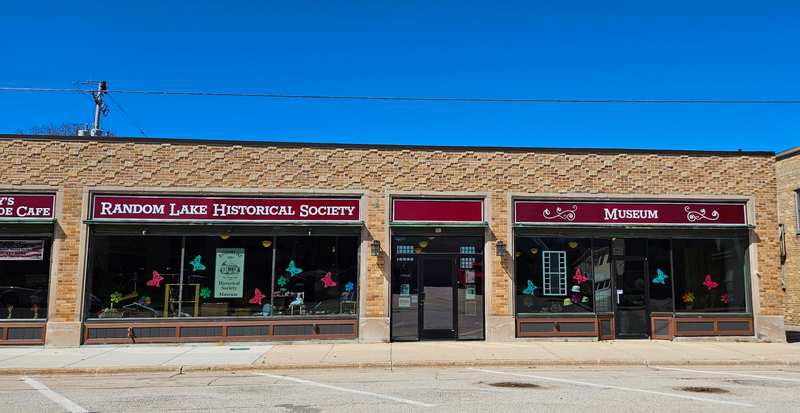
The railroad emphasis makes sense once you know the Greenleaf story. Without the line there is no village here, and the building the collection sits in was a grocery store, opened in 1932, before it was a museum. The society runs the whole operation on volunteers.
Those opening hours are the practical thing to take away. Tuesday to Friday, mornings. If you are here for a weekend you will not get in, so either plan a weekday or accept this one is for another visit.
A walk along Carroll Street also passes a state historical marker for the Theodore Rietz Distillery, number 571 of the six hundred or so across Wisconsin. Outdoors, free, two minutes.
The breakfast that pays for the museum
This is the detail that ties the whole thing together. The cafe at 111 Carroll Street is run entirely by volunteers, and every penny of its profit goes to the historical society. Eggs, omelets, pancakes, homemade muffins, and a museum kept open on the proceeds.
It is cash only, and there is no machine nearby, which is worth knowing before you sit down. Go for breakfast, then walk four doors along to the depot. That is the morning, and it costs almost nothing.
The art half of the story
Random Lake describes itself as having a history of community art as well as preservation, and for a long time that claim ran ahead of the evidence. It does not any more.
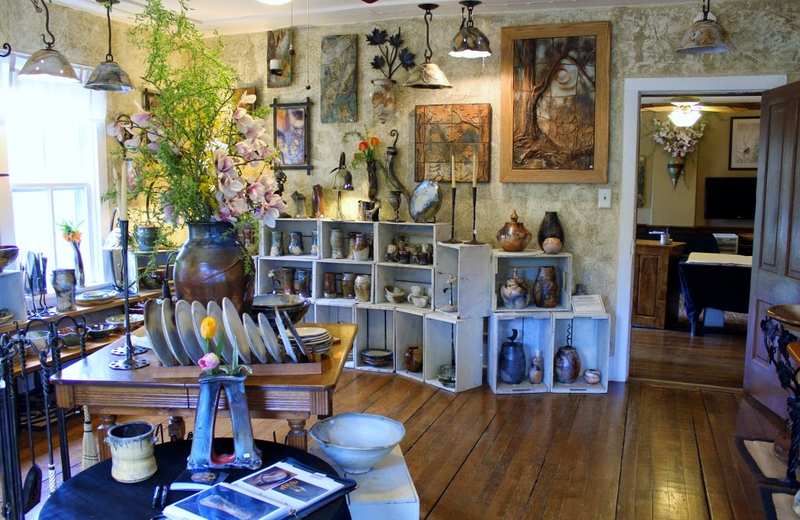
Two people making things by hand in the building where they make them is a nineteenth-century arrangement that happens to still be running. It is also the highest-rated thing to visit in the area on every platform that covers the village, which tells you people go out of their way for it.
The combination reads as a joke until you understand the economics of a village this size, where one building has to earn its keep several ways at once. Preservation and art here are the same instinct, which is a small town deciding something is worth the trouble and then doing the trouble.
Walking it
All of this except the forge sits within a few hundred yards. Start at the cafe on Carroll Street, take the depot next while it is still open, walk to the marker, then over to the collective on 2nd Street. Short Street and the Nowack House are a short walk south toward the water. Silver Creek needs a car and an afternoon.
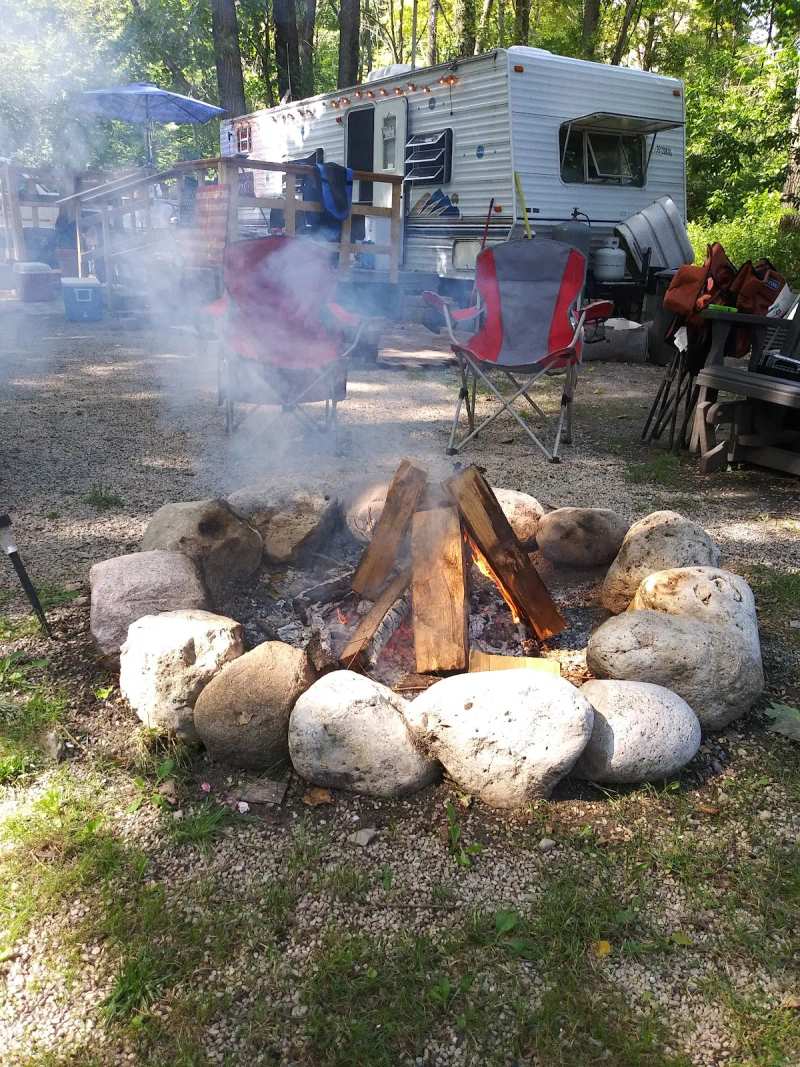
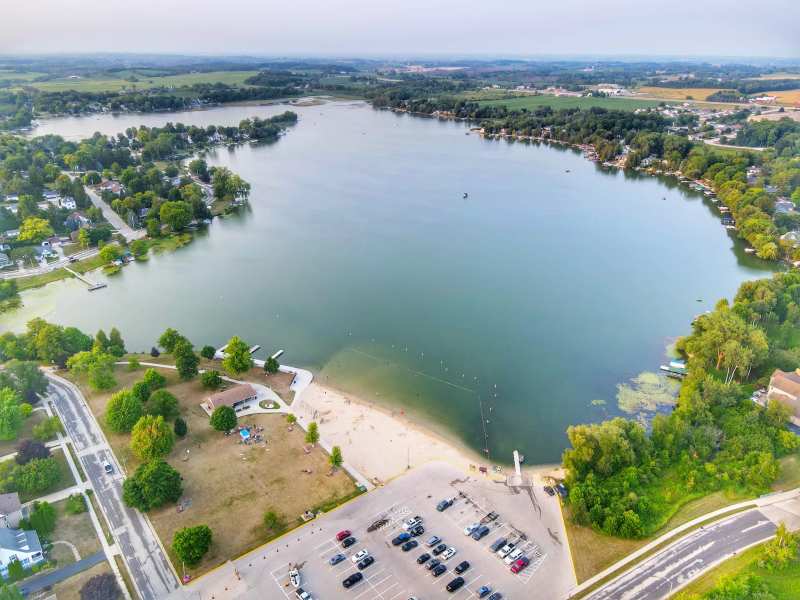
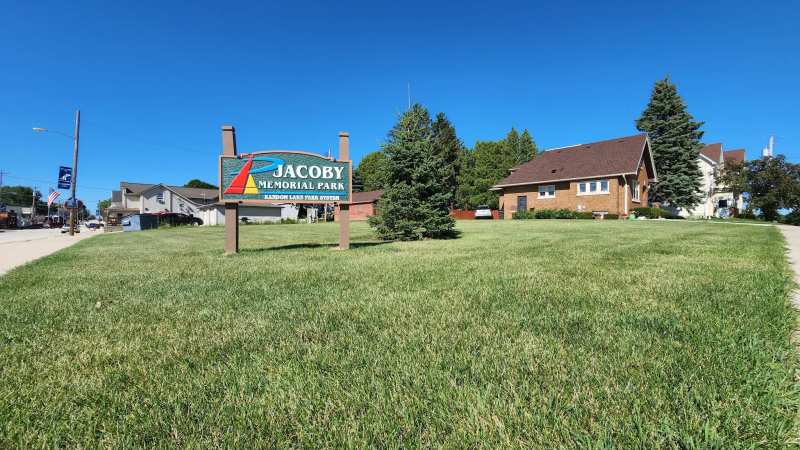
The rest of a day here goes to the lake, the beach and five parks.
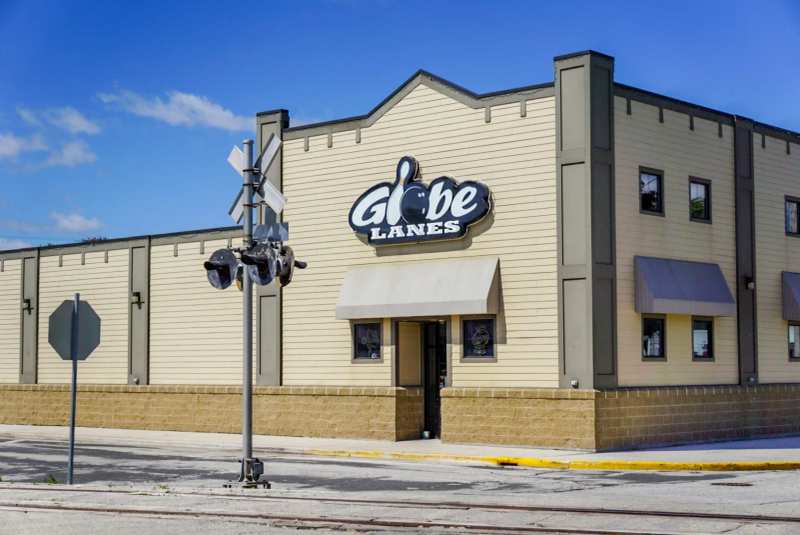
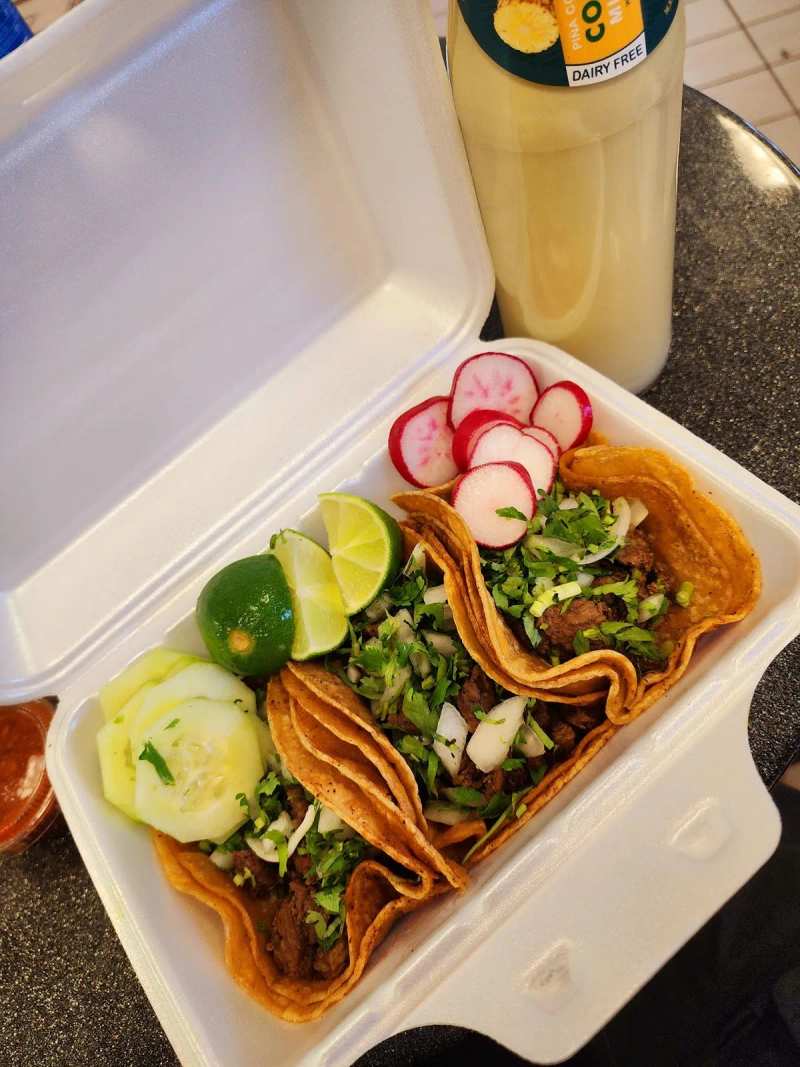
A village this size has no business supporting three taquerias and an Indian kitchen, and yet it does.
Published August 24, 2026