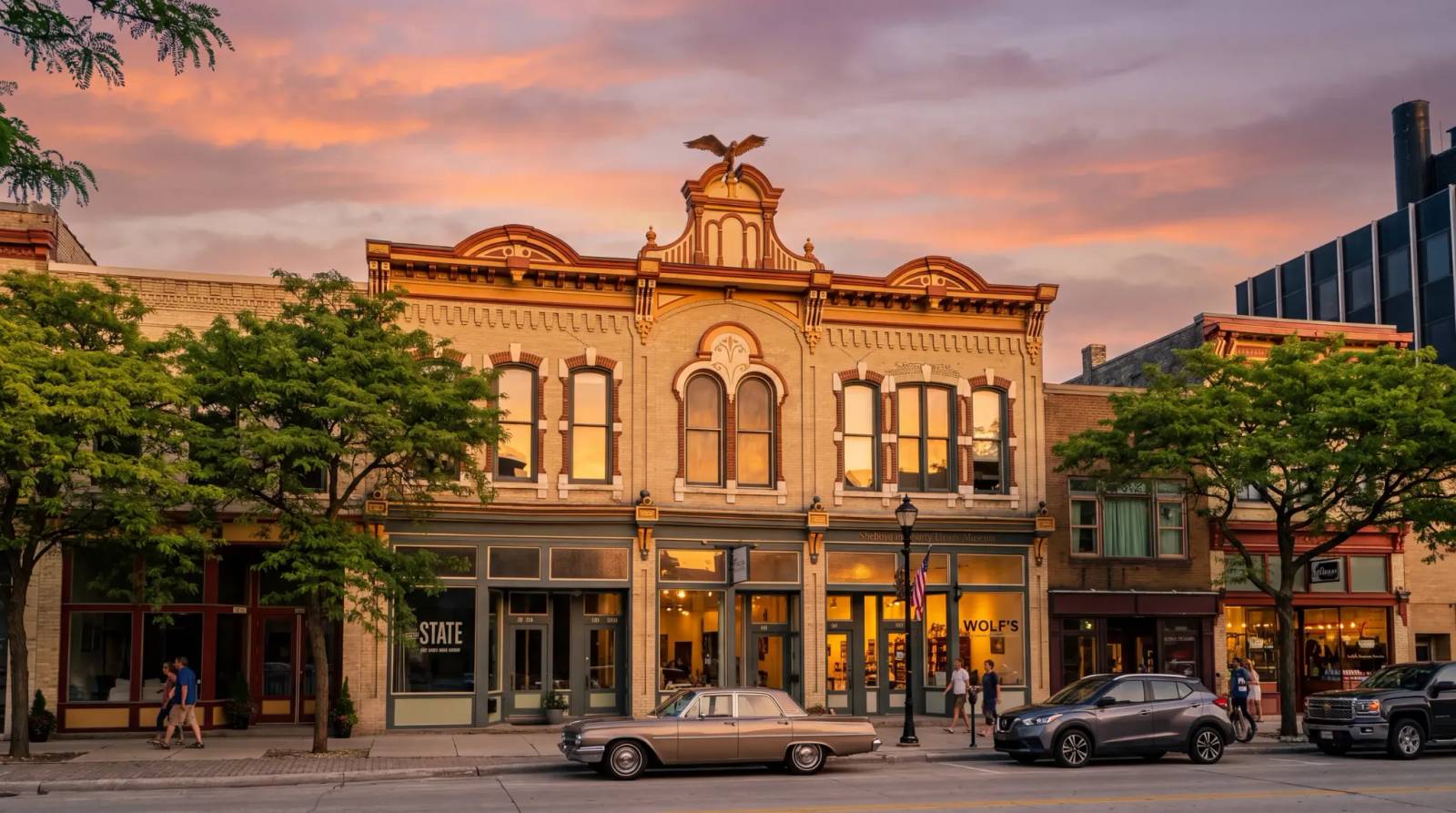
Ask someone from Wisconsin about Sheboygan and you will usually get one of two answers, surfing or bratwurst, and both are true. But what is Sheboygan known for beyond its nicknames? A name that comes from an Ojibwe word, a century of chair-making, a Ryder Cup golf course on its lakeshore, an arts center whose washrooms draw visitors, and a flagpole taller than the Statue of Liberty. This is the short version of the city's reputation, and the facts behind it.
The short answer
Sheboygan is known for freshwater surfing, which earned it the nickname Malibu of the Midwest; for bratwurst, with a 1970 ruling naming it the Bratwurst Capital of the World; for the Kohler golf courses next door; and for the John Michael Kohler Arts Center.
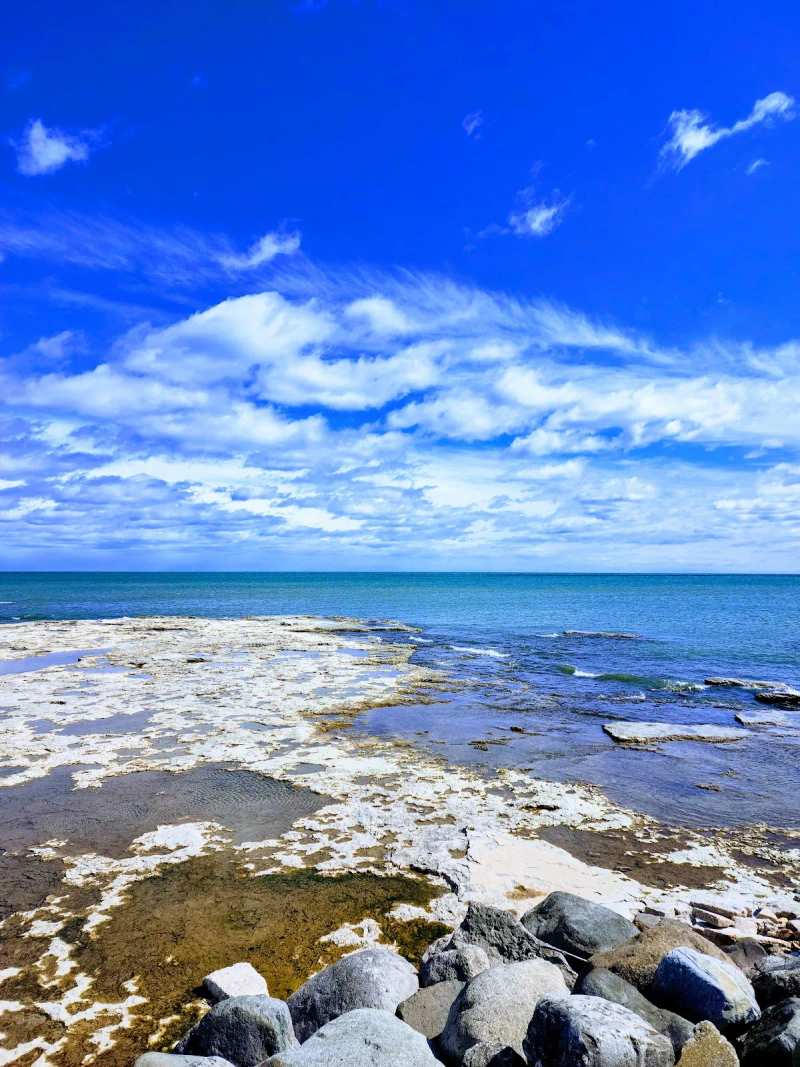
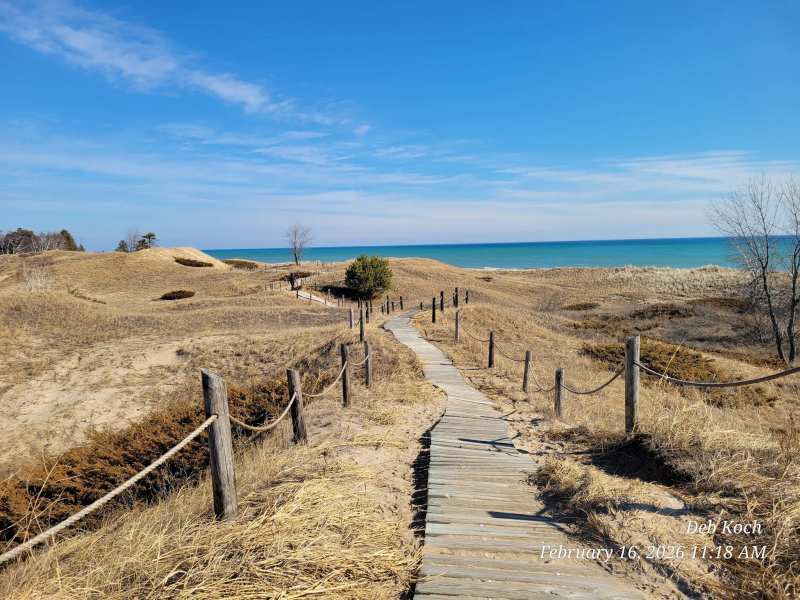
It is a Lake Michigan port city at the mouth of the Sheboygan River, the county seat of Sheboygan County, with 49,929 residents at the 2020 census. It sits about 50 miles north of Milwaukee, and much of its identity comes from the lake: the surf, the beaches, the harbor and the weather.
The rest of its reputation is industrial and cultural. Factories made furniture, cheese and plumbing fixtures here for generations, and the arts center the Kohler family helped found has become one of the most distinctive museums in the Midwest. A visit to Sheboygan touches most of these in a couple of days.
The name
Sheboygan takes its name from the Sheboygan River, and most sources trace the word to an Ojibwe, or Chippewa, word for something perforated or hollow, such as a pipe stem.
The city's own library has collected the explanations. According to the Mead Public Library's reference desk, most authorities agree the name is Chippewa in origin but differ on its exact meaning. The generally accepted version, supported by a Chippewa interpreter and scholars quoted in the city directory of 1920, derives it from a word for any perforated object, like a pipe stem or a hollow bone.
Other traditions tie the name to sound: a great noise said to travel underground from the direction of Lake Superior, or the way sound carried unusually far near the river mouth, or drums carried between Sheboygan Falls and the lake. The river was named first, and the county and the city took their names from it.
The city was incorporated on March 19, 1853.
The Malibu of the Midwest
Sheboygan is called the Malibu of the Midwest because of its surfing: the city pushes out into Lake Michigan and catches wind-driven waves, and people have surfed here for decades, mostly in fall and winter.
The nickname is used straight-faced by the tourism board and the surfers alike, and it is only partly a joke. Great Lakes waves are made by wind rather than tides, so the biggest swell arrives in the colder months, and Sheboygan's surfers go out through snow in thick hooded wetsuits. The city also calls itself the freshwater surf capital of the world.
The breaks, the seasons and what a lesson involves are the substance of the surf scene on Lake Michigan.
The Bratwurst Capital of the World
In 1970 Judge John Bolgert ruled that Sheboygan, not Bucyrus, Ohio, had earned the title of Bratwurst Capital of the World, and the city has used it ever since.
A Sheboygan brat is fresh bratwurst cooked over charcoal and served on a round hard roll with onion and brown mustard, often doubled. The roll comes from bakeries such as Johnston's on Superior Avenue, baking since 1950. In the 1940s and 1950s the city had around 50 neighborhood meat markets competing on sausage, and the brat fry, a cookout that raises money for churches and clubs, remains a summer fixture.
The city celebrates with Brat Days every summer. The ruling, the butchers and how locals cook one are the story of the double brat on a hard roll.
Golf on the lake
Whistling Straits, on the lakeshore north of Sheboygan, hosted the 2021 Ryder Cup, and together with Blackwolf Run in neighboring Kohler it has made the area one of the best-known golf destinations in the United States.
Kohler's riverside courses at Blackwolf Run, opened in 1988, hosted the U.S. Women's Open twice, and The Bull at Pinehurst Farms in Sheboygan Falls is Wisconsin's only Jack Nicklaus Signature course. The range, from the Ryder Cup to a nine-hole par-3, runs across the courses within a short drive of the city.
Art and the famous bathrooms
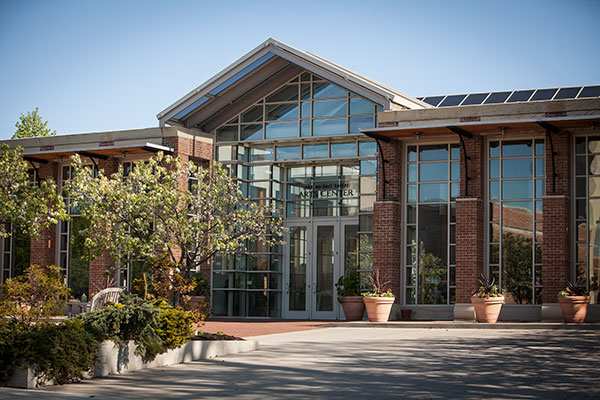
The John Michael Kohler Arts Center downtown is known for its artist-designed washrooms and for the Art Preserve, the first museum built to house artist-built environments, and both are free.
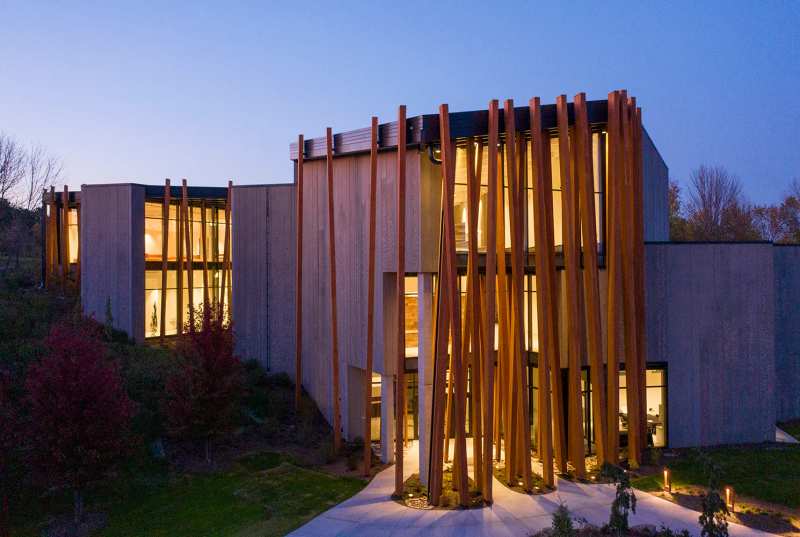
Its second site, the Art Preserve on Lower Falls Road, opened in 2021 and holds more than 25,000 works by more than 30 artists, including whole rooms, gardens and sculpture worlds made by self-taught artists. Together, the two sites are the reason the museums in Sheboygan attract art travelers from far beyond Wisconsin.
Chairs, the flagpole and the working town
Sheboygan was once known as Chair City for its furniture factories, and it remains a working manufacturing town, home to the headquarters of the insurer Acuity and close neighbor to the Kohler company.
The Chair City name recalls a time when furniture makers filled the city, and an old nickname went further, calling Sheboygan the city of cheese, chairs, children and churches. The furniture industry has largely gone, but the history is still celebrated, including at the James Tellen Chair City Cookout.
The most visible landmark of the modern working town is the Acuity flagpole at the insurer's headquarters, billed as America's tallest. The pole stands 400 feet, taller than the Statue of Liberty, and flies a 70-by-140-foot American flag, with a veterans memorial of more than 750 inscribed pavers at its base honoring Sheboygan County residents killed on active duty. Kohler, the plumbing company, is headquartered in the neighboring village of Kohler, and cheese and sausage makers remain important across the county.
A smaller business with a national following is Olivü 426 downtown, which makes natural hair, body and personal care products.
Places people mix up
Several things called Sheboygan are not in the city of Sheboygan: the county fair is in Plymouth, Whistling Straits is in the Town of Mosel north of the city, Kohler-Andrae State Park is in the Town of Wilson to the south, and Sheboygan Falls is a separate city to the west.
The confusion comes from the county sharing the city's name and from mailing addresses that say Sheboygan for places outside it. Sheboygan County has its county seat in the city, but its fair is held at the fairgrounds in Plymouth, about 12 miles west. Whistling Straits carries a Sheboygan address but sits near Haven, north of the city, while The American Club and Blackwolf Run are in the village of Kohler, just west.
Road America, often described as near Sheboygan, is on the edge of Elkhart Lake and is listed under Plymouth, about 14 miles west-northwest. Sheboygan Falls, 5 miles west, has its own downtown, its own golf courses and the county airport. None of this matters much on a visit, except when you are booking a hotel expecting to walk to the lake.
Facts people look up
Sheboygan was incorporated as a city on March 19, 1853 and had 49,929 residents at the 2020 census; it is the county seat of Sheboygan County and lies about 50 miles north of Milwaukee on Lake Michigan.
The city's population has hovered close to 50,000 for decades, after rising from 4,262 in 1860, according to figures kept by the Mead Public Library. Sheboygan's sister cities are Esslingen in Germany, Tsubame in Japan, Shuya in Russia and Rivas in Nicaragua.
A few local curiosities from the same library records: the North Pier is 3,829 feet long and the South Pier 2,340 feet, according to US Army Engineers figures from 1983. The city's lowest recorded temperature is 26°F below zero and its highest 108°F. And a novelty song copyrighted in 1918, later sung on national radio, spelled the name out as S-H-E, B-O-Y, G-A-N, a joke the library still keeps on file.
How the lake shapes the city's weather, month by month, is part of choosing when to visit Sheboygan.
Frequently asked questions
Published April 20, 2026