People are often surprised to hear it, but Sheboygan has one of the most consistent surf scenes on the Great Lakes, and it has had one for more than half a century. Sheboygan surfing happens in wetsuits, often in snow, on waves made by wind rather than tides, and the town wears its nickname, the Malibu of the Midwest, with a straight face. What follows covers when to go, where the breaks are, where to rent gear, and what a first session on a freshwater lake is actually like.
Yes, you can surf in Sheboygan
Sheboygan sits on a point that pushes out into Lake Michigan, so it catches swell built by winds from the north and from the south, and people have been riding those waves here since the 1960s.
Most of the Great Lakes shoreline only gets rideable surf from one wind direction. Sheboygan's shape gives it more chances, which is why surfers drive in from around the region when a storm system moves across the lake. People surfed Lake Michigan as early as the 1950s, and by the 1960s Sheboygan had its own Lake Shore Surf Club.
The nickname has a messier history. The Williams twins, Lee and Larry, are the names most closely tied to Sheboygan's surf scene, and sources differ on whether one of them coined "Malibu of the Midwest" or whether they simply made it stick. The 2003 surf documentary Step Into Liquid put the town in front of a national audience, and the tourism board has used the name ever since. It is one half of what Sheboygan is known for; bratwurst is the other.
When to surf: the season runs backwards
The best surf in Sheboygan comes between fall and early spring, because Great Lakes waves are made by passing weather systems and strong wind, and summer has the fewest of both.
Sources put the season in slightly different places. Travel Wisconsin describes the peak as late August to early April; Visit Sheboygan says Labor Day weekend starts the fall season and the biggest waves come from late fall through winter; local writers most often point to October onward. All of them agree on the reason: wind makes the waves, so the windy months are the surf months. September and October are the sweet spot for most visitors, with real swell and water that has not yet gone numbingly cold.
Summer is usually flat, but it is not wasted. The calm days are the best time for a first lesson, with warmer water and small waves that let you practice standing up without being pounded. Winter is for experienced surfers only. The regulars go out through snowstorms in thick hooded wetsuits, boots and gloves, and they will tell you that the cold is the price of having the lineup mostly to themselves.
Wind direction decides the day. South, southwest and north winds can all produce rideable waves at different spots around the point, while a straight west wind blows offshore and flattens the lake. Checking the seasons in Sheboygan helps set expectations, but the forecast on the morning you go matters far more than the month.
The breaks
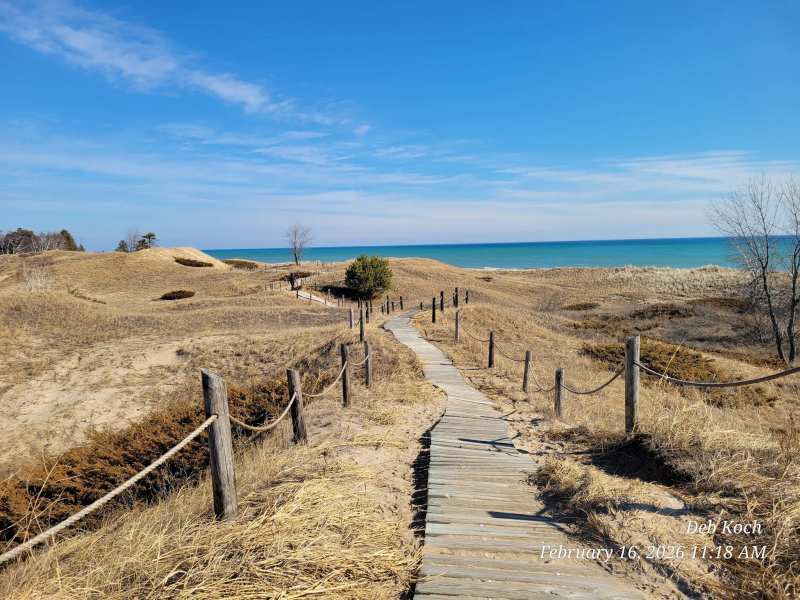
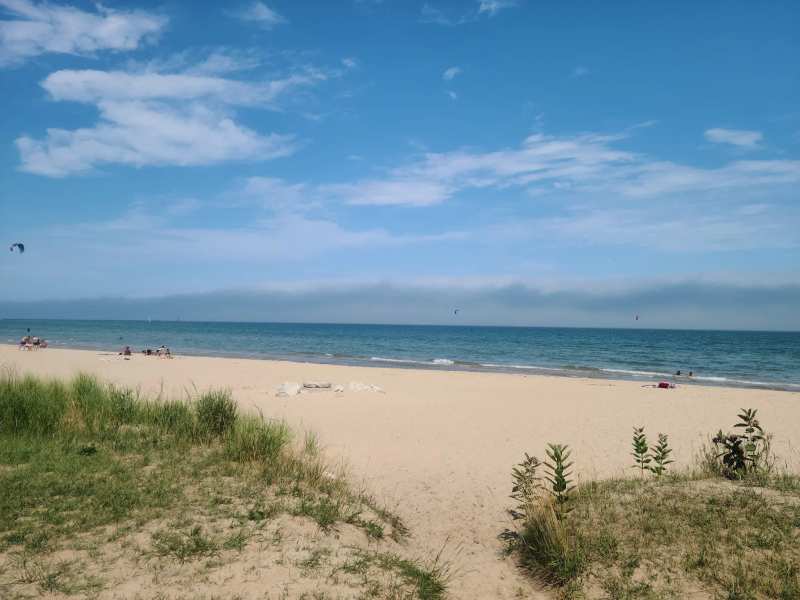
Sheboygan's surf spots cluster on the north side of the river mouth, around Deland Park and North Point, with sandbars south of the river near Blue Harbor, and which one works depends on the swell direction that day.
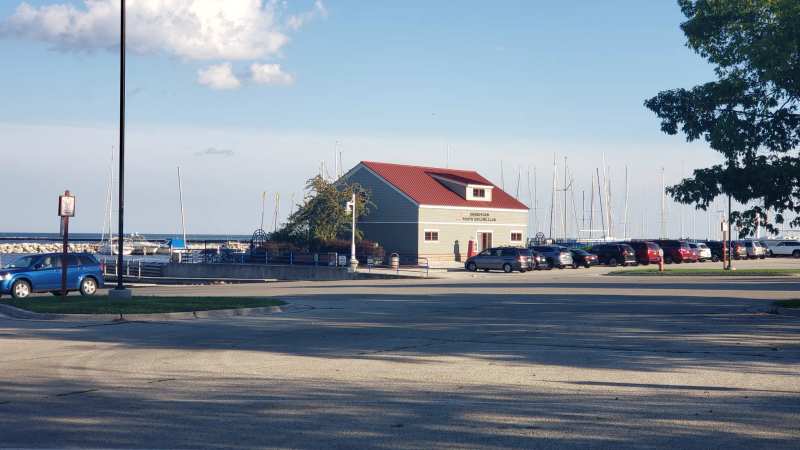
Deland Park, the beach locals call North Beach, holds several distinct spots along its shoreline and is where most people start. The Elbow, where the north breakwater bends, is the best-known break in town, and on the right day surfers step off the pier structure straight into the lineup. The Jetties offer easier access from the sand for anyone who does not want to paddle far. Parking is along Broughton Drive and in the marina lots.
North Point Park, at the top of the lakefront, is the spot for bigger days. When a strong swell wraps around the point, it can hold more size than the beaches to the south, and the picnic area above gives spectators a good view. South of the river, the sandbars near the river mouth by Blue Harbor work on some swells and are handy for anyone staying at the resort.
Kite Beach, further south, belongs mostly to kiteboarders, who use the same winds in a different way. Each of Sheboygan's beaches has its own facilities, parking and water-testing record, which matters in the warmer months.
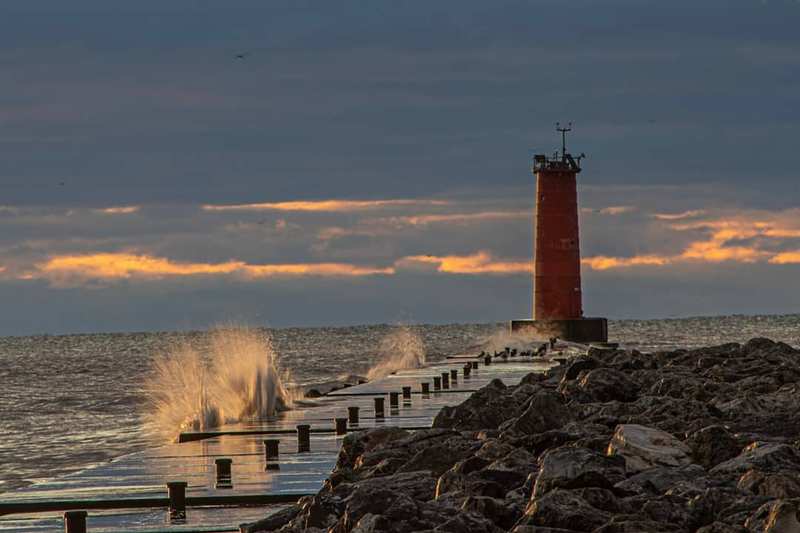
A word on the piers: the north breakwater walkway leading to the lighthouse at the end of the north pier narrows and gets slick when waves wash over it, which is exactly when the surf is good. Do not walk it on a big day, and leave jumping off it to the regulars who know the spot and the conditions.
Boards, wetsuits and lessons
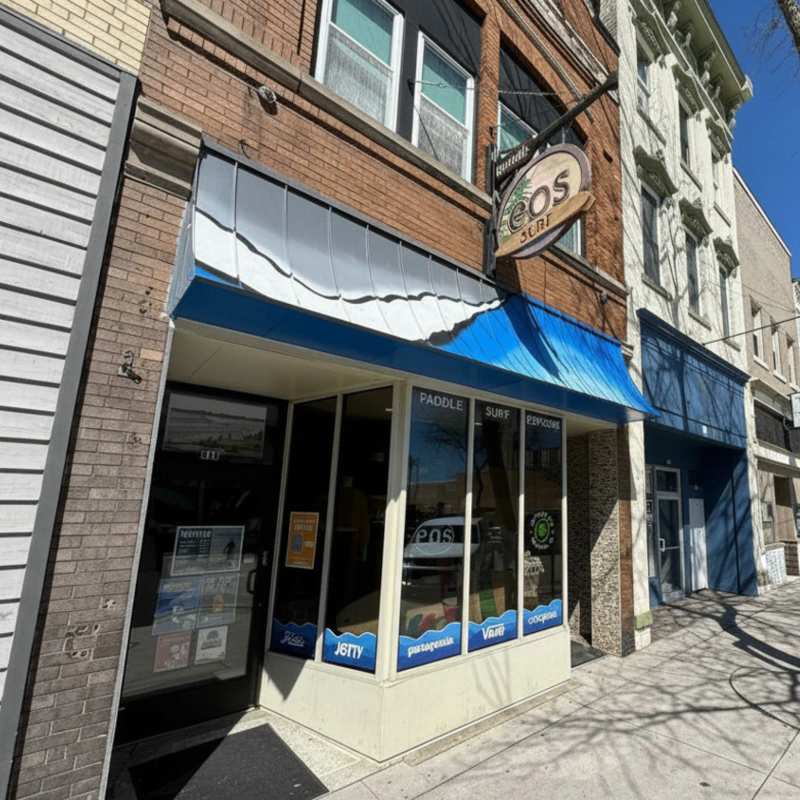
EOS Surf & Outdoor on North 8th Street is the surf shop in Sheboygan, and it is where you book a lesson, rent a board and wetsuit, and ask what the lake is doing.
A lesson usually starts on the beach, practicing the pop-up on a board in the sand, before moving into the water. Andrew Jakus has said his goal for a first lesson is to paddle in, pop up and ride your first wave, and he is honest that not everybody gets there on day one. Surfing is hard; a lake makes it harder, and a good instructor makes it possible.
Wetsuit guidance follows the water. In midsummer a thinner suit is often enough for a lesson. As the water cools into fall you need a proper full suit, and in winter the regulars wear thick hooded suits with boots and gloves. If you are renting, tell the shop honestly how long you plan to stay in the water; a suit that is fine for twenty minutes can be miserable after an hour.
The shop also runs youth skate camps and a thrift shop in the basement, and it is the unofficial meeting point of the local surf community. Surfers organize sessions by group text, and a friendly question at the counter is the quickest way to find out who is going out and where.
Checking conditions before you drive
Visit Sheboygan runs live webcams of the beach, the marina and Blue Harbor, plus a surf report page, and surfers check them before loading the car.
The beach camera is the one to watch for surf; the marina and Blue Harbor cameras show the harbor and the south side. Look for lines of swell arriving at a steady interval rather than choppy white water blown in every direction, which usually means the wind is too strong or onshore to be clean. Watch for a few minutes, not a few seconds, because sets come and go.
A good forecast and a good wave are not the same thing on a lake. A promising wind forecast can produce messy, short-period chop, and a modest one can line up beautifully at one spot. The cameras, the shop and the regulars in the water are more reliable than any app.
If you have never surfed on a lake
Lake waves are shorter, faster and colder than ocean waves, so the paddle out is often easier but catching and riding a wave is harder.
On the ocean, waves arrive from storms far away and are spaced well apart. On Lake Michigan they are made by wind close by, so they come in quickly, one after another, with little time between them. That short interval means less time to get to your feet and a steeper, quicker ride. Fresh water is also less buoyant than salt water, so a board feels a little less stable and you float a little lower.
Cold is the real safety issue. Even in summer the lake can be cold enough to tire you faster than you expect, and in fall and winter hypothermia is a genuine risk. There are no lifeguards on any Sheboygan beach, least of all in the months with the best surf. Go with someone, stay close to shore on your first sessions, and get out before you are shivering.
If a lesson in summer goes well, come back in September for your first real swell with the same shop. The jump from summer ripples to fall waves is big, and it is easier with someone who knows the spots.
The Dairyland Surf Classic, and after
The Dairyland Surf Classic was held in Sheboygan over Labor Day weekend from the late 1980s until the early 2010s, and for years it was described as the largest freshwater surf contest in the world; it ended, and nothing has replaced it.
The contest was founded in 1988 by the Williams brothers and its final edition was held in 2012. For more than two decades it brought surfers from around the Great Lakes to Sheboygan every Labor Day, and it did more than anything else to turn a local habit into an identity. Some online articles still describe it as an annual event, which is wrong.
The scene carried on without it. Today EOS hosts occasional events and free community paddles, and the real calendar is set by the weather. The surfers are still there every fall and winter, whether or not anyone is judging.
Watching instead of surfing
On a good fall day you can watch surfers from Deland Park or from the picnic area at North Point Park, and both are free, have parking, and put you close to the action.
Deland Park is the easiest. Stand on the beach near the breakwater and you are looking straight at the Elbow and the spots along North Beach. North Point gives a higher view of the bigger days. Bring a warm layer; the wind that makes the waves also makes the beach cold, even in September. Stay off the pier when waves are washing over it.
Watching is also a good way to fit the lake into a wider trip. The Arts Center and 8th Street are a short drive from either spot, and a day in Sheboygan beyond the lake is easy to build around an hour on the beach. For a surf weekend, a room within a few minutes of Deland Park lets you check the water at first light, and the Sheboygan hotels by the lake and river are the ones to look at.
Frequently asked questions
Published August 17, 2026