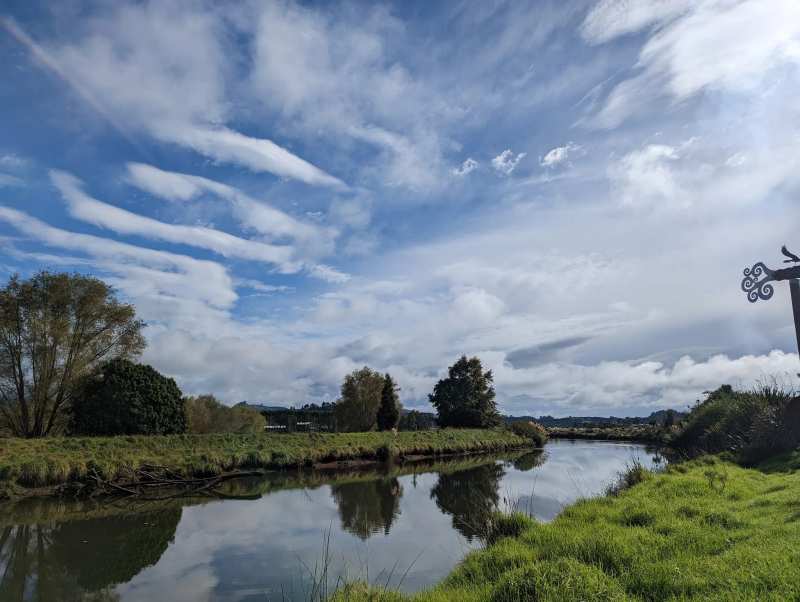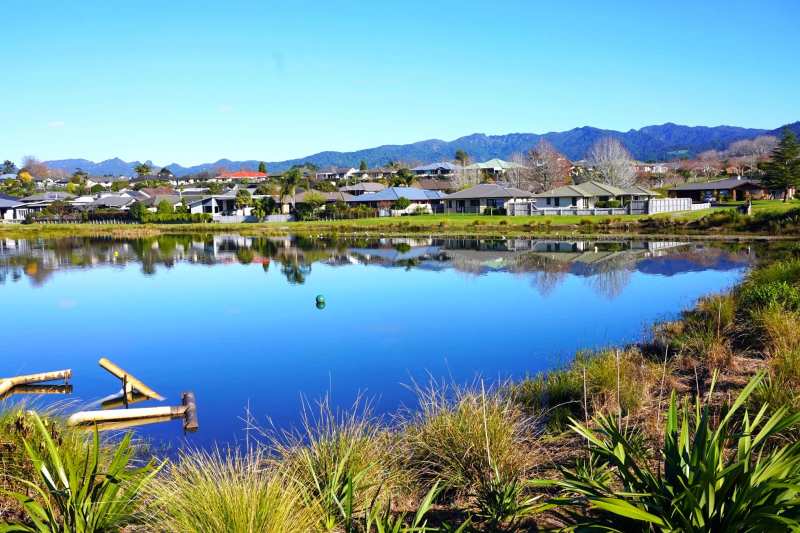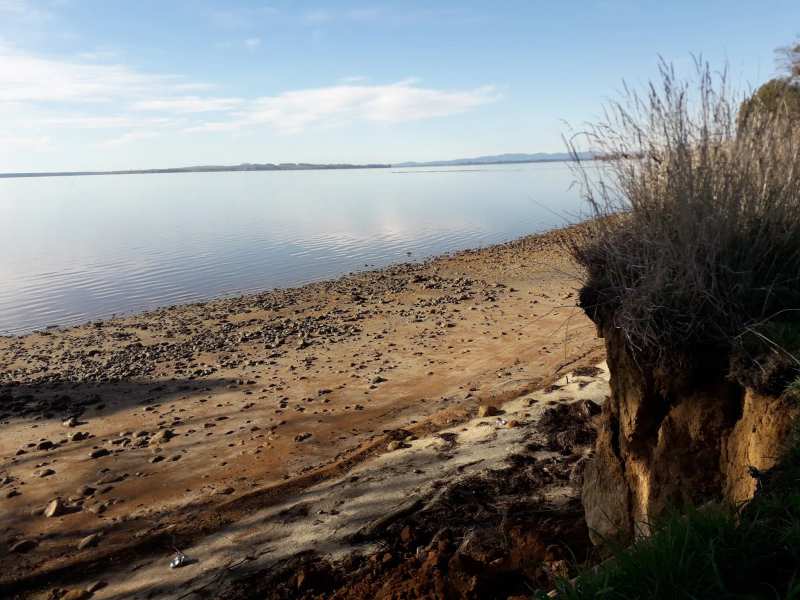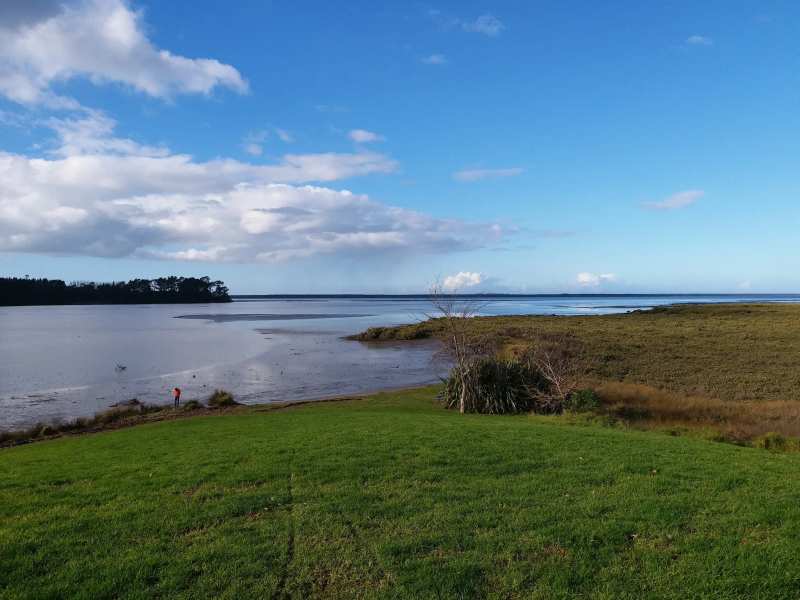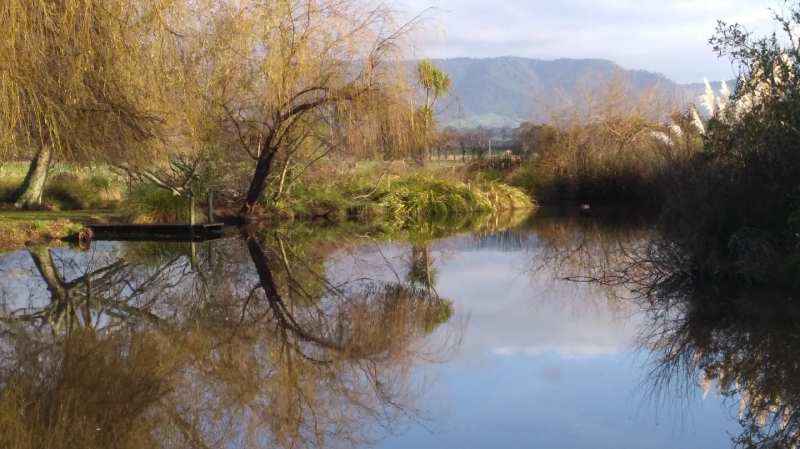

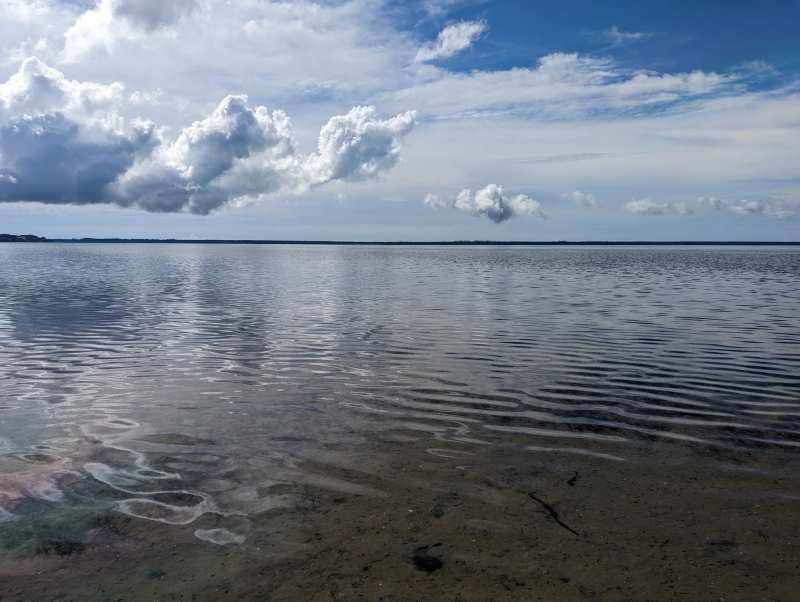
Katikati sits low on the edge of Tauranga Harbour, about nine metres above sea level, with the Kaimai Range at its back. The result is weather without extremes: warm summers, cool damp winters and rain spread through every month of the year. Katikati weather rarely stops you doing anything, but it does change what is worth doing.
The numbers below are long-term averages from NIWA, New Zealand's climate agency, for its Katikati station over 1991 to 2020. For today's forecast, use a live forecast; this is the year-round picture for planning a trip.
What is the weather like in Katikati?
Katikati has a mild coastal climate: average daily highs of about 24°C in January and February, about 15°C in July, overnight lows near 5°C in the depths of winter, and about 1,320 mm of rain a year.
Across the whole year the average daily high is 19.4°C and the average overnight low is 9.9°C. Rain falls in every month, with no dry season, but the wettest months get about twice the rain of the driest.
Katikati weather by month
January and February are the warmest months, July is the coolest and also the wettest, and January is the driest. These are NIWA's monthly averages for Katikati, daily high and low with average rainfall.
January: 24.1°C high, 14.0°C low, 76.7 mm rain. February: 24.3°C high, 14.5°C low, 125.3 mm. March: 23.0°C high, 12.5°C low, 86.0 mm. April: 20.2°C high, 10.2°C low, 144.1 mm.
May: 17.7°C high, 8.5°C low, 102.3 mm. June: 15.4°C high, 6.3°C low, 114.9 mm. July: 14.7°C high, 5.4°C low, 153.4 mm. August: 15.3°C high, 6.1°C low, 106.3 mm.
September: 17.0°C high, 7.8°C low, 109.3 mm. October: 18.6°C high, 9.3°C low, 95.5 mm. November: 20.4°C high, 10.9°C low, 107.0 mm. December: 22.6°C high, 13.1°C low, 103.8 mm.
The record extremes over the observation period were a high of 31.4°C in February and a low of minus 3.2°C in July.
Summer in Katikati: December to February
Summer is warm and the most settled time of year, with average highs of 22 to 24°C and January the driest month at about 77 mm of rain.
This is the season for the harbour. Paddleboarding and swimming at the waterfront reserve off Beach Road work around high tide, and the hot days are the reason to plan outdoor walks for mornings and evenings.
January is also festival month, when summer events like the Avocado Festival at Uretara Domain bring the busiest weekend of the year. The festival organisers warn that Katikati can be very hot in January and ask people to bring sunblock, a hat and sunglasses, which is sound advice for any summer day here.
February is as warm as January but noticeably wetter, with about 125 mm of rain on average, so a February trip needs a rainy-day plan.
Autumn in Katikati: March to May
Autumn stays mild into April, with highs of 23°C in March falling to about 18°C by May, but April is one of the wettest months at about 144 mm.
March is one of the best months to visit: close to summer warmth, with less rain than February or April. By May, nights drop to about 8 or 9°C, and a jacket earns its place in the car.
Winter in Katikati: June to August
Winter days reach about 15°C, nights average 5 to 6°C, July brings the most rain of the year at about 153 mm, and frost is possible on the coldest clear nights.
The lowest temperature on record at the Katikati station is minus 3.2°C, in July, so a hard frost on a clear, still night is part of winter here. The average winter low still stays around 5°C.
Winter is also the quiet season for walking. The Kaimai tracks have fewer people, and in the colder months the forest floor on tracks like the Aongatete Loop fills with mushrooms. Stream crossings are harder after rain, so check the forecast and track status first.
Spring in Katikati: September to November
Spring warms steadily, from highs of about 17°C in September to about 20°C by November, with rain of around 95 to 110 mm a month.
October is one of the drier months of the second half of the year, which makes it a good time for longer walks before the summer heat and holiday crowds arrive.
Daylight and sea temperature through the year
Daylight swings a long way between seasons. In early February the sun rises at about 6:35am and sets at about 8:20pm, giving long summer evenings on the harbour. By mid-September it rises around 6:15am and sets around 6:10pm, before daylight saving starts at the end of the month.
The harbour water lags behind the air. Tide websites that estimate sea temperature put the upper harbour at around 14 to 16°C in winter and closer to 19°C by late summer, so swimming is most comfortable from about January to March.
What to pack for Katikati by season
In summer, pack for sun: light clothes, a hat, sunblock and sunglasses, and a light layer for evenings, when lows sit around 13 to 14°C. A swimsuit and something for the pools are worth the space in any season.
In autumn and spring, pack layers and a rain jacket, since April and September to November bring regular rain and nights drop to 8 to 10°C.
In winter, bring a warm jacket, a raincoat and something waterproof on your feet for walks, with days around 15°C, nights around 5°C and July the wettest month. For the Kaimai tracks, add warm layers and wet-weather gear at any time of year.
Rainy-day options in Katikati
On a wet day, the gallery at The Arts Junction, the warm pools and the town's cafés still make a good day out.
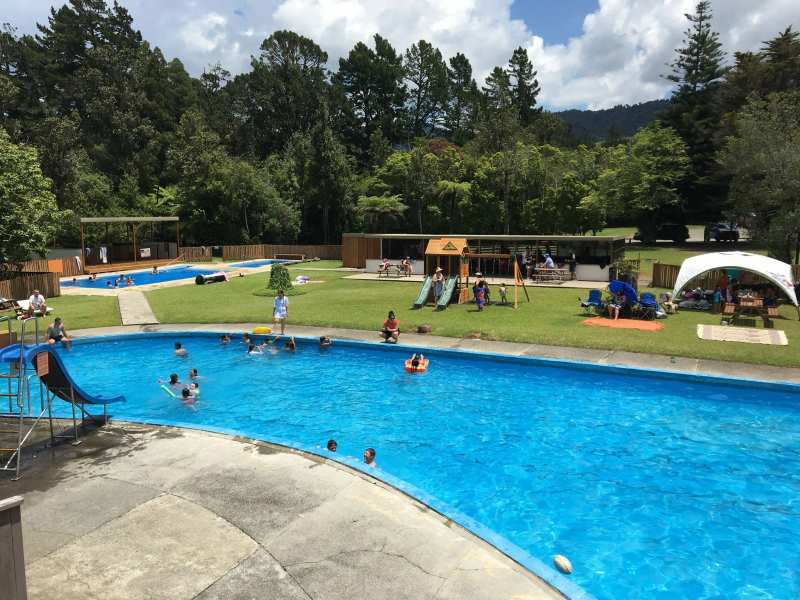
The warm pools at Sapphire Springs work in light rain too, since you are already wet. The Western Bay Museum, usually the best rainy-day stop, is closed for renovation until March 2027.
Wind, tides and the harbour
Wind and tide together decide whether the harbour edge is pleasant. Forecasts for Katikati often show westerly and south-westerly winds, and shallow harbour water chops up quickly in a breeze, so a calm day at high tide is best for getting on the water. Reading tides alongside the wind forecast saves a wasted trip to the beach.
Where to get the forecast for Katikati
MetService, New Zealand's national forecaster, and other New Zealand forecasting services cover Katikati by name with daily and hourly forecasts, and they are the place to look for today's weather.
Harbour activities need a marine forecast alongside the town forecast. Kaimai walks need a look at the conditions on higher ground, since cloud and wind on the range can be very different from a sunny morning on Main Road.
When to plan your stay in Katikati
For warm, settled weather, plan for January to March; for quieter travel and hot pools, June to August; for gardens and walks, October and November. Summer is also when accommodation books out first, so book early for January.
Whatever the month, the year-round mildness is part of the appeal of a mural and avocado town in the Bay of Plenty.
Frequently asked questions
Published July 12, 2026