In 1926 an English garden designer who had never set foot in America was asked to design a garden for a Connecticut parsonage. She produced a hand-drawn plan, the plan was filed away, and it sat unbuilt for roughly sixty years. The garden at the Glebe House in Woodbury was finally planted in the late 1980s, from her original drawing, and it is the only surviving Gertrude Jekyll garden in the United States.
That is the headline, and it is unusual enough that it draws people from outside the state. What most of them do not realise until they arrive is that two more historic houses sit within a few hundred yards, and one of the three is a good deal more significant than the garden.
The Glebe House
A glebe, since the word does most of the work in the name, was land granted to support a parish clergyman. The glebe house was the house that came with the land. This one was occupied from 1771 by Woodbury's first Anglican priest, John Rutgers Marshall, who arrived from New York with his wife Sarah. They had nine children. Three enslaved people also lived in the house, and the museum interprets the property across the years 1771 to 1786 rather than presenting it as a family home alone.
The Marshalls were Anglicans in a colony at war with England, which made them suspect by default. An Anglican priest in Revolutionary Connecticut was assumed loyal to the King whether he was or not, and the museum's interpretation is built around that pressure rather than around furniture.
There is furniture, and it is good. The collection is regional, with many pieces made in Woodbury itself, which matters in a town that later became the state's antiques capital. The house is effectively showing you the local trade at its source, three hundred yards from the dealers now selling the same period further along the road.
But the reason to take a tour is the story rather than the objects, and that is unusual for a house museum.
Why this house matters beyond Woodbury
Weeks after American independence was secured, a group of Episcopalians met at the Glebe House in secret to decide how a church with English roots would exist in a country that had just fought England. The decision they took there is why the Glebe House is described as the birthplace of the Episcopal Church in the New World.
That is a national claim in a town of under ten thousand people, and it sits quietly at the end of a residential road with no fanfare whatsoever. It is the single most consequential thing that has happened in Woodbury and there is no monument to it beyond the house.
The Gertrude Jekyll garden
The garden's story is worth telling properly because it is genuinely strange.
Gertrude Jekyll was the most influential English garden designer of her generation. In 1926 an American philanthropist, Annie Burr Jennings, took tea with her and agreed to fund a Jekyll garden at the newly restored Glebe House. Jekyll drew a detailed plan the following year without ever visiting the site or the country. The plan was then lost for decades, rediscovered in the 1970s by a researcher working on Jekyll at Berkeley, and the garden was finally installed in the late 1980s to her drawing.
Two things are worth being precise about, because sources vary. Jekyll designed a small number of American gardens; this is the only one that survives, which is why the museum, the National Trust for Historic Preservation and the state tourism board all describe it as her only remaining design in the country. It is also the one realised most faithfully to her original plan.
The practical detail that matters most: the garden is open year round, seven days a week, dawn to dusk, for self-guided visits. The house is not. Tours of the interior are seasonal and limited outside the summer months, so if the house is the point of the trip, check before you drive. If the garden is the point, you can turn up on a Tuesday in January.
Restoration work in the garden has been under way recently and it has stayed open to the public throughout.
Hurd House, a few doors down
Take the two together and add Hollow Park at number 43, which sits between them, and Hollow Road delivers two museum houses and the town's most accessible green space inside a few hundred yards. The preserves out past Church Hill are the longer walk if the park is not enough.
The Leroy Anderson House
His name also sits on the bandstand at the North Green at 11 Main Street South, which is the green that splits Main Street into North and South. If you are orienting yourself in Woodbury, that bandstand is the middle of the town.
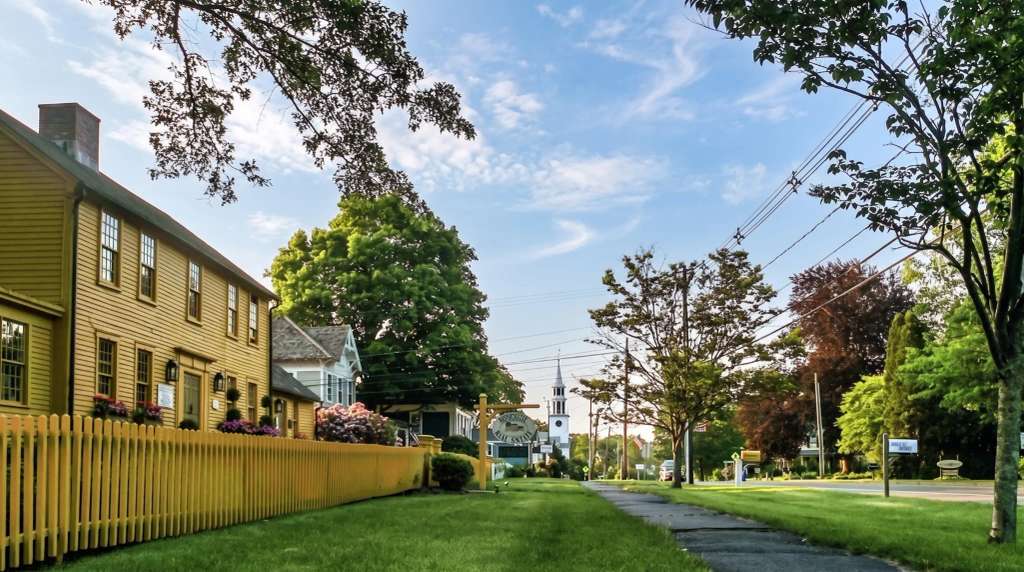
Walking Main Street's historic mile
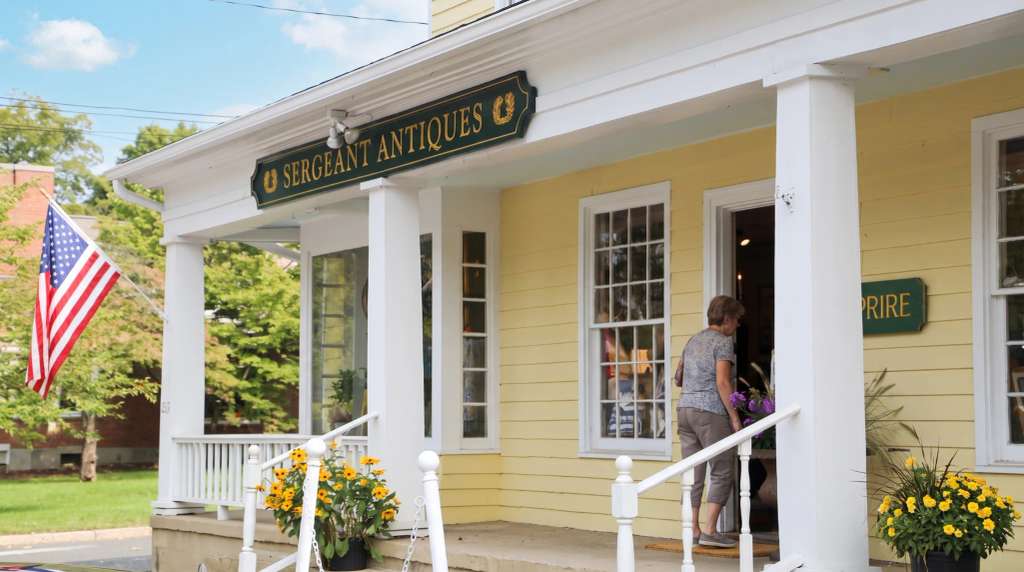
Most of the buildings along Main Street went up in the seventeen and eighteen hundreds, and the majority of them now hold antique dealers rather than families. That is the unusual part of Woodbury's preservation story: the buildings were saved by being useful rather than by being museums.
The dealers filling those eighteenth-century rooms are the reason you can walk into a 1790s building on a Saturday afternoon without booking a tour. Thirteen of them trade along Main Street, and looking at the rooms is free even if the furniture is not.
The galleries and the framers
Two smaller cultural stops sit on Main Street South. Studio Hill Gallery and Design Shop at 507 is the town's gallery. Clapp & Tuttle Picture Framing at 742 sits in the middle of the restaurant block, which makes it an easy stop between other things rather than a trip in itself.
Seeing all three in one visit
The three houses are not a trail and nobody presents them as one, but they work as a morning if you take them in the right order.
Start on Hollow Road, because two of them are on it. Hurd House at 25 and the Glebe House at 49 are a few minutes apart on foot, with Hollow Park at 43 sitting between them if you want somewhere to sit down. The Leroy Anderson House on Grassy Hill Road is the separate trip, and the one to do last.
Time it around the house tours rather than the garden. The Jekyll garden is open dawn to dusk every day of the year and needs no planning at all, so it is the flexible part. The interiors are the constrained part, and outside the summer months they are the thing most likely to be shut when you arrive.
Allow more time at the Glebe House than the size of the building suggests. The interpretation covers fifteen years of a household under political suspicion, and the rooms do not explain themselves without a guide.
Why the furniture matters here specifically
The regional collection inside the Glebe House is worth more attention than most house-museum furniture gets, because of where you are standing.
Woodbury became Connecticut's antiques capital, and the pieces in this house are the local trade at its source: eighteenth-century furniture made in this town, sitting in an eighteenth-century room in the same town, a few hundred yards from the dealers now selling the same period to collectors.
That is an unusual thing to be able to do in one morning. Most places offer you either the museum or the market. Woodbury has both on the same road, and seeing the furniture in a room it was built for changes what you notice later in a shop.
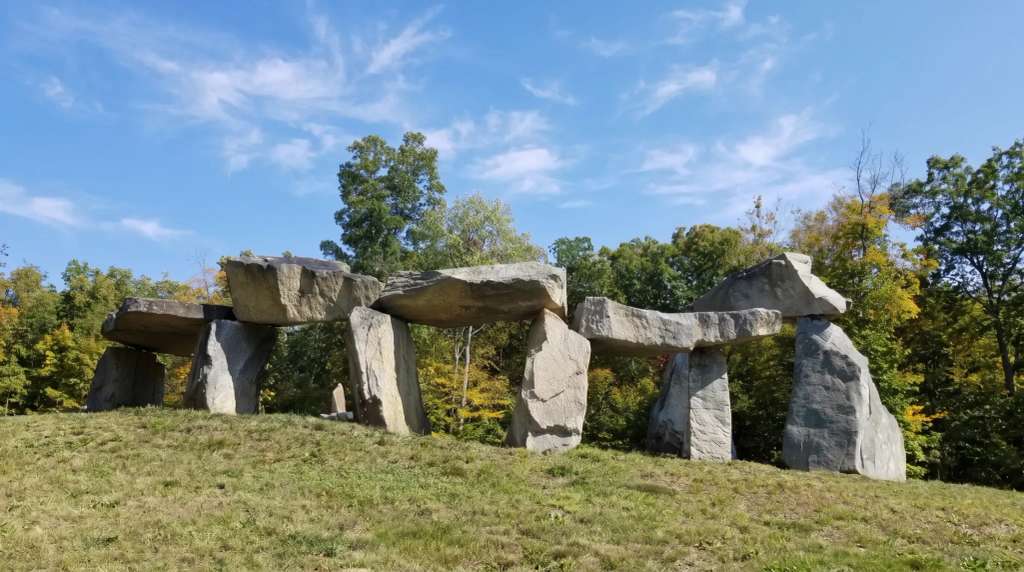
Three houses and a garden is half a day at most, which leaves the afternoon open. A sculpture park, a mile of dealers and eighteen preserves is the rest of what the town holds, and most of it sits within a few minutes of Hollow Road.
Frequently asked questions
Published August 11, 2026