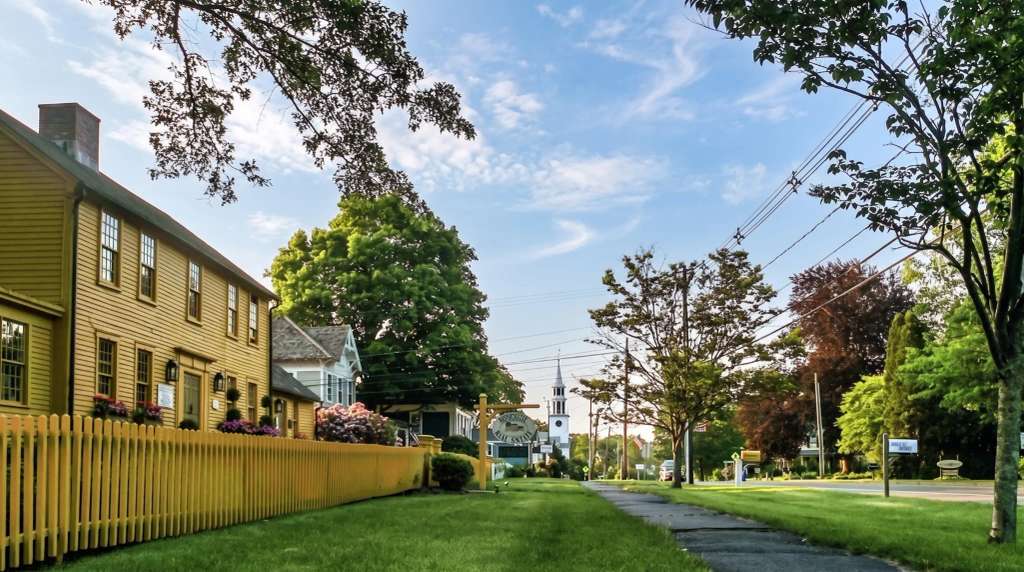
House numbers on Main Street run outward from the town green in both directions. That is the first thing worth understanding about shopping for Woodbury antiques on foot, because number 12 Main Street North sits at the green and so does number 113 Main Street South, while 1068 North and 1023 South are at opposite ends of town, roughly two miles apart. A walking plan that treats them as neighbours because the numbers look similar will cost you an afternoon.
Thirteen dealers trade along that road. A fourteenth sits off it. They are the reason Woodbury is described as Connecticut's antiques capital, and unlike a lot of towns with a slogan, this one is a description of a real concentration of trade rather than a marketing decision made in a committee.
Why Woodbury is Connecticut's antiques capital
The short version: dealers concentrated here, more dealers followed, and the trade organised itself. There is a Woodbury Antiques Dealers Association with a published member list, and the town's own municipal website carries that directory. That is an unusual arrangement. Most Connecticut towns do not give a private trade association a page on the town site, and it tells you how central the business is to the place.
Woodbury also anchors a regional route that runs on into Southbury and Middlebury, the three towns sitting together in the southern corner of Litchfield County. The road is Route 6, which becomes Main Street when it reaches town and splits into Main Street North and Main Street South either side of the green.
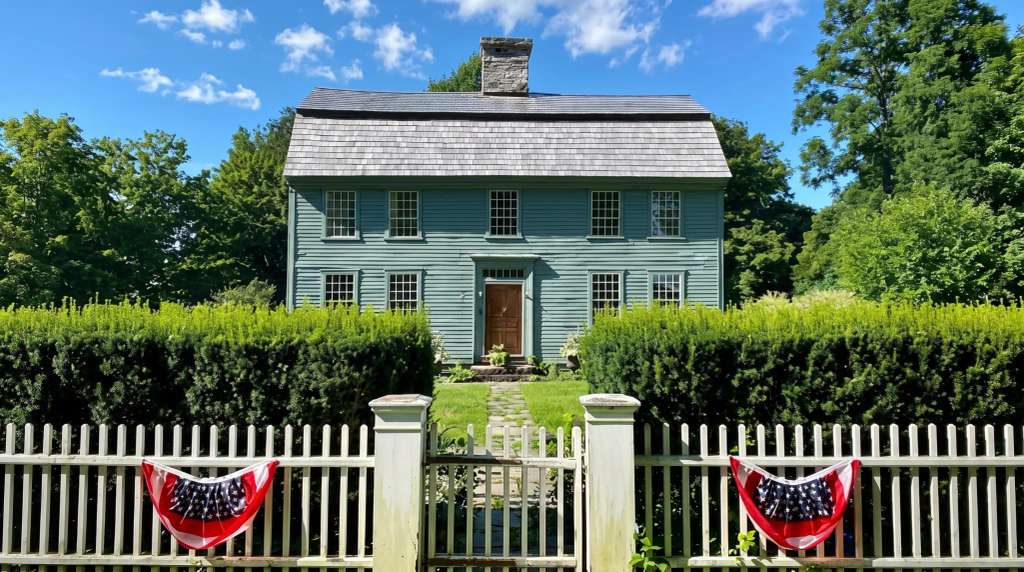
What none of that conveys is the physical reality, which is that a lot of this trade happens inside eighteenth and nineteenth century houses. You are frequently looking at period furniture in a period room, which is a different experience from a warehouse or a mall, and it is the main argument for coming here rather than buying online.
Woodbury antiques, dealer by dealer, north to south
Start at the far north end if you want the drive out of the way first.
Coming back south towards the green, The Coop Antiques at 245 Main Street North and Tattered Roses sit in the stretch between, and then the numbers drop quickly into the low double digits as you reach the green itself, where Villa Vintiques at 12 Main Street North is about as central as a Woodbury dealer gets.
Cross the green and the numbering restarts on Main Street South, which is where the densest walkable run of woodbury antiques dealers sits.
From there the walk south is genuinely a walk. Adorn Vintage and Restoration at 319, Madeline West Antiques at 373, Kocian DePasqua at 451 and Farmhouse Antiques at 495 follow each other closely enough that you can park once and take all five.
Then there is a gap. Pantry & Hearth at 994 and Antiquario at 1023 are down at the far southern end, past the point where walking stops being sensible. Drive that leg.
The fine-art and specialist end
Not every dealer here is selling furniture, and the ones who are not are easy to miss if you are working from a list of names.
Kocian DePasqua carries American antiques and fine art together, which puts pictures on the wall alongside the furniture and makes it a useful stop for anyone furnishing rather than collecting. Madeline West and G Sergeant sit in the general antiques territory that fills most of the street.
What you will actually find
The mix across the fourteen runs to eighteenth and nineteenth century American furniture at the serious end, with fine art, garden antiques and smalls filling out the rest. Smalls is the trade's word for the collectable objects that are not furniture: ceramics, silver, glass, treen, textiles, the things that fit in a car without folding the seats down.
That distribution matters for planning. If you are furnishing a room, the furniture dealers are concentrated in the middle of Main Street South and you can do them in a morning. If you are hunting smalls, you want the multi-dealer shops and the flea market, and the walk matters less than the volume of stock you can get through.
A dealer specialising in formal period furniture and one selling painted country pieces can sit two doors apart with nothing in the window to tell you which is which. That is the argument for walking the whole stretch rather than picking two names off a list beforehand, and it is why the multi-dealer shops are a sensible first stop.
Hours, and the thing nobody tells you
Independent antique shops keep independent hours. Several of these dealers close midweek, some open by appointment, and the published hours on any given aggregator are not reliably current.
Friday to Sunday is the window. If you are driving any distance for one specific dealer, call ahead. This is the single most useful thing in this guide and the thing that every write-up of Woodbury leaves out, presumably because it makes the town sound less convenient than the writer wanted it to sound.
It is genuinely possible to arrive on a Tuesday in February and find half the street shut. That is not a failure of the town; it is what a trade made of independent proprietors looks like. Plan around it and the day works.
Autumn is the reliable stretch when the whole street keeps hours, and it overlaps with the season the rest of the town is busiest. The weeks when the shops all keep hours and the foliage turns is the timing argument in full.
Woodbury Pewter and the makers
It is worth understanding the distinction if you are buying a gift. A dealer sells you something old whose value comes from its history and condition. A maker sells you something new whose value comes from the craft and the fact that almost nobody does it any more. Both are on the same road, a few hundred yards apart, and people routinely conflate them.
Buying furniture, and getting it home
Most people who leave Woodbury with something large did not plan to, and the practical side of that is worth thinking about before rather than after.
Measure first. Not the piece, your room and your doorways, written down before you leave home. The single most common way a good buying day goes wrong is a chest that will not turn on a staircase, and no dealer can fix that for you afterwards.
Ask about condition in the dealer's own language. The trade distinguishes between a piece that is original and untouched, one that has been restored, and one described as being in as-found condition, which means exactly what it says. These distinctions drive the price, and a dealer will tell you plainly if you ask plainly. They are not trying to catch you out; they are assuming you know to ask.
Ask about delivery before you fall in love with something. Arrangements vary from dealer to dealer here because these are fourteen independent businesses rather than a chain, so there is no single answer, and the time to find out is while you are still deciding.
On price, there is usually some room, and there is usually less of it than a first-time buyer expects. A dealer who has held a piece for two years and knows exactly what it is has already priced in the conversation you are about to have.
The flea market, if you want the other end of the trade
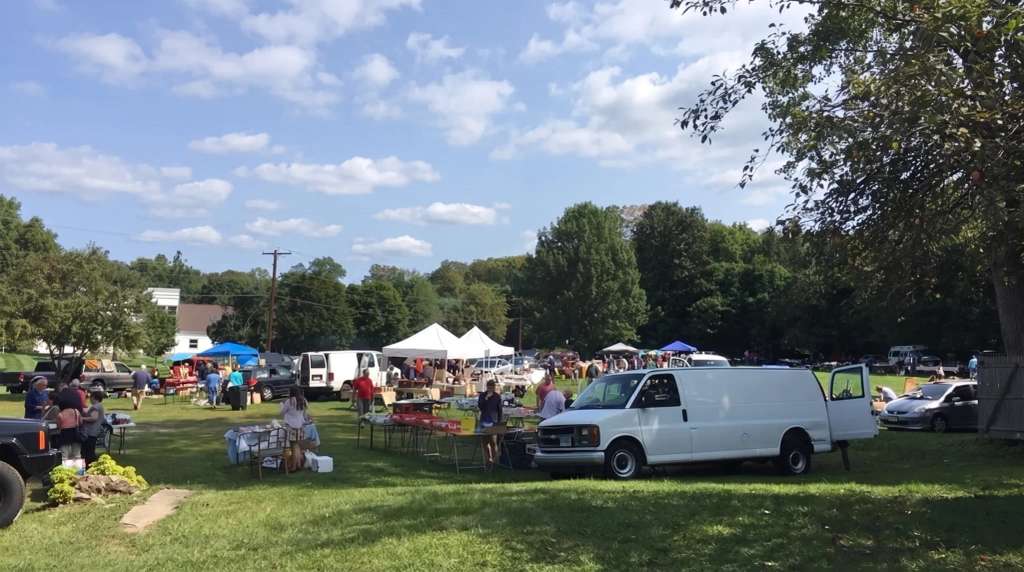
The fixed shops are one half of the antiques trade in Woodbury. The other half happens on Saturday mornings at a road junction about a mile off Main Street.
The Saturday dealer field out on Sherman Hill Road runs 7:30am to 2:30pm, roughly April through November, with free admission and free parking. The two experiences are genuinely different. The Main Street dealers offer known provenance, condition you can assess in good light, and a marked price. The market offers volume, turnover and the possibility of finding something mispriced.
Serious buyers do both, in that order, because the market shuts at half past two and the shops do not. Vendors start setting up at 6am, which tells you when the people who care most about first pick actually arrive.
Where to park, and where to eat between shops
Park once and walk the southern cluster, which is the densest run and the most rewarding on foot. Then drive the northern leg and the two southern outliers separately. Trying to walk from 12 Main Street North to 1023 Main Street South is a two-mile proposition each way, and people do attempt it because the street name never changes.
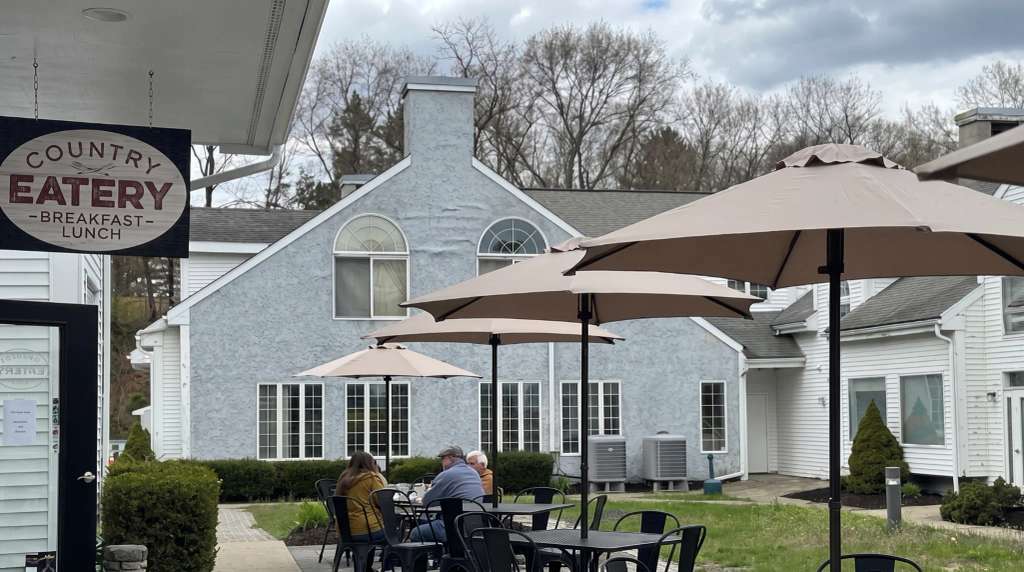
For the middle of the day, John's Cafe sits on the same stretch and is the most-visited restaurant website in the town, which is a reasonable proxy for a safe bet. If twenty minutes is all you want between shops, the coffee counter down at 787 Main Street South is the shorter stop. Twenty-eight kitchens sit within a few minutes of these shops, and the ones along this same mile are the practical choice mid-browse. Beyond the furniture, the parts of Woodbury that have nothing to do with antiques fill more of a day than the street suggests.
Frequently asked questions
Published July 21, 2026