Up on its ridge in southwest Wisconsin, Viroqua gets all four seasons at full strength: summer afternoons near 80 degrees, January nights below zero, and a fall that turns the coulees red and gold. Viroqua weather shapes what you can do here more than in a city, because the town's best days are spent outside on trout water, trails and the river.
Below are the real averages, month by month, from the National Weather Service station in Viroqua, and what each season means for a visit.
Sponsored
What is the weather like in Viroqua?
Viroqua has a humid continental climate: warm, fairly humid summers, cold and snowy winters, and short, changeable springs and falls. July is the warmest month, with an average high of about 79 degrees, and January is the coldest, with an average low of about 6.
The town gets about 38 inches of precipitation a year and about 30 inches of snow. June is the wettest month, with close to 6 inches of rain, much of it from afternoon thunderstorms, and January and February are the driest.
Averages hide the real range of a normal year. In a typical summer the hottest day reaches about 89 degrees, and in a typical winter the coldest night drops to about 17 below zero. Those are not records, just what an ordinary year brings.
The extremes are wider still. The station has recorded 108 degrees in July and 42 below zero in January, and a night well below zero happens most winters.
Viroqua weather month by month
These are the 1991 to 2020 climate normals for the Viroqua weather station, the official 30-year averages published by NOAA.
| Month | Avg high (°F) | Avg low (°F) | Rain and melted snow (in) | Snow (in) |
|---|---|---|---|---|
| January | 22.9 | 6.1 | 1.16 | 11.3 |
| February | 27.6 | 9.5 | 1.14 | 10.4 |
| March | 40.4 | 21.3 | 1.99 | 7.1 |
| April | 54.3 | 33.1 | 3.98 | 3.8 |
| May | 66.0 | 44.8 | 4.72 | 0 |
| June | 75.3 | 55.3 | 5.70 | 0 |
| July | 79.1 | 59.0 | 4.58 | 0 |
| August | 77.4 | 57.1 | 4.58 | 0 |
| September | 70.2 | 48.3 | 3.94 | 0 |
| October | 56.9 | 36.4 | 2.65 | 0.4 |
| November | 41.2 | 24.4 | 1.98 | 4.0 |
| December | 28.4 | 13.1 | 1.58 | 10.2 |
Two numbers stand out. The swing between a July afternoon and a January night is more than 70 degrees, and the snow comes almost entirely between November and March, with a few inches still possible in April.
Spring in Viroqua: March to May
Spring is short, muddy and changeable, and it is when the trout streams wake up. March averages a high of about 40 degrees and still brings around 7 inches of snow; by May, highs reach the mid 60s and the snow is done.
Rain picks up through the season: April averages about 11 days with measurable rain and May about 12 or 13. A late frost can still catch you in May, when a typical year brings at least one night near 30 degrees. Expect mud on the trails and on gravel back roads through April, and rain that builds through May. Pack layers and waterproof boots: April's records at the Viroqua station run from 8 below zero to 90 degrees.
Spring is also foraging season in the Driftless, when locals head into the woods for wild greens and mushrooms. The Saturday farmers market reopens in May, which is the clearest sign in town that winter is over.
Summer in Viroqua: June to August
Summer is warm, green and busy, with average highs in the mid to upper 70s and lows near 60. July is the warmest and clearest month, with clear or partly cloudy skies about three-quarters of the time and over 10 hours of sunshine a day on average.
It is also the stormy season. June is the wettest month of the year, and thunderstorms roll through often, so watch the sky on river trips and long rides. Humidity peaks in July, when the dew point averages around 62 degrees, warm enough to feel sticky without being oppressive.
Summer nights are the reward. July lows average about 59 degrees, which makes for good sleeping with the windows open and cool evenings around a campfire.
On the hottest days, head for swimming and shade at Sidie Hollow, where the lake has a small beach and the trails run under the trees. Summer is also when the town's festivals land, including Pride in late June and Wild West Days in mid-August.
Fall in Viroqua: September to November
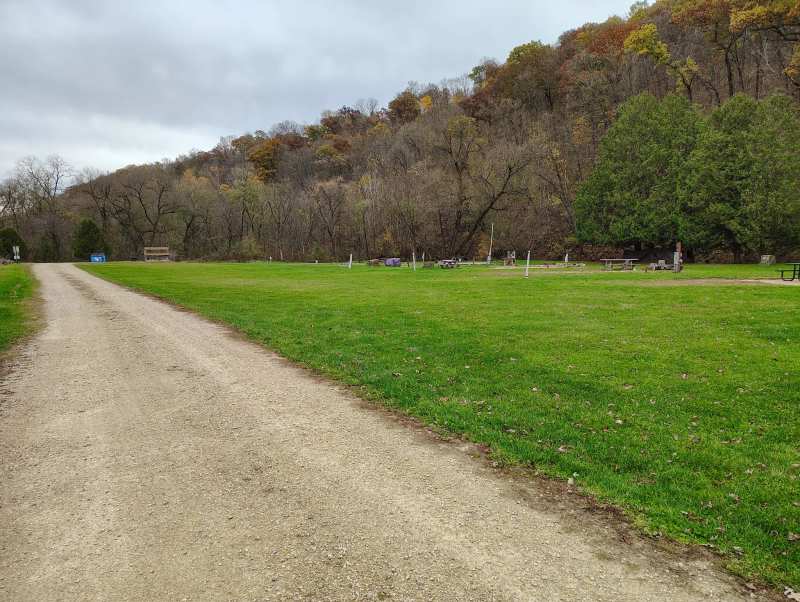
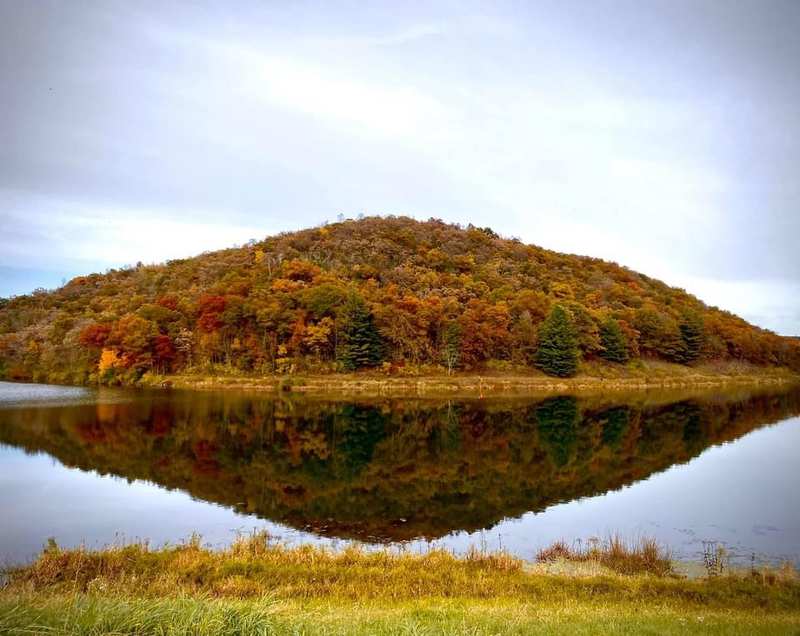
Fall is the best season to visit for many people. September is still warm, with highs around 70 and cool nights in the upper 40s, and October brings crisp days in the upper 50s and the peak of the leaf color in the coulees.
The color comes from the hardwood forests on the steep valley sides, and the views are best from high ground. The overlooks at Wildcat Mountain look straight down over the Kickapoo valley.
The classic fall drive is to the overlooks at Wildcat Mountain, the state park about 18.5 miles east-northeast of Viroqua near Ontario.
Closer to town, Vernon Vineyards keeps its tasting room open Friday through Sunday into the fall, and the fairways at Viroqua Hills Golf Course play well in cool September weather.
Frost arrives in October: a typical October brings at least one night in the low 20s, so cover the garden and expect icy windshields on early starts.
By November, highs drop to the low 40s and the first real snow, about 4 inches on average, arrives. Many trails get muddy again, and daylight shortens fast.
Winter in Viroqua: December to February
Winter is cold, snowy and quiet. January averages a high of about 23 degrees and a low of about 6, with around 11 inches of snow, and December and February are close behind. The shortest day, around December 21, has less than nine hours of daylight.
February is often the steadiest month for skiers and snowshoers, with about 10 inches of snow and highs near 28 degrees that keep it from turning to slush. Snow cover usually lasts through much of the season, which is good news for skiers and snowshoers and slow going on the back roads. Main roads into town are kept open, but the steep valley roads can be icy, so allow extra time and carry winter gear in the car.
One practical note: the Viroqua Heritage Inn B&B closes for regular stays from December 1 to June 1, so in winter the downtown hotel choice is the Hotel Fortney.
Rain, rivers and flash floods
Heavy rain is the weather to respect in the Driftless. The steep valleys funnel water fast, and creeks and the Kickapoo River can rise within hours of a big storm.
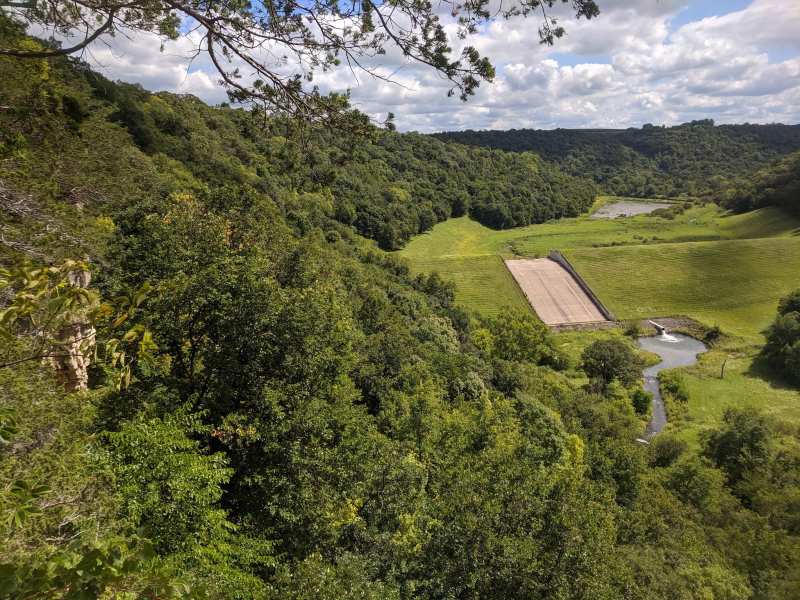
That history is written into the land. Sidie Hollow's lake exists because Vernon County built a flood-retention dam in the 1960s to protect farms in the Bad Axe River valley from flash flooding. In the Kickapoo Valley Reserve, camping on the riverbank is not allowed for the same reason, and river levels change often after rain.
If you are paddling or fishing, check river conditions with the outfitter or the reserve visitor center the morning you go, and get off the water if a storm builds.
Wind, cloud and sunshine
The ridgetops catch the wind. Average wind speeds sit around 10 miles per hour in winter and early spring and drop to about 7 in July and August, which is why summer evenings can feel still and muggy while January days feel colder than the thermometer says.
Winter is the gray season. December is the cloudiest month, overcast about half the time, with a little over 3 hours of direct sunshine a day on average. July is the bright one, with more than 10.
Weather for the big events
Plan festival clothing around the month. Wild West Days falls in mid-August, when highs average in the upper 70s and storms are common, so bring sun protection and a rain layer for a long day outdoors.
The farmers market runs Saturdays from May through October, so dress for a cool 8 o'clock start in May and October and an early heat in July. The Snowflake ski jump in Westby falls in February, among the coldest weeks of the year, so dress for standing still in the snow for a couple of hours.
When is the best time to visit Viroqua?
The best time to visit Viroqua is from mid-May through mid-October, when the farmers market is running, the trails are dry and the trout season is open. Late September and early October add fall color and cooler days, and that is the pick if you can choose just one window.
Climate data backs this up: Viroqua averages about 141 days a year with comfortable weather, falling between mid-May and September.
Summer is the liveliest season, with free music in town from May through October. Winter is for people who want quiet, snow and a seat at the theatre. Whatever you pick, Viroqua's theatre, market and trails each have their season, so match the trip to the month.
What to pack for Viroqua
Pack for the season and then add a layer. Even in summer, nights on the ridge can drop into the 50s, and a light rain jacket earns its place from May through September because of the storms.
In spring and fall, bring waterproof boots for muddy trails. In winter, bring a proper insulated coat, a hat and gloves, and boots with grip, since January lows average about 6 degrees and sidewalks can be icy. If you plan to fish, pack waders in every season, because the spring creeks run cold even in July. For a float trip on the Kickapoo, keep a dry bag for your phone and car keys.
Driving in bad weather
The highways into Viroqua cross open ridgetops, where wind and blowing snow can make winter driving harder than the snow totals suggest. Check the forecast from the National Weather Service for Vernon County before you set out, and see the five highways into Viroqua for the routes in.
History is a reminder to take the weather seriously: on June 28, 1865, a tornado struck Viroqua and killed 22 people. Summer storms here are usually just loud and wet, but when the sirens sound, take shelter.
Frequently asked questions
Published September 14, 2026