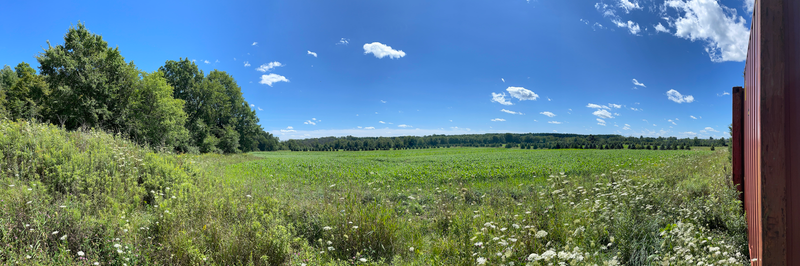
Two lobes of ice met here and ground against each other for a long time. Where they met, meltwater dumped gravel and sand into a ridge that runs south-west across the state, and when the ice finally went the ridge stayed. The Kettle Moraine State Forest Northern Unit is the 30,000 acres of that ridge sitting in Sheboygan and Fond du Lac counties, and it is the reason anyone drives out to this corner of Wisconsin at all.
It took 572,379 visitors in 2024. That sounds like a lot until you spread it across thirty thousand acres and realise that on a Tuesday in May you can walk for two hours and pass four people.
This is a day in it, from the eastern edge, where the village of Cascade sits about five miles from the boundary. The state does a thorough job of telling you the rules. Nobody tells you what order to do things in, or where to eat afterwards, so that is what this covers.
What you need before you go
The forest is open 6am to 11pm daily, every day of the year. A Wisconsin state park admission sticker is required on your vehicle, and this is the single thing that catches people out, because the entrances are unstaffed and nothing stops you driving in without one.
Two offices run the place and they keep almost opposite hours, which is worth understanding before you plan around either.
- Forest Headquarters, N1765 County Road G, Campbellsport, (262) 626-2116. Open Monday to Thursday, 10am to 4pm in the off-season. Closed Friday through Sunday.
- Henry S. Reuss Ice Age Visitor Center, N2875 Highway 67, Campbellsport, (920) 533-8322. Open Friday to Sunday, 10am to 4pm. Closed Monday through Thursday, and closed on winter holidays.
Read those twice. The headquarters is shut at the weekend and the visitor centre is shut midweek. If you want a human being and a map on a Saturday, it is the visitor centre or nothing.
Start at the Ice Age Visitor Center
The Henry S. Reuss Ice Age Visitor Center sits on Highway 67 and it is the right first stop for anyone who has not been before. The exhibits explain the glacial story, there is a short film, and the staff will tell you which trails are wet, which is information no website carries.
The building is named for a congressman who spent decades pushing to get the Ice Age Trail protected, which is a fair reason to spend twenty minutes inside before walking on it.
If it is a Tuesday and the doors are locked, the forest is still open. You just do the reading yourself.
Climb Parnell Tower first, while the light is good
Parnell Tower is a 60-foot wooden observation tower standing on the highest point of elevation in the whole forest. From the top the view runs about 25 miles in every direction on a clear day, over the hills and out across the farmland that surrounds them.
Do this early. The tower gives you the shape of the place, and once you have seen the moraine from above, every kettle and kame you drive past afterwards makes sense. Do it in the wrong order and you spend the day looking at hills without understanding why they are there.
The two lakes, and which one to pick
The forest has two main swimming lakes and they are not interchangeable. Picking the wrong one for what you want is the most common way to waste an afternoon here.
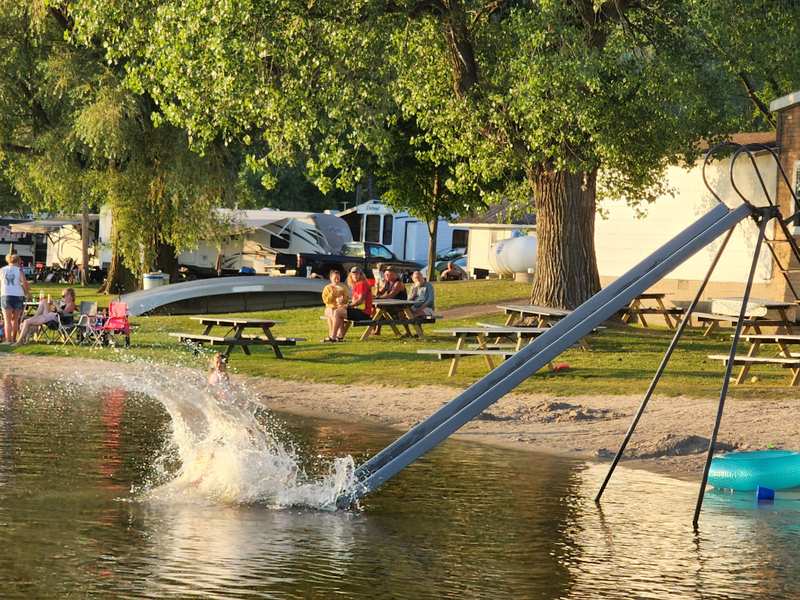
Long Lake Recreation Area holds the biggest beach and campground in the unit, with a large day-use area, a boat launch and room for a crowd. It is the one to choose if you have children, a cooler and no intention of moving far from the car.
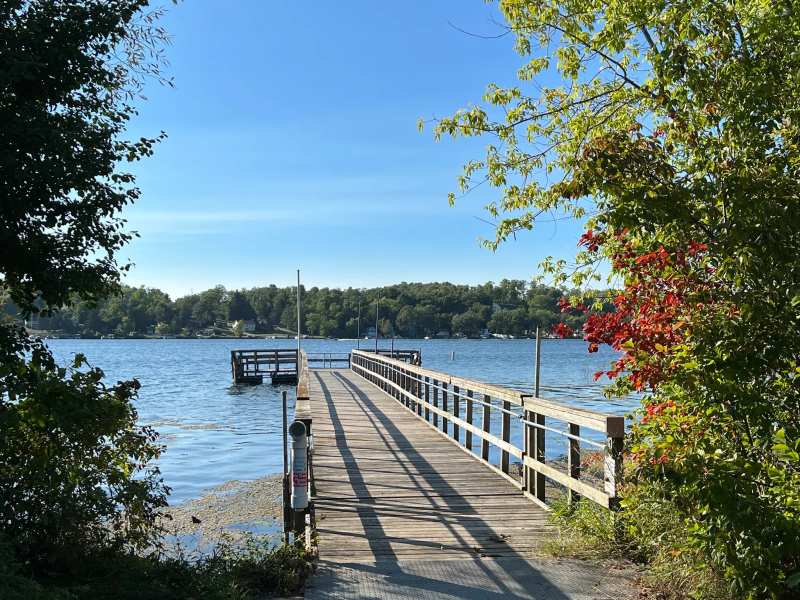
Mauthe Lake is the other one, further south-west on County Road GGG, and the difference that matters is that no motors are allowed on it. It has a swimming beach, a boat launch and a campground of its own, but the water stays quiet in a way Long Lake's does not. Bring a paddle and it is the better lake. Bring a speedboat and it is the wrong one entirely.
Both campgrounds are booked through the Wisconsin DNR, and both keep a firewood vending trailer running 24 hours a day, which is the sort of detail you only appreciate at nine at night in October. The full comparison, including the sites themselves, sits in the beach at Mauthe Lake.
Walking it: the Ice Age Trail and the rest
A segment of the Ice Age National Scenic Trail runs the length of the Northern Unit. The full trail follows the edge of the last glaciation for a thousand miles across Wisconsin, and this stretch is one of the better-regarded parts of it.
Five three-sided backpacking shelters sit along the trail inside the unit, reservable through the DNR. They are the reason people walk this section over two or three days rather than driving between trailheads, and they book out for autumn weekends well in advance.
Beyond the Ice Age Trail itself, the walking splits roughly four ways:
- Parnell Tower Trail, from the County U parking lot, overlapping the Ice Age Trail and climbing to the tower.
- The Greenbush trails, at the northern end, a network used heavily by mountain bikers, which is what fills the car park at Greenbush Recreation Area on a summer weekend.
- Zillmer and Butler Lake, in the middle of the unit, quieter loops through kettles.
- The horseriders' trails, out of the New Prospect campground, which are exactly what they sound like and worth avoiding on foot after rain.
Driving it: County A and the scenic route
The Kettle Moraine Scenic Drive runs the length of the unit, and County Road A west out of Cascade is part of it. The signage is modest and plenty of people drive the whole thing without knowing it has a name.
Doing the forest by car is not a lesser way to see it. The moraine is a landform you read best at thirty miles an hour, and the route strings together most of what is worth stopping for. The drive through the kettles lists the stops in order, which the official route map does not.
The glacial features, and how to spot them
Three shapes account for most of what you are looking at, and once you can name them the whole forest reorganises itself.
A kettle is a hole. A block of ice broke off the retreating glacier, got buried in gravel, and eventually melted out, leaving a depression that often filled with water. Half the small lakes here are kettles.
A kame is a mound. Meltwater poured down a crack in the ice carrying sediment, which piled up underneath, and when the surrounding ice melted the pile was left standing on its own. Dundee Mountain is the obvious one in this unit.
An esker is a ridge. A river ran in a tunnel under the ice, dropping gravel along its bed, and when the ice went the riverbed was left standing above the ground around it. The Parnell Esker is the one people come to see.
There is also Spruce Lake Bog, a State Natural Area in the unit holding plant communities left over from a colder climate, on a boardwalk you can walk in trainers.
When to come, and what each season actually does
The forest is open every day of the year and it is a genuinely different place four times over. Picking the wrong month for what you want is more costly here than picking the wrong trail.
Autumn is the season people plan around, and Parnell Tower is why. The hardwoods on the moraine turn hard, and from sixty feet up you see the colour running over hills rather than along a road. Weekends in the first half of October are the busiest the forest gets all year, and the backpacking shelters go early. Come on a weekday if you can.
Summer is lake season. Long Lake fills up, Mauthe stays calmer, and the trails get humid and buggy in the low wet sections between kettles. Mornings are better than afternoons, both for the heat and for the mosquitoes. This is also when the Greenbush mountain bike network is at its best and its most crowded, which are the same thing.
Winter turns the trail network over to skis and snowshoes, and the horseriders' trails out of New Prospect go quiet. The visitor centre keeps its Friday-to-Sunday hours but closes on Thanksgiving, Christmas Eve and Day, New Year's Eve and Day, and Martin Luther King Jr. Day, so check before driving out over a holiday weekend. The tower is still open and the view is longer without leaves in the way.
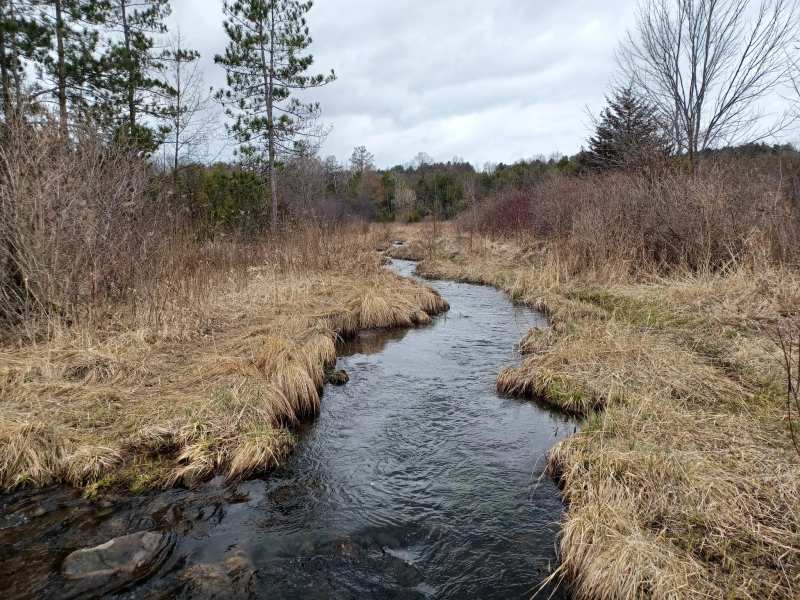
Spring is the honest weak spot. The ground here holds water, the low stretches between kettles turn to mud, and the horse trails in particular are best left alone until things dry. The upside is that you get the place almost to yourself and the spring runs feeding the creeks are running hardest.
Two things hold true in every season. There is no food inside the forest, so bring what you need or plan the tavern stop. And mobile coverage is patchy in the low ground, which matters if you are relying on a phone for the trail map.
Where to eat and sleep on the eastern edge
This is the part the official pages will never carry, and it is the difference between a day trip and a weekend.
Cascade is the nearest village, five miles from the boundary, with five places to eat and four to sleep. It is not a resort town and it does not pretend to be.
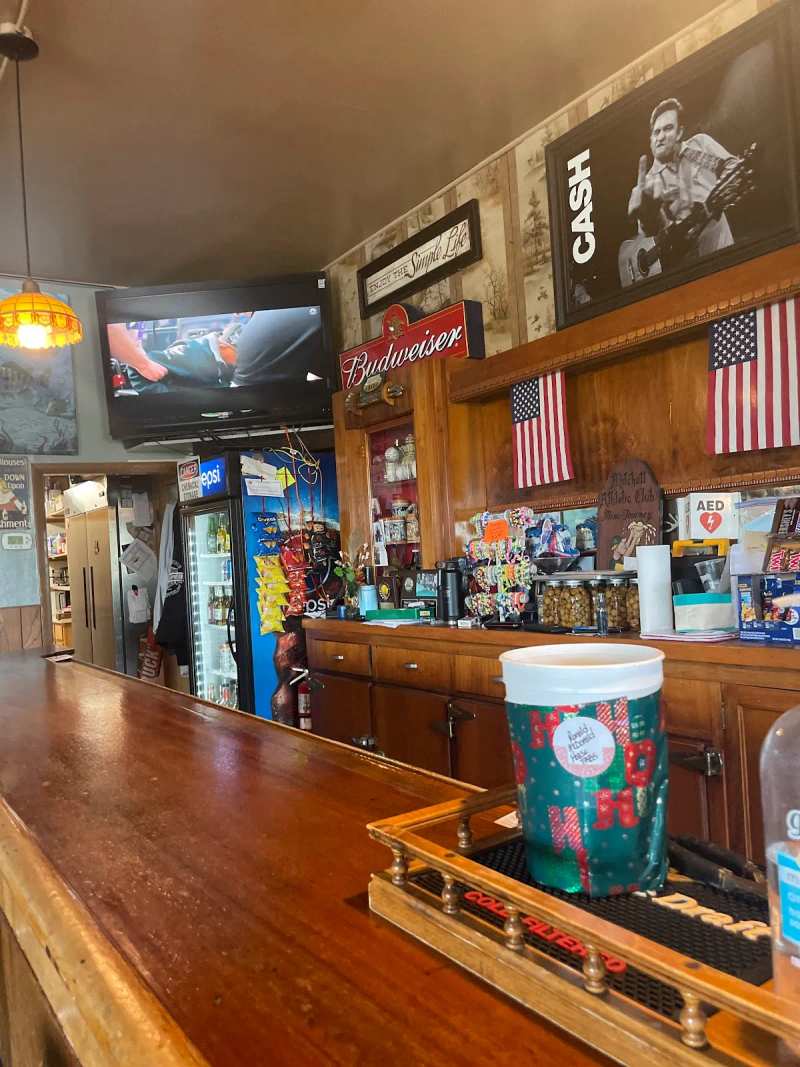
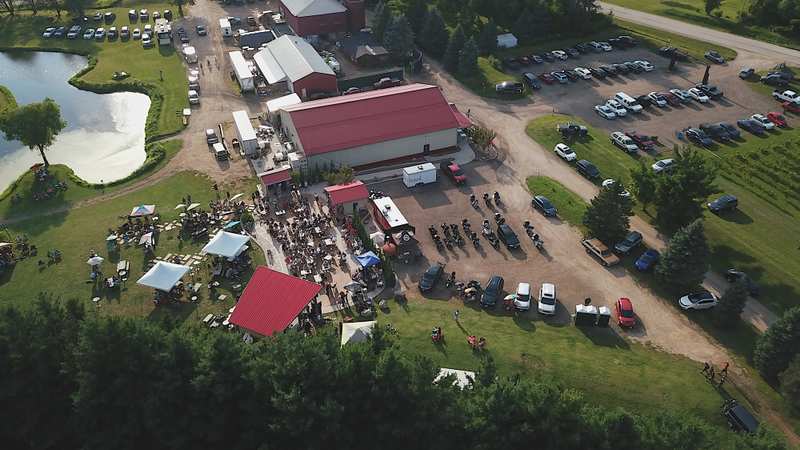
In the village itself, Sipp's Bar -N- Grill does perch and bluegill dinners and Nevvo'z Pizza does a cracker crust. Out west on County F, SoLu Estate Winery & Meadery makes wine and mead on the property and runs live bands most weekends in season, which turns a Saturday in the forest into a Saturday evening as well.
For sleeping, the state campgrounds at Long Lake and Mauthe Lake are inside the forest and go through the DNR. Outside it, Hoeft's Resort & Campground on Crooked Lake runs tent sites through to cabins with an arcade and a snack bar, and Larson's Resort takes a 38-foot fifth wheel on a powered site. Between the state sites and the private resorts there are nine options within ten miles, laid out in nine places to pitch within ten miles.
Doing it in one day, in order
If you have a single day and want the shape of the place rather than a piece of it, this is the sequence that works.
- Morning. Visitor centre on Highway 67 if it is a weekend, then Parnell Tower off County U. Climb it before the haze comes up.
- Late morning. The Parnell Tower loop, or the Greenbush trails if you would rather ride than walk.
- Lunch. Parnell Tavern at the crossroads, which is the only thing close enough not to break the day.
- Afternoon. Long Lake for the beach, or Mauthe Lake with a paddle. Spruce Lake Bog if the weather turned and you want something short.
- Drive out. County A east as the Kettle Moraine Scenic Drive, slowly.
- Evening. Harbor Lights on Lake Ellen, or SoLu if there is a band on.
That is a full day and it leaves out the horseriders' trails, Butler Lake, the New Prospect end and most of the Ice Age Trail. Thirty thousand acres does not fit into one visit, and anyone telling you otherwise has not walked it.
The village at the eastern edge is small but it is the practical base, and there are a few things worth an hour in the village of Cascade itself.
Frequently asked questions
Published September 7, 2026