Highway 23 runs between Sheboygan and Fond du Lac, and about halfway along it there is a cluster of buildings, a wooded recreation area and a village most people drive through in fifteen seconds. Greenbush, Wisconsin is worth stopping in for one very specific reason: a stagecoach inn built in 1849 that never moved and never burned down.
The village sits 9.6 miles north-north-west of Cascade, at the northern end of the Kettle Moraine State Forest Northern Unit. It is unincorporated, it is small, and almost everything worth your time here sits on 240 acres just off the highway.
It was not always this quiet. The inn stood on the main line of Highway 23 until the mid-1980s, when the road was rerouted to bypass north of the village. Greenbush has been losing its through traffic since the railway killed the stagecoach route in the 1850s, and the bypass finished the job. The place you drive into now is what is left, and it is better for it.
Wade House: what it actually is
Wade House is a Wisconsin Historical Society site built around the Sylvanus Wade House, a Greek Revival plank-road inn put up in 1849 by architect Charles Robinson. It served travellers on the plank road between Sheboygan and Fond du Lac, in the years before a railway made the stagecoach route pointless.
The site covers 240 acres and holds nine major structures, three of them listed on the National Register of Historic Places. The inn itself went on the register in 1971.
This is an open-air museum rather than a house tour. Horse-drawn wagons carry visitors between the visitor centre and the historic buildings, and there is a boardwalk and walking trail if you would rather go on foot.
The carriage museum, which is the surprise
The Wesley W. Jung Carriage Museum holds Wisconsin's largest collection of hand-drawn and horse-drawn vehicles: carriages, sleighs, wagons, fire wagons. Wesley Jung was the grandson of a Sheboygan carriage maker, and the collection came to the site in 1968. The current visitor centre and museum building opened in 2013.
This is the part nobody arrives for and plenty of people stay longest in. Wisconsin had a serious carriage-building industry before the car took it, and the hall is the record of it. Budget more time than you think.
The sawmill, which is the better surprise
The Herrling Sawmill is a reconstructed water-powered mill on its original site, rebuilt between 1999 and 2001, and it runs. An up-and-down saw driven by water from the Mullet River, with no electricity in the building at all.
It is described as Wisconsin's only working water-powered sawmill and one of a small number left anywhere in North America. Costumed staff run demonstrations, as they do at the Dockstader Blacksmith Shop, where the demo runs around half an hour.
If you take one thing away from the site, it is watching something built in the 1850s do actual work without a wire attached to it.
The buildings, and which are original
Nine major structures, three of them on the National Register. Two are original to their sites rather than moved or rebuilt: the Wade House itself and the Charles Robinson House. The third listed building is the Robinson-Herrling Sawmill.
The centrepiece is a 27-room stagecoach hotel built in 1850, visited on a guided tour. The blacksmith shop is a reconstruction, in a log building brought here in the 1950s.
The site was restored between 1950 and 1953 by the Kohler Foundation and handed to the state, running for years as Old Wade House State Park before the Historical Society took it on directly. It is one of twelve Wisconsin Historical Society sites and museums.
Hours, and the winter rule that wastes drives
Read this part before you set off, because Wade House keeps two completely different schedules and the winter one is severe.
- 23 May to 1 November 2026: Wednesday to Saturday, 9:30am to 4:30pm. Sunday, 11am to 4:30pm. Closed Monday and Tuesday.
- 7 November 2026 to 22 May 2027: Saturdays only, 9:30am to 4:30pm, and visitor centre and carriage museum only.
Six days a week in summer, one day a week in winter. The site is also closed over the New Year holidays, Martin Luther King Jr. Day, Easter, Thanksgiving weekend and Christmas weekend.
There is a cafe on site, the Butternut, serving lunch from 11am to 2pm. The address is W7965 State Highway 23, Greenbush, and the number is (920) 526-3271.
What it costs
Admission changes with the season, like the hours.
Spring, summer and autumn: $15 for adults and teens, $13 for seniors over 65, $8 for children 5 to 12, and free under five. Winter drops to $8 for adults and teens, $6 for seniors and $4 for children.
Wisconsin Historical Society members get free general admission and ten per cent off ticketed events.
The one worth knowing if you live nearby: Half-Price First Saturdays gives Sheboygan and Fond du Lac county residents fifty per cent off on select Saturdays each month. Nobody advertises this outside the county.
Greenbush Recreation Area and the trails behind the village
Behind Greenbush sits one of the best trail networks in the Northern Unit. Greenbush Recreation Area holds 13.5 miles of trail, which makes it the largest walking and riding network in the forest after the Ice Age Trail itself.
Mountain bikers use it heavily, and on a summer weekend the car park fills. There is a group campground as well, which is how scout troops and clubs end up here.
A segment of the Ice Age National Scenic Trail runs through, and the Greenbush Kettle nearby is a textbook example of the landform the whole forest is named for.
Events worth timing a visit around
The site runs a programme rather than just opening its doors, and some of it is genuinely unusual.
Stagecoach Saturdays put you in a replica Concord coach for a thirty-minute ride through the Kettle Moraine countryside. Prairie Schooner Saturdays do the same with a horse-drawn covered wagon. There are blacksmithing workshops where you hammer your own knife or hatchet, an arts and crafts fair, and vintage base ball played by 1860s rules once a month from May to September.
Ticketed events sit on top of general admission, so check the calendar before you set a date.
Making a day of it from Cascade
Greenbush and Cascade work well as a pair, because neither is quite a day on its own.
The drive between them is 9.6 miles of county road through the northern end of the forest, and the stops along the way sit on the scenic drive south.
A workable shape: Wade House in the morning while the wagons are running, lunch at the Butternut or back at the tavern, then the Greenbush trails or the tower in the afternoon.
Getting there, and where Greenbush sits
Greenbush is on Highway 23 roughly halfway between Sheboygan and Fond du Lac, which is why the plank road ran through it in the first place. Coming from Cascade it is 9.6 miles north-north-west. Plymouth is the nearest town of any size at about seven miles east.
The site is signposted off the highway rather than on it, since the bypass. Watch for the brown historic-site signs and take the turn a few hundred yards past them.
Where to eat near Greenbush
Greenbush itself has the museum cafe and not much else. The nearest range of options is south.
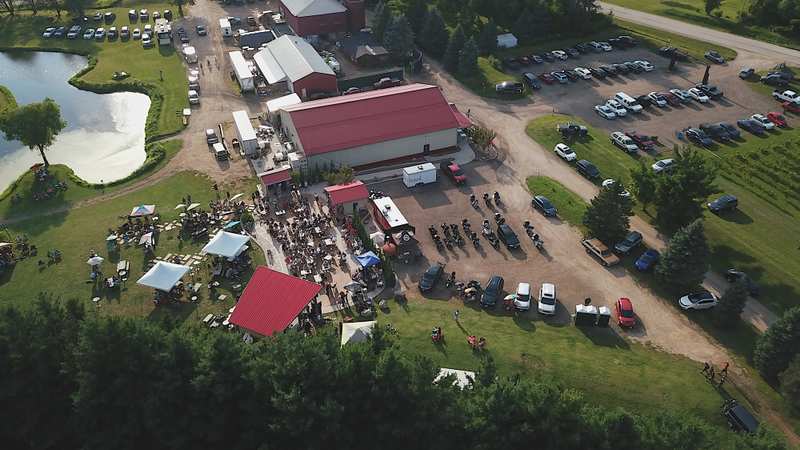
SoLu Estate makes wine and mead on County Road F and runs live bands most weekends in season. Sipp's Bar -N- Grill in Cascade village does perch and bluegill dinners and a long dessert list. Harbor Lights on Lake Ellen has a patio and a summer beach bonfire, which is the better bet if the weather has held.
Elkhart Lake is 12.3 miles north if you want more choice than Cascade offers, and Plymouth is 6.4 miles east of Cascade with the same advantage.
The forest that Greenbush sits at the top of, including the two swimming lakes and the visitor centre hours, is covered in the Kettle Moraine at its northern end.
For a bed, fuel and the rest of a weekend, Cascade, at the southern end is the practical base at the southern end.
Frequently asked questions
Published August 10, 2026