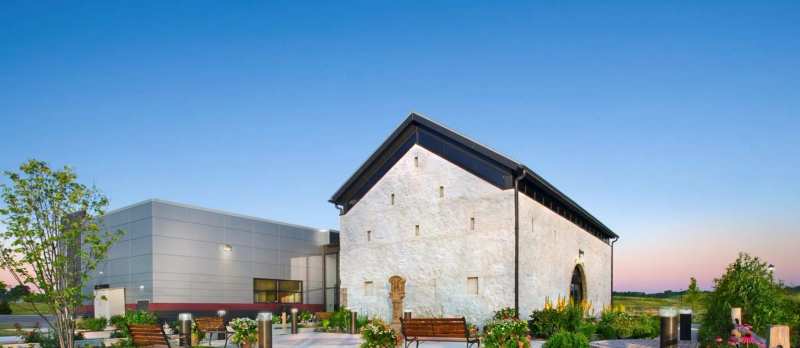
A flooded limestone quarry sits half a mile back from Lake Michigan, twenty six acres of water so clear and green it looks like it was shipped in from somewhere else. Harrington Beach State Park holds that quarry, a mile of undeveloped shoreline, a white cedar swamp and seven miles of trail, across 715 acres at the top of Ozaukee County. It is the largest thing in a village of 2,421 people by a wide margin.
The park opened in 1966 and carries the name of C.L. Harrington, the first superintendent of Wisconsin's state parks. Most people drive in, sit on the sand, and drive out again. That is a fine day. It is also about a third of the place.
The beach
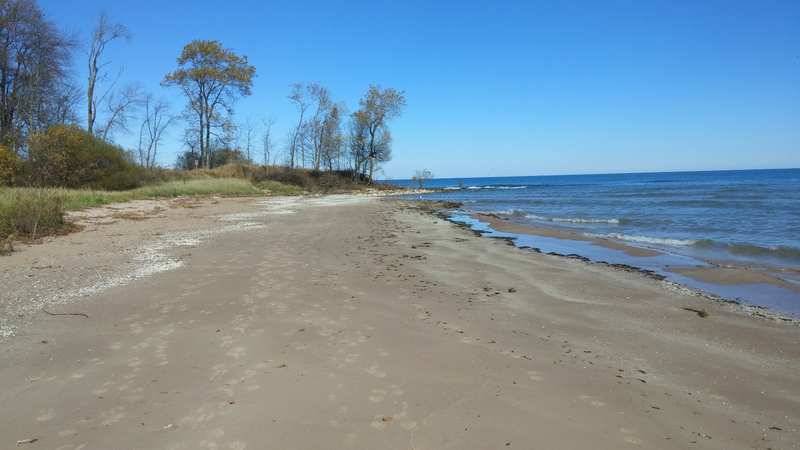
The shoreline runs a full mile and it is one of the few undeveloped beaches left on the Wisconsin side of Lake Michigan. No boardwalk, no concession stand, no rank of hotels behind it. Sand, driftwood and a lot of sky.
It divides informally into a north and a south end. Dogs are welcome on a leash throughout the park and may swim at the south end, which is the practical reason to walk that way if you have brought one. The north end is quieter on a busy day because it takes longer to reach from the lot.
That lot is the thing to plan around. On a warm Saturday in July it fills by late morning and there is an in-season shuttle down to the water, which tells you how far the walk is and how often the parking runs out. Arrive before ten or come after four.
Quarry Lake
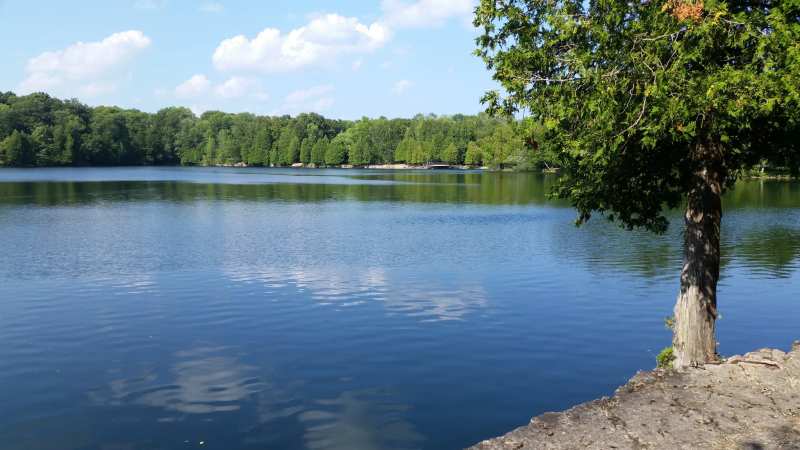
The quarry is the reason to come back a second time. Limestone was cut here from the late 1800s and shipped out by water, and when the cutting stopped the pit filled. What is left is a lake with rock walls, unusually clear water, and a colour that does not look like Wisconsin.
You cannot swim in it. You can fish it, walk the whole way round it, and stand on the point that runs out into the middle. The loop around the water is about a mile with roughly fifteen feet of climb, which makes it the easiest serious walk in the park and the one to do first.
The trail crosses a bridge, passes a small stream and a seasonal waterfall that runs in spring and after heavy rain and is dry for much of the summer. Do not plan a trip around the waterfall.
The trails, and what is buried under them
Seven miles in total. The quarry loop is the headline, but the interpretive path and the historical route are where the park gets interesting.
There was a settlement here called Stonehaven, built for the men who worked the quarry and their families. It is gone. The trail runs over and past its foundations, and an eroded road still cuts through the woods where the traffic used to go. None of it is dramatic. It is the kind of thing you walk over twice before you notice it, and then cannot stop noticing.
Limestone left the site on a pier that ran 700 feet out into Lake Michigan in the early 1900s. Parts of it are still in the water off the historic beach. On a calm, clear day the line of it is visible from shore.
The white cedar swamp in the interior is the part hikers from elsewhere in the state make a special trip for. It is an unusual plant community this far south, and the boardwalk through it is quiet in a way the beach never is. Back from the shoreline, the restored wetland at Puckett's Pond is the best birding on the property.
Some trails are shared with bicycles, and there is horseback riding and cross-country skiing in season.
Fishing
Two very different kinds in one park. Quarry Lake is fished from the bank and from the point, and it is the quieter option. Lake Michigan shore fishing off the beach is the other, and it runs to salmon and trout in the right season, which is why you will occasionally see people walking in at dawn with waders and no interest in the quarry at all.
There is no bait or tackle sold inside the park. Buy in the village or in Port Washington before you come.
Birding
The mix of habitat is what makes this park good for birds rather than the acreage. Lake Michigan shoreline, restored wetland ponds, old field grassland and a cedar swamp sit within a mile of each other, which pulls in more species than any one of them would alone.
Spring and fall migration are the windows. The wetland back from the beach and the swamp boardwalk are the two places to stand still.
Camping
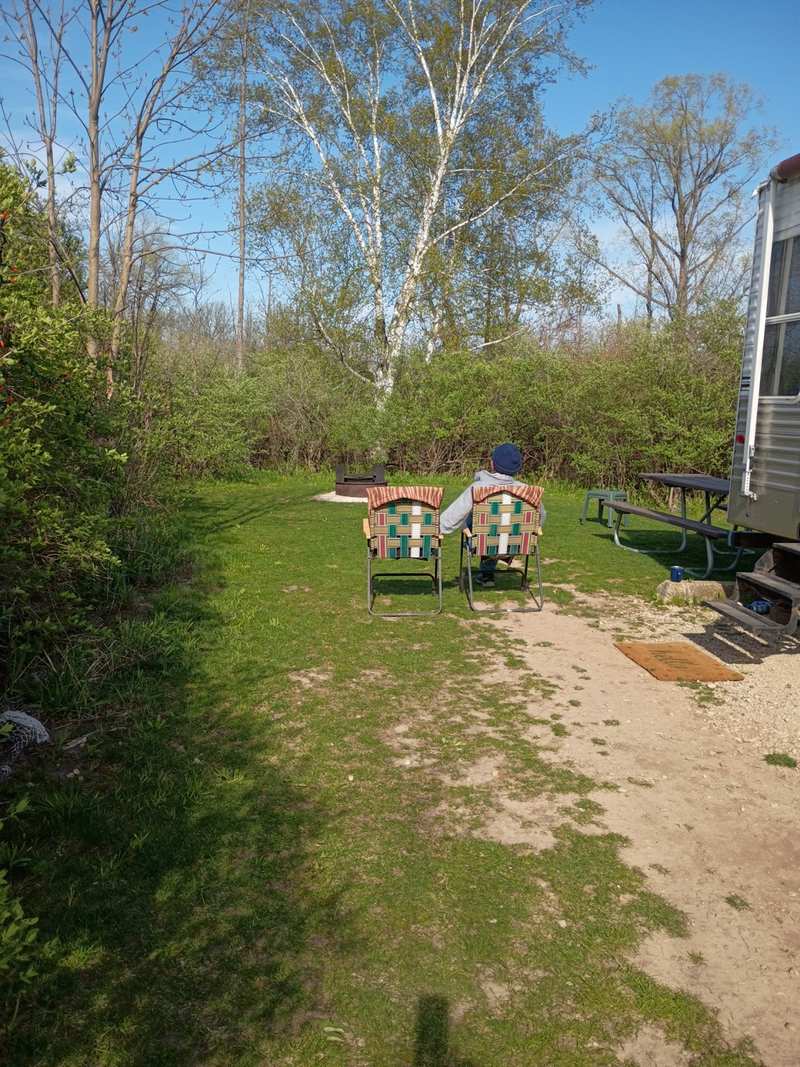
The campground is a genuine reason to come rather than an afterthought. Sites are wooded, the bathhouse is clean and well kept, and the whole thing sits close enough to walk to both the quarry and the beach.
Beyond the family sites there is a group campsite for up to thirty, tent only, with two fire rings, five picnic tables and a fourteen-vehicle lot. There is a kayak site. And there is an accessible cabin built properly rather than nominally, with counters a wheelchair rolls under, a roll-in shower, hospital-style beds and Hoyer lifts available, plus a pull-out bed and cots on a screened porch for family.
Firewood is sold at the park office and from the campground host at site 100 through the summer. Book ahead for July and August.
If camping is not the plan, the four places to sleep in Belgium are all within a few miles of the gate.
Accessibility
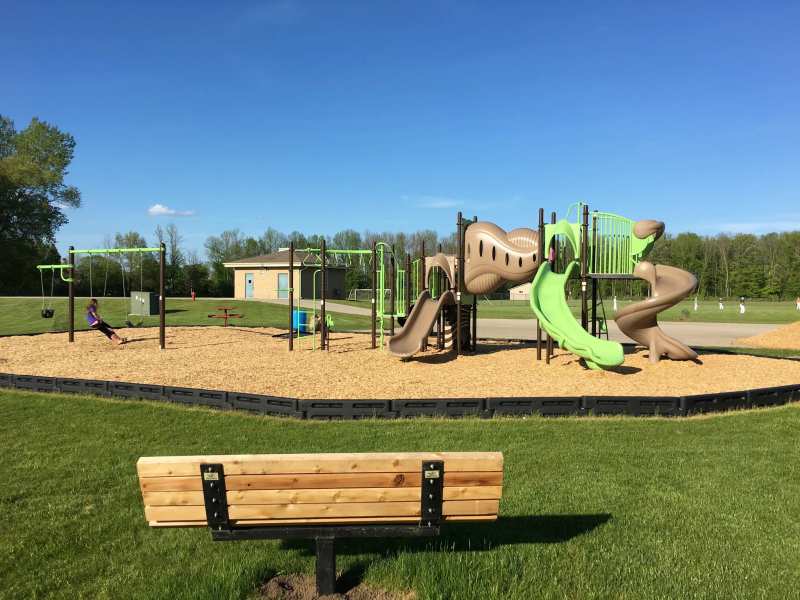
Better than most parks of this size, and worth spelling out because the official pages bury it. There is a universal playground, accessible picnic shelters and accessible campsites alongside the cabin already described.
The quarry loop is compacted and close to level, with about fifteen feet of climb across a mile, which makes it the most usable of the seven miles of trail for anyone who does not want rough ground. The beach itself involves sand, and there is no getting around that.
The observatory and the dark sky
There is a public observatory in the park with monthly viewing nights run by volunteers. That is unusual for a state park this size and it is the single most underused thing here.
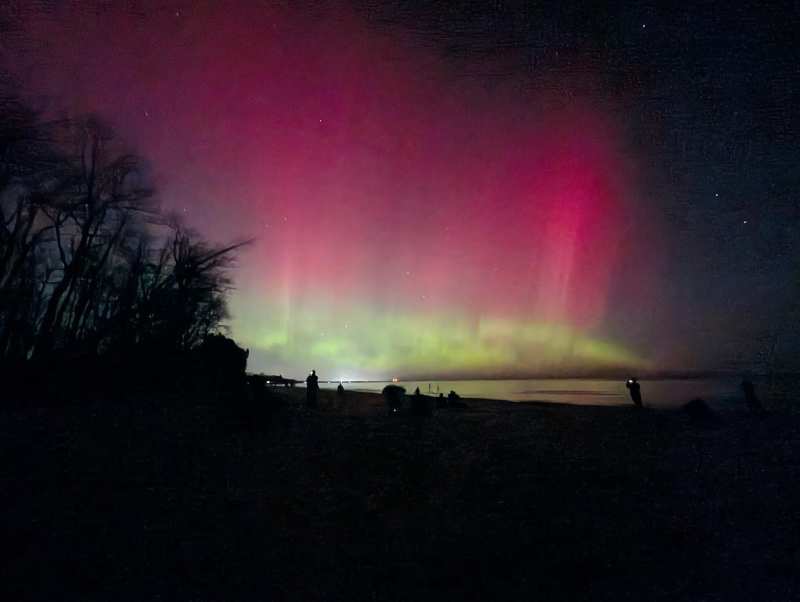
Northern Ozaukee County is dark by the standards of anywhere within forty miles of Milwaukee, and people do come out to the quarry for aurora when the forecast is good. Be realistic about that. Wisconsin gets a handful of decent nights a year and most attempts end with a cold walk back to the car.
Winter
The campground shuts after the last weekend in October and the park stays open. Cross-country skiing is the main winter use, on groomed stretches, and there is horseback riding in season on the designated routes.
A guided hike runs here on the first of January most years and draws a genuine crowd for something that happens in a Wisconsin January. The beach in February, with ice shelf built up along the shoreline, is the most dramatic this park ever looks and almost nobody sees it.
Running it
The park is on the course of the local race weekend. The race series run out of the village puts a 10k hybrid trail run through Harrington Beach and a half marathon loop out past the old Stonehaven ground, alongside a flat 5k on the village roads.
If you are training rather than racing, the quarry loop is a clean mile and the shared-use paths take a longer run without road crossings.
Getting there, and what it costs
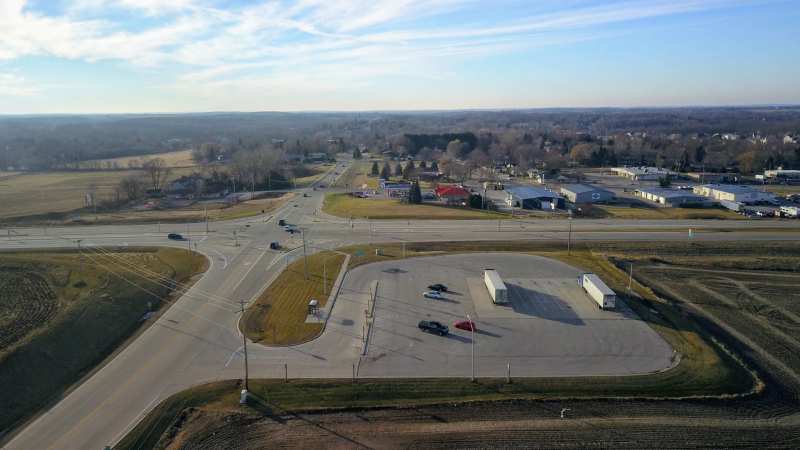
Take exit 107 off I-43, signed Belgium and Lake Church, and head east on County Highway D for about a mile. The entrance is on the right. The park is roughly 35 miles north of Milwaukee and 21 miles south of Sheboygan.
Ignore route directions that send you around by Highway 57 and Highway 28. They exist online, they are longer, and exit 107 is the only exit you need. The full orientation, including where to leave a car in the village, is in the run up from Milwaukee on I-43.
A Wisconsin state park vehicle admission sticker is required, daily or annual, and camping is billed separately. The welcome center can be rented for events, which is how a fair number of people in this county first end up inside the park.
What to bring
There is no food or drink anywhere in the park. None. That surprises people every summer, and the nearest anything is a mile west in the village.
Bring water, bring lunch, and bring shoes you can walk a mile of packed trail in if you intend to see the quarry rather than photograph it from the lot. Sand does most of the work on the beach side. Firewood you can buy on site, so do not haul your own, and Wisconsin asks you not to move firewood between counties anyway.
If you want a roof rather than a tent, the inn out by the interstate is two miles away and has a sauna and a hot tub, which after a cold day on the shore is not nothing.
Thirteen miles south, the bluff stairs and the beach at Lion's Den Gorge make the obvious second stop if you have a full day on this stretch of coast.
When to come
July and August for swimming and the busiest parking. October for the quarry loop, which is the best walk of the year here. Winter for skiing and an empty beach, with the campground shut from the last weekend in October. Spring is the weakest stretch, muddy underfoot, and the case for each season is set out in the seasonal rundown for the village.
Whatever you come for, walk the quarry. Almost nobody who drives out here for the beach knows it is back there, which after sixty years is a strange thing to still be true. The rest of what the village is good for is in the rest of a day in Belgium.
Frequently asked questions
Published June 22, 2026