In 1898 a dance teacher named Frederick W. Kehl opened an academy on West Johnson Street, a few blocks from the Capitol, and his family kept it going for generations. Kehl School of Dance is still teaching today, and it is a good place to begin, because the dance studios Madison families use now are spread across the whole city rather than gathered in one neighborhood.
There is a cluster on the south side near the Beltline, a pair on the near east side, one out east on Stoughton Road, and more out west and in Middleton. This maps them all, with straight-line distances from the Capitol, and is clear about what each one is for.
Where Madison's dance studios are
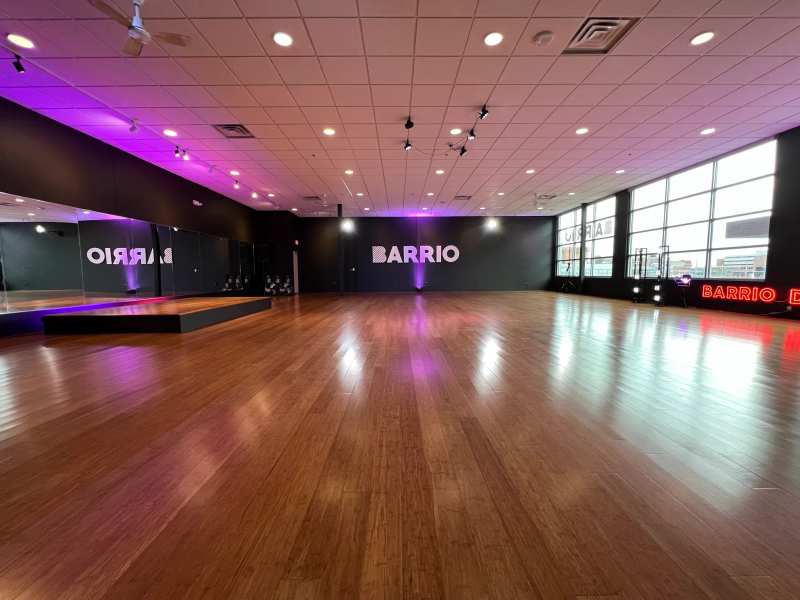
On the south side, three studios sit close to the Beltline: Kehl on Verona Road, 5.3 miles southwest of the Capitol, Studio Dansu on Ski Lane and Madison Professional Dance Center on Syene Road. The near east side has Variations Dance Academy on East Mifflin Street and Barrio Dance on East Washington Avenue, both within about a mile of the Capitol.
Out east, Monona Academy of Dance is on South Stoughton Road. Out west, Dance Life sits on Seybold Road, and Vibe is in Middleton on Greenview Drive.
In practice, the real choice for a family is usually between the two or three studios closest to home.
Kehl, teaching since 1898
The Wisconsin Historical Society keeps a record of the original academy, which taught at 309 West Johnson Street from 1898 to 1906. Few studios anywhere can tell a child that students were learning to dance at the same school more than a century ago.
For a family, that history matters less than the classes themselves. But it does tell you this is a school that has outlasted plenty of trends.
Why Madison takes dance seriously
Madison has an unusual place in the history of American dance. In 1926, under the dance pioneer Margaret H'Doubler, the University of Wisconsin-Madison became the first university in the country to treat dance as an academic discipline.
The UW dance department still works out of Lathrop Hall near Lake Mendota, with five studios and a 240-seat theater named for H'Doubler. Its performances are open to the public, and taking a young dancer to a university show is a cheap, close-up way to see what serious training leads to.
All-style schools on the south and east sides
Between them, Dansu and Monona cover the classic Madison family studio: a full menu of styles, a recital, and a path to more serious training for dancers who want it.
The near east side
For a teenager who has outgrown a recital studio or never wanted one, Barrio is often the right answer. There is no season to sign up for, the music is current, and the room is full of older teens and adults rather than younger kids.
Middleton and the west side
For adults on the west side, Dance Life Studio and Fitness on Seybold Road describes itself as a body-positive and fat-positive studio, with belly dance, burlesque, Bollywood and hip hop among its classes.
Teens and adults
Grown-ups have plenty more choice, from salsa nights on Willy Street to ballroom off the Beltline, and the classes for grown-ups include drop-in options with no commitment.
Starting ages
Several Madison studios take very young children. Kehl teaches from age two, Variations runs preschool arts programs, and Vibe in Middleton teaches preschoolers.
For a toddler or preschooler, a good class is mostly movement, music and games, about 30 to 45 minutes long, with a teacher who expects short attention spans and plans for them. Proper technique comes later. A three-year-old who leaves class happy and asks to come back has had a good class, whatever the steps looked like.
Studios usually group the youngest classes tightly by age, so a three-year-old is not in a room with six-year-olds. Ask how the studio splits its early classes before you sign up.
What the studios teach
Nearly every Madison studio covers the core set of ballet, tap, jazz and hip hop. The useful differences are at the edges, and they should drive your choice as much as the address.
For a classical path to pointe, look at Vibe in Middleton. For a child who loves performing generally, Studio Dansu adds acting and camps. Variations is the place for baton twirling and stagecraft, and for preschool arts. Kehl has a competitive team for dancers who want one, and Monona leans on performance opportunities in different venues. For teens who want current urban styles without a recital, Barrio is the answer.
If your child has not settled on a style, a studio with a broad menu, like Dansu, Monona or Kehl, lets them try a few before committing.
When a teenager outgrows the recital studio
Plenty of Madison teens hit a point around middle school where a recital studio stops fitting. They want current music, older classmates and more freedom about what they learn.
The city has good answers. Barrio's drop-in urban classes take teens from 13, with no season to commit to. Madison Professional Dance Center teaches hip hop, jazz and tap to teens and adults together. And for a teen who loves performing more broadly, Studio Dansu's acting classes and camps add the stage side.
None of this means leaving dance. It usually means keeping it, in a form that fits who they are now.
Competition or recreational
A big fork in the road for a dance family is whether to join a competition team. A recreational track is usually one or two classes a week and a spring recital, and it fits around school and other activities.
A competition track asks much more: several classes a week, extra rehearsals, weekend travel through the winter and spring, and separate costumes and entry fees. In return, dancers improve quickly and often make close friends on the team.
Ask each studio how a dancer joins the team, whether there is an audition, and whether a child can try the recreational side before deciding.
How a season runs
Madison studios generally follow the school year. Registration opens in late summer, classes start in September, and the season builds toward a recital in late spring. Expect a costume order in the fall or early winter, so costumes arrive in time for recital rehearsals.
Many studios also run summer camps or short summer sessions, which are a low-commitment way for a child to try a studio before signing up for a full year. Studio Dansu, for one, lists camps among its programs.
What to buy
Wait for the studio's dress code before buying anything. Requirements vary by style and by studio, and some studios sell or recommend specific shoes and leotards so a class looks uniform.
For a young child starting ballet, the usual list is a leotard, tights and ballet slippers. Tap needs tap shoes, and hip hop usually just needs clean sneakers kept for indoor use. At Barrio, heels classes call for heels you can actually dance in. Buy shoes with a little room, and check the fit again midway through the season, because feet grow.
Questions for a trial visit
Most studios will let a child try a class before you register, and the visit is your best chance to ask the questions that matter later in the year.
Ask how parents wait: in a lobby with a window into the room, or outside until pickup. Ask how the studio handles bad-weather nights in January, whether classes are canceled and whether missed ones can be made up. Ask how many weeks the season runs and when the recital is, so you can check it against family plans. And ask whether a child can switch classes or levels partway through if the original choice is not working.
A good studio will be glad you asked. A studio that gets vague about costs or schedules is telling you something too.
Choosing a studio
Start with what your child actually wants, then look at the drive. The studios on this map run from under a mile from the Capitol to about eight miles out in Middleton, and over a nine-month season, twice a week, that difference adds up.
Ask for a trial class, and ask what the season costs in full: tuition, registration, recital costume, competition fees and recital tickets. Ask how big the classes are, because a class of eight and a class of twenty feel very different to a shy six-year-old. And watch the room if you can. You want a teacher who knows the children's names and keeps the youngest ones moving.
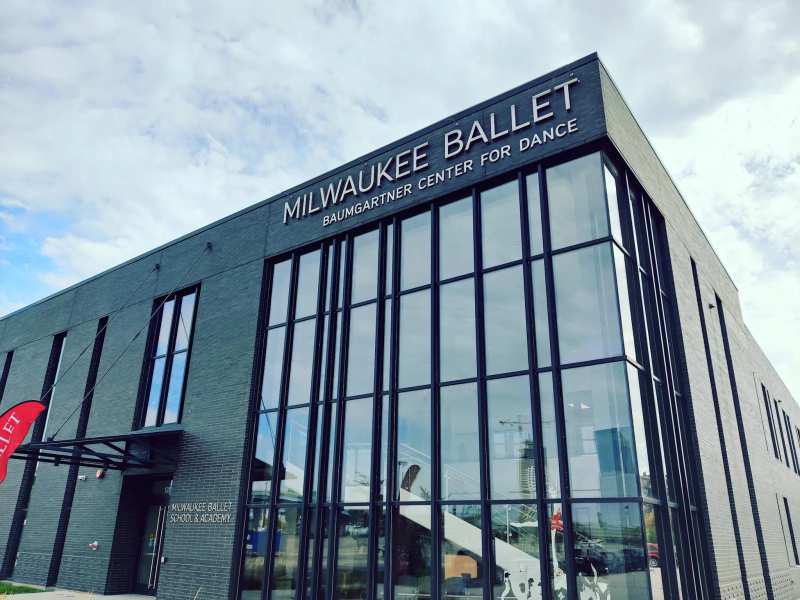
If you are looking further afield, the studios beyond Madison run from Milwaukee Ballet's school to the Fox Valley.
Frequently asked questions
Published October 5, 2026