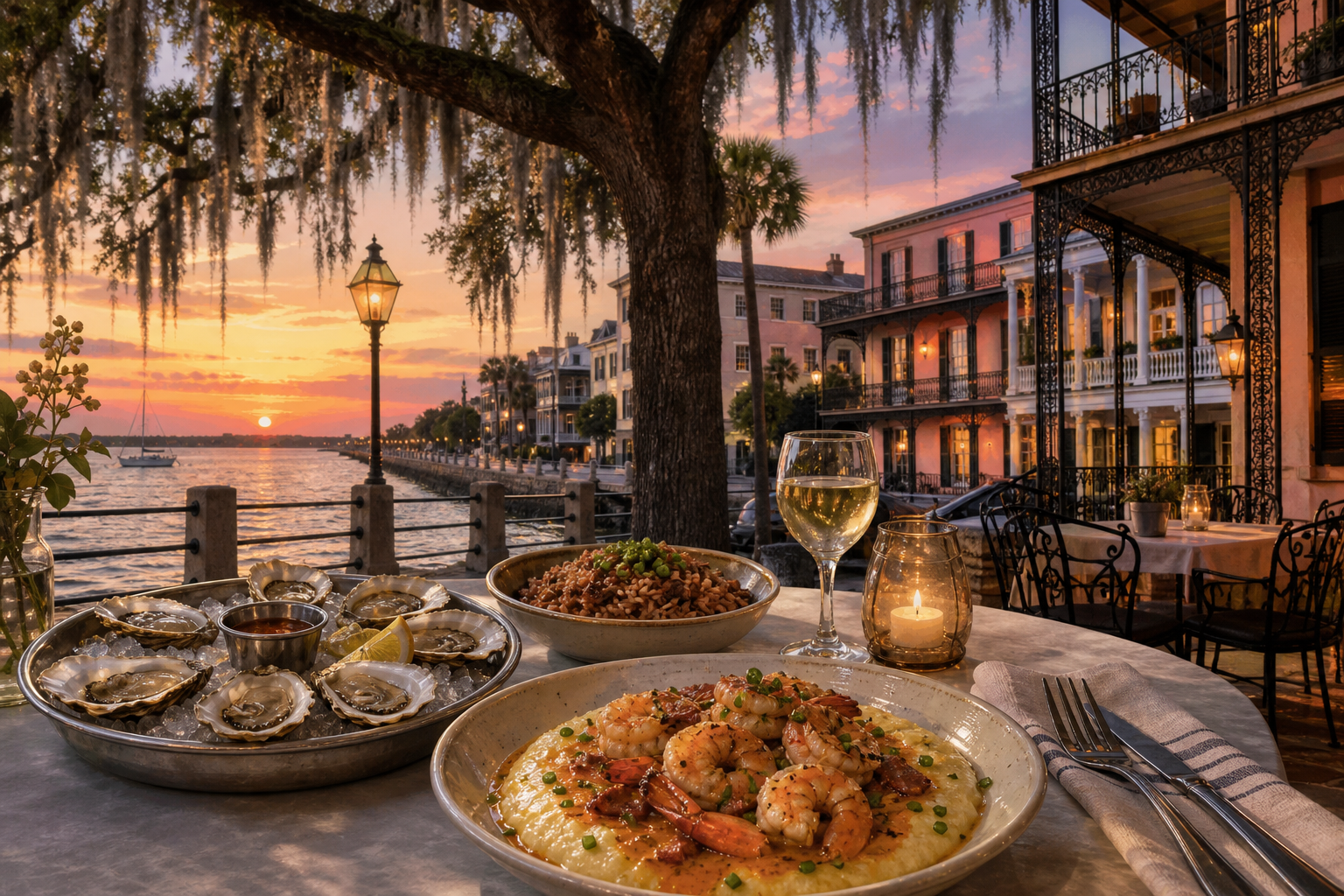
Charleston's food tells centuries of history in a single bowl of shrimp and grits, and the city keeps adding new chapters.
Find your next great meal in Charleston
Explore Charleston's top dining neighborhoods and find the right restaurant for your next meal.
Why Charleston earns its reputation as a food city
Charleston is widely regarded as the culinary heart of the South, and that reputation is built on more than tradition. The city's dining scene has attracted national recognition, Michelin stars, and a Food & Wine Classic that expanded to Charleston in 2024, the first time the long-running event moved beyond its original Aspen home. What makes Charleston distinctive is the layering: centuries-old Lowcountry cooking sits alongside chef-driven tasting menus and intimate omakase counters, all within a few walkable neighborhoods. Talented chefs from around the country have relocated here, drawn by year-round local harvests and a food culture that rewards both tradition and experimentation.
Lowcountry cuisine and the ingredients that define it
To eat well in Charleston, it helps to understand what Lowcountry cooking actually is. The style originated in the coastal areas of South Carolina and rose from a blend of West African, French, Spanish, English, and Native American influences, making it one of the most culturally layered regional cuisines in the country. Rice is the foundation: dishes like Hoppin' John, red rice, chicken bog, and purloo all trace back to rice cultivation that shaped the region's agricultural and culinary identity. Seafood, particularly shrimp and oysters, runs through nearly every menu. The most iconic dish, shrimp and grits, is exactly what it sounds like: boiled shrimp finished with butter or bacon, salt, and pepper, served over grits. Simple, deeply satisfying, and almost impossible to eat badly in Charleston.
Neighborhoods shape the dining experience as much as the menu
Where you eat in Charleston matters as much as what you eat. Upper King Street, north of Calhoun, is the city's food and nightlife engine, named one of America's top food neighborhoods, and it is where you will find the highest concentration of chef-driven restaurants, lively bars, and late-night options. The French Quarter, closer to the waterfront, offers a more historic atmosphere with gracious Southern hospitality and menus built around fresh local ingredients. Cannonborough-Elliotborough tends to be the better pick for casual, food-led meals without the crowds. The Historic District is a reliable starting point for first-time visitors. Understanding these distinctions helps you match the neighborhood's energy to your mood, whether you want a quiet dinner or a lively night out. For a similar neighborhood-by-neighborhood approach in another Southern food city, see our guide to eating your way through New Orleans.
Award-winning restaurants worth planning around
A handful of Charleston restaurants have earned recognition that makes advance planning worthwhile. FIG, whose name stands for Food Is Good, is a James Beard Award-winning restaurant on King Street, the city's main corridor for dining and shopping. Vern's has joined the Michelin Star ranks as a newer addition to the city's fine dining landscape. For something more intimate, Sushi Bar Charleston operates as a twelve-seat omakase counter in the French Quarter, offering a 17-course tasting menu led by Michelin-starred chef Anthony Martin. These are not casual walk-in spots: reservations at places like Sorelle can be genuinely difficult to secure, particularly on Friday and Saturday nights. Building your itinerary around one anchor reservation and filling in the rest with more accessible neighborhood spots is a practical approach.
Practical habits that make Charleston dining easier
A few habits separate a frustrating dining experience from a great one. Book reservations as early as possible for any restaurant with national recognition, and check cancellation policies since popular spots fill weeks out. Seasonal menus are common here because so many kitchens source locally, so what is on the menu in spring will differ from what you find in fall. Tourist-heavy areas near the waterfront tend to have longer waits and higher turnover; locally favored spots in Cannonborough-Elliotborough or Upper King often deliver a more genuine experience. If you are exploring other cities with strong local dining cultures, the same principles apply: our Sioux Falls restaurant guide covers how to navigate a less-familiar food scene with the same local-first mindset.
How to plan a great meal in Charleston
- 1
Decide what kind of meal you want
Charleston offers everything from casual Lowcountry comfort food to multi-course tasting menus. Before searching for a specific restaurant, settle on the experience you are after: a relaxed lunch of shrimp and grits, a celebratory dinner at a James Beard-recognized kitchen, or an intimate omakase counter. Matching the format to the occasion saves time and prevents the common mistake of booking a tasting-menu restaurant when you actually want a laid-back neighborhood meal.
- 2
Pick the right neighborhood for your mood
Upper King Street suits lively evenings with a wide range of cuisines and a younger crowd. The French Quarter is better for a more historic, atmospheric dinner close to the waterfront. Cannonborough-Elliotborough is the local's choice for casual, food-focused spots without tourist-area noise. Knowing the neighborhood's character before you go means you arrive with the right expectations and spend less time wandering.
- 3
Book reservations well in advance
For any restaurant with national recognition, such as FIG or Sorelle, reservations can be difficult to secure, especially on weekends. Book as early as your plans allow, check whether the restaurant uses a waitlist system, and have a backup option in the same neighborhood in case your first choice is full. Walk-in spots and counter seating exist, but relying on them for a top-tier restaurant on a Saturday night is a gamble.
- 4
Read the menu before you arrive
Many Charleston kitchens rotate their menus seasonally, sourcing from local farms and coastal suppliers. A dish you read about in a review may not be available on the night you visit. Checking the current menu online also helps you identify whether the kitchen leans toward Lowcountry tradition, contemporary Southern, or something more globally influenced, so you arrive knowing what to expect.
- 5
Balance one anchor restaurant with neighborhood exploration
The most satisfying Charleston food trips usually combine one planned, reservation-required dinner with more spontaneous meals at neighborhood spots. Use your anchor reservation as the centerpiece of the trip and fill lunches and casual dinners with locally recommended spots in Cannonborough-Elliotborough or Upper King. This approach lets you experience both the city's celebrated fine dining and its everyday food culture.
Benefits
Centuries of culinary tradition
Lowcountry cuisine draws from West African, French, Spanish, English, and Native American influences, producing a regional cooking style found nowhere else in the country. Eating in Charleston means engaging with that history in every dish.
National and international recognition
Charleston holds James Beard Awards, Michelin Stars, and now hosts the Food & Wine Classic, which expanded here in 2024. The city's dining scene is not just locally celebrated; it is benchmarked against the best in the country.
Distinct neighborhoods, distinct experiences
From the lively energy of Upper King Street to the historic atmosphere of the French Quarter and the casual local feel of Cannonborough-Elliotborough, Charleston's neighborhoods give diners genuine variety within a walkable city.
Locally sourced, seasonal menus
Many Charleston kitchens source from local farms and coastal suppliers, meaning menus shift with the seasons. Thoughtfully sourced local ingredients are a defining characteristic of the city's most respected restaurants.
Who this guide is for
First-time visitors planning a long weekend
A traveler arriving in Charleston for the first time often defaults to the Historic District, which is convenient but not always where the most interesting food is. Starting with one well-researched reservation at a James Beard or Michelin-recognized restaurant, then spending other meals exploring Upper King or Cannonborough-Elliotborough, gives a much fuller picture of the city's dining range. Shrimp and grits at a classic Lowcountry spot should be on every first-timer's list.
Locals rediscovering their own city's food scene
Charleston's dining landscape changes quickly. Vern's earning a Michelin Star and the Food & Wine Classic arriving in 2024 are signs that new restaurants and formats are opening regularly. A local who has not explored Upper King recently may be surprised by how much the neighborhood has evolved. Checking current listings and new openings is worthwhile even for long-time residents.
A group planning a special occasion dinner
For a birthday, anniversary, or celebration dinner, Charleston's intimate tasting-menu restaurants are a strong choice. Sushi Bar Charleston's twelve-seat omakase counter with a 17-course menu is the kind of experience that works well for a small group who wants a chef-driven, immersive evening. Booking far in advance is essential for these formats, and confirming dietary restrictions at the time of reservation is standard practice.
Food-focused travelers comparing Southern cities
Travelers who have already eaten their way through New Orleans or are planning to often ask how Charleston compares. The two cities share a deep reliance on seafood and rice-based dishes, but Charleston's Lowcountry tradition is distinctly its own, shaped by a different set of cultural influences and a coastal geography that puts oysters and shrimp at the center of the plate. Our guide to dining in New Orleans by neighborhood offers a useful point of comparison.
Common questions about eating in Charleston
Find the right Charleston restaurant for your next meal
Charleston's dining scene rewards the people who plan ahead and eat with curiosity. Whether you are booking a Michelin-starred omakase counter or looking for the best bowl of shrimp and grits in the French Quarter, Local Eyes can help you find the right spot. Browse Charleston restaurant listings to see what locals are recommending right now.