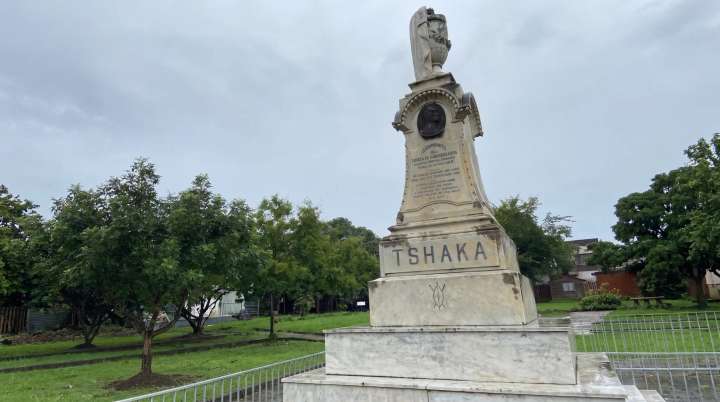
King Shaka was killed here on the 22nd of September 1828, and the memorial that marks the spot stands in the middle of the modern town, on the street that carries his name. The exact place of his grave is not certain, but the site is taken to be where he fell, and it is the reason this town exists at all. The wider story of KwaDukuza heritage runs from that killing through a sugar-and-settler century to the home of a Nobel Peace laureate a few kilometres south, and all of it is visitable in a single morning.
Where is King Shaka buried?
Shaka built his royal settlement, kwaDukuza, on this site around 1825. The name means "the place of the lost person", a description of the maze of huts the capital had become. On the 22nd of September 1828, while his army was away, he was attacked by his half-brothers Dingane and Mhlangana together with his servant Mbopa. He is said to have made his way about fifty metres from where he was struck to the spot where he died, which is where the memorial now stands. His capital was burnt down after his death, and the exact location of his grave was lost, so the memorial marks the site rather than a confirmed burial place.
The memorial stone itself came later. It was made in Newcastle, in the north of the province, erected in 1932 by the Zulu nation, and declared a national monument on the 29th of June 1938. The rock Shaka is said to have been sitting on has been moved a few metres and placed beside it.
Visiting the King Shaka Memorial and Visitor Centre
The memorial sits on King Shaka Street in the centre of town, and you should give yourself an hour. Phone ahead to make an appointment rather than simply arriving, because access is not always open on demand.
On the grounds you will find the memorial and the rock, an interpretive centre with a short slide show on Shaka's reign and death, a small curio shop, and two traditional Zulu huts, one built for sleeping and one for storing food. If you can time your visit for the 24th of September, the annual Shaka Day ceremony is held here, led by the reigning Zulu king with his warriors and dignitaries, and it is the one day the site returns to something like its original purpose. The rest of the year it is quiet, and a weekday morning is the calmest time to come.
The new KwaDukuza Museum
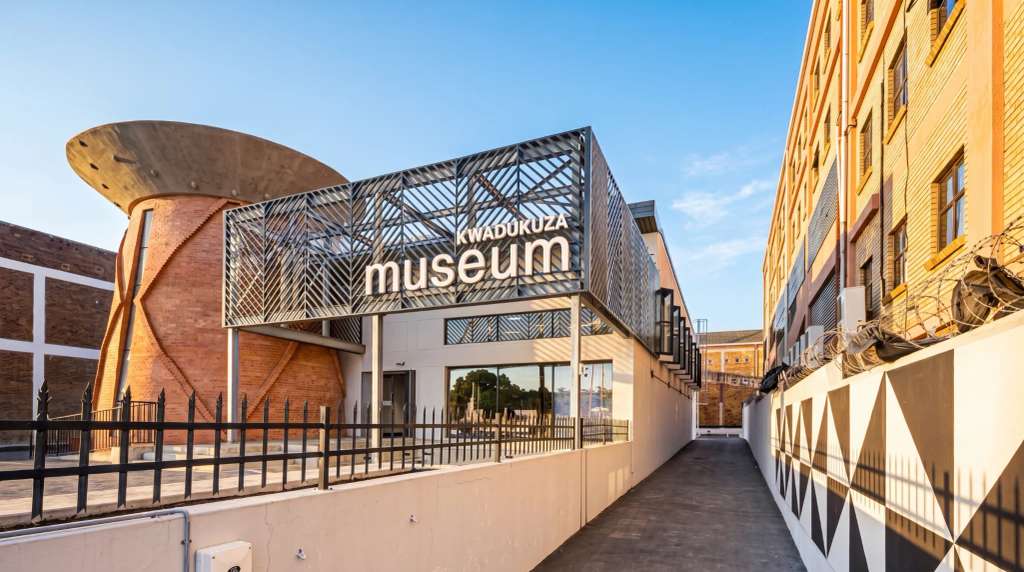
Directly opposite the Visitor Centre, the KwaDukuza Museum has moved into a striking new building topped with a tower shaped like an isicholo, the wide traditional hat worn by married Zulu women. This is a genuine upgrade on the single curio room the town relied on for years, and it is worth pairing with the memorial across the road.
Inside, the displays balance the deep history with the recent. Permanent exhibits cover the early settlers, the Zulu heritage of the area, the prominent people of the town including Chief Albert Luthuli, and the sugar and paper industries that built the modern economy. Alongside them sit exhibitions marking thirty years of democracy, including a collection of struggle-era political t-shirts and displays on figures such as Albertina Sisulu and Charlotte Maxeke. It is a civic museum, low-cost, and it fills in everything the memorial across the street cannot.
Chief Albert Luthuli and Groutville
A few kilometres south of town at Groutville is the home of Chief Albert Luthuli, president of the African National Congress and, in 1960, the first African to be awarded the Nobel Peace Prize. His house was proclaimed a museum in 2004 and preserves the rooms much as he used them, along with photographs, newspaper clippings and mementoes from the years of the anti-apartheid struggle.
The Luthuli Museum is at 3233 Nokukhanya Luthuli Street in Groutville. It opens Monday to Saturday from 08h30 to 16h00, and on Sundays and public holidays from 11h00 to 15h00, closing only on the 25th and 26th of December and the 1st of January. Luthuli is buried in the nearby Groutville Congregational Church cemetery, and close by is the rock from which Shaka is said to have reviewed his regiments, so the two histories of the area sit almost on top of each other. It is an easy add-on to the morning in town.
The sugar town and the 1860 Indian community
The modern character of KwaDukuza was shaped by two things: sugar, and the people brought to work it. After Shaka's capital was destroyed, European settlers built a town on the site, laid out formally in the early 1870s and named Stanger after Dr William Stanger, the first Surveyor-General of Natal. The town was officially renamed KwaDukuza in 2006, though almost everyone still calls it Stanger.
From 1860, indentured workers were brought from India to cut and mill the sugar, and their descendants built much of the town's commercial centre and its Muslim and Hindu communities. That history is not just in the record, it is on the plate: the curry houses and bunny chow that define eating in KwaDukuza are the living side of the 1860 arrival. The Jacaranda-lined streets, the temples, and the halaal grills of the CBD are all part of the same inheritance.
Making a heritage morning of it
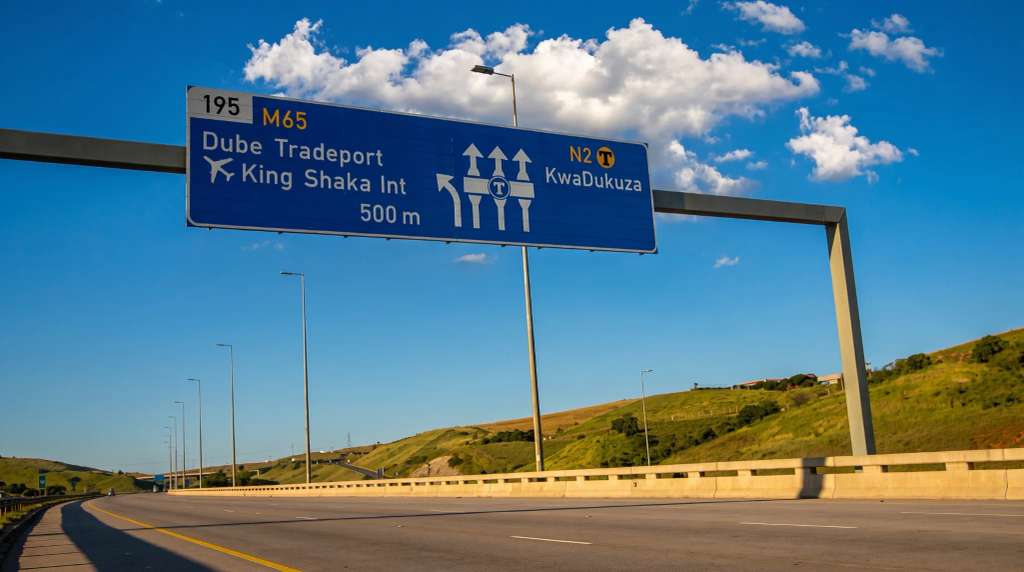
Start at the King Shaka Memorial and the museum opposite while the day is cool, then drive south to Groutville for the Luthuli Museum, checking its hours before you go. That is a comfortable half-day, best in the morning, and it leaves the afternoon free for the food or the beach. The rest of what there is to do in KwaDukuza slots in around it, and getting to KwaDukuza is straightforward whichever direction you are coming from.
Frequently asked questions
Published August 11, 2026