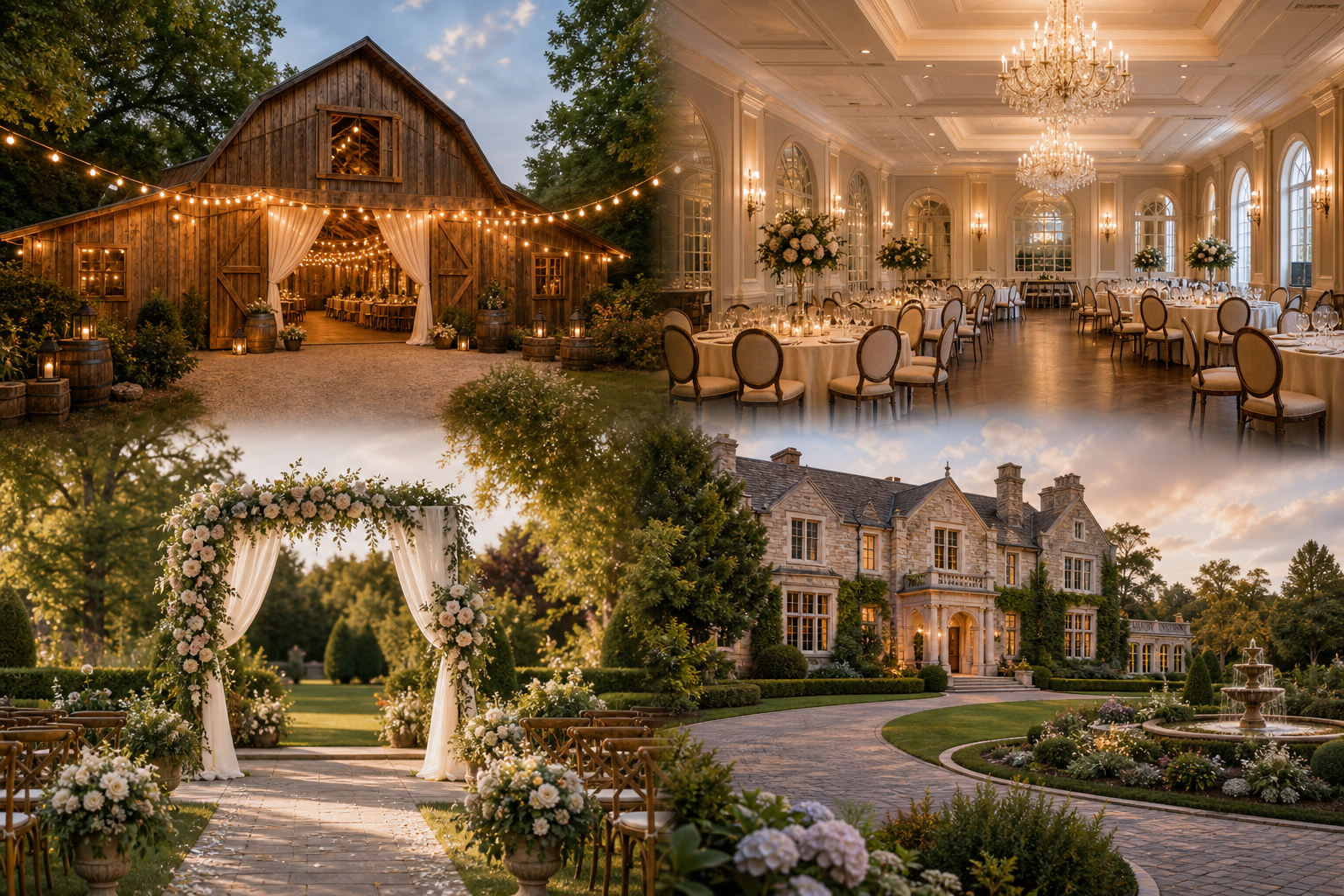
The venue sets the date, the guest count, and a large share of the budget before any other vendor is confirmed.
Start your wedding venue search locally
Explore local wedding venues on Local Eyes and find the spot that fits your vision, guest list, and budget.
Why the venue decision shapes everything else
The wedding venue is almost always the first major booking a couple makes, and for good reason: it sets the date, the guest count, the atmosphere, and a large share of the budget before any other vendor is confirmed. 82% of couples hire their venue first, according to The Knot 2025 Real Weddings Study. That sequencing matters because most other vendors, from caterers to photographers, organize their calendars around the venue date. Choosing the venue first gives you a fixed anchor for every decision that follows. It also means that if you delay the venue search, you risk losing your preferred date entirely, especially at popular spots.
The venue landscape, from barns to ballrooms
Wedding venues span a wide range of settings, each with a distinct atmosphere and a different set of logistical trade-offs. Banquet halls are purpose-built for large celebrations, typically offering in-house catering teams, set menus, and fully equipped kitchens, though some allow outside caterers. Hotels offer convenience for out-of-town guests and often bundle ceremony and reception spaces. Barns and farms deliver a relaxed, rustic feel but may require renting tables, linens, and portable restrooms separately. Botanical gardens and historic estates provide built-in visual character, though they sometimes come with stricter vendor restrictions or noise curfews. Knowing which category fits your vision before you start touring saves time and prevents you from falling for a space that cannot practically work for your day.
What the rental fee actually covers
One of the most common surprises in venue contracts is the gap between the headline rental figure and the final invoice. Some venues quote a room rental that covers only the space itself, leaving catering, staffing, bar service, linens, and setup entirely separate. Others bundle most of those elements into a per-head package. Service fees, often 18 to 25 percent added on top of food and beverage totals, are standard at many full-service venues and can significantly change the total. Cake-cutting fees, corkage fees for outside wine, and overtime charges for running past the contracted end time are other common additions. Reading the contract line by line, and asking the venue coordinator to walk you through every possible add-on, is the only reliable way to compare venues on an equal footing.
Capacity, guest minimums, and how they interact
Every venue has a maximum capacity set by fire code, but many also enforce a minimum guest count that can catch couples off guard. Smaller venues may require 50 to 100 guests; large hotel ballrooms and exclusive estates often set minimums at 150 to 200. These minimums exist because venues have fixed operational costs, including staffing, utilities, and insurance, that do not change based on how many guests attend. Some venues will waive a guest-count minimum if you commit to a minimum food and beverage spend instead, which can work in favor of a smaller wedding at a larger space. Always confirm both the maximum and the minimum before you fall in love with a room.
Booking timelines and when to start looking
The window between starting your venue search and securing a signed contract is shorter than most couples expect. It is generally recommended to begin searching 12 to 18 months before your intended wedding date, and popular venues in sought-after markets can book 18 to 24 months out, sometimes longer for peak Saturdays in summer. Peak wedding season runs roughly June through September, with Saturdays commanding the longest lead times. Choosing a Friday, Sunday, or an off-peak month opens up availability that a peak Saturday simply will not have, and often at different price points. If your timeline is shorter, targeting off-season dates and being flexible on the day of the week gives you the most options.
How to find and book the right local venue
- 1
Set your priorities before you tour
Before contacting a single venue, agree on the three things that matter most: approximate guest count, preferred atmosphere (formal, rustic, garden, urban), and whether you need the venue to handle ceremony and reception in the same location. Knowing your non-negotiables in advance prevents you from being swayed by a beautiful space that cannot accommodate your guest list or requires vendors you cannot use. Write them down and bring the list to every site visit.
- 2
Research local venues and check availability
Use local guides, community platforms, and word-of-mouth to build a shortlist of venues in your area. Check each venue's website for a capacity range, venue type, and any stated policies on outside vendors. Contact your top choices early to confirm your preferred date is still open before investing time in a full tour. Many popular venues will not hold a date without a signed contract and deposit, so treat the availability check as step one of the booking process, not step two.
- 3
Tour each venue in person
Photos and virtual tours do not reveal everything. Visit each shortlisted venue at the time of day your event would actually run, so you can assess natural light, noise from nearby roads or other event spaces, and the flow between ceremony and reception areas. Ask to see the kitchen, the restrooms, and the parking situation. Bring a list of specific questions covering catering arrangements, vendor policies, what is included in the rental, and what the setup and breakdown windows look like.
- 4
Compare contracts on equal terms
Once you have toured your top candidates, request itemized proposals from each. Line up the rental fee, catering arrangements, service charges, minimum spends, and any additional fees side by side. Most couples aim to keep the venue within 30 to 40 percent of the total wedding budget, so running these numbers against your overall budget before signing is essential. Pay close attention to the cancellation and postponement policy, the guest count minimum, and any clauses about vendor restrictions.
- 5
Sign the contract and secure the date
Once you have chosen your venue, move quickly. Most venues require a signed contract and a deposit to hold the date, and verbal agreements are not binding. Review the contract one final time with fresh eyes, or have someone you trust read it, before signing. Confirm the payment schedule, the final guest count deadline, and what happens if you need to change the date. Once the contract is signed, you have your anchor: every other vendor booking can follow.
Benefits
Venue type shapes total cost
Whether a venue includes in-house catering, staffing, and rentals has a larger effect on the final bill than the headline rental figure alone. Comparing venues on total cost, not just the room fee, is the only way to make an accurate budget decision.
Early booking protects your date
Popular venues in peak season book 18 to 24 months in advance. Starting the search early is the single most effective way to keep your preferred date, location, and day of the week on the table.
Guest minimums can limit your options
Many venues require a minimum number of guests, and some will only waive that requirement if you meet a minimum food and beverage spend. Knowing a venue's minimums before you tour prevents wasted time on spaces that cannot work for your guest count.
Contracts contain the real terms
Cancellation policies, overtime fees, vendor restrictions, and payment schedules all live in the contract, not in the brochure. Reading the contract carefully before signing is the step most couples wish they had done more thoroughly.
Off-peak dates open real alternatives
Choosing a Friday, Sunday, or an autumn or winter date can make previously unavailable or out-of-reach venues accessible. Flexibility on timing is one of the most practical tools a couple has in a competitive local venue market.
Venue searches that look different in practice
A large wedding in a competitive urban market
A couple planning a reception for more than 150 guests in a major city faces the tightest availability windows. Starting the venue search 18 to 24 months out is often necessary to secure a Saturday at a hotel ballroom or historic estate. In dense urban markets, venue costs also vary dramatically by neighborhood, so comparing options across different parts of the city can surface meaningful differences in what the rental covers.
An intimate wedding at a boutique or barn venue
Smaller weddings of 50 guests or fewer narrow the field considerably, since many venues enforce guest minimums that rule them out. Barn, garden, and boutique venues are more likely to accommodate intimate guest counts, but they often require couples to source their own catering, rentals, and staffing. Understanding exactly what the venue provides versus what you bring in is especially important here, since the logistics of a blank-slate venue can add up quickly.
A couple with a shorter planning window
Not every couple has 18 months. A couple working with a six-to-nine-month timeline should focus on off-peak months and non-Saturday dates, which open up availability at venues that would otherwise be fully booked. Fridays and Sundays in the spring or autumn are often available with less lead time and may come with different pricing structures than peak Saturdays.
A destination or out-of-town wedding
Couples planning a wedding in a town they do not live in face the added challenge of evaluating venues without being able to visit easily. Local community guides and curated venue directories are especially useful here, as they surface options that do not always appear in national search results. When an in-person visit is not possible early in the process, a detailed video call with the venue coordinator and a request for references from recent couples can substitute for an initial tour.
Common questions about wedding venues near you
Find the right wedding venue in your area
Finding the right wedding venue is easier when you have a clear picture of what is available locally. Browse wedding venues on Local Eyes to see real spots in your area, read what locals say about them, and get in touch with the ones that fit your vision.